
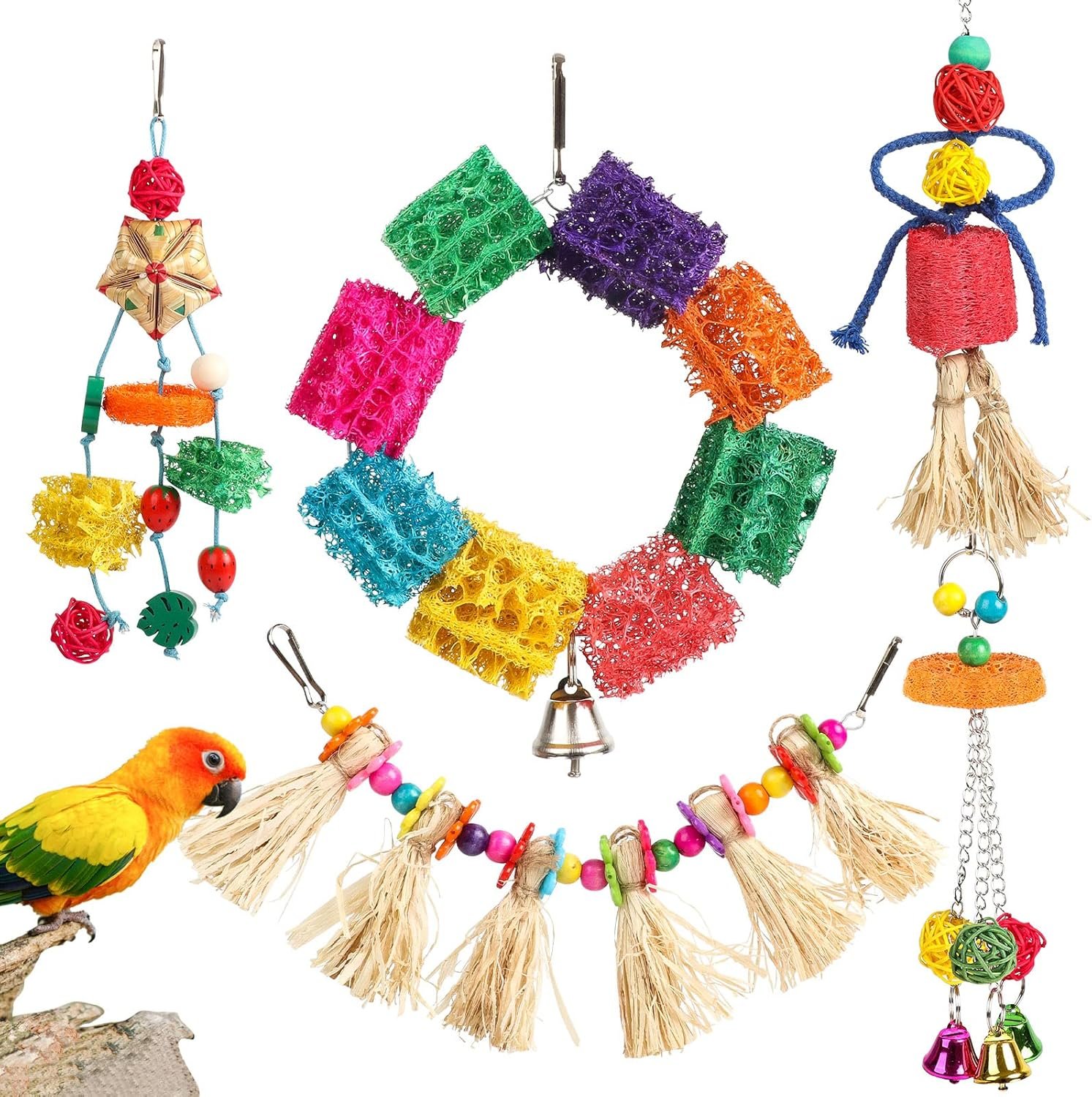
Bright swings, bells and shreddable toys can make a bird enclosure more interesting. Sets such as PETUOL’s advertised parrot toys may combine several materials, but a colorful product photo does not prove it is safe for every species. Appropriate size, supervision, safe hardware and access to normal perching matter more than the number of toys in a bundle.
Why enrichment matters
Parrots and other companion birds are active, curious animals. Foraging, climbing, manipulating objects and social interaction can support welfare. Toys are most useful when they encourage natural behavior without introducing a new hazard. A bird that persistently plucks feathers, stops eating or becomes lethargic needs evaluation, not only another toy.
Hardware and parts to inspect
Check attachment clips, chain links, bells, exposed wire, loose rings and sharp edges. Open hooks and pinch points can trap feet or beaks. Replace damaged components before the bird has access to sharp or swallowable fragments. Toys marketed for large birds may be too big for a budgie; tiny parts may be swallowed by a larger species.
Natural materials still deserve scrutiny
Rattan, plant fibers and wood should be appropriately sourced, clean and free of concerning coatings. Loose threads, fraying rope and long fibers can entangle toes or be swallowed. Some birds aggressively destroy toys, which is normal play, but damaged pieces should be removed promptly. Never assume that a “natural” label means a material is guaranteed safe.
Keep the flight and resting spaces usable
Do not overcrowd the cage. A bird still needs suitable perches, unobstructed room to move, easy access to food and water, and a quiet resting place. Introduce a new swing gradually because sudden unfamiliar objects may frighten a cautious bird. The Merck Veterinary Manual’s bird enrichment overview is a useful reference for enrichment concepts.
When a veterinarian should assess behavior
New loss of balance, trouble perching, appetite change, injured feet or feather damage needs prompt avian veterinary advice. A toy cannot substitute for examination when behavior changes are caused by illness. We have not independently tested this PETUOL set or determined that its exact hardware suits your bird.
Affiliate disclosure: The Pet Vet may receive a commission from qualifying purchases. Product price and specifications can change. Check product listing.
This article is for general education and is not a substitute for care from your own veterinarian. Learn about The Pet Vet and our editorial policy.