
Overview
Setting up multiple feeding stations addresses common mealtime stress in multi-cat households by honoring cats’ natural solitary hunting instincts and eliminating food-related competition. This approach reduces anxiety, prevents rushed eating and health issues, and allows each cat to eat peacefully in their own secure location.
Table of Contents
- Why Separate Feeding Stations Matter
- Understanding Your Cat’s Food Instincts
- How Separate Feeding Spots Benefit Your Cats’ Health
- How to Assess Your Home and Your Cats
- How Many Feeding Stations Do You Need?
- Choosing the Right Spots in Your Home
- How to Set Up Each Feeding Station
- Special Setups for Kittens, Seniors, and Prescription Diets
- How to Transition Your Cats Without Stress
- What to Do Right Now
- Common Problems and Simple Solutions
- Conclusion
- Frequently Asked Questions
If mealtime in your home feels more like a standoff than a peaceful routine, you are not alone. Many cat owners watch one cat gulp food anxiously while another waits in the corner — and wonder if something is wrong. The good news is that this is a very common problem, and there is a straightforward solution: setting up multiple feeding stations around your home.
This article is for informational purposes only and is not a substitute for professional veterinary advice. Always consult a licensed veterinarian for diagnosis and treatment.
Separate feeding locations reduce tension, support your cats’ natural instincts, and make it easier to keep an eye on each cat’s health. This guide walks you through everything you need to know.
Why Separate Feeding Stations Matter
Cats evolved as solitary hunters. They did not share meals in the wild. When we ask them to eat side by side, we are working against millions of years of instinct.
Even cats who cuddle and play together can feel stressed around shared food bowls. That stress does not always look like obvious fighting. Watch for these quieter signs:
- One cat always eating first while others wait
- A cat eating very fast and vomiting shortly after
- A cat only approaching food late at night when others are asleep
- A cat who seems to avoid the feeding area altogether
Multiple feeding stations address these issues by giving every cat their own secure place to eat — without competition.
Understanding Your Cat’s Food Instincts
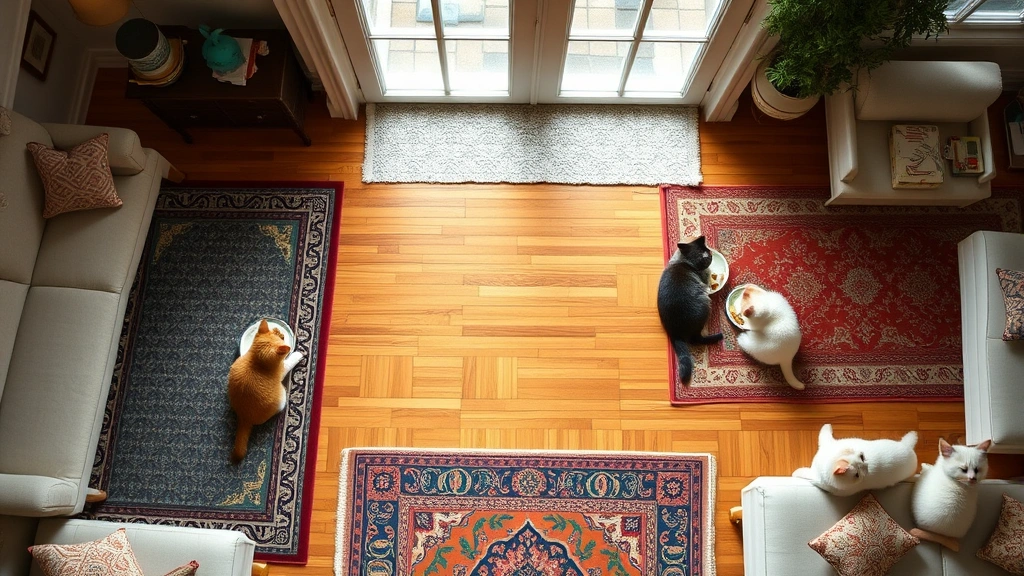
Your cats are wired to protect food as a valuable resource. In a multi-cat home, this can lead to some predictable patterns:
- One cat positioning themselves to block others from the bowls
- Speed-eating to finish before a more confident cat pushes in
- Anxious cats skipping meals entirely
Research published in the Journal of Feline Medicine and Surgery suggests that resource competition may be a significant source of stress in multi-cat households. This stress could contribute to behaviours that seem unrelated to food — such as changes in litter box habits, excessive grooming, or tension with people.
It is completely normal to feel concerned when you notice these signs. Recognising them early puts you in a great position to help.
How Separate Feeding Spots Benefit Your Cats’ Health
Setting up individual feeding areas can make a real difference to your cats’ wellbeing. Here is what you may notice over time:
- Less anxiety at mealtimes. Cats who feel safe around food tend to be calmer throughout the day.
- Easier health monitoring. You will quickly spot if one cat stops eating or seems hungrier than usual — both of which could be early signs worth discussing with your vet.
- Better diet management. A senior cat on a special food can eat without younger cats stealing it. A cat who needs measured portions can be fed separately from one who needs more.
- Less vomiting from speed-eating. Cats who eat at their own pace in a calm spot tend to digest food more comfortably.
How to Assess Your Home and Your Cats
Before moving any bowls, take a little time to look at both your space and your cats’ relationships.
Walk through your home and look for quiet, low-traffic spots. You do not need a large house. Even small apartments have hidden potential:
- The space under a desk
- A bathroom corner
- A closet with the door propped open
- A cleared shelf on a sturdy bookcase
Think vertically too. Cats often feel more secure when elevated. A stable cat tree platform or a cleared dresser top can work well.
Next, observe your cats for a few days. Notice who eats first, who waits, who guards the bowls, and who seems anxious. Even a long stare can be enough to make one cat back away from food. Jot down what you see — it will help you decide how much distance each cat needs.
How Many Feeding Stations Do You Need?
A simple starting point: one station per cat, plus one extra. For three cats, aim for four stations. This gives everyone options and reduces competition.
Adjust based on what you observe. Truly bonded cats with no signs of food stress may share a station comfortably. Households with more tension may need greater separation than the basic formula suggests.
Consider adding more stations if you notice:
- Cats waiting for others to finish before approaching food
- Hissing, swatting, or other tension around feeding areas
- A cat losing weight or not eating enough
- Cats moving between stations rather than settling at one
Some situations call for completely separate feeding regardless of how well your cats get along. Cats managing specific health conditions, kittens on high-calorie food, and senior cats with mobility challenges all benefit from their own dedicated space.
Choosing the Right Spots in Your Home
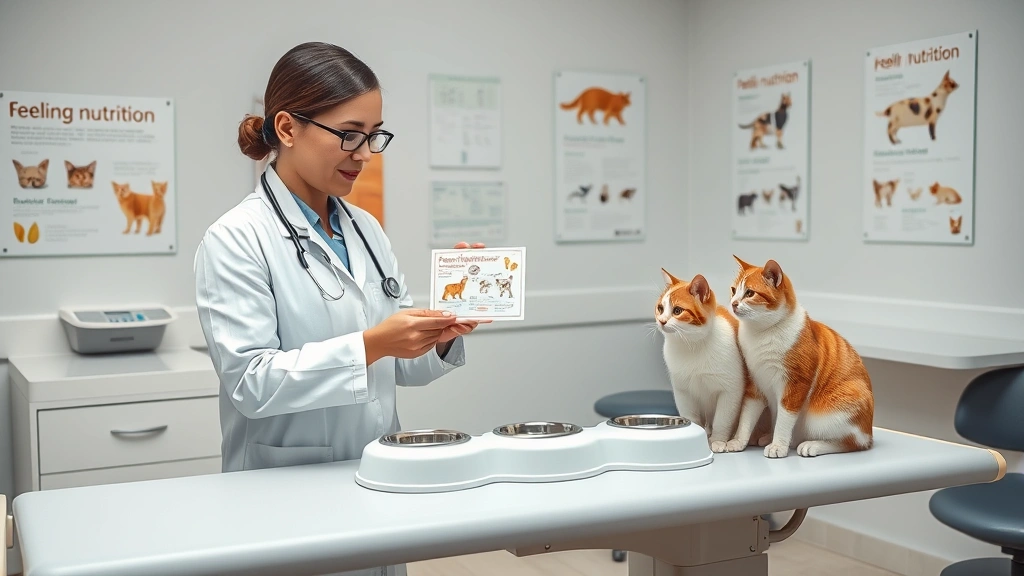
Where you place each station matters as much as having separate stations at all. Look for spots that are:
- Quiet and low-traffic. Busy hallways and entryways create too much unpredictable activity for a cat to eat comfortably.
- Away from litter boxes. The Cornell Feline Health Center notes that cats instinctively avoid eating near elimination areas. Ideally, keep these in completely different rooms.
- Open enough to see and escape. Cats need to spot any approaching threat and have a clear path to leave. Avoid tight dead-end corners where a cat could feel trapped.
- Out of sight from other stations. Cats should not be able to make eye contact with another cat while eating.
Here are some room-by-room ideas:
- Bedrooms: Often ideal — quiet, familiar, and associated with people your cats trust.
- Bathrooms: Private and easy to clean. Just keep them well away from litter boxes.
- Closets and alcoves: The semi-enclosed feel gives cats the sense of security they naturally prefer.
- Home offices: Usually calm during feeding times with minimal foot traffic.
- Kitchen corners: Can work if positioned away from cooking activity and appliances.
- Laundry rooms: A good option if the sound of appliances does not startle your cats.
For households with significant tension, place stations on different floors or at opposite ends of your home.
How to Set Up Each Feeding Station
Each station needs just a few key items to work well.
Choose the right bowls. Stainless steel is a great choice — durable, easy to clean, and less likely to harbour bacteria. Ceramic works well too. Try to avoid plastic where possible, as it can retain odours and may irritate some cats’ skin.
Look for wide, shallow bowls. Deep bowls can cause whisker discomfort, which may put cats off eating. This small detail makes a genuine difference.
Include water at every station. Place the water bowl a few inches away from the food bowl — cats tend to prefer drinking away from where they eat. Many cats drink more when water is moving, so a fountain can be a worthwhile addition.
Add a feeding mat. A silicone mat under each station contains spills, defines the space, and keeps bowls from sliding. It also makes daily clean-up much quicker.
Consider raised feeders where helpful. Elevated bowls may reduce neck strain for cats with certain health needs. That said, not every cat needs or wants elevation — offer it where it is genuinely useful.
Special Setups for Kittens, Seniors, and Prescription Diets
Some cats need a more tailored approach.
Kittens eating several small meals a day need stations that adult cats cannot easily reach. A separate room or a barrier with a kitten-sized opening works well.
Senior cats with reduced mobility need stations that do not require jumping or climbing. Place their food in a familiar, well-lit spot at floor level. Slightly raised bowls can help if bending is uncomfortable — but keep everything accessible.
Cats on prescription diets need to eat their specific food without other cats stealing it. Supervise mealtimes where possible, or consider a microchip-activated feeder. These open only for the cat whose microchip matches the programmed identity. They are particularly useful when your home layout makes physical separation difficult.
How to Transition Your Cats Without Stress
Sudden changes can unsettle cats. A gradual approach works much better.
Start by placing new stations close to the existing feeding area. If all your cats currently eat in the kitchen, begin by setting up individual spots in different parts of that same room. After a few days, slowly move each station toward its final location — a little at a time.
Use positive reinforcement throughout. Sit near new stations during early meals. Offer a small treat or a little wet food as a topper to build a good association. Gentle praise when a cat approaches a new spot helps too.
Expect the process to take two to three weeks on average. Some cats adapt within days. Others — particularly anxious cats — may need a month. Rushing usually creates more resistance, not less.
Watch for signs that things are going well:
- Cats approaching their station willingly
- Eating at a relaxed pace
- Less tension around mealtimes overall
If you notice any of the following, slow down and reassess:
- A cat refusing to eat at their new station for more than 24 hours
- Weight loss in any cat
- Increased aggression or excessive grooming that could be a sign of stress
- Vomiting or loose stools that may suggest digestive upset
If a cat is not eating for more than a day, contact your vet. Cats can decline quickly when they stop eating, so it is always worth getting advice promptly.
What to Do Right Now
If you are ready to get started — or just want to take a first step today — here is a simple plan:
- Write down what you have observed. Note which cats seem stressed at mealtimes, who eats first, who waits, and any symptoms like vomiting or weight changes. Include when you first noticed these behaviours.
- Walk through your home and identify two or three quiet spots away from litter boxes and busy areas. Take photos if it helps you compare options.
- Set up one new station close to your current feeding area using a bowl you already have. Introduce it at the next mealtime and see how your cats respond.
- Check your cats’ weight and appetite over the next week. If any cat seems to be eating significantly less or losing condition, book a vet check.
- If you are unsure whether your pet needs urgent care, a quick telehealth check-in can give you peace of mind — no appointment needed.
Common Problems and Simple Solutions
A cat keeps visiting other stations after finishing their own meal. Scheduled mealtimes help here. Feed all cats at the same time, supervise the meal, and remove all food after 20 to 30 minutes. With no food left out, there is nothing to steal.
A cat refuses their new station. Try a different location — the current spot may be too noisy, too exposed, or too close to another cat’s territory. Switching bowl materials or adjusting the height can also make a surprising difference. Hand-feeding a few pieces at the new station can help build confidence.
Keeping multiple stations clean feels overwhelming. It becomes routine quickly. Wash food bowls after each meal. Wipe mats daily. Keep a few spare bowls so you always have a clean one ready. Many people find it easiest to wash feeding bowls at the same time as their own dishes.
Conclusion
Setting up multiple feeding stations is one of the most effective things you can do for a multi-cat household. It works with your cats’ natural instincts rather than against them. It reduces stress, supports better health, and makes mealtimes calmer for everyone — including you.
Start small. Observe your cats, find a couple of quiet spots, and introduce changes gradually. Most households see a real improvement within a few weeks.
Your cats will eat better, feel safer, and be healthier when they can dine without competition. That is worth the effort.
Frequently Asked Questions
How far apart should multiple cat feeding locations be?
At minimum, stations should be out of sight from each other so cats cannot make eye contact while eating. For cats with significant tension, placing stations on different floors or at opposite ends of your home works best.
Can bonded cats share a feeding station?
Yes — if they show absolutely no signs of food-related stress, a bonded pair may share one station comfortably. That said, most cats benefit from having their own space, even if they appear to get along well.
What if my cat won’t eat at their new feeding station?
Move the station gradually rather than all at once, and use treats and gentle praise to build positive associations. If the cat continues to avoid it, try a completely different location or adjust the bowl type and height. If your cat goes more than 24 hours without eating, contact your vet.
Do I need to feed all cats at the same time?
Feeding all cats simultaneously — with supervision — works best for preventing station-hopping and food stealing. Remove all food after 20 to 30 minutes rather than leaving it available all day.
Are microchip feeders necessary?
They are not essential for most households, but they can be very helpful when managing different health diets, dealing with persistent food theft, or when your home layout makes physical separation difficult. They offer reliable portion control when other methods are not working.
This article is for general education and is not a substitute for care from your own veterinarian. Learn about The Pet Vet and our editorial policy.