
Yes, you can absolutely talk to a vet about puppy anxiety online, and it’s often one of the fastest ways to get professional guidance when your new pup is showing signs of stress or fear. If you’ve noticed your puppy trembling during thunderstorms, hiding when guests arrive, or displaying destructive behavior when left alone, an online veterinary consultation can help you understand what’s happening and create a plan to support your anxious pup.
Table of Contents
- Why Online Vet Consultations Work Well for Puppy Anxiety
- Common Signs of Puppy Anxiety to Discuss With Your Vet
- What to Expect During an Online Vet Consultation for Puppy Anxiety
- Best Online Vet Platforms for Puppy Behavior Concerns
- Practical Strategies Vets Often Recommend for Anxious Puppies
- How Online Vets Address Separation Anxiety in Puppies
- The Role of Breed and Age in Puppy Anxiety
- When to Follow Up With In-Person Veterinary Care
- Creating a Supportive Environment While You Wait for Your Consultation
- Cost and Insurance Considerations for Online Vet Visits
- Frequently Asked Questions
- What To Do Now
- Summary: Online Vets Are Ready to Help Your Anxious Puppy
This article is for informational purposes only and is not a substitute for professional veterinary advice. Always consult a licensed veterinarian for diagnosis and treatment.
Many pet owners feel isolated when their puppy starts showing anxiety behaviors—but you’re not alone, and help is just a click away. Telehealth veterinary services have made it easier than ever to connect with qualified vets who specialize in behavioral concerns, all from the comfort of your home.
Why Online Vet Consultations Work Well for Puppy Anxiety
Telehealth visits offer a unique advantage for anxious puppies: they happen in a familiar, safe environment. Your puppy won’t experience the stress of a car ride or a loud, unfamiliar clinic, which means you’ll get a clearer picture of their actual behavior.
Online veterinarians can observe your puppy’s body language, listen to your detailed descriptions, and ask targeted questions about triggers and patterns. This information is invaluable for understanding whether your puppy is experiencing situational anxiety, generalized nervousness, or something that might need further investigation.
The convenience factor also matters: you can schedule a consultation during times that work for your family, often with same-day or next-day availability. This means you don’t have to wait weeks for an appointment while your puppy’s anxiety continues.
Common Signs of Puppy Anxiety to Discuss With Your Vet
Recognizing anxiety symptoms is the first step toward getting help. Here are behaviors that warrant a conversation with a veterinarian:
- Excessive panting or drooling without physical exertion
- Destructive behavior like chewing furniture or scratching doors
- House soiling or accidents despite being housetrained
- Hiding, trembling, or cowering during specific triggers
- Excessive barking or whining when separated from you
- Pacing or restlessness that seems unusual
- Loss of appetite during stressful periods
- Aggression or snapping when anxious
Catching these signs early puts you in a great position to help your puppy develop coping skills before anxiety becomes deeply ingrained. A vet can rule out medical causes and recommend behavioral strategies tailored to your pup’s specific triggers.
What to Expect During an Online Vet Consultation for Puppy Anxiety
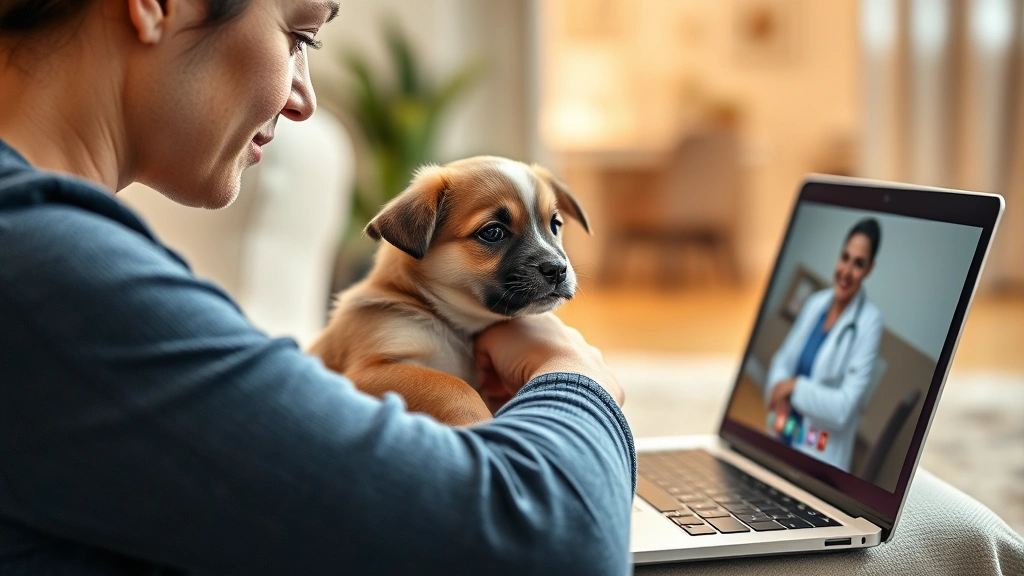
Most telehealth visits follow a straightforward format. You’ll log into a video platform, and the veterinarian will greet you and your puppy. Have your pup nearby so the vet can observe their behavior and body language in real time.
The vet will likely ask questions about:
- When the anxiety started and what triggers it
- How your puppy behaves during anxious episodes
- Your puppy’s age, breed, and health history
- Any recent changes in your home or routine
- What you’ve already tried to help
Based on this conversation, the vet may recommend environmental adjustments, training techniques, calming supplements, or other interventions. If they believe your puppy needs in-person examination or diagnostic testing, they’ll refer you to a local clinic.
Best Online Vet Platforms for Puppy Behavior Concerns
Several reputable telehealth services now offer veterinary consultations for behavioral issues. The Pet Vet specializes in making these consultations accessible and stress-free, with licensed vets available to discuss puppy behavior problems including anxiety.
When choosing a platform, look for:
- Licensed, board-certified veterinarians
- Availability that matches your schedule
- Clear pricing with no hidden fees
- Ability to follow up if needed
- Integration with local vets for in-person care if necessary
If you are unsure whether your pet needs urgent care, a quick telehealth check-in can give you peace of mind — no appointment needed.
Practical Strategies Vets Often Recommend for Anxious Puppies
While every puppy is different, veterinarians frequently suggest these evidence-based approaches:
Environmental Management: Create a safe space where your puppy can retreat. This might be a crate, a specific room, or a cozy corner with familiar toys and bedding. This gives your puppy a sense of control during stressful moments.
Gradual Desensitization: Slowly expose your puppy to anxiety triggers at very low intensities, paired with positive experiences like treats or play. Over time, your puppy may become less reactive to these stimuli.
Calming Supplements: Some puppies benefit from supplements containing ingredients like L-theanine or chamomile. Your vet can recommend options that are safe and appropriate for your puppy’s age and weight.
Exercise and Mental Stimulation: A tired puppy is often a calmer puppy. Regular play, training sessions, and puzzle toys can help burn nervous energy and build confidence.
Consistent Routine: Puppies thrive on predictability. Maintaining regular feeding times, potty breaks, and play sessions helps reduce overall anxiety levels.
How Online Vets Address Separation Anxiety in Puppies
Separation anxiety is one of the most common concerns pet owners bring to online vet consultations. Your puppy may panic when you leave, leading to destructive behavior, excessive barking, or house soiling.
During a telehealth visit, a vet can help you distinguish between normal puppy behavior and true separation anxiety. They might suggest starting with very short departures—just stepping outside for 30 seconds—and gradually building your puppy’s confidence that you always return.
Some vets may discuss calming aids or recommend working with a certified professional dog trainer alongside veterinary care. The combination of behavioral support and professional guidance often yields the best results.
The Role of Breed and Age in Puppy Anxiety
Certain breeds are genetically predisposed to anxiety, and puppies at different developmental stages experience fear and stress differently. A knowledgeable online vet can factor these considerations into their recommendations.
For example, puppies between 8 and 16 weeks often go through a fear-imprinting period where new experiences can have lasting effects. Understanding where your puppy is developmentally helps your vet provide age-appropriate guidance.
Similarly, breeds known for sensitivity—like Vizslas, German Shepherds, or Border Collies—may need specialized anxiety management strategies that differ from more laid-back breeds.
When to Follow Up With In-Person Veterinary Care
While online consultations are excellent for initial assessment and behavioral guidance, some situations require in-person evaluation. If your puppy shows signs of physical illness alongside anxiety—such as loss of appetite, vomiting, or lethargy—an in-person exam may be necessary.
Additionally, if your puppy’s anxiety doesn’t improve with behavioral strategies, your vet might recommend bloodwork or other diagnostics to rule out underlying health issues. Your online vet can facilitate this referral seamlessly.
Think of telehealth as a valuable first step that can prevent unnecessary trips to the clinic while ensuring your puppy gets the right level of care.

Creating a Supportive Environment While You Wait for Your Consultation
Between scheduling your online vet appointment and the actual visit, you can take steps to help your anxious puppy feel safer. Avoid forcing your puppy into situations that trigger anxiety—this often makes things worse.
Instead, focus on creating positive associations. If your puppy is afraid of loud noises, for instance, play soft music or white noise at low volumes paired with treats and praise. This helps rewire your puppy’s response over time.
Keep a journal of your puppy’s anxiety episodes, noting what triggered them, how long they lasted, and what seemed to help. This information will be incredibly useful during your online vet consultation.
Cost and Insurance Considerations for Online Vet Visits
Online veterinary consultations are typically more affordable than in-person visits, often ranging from $30 to $75 depending on the platform and vet expertise. This makes it an accessible option for pet owners seeking professional guidance without a major financial commitment.
Most pet insurance plans do not cover telehealth behavioral consultations, as they’re often classified as wellness or preventive care. However, if your vet recommends follow-up in-person care or diagnostics, those may be covered under your policy. Check your specific plan details.
The affordability of online consultations means you can get professional input quickly, which often prevents anxiety from escalating into more serious behavioral problems that could be costlier to address later.
Frequently Asked Questions
Can a vet prescribe anxiety medication through a telehealth visit?
Many vets can prescribe certain medications through telehealth if they believe it’s appropriate, though some medications may require an in-person exam first. Your vet will discuss options and explain any limitations based on your location’s regulations.
Is a telehealth consultation as effective as an in-person visit for puppy anxiety?
For behavioral assessment and initial guidance, telehealth is often very effective. However, if your vet needs to rule out medical causes, an in-person exam may be necessary to complement the telehealth consultation.
How long does an online vet consultation for puppy anxiety typically last?
Most consultations last 15 to 30 minutes, though some may be shorter or longer depending on the complexity of your puppy’s situation. The vet will discuss duration when you schedule.
What if my puppy won’t cooperate during the online vet visit?
That’s completely normal! Anxious puppies may hide or behave differently on camera. A good vet understands this and will work with what you can show them while relying on your detailed descriptions of your puppy’s behavior at home.
Can I get a second opinion about my puppy’s anxiety through telehealth?
Absolutely. Seeking a second opinion is always reasonable, especially for behavioral concerns. Many pet owners consult multiple vets to gather different perspectives and recommendations.
What To Do Now
- Schedule a telehealth consultation: Contact The Pet Vet or another licensed telehealth provider to book an appointment. Most platforms allow same-day or next-day scheduling.
- Prepare information beforehand: Write down when your puppy’s anxiety started, what triggers it, and any symptoms you’ve noticed. Include details about your puppy’s breed, age, and any recent life changes.
- Create a safe space: While waiting for your consultation, set up a quiet, comfortable area where your anxious puppy can retreat and feel secure.
- Document episodes: Keep a brief journal of anxiety episodes, noting time, trigger, duration, and your puppy’s response. This will help your vet provide more targeted recommendations.
- Gather follow-up resources: Ask your vet about recommended trainers, supplements, or additional resources. Many vets can refer you to certified professional dog trainers who specialize in anxiety.
Summary: Online Vets Are Ready to Help Your Anxious Puppy
Puppy anxiety is treatable, and you don’t have to figure it out alone. Yes, you can talk to a vet about puppy anxiety online—and doing so is often the fastest, most convenient path to understanding your puppy’s needs and creating a supportive plan.
Telehealth veterinary services remove barriers like scheduling delays and travel stress, making professional guidance more accessible than ever. Whether your puppy is struggling with separation anxiety, noise sensitivity, or general nervousness, an online vet can provide valuable insights and recommendations tailored to your situation.
The fact that you’re seeking help shows how much you care about your puppy’s wellbeing. Taking action now—before anxiety becomes deeply ingrained—gives your puppy the best chance of developing into a confident, happy adult dog. Reach out to a telehealth provider today, and take the first step toward a calmer, more confident pup. You’ve got this, and your vet is here to support you both.
This article is for general education and is not a substitute for care from your own veterinarian. Learn about The Pet Vet and our editorial policy.