
It’s easy to assume that crunchy kibble automatically scrubs a dog’s teeth. In practice, ordinary dry food does not replace toothbrushing or professional dental care. Certain specially designed dental diets and chews, however, have evidence for reducing plaque or tartar when used as directed.
Regular kibble versus a dental diet
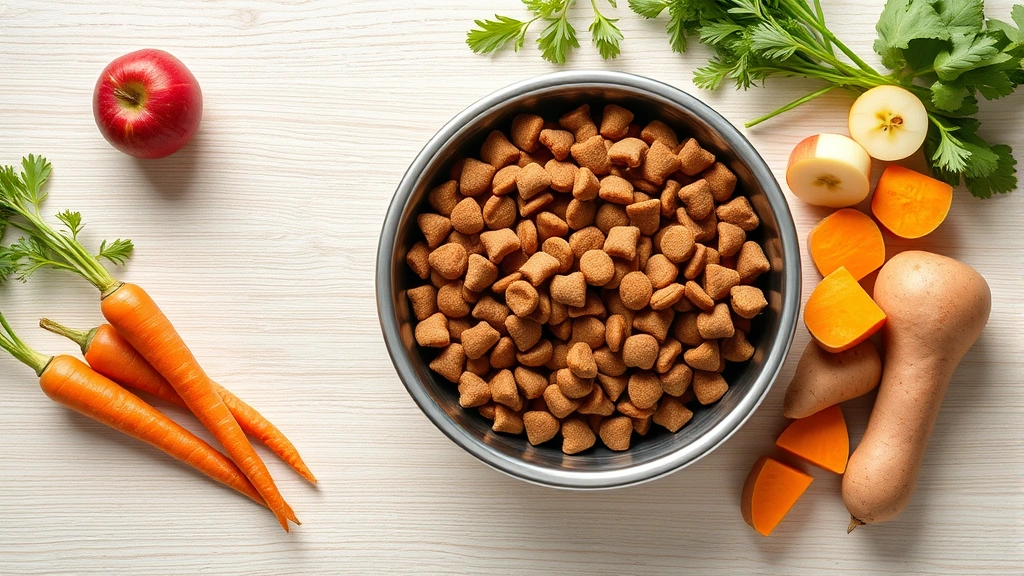
Some veterinary dental diets are made with a specific kibble size or texture that encourages a tooth-cleaning action as a dog chews. Others contain ingredients intended to affect plaque or tartar buildup. These products differ from ordinary dry food, and their claims should be checked rather than inferred from the word ‘crunchy’ on the bag.
What the VOHC seal tells you
The Veterinary Oral Health Council reviews submitted evidence for plaque or calculus control. Accepted products are listed by category and by the claim they have demonstrated. A VOHC seal is helpful when selecting among products, but it does not mean a product prevents every dental problem or can cure established periodontal disease.
Dental chews: benefits and practical limits
A suitable chew can be a useful addition to home care for some dogs. Size, chewing style, calorie content, allergies, and choking or obstruction risk all matter. Avoid very hard chews that might fracture teeth; a product that is wrong for an aggressive chewer is not worth the risk. Supervise use as recommended.
The role of brushing
Regular toothbrushing with a dog-safe toothpaste targets plaque where food alone often falls short. Introduce it slowly, with short sessions and positive reinforcement. If your dog is already painful, has loose teeth, or bleeds easily, book a dental examination before forcing brushing around tender gums.
Diet changes after dental treatment
After extractions or other dental work, follow your veterinarian’s instructions on food texture and when to resume chewing. Do not use hard treats during a healing period without approval. Dogs with other medical conditions may need a specialized diet that takes priority over dental claims.
What food cannot fix
Once periodontal disease causes gum attachment loss or an infected tooth, feeding a dental diet is not a substitute for cleaning and treatment under anesthesia. A veterinarian can examine beneath the gumline with dental radiographs and probing as needed. Read more about the progression of dental disease and why plaque causes gum problems.
References
VOHC Accepted Products and Claims; AVMA: Pet Dental Care.
This article is informational; ask your veterinarian before making a major diet change.
This article is for general education and is not a substitute for care from your own veterinarian. Learn about The Pet Vet and our editorial policy.