
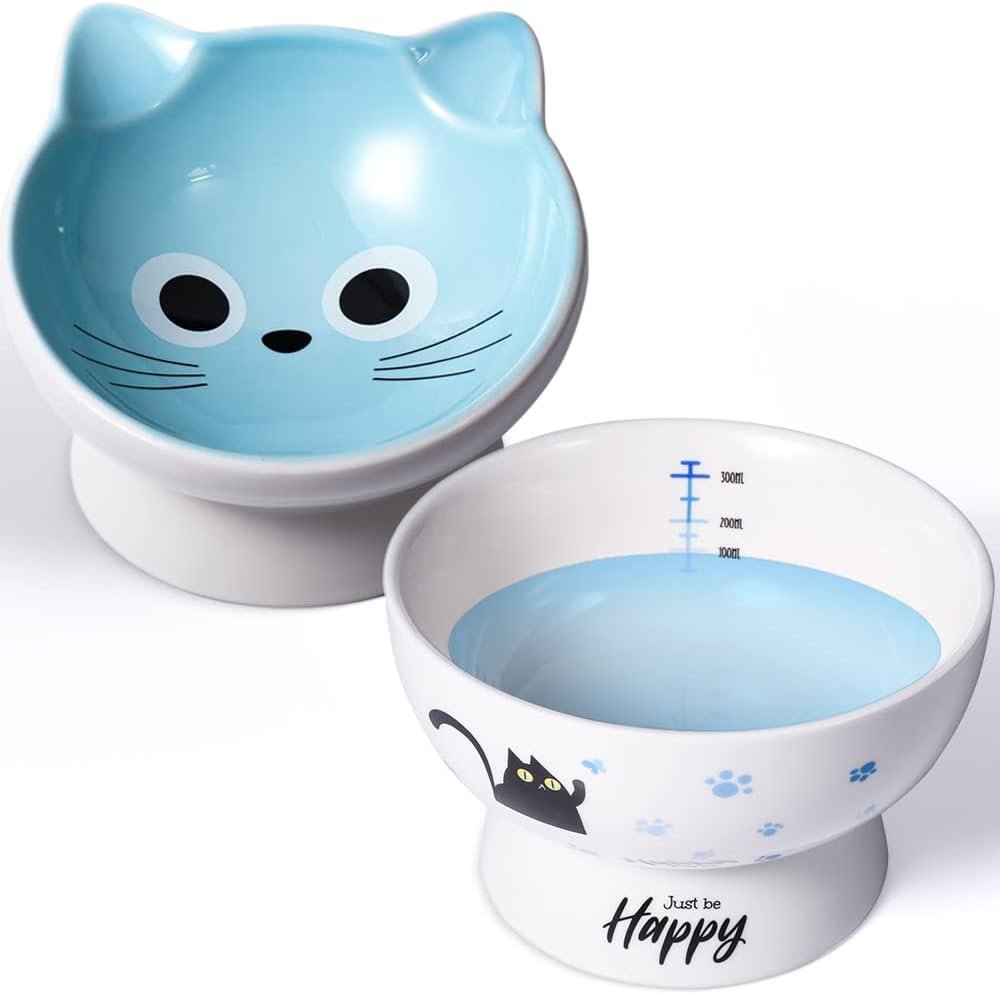
Raised or tilted ceramic dishes, including sets sold by AISBUGUR, are sometimes advertised as helping cats eat comfortably or reducing vomiting. Whether a dish suits an individual cat depends on its dimensions, stability and the animal’s preferences. There is not good evidence that a 15-degree angle itself prevents vomiting in healthy cats, so this is a practical product-selection guide rather than a claimed clinical benefit or personal product test.
What can an elevated bowl change?
Raising a dish can change a cat’s neck position, and a wide shallow dish may give whiskers more room. Some cats prefer these changes; others do not. A bowl cannot treat vomiting caused by gastrointestinal disease, hairballs, parasites, diet intolerance or another medical condition. Repeated vomiting, weight loss, poor appetite or lethargy warrants a veterinary evaluation. Do not treat these symptoms by buying a new dish alone.
How to check fit and material
Measure the usable bowl width and height instead of relying on product pictures. Observe whether your cat can approach, eat and leave without stretching or balancing awkwardly. Ceramic dishes should be smooth, food-safe, free from cracks and easy to wash. Replace a chipped bowl rather than allowing sharp edges or porous damaged surfaces to collect residue.
Where should the bowls go?
In multi-cat homes, access matters. One cat may guard food from another. The AAFP and ISFM feline environmental guidelines recommend separated resources so cats do not have to compete at one station. Place bowls in quiet, accessible areas away from a busy litter box, and give each cat its own feeding opportunity if needed.
Questions before buying
Is the dish stable on your flooring? Can the insert be removed for cleaning? Are there narrow corners where food collects? Does the stand make the bowl harder for a kitten or an elderly cat to reach? When a cat has arthritis or mobility difficulty, ask a veterinarian whether a change in height is worthwhile rather than assuming every raised feeder helps.
What is a better measure of success?
Look for comfortable posture, normal food intake, easy cleaning and a cat willing to use the bowl. Track changes in appetite and vomiting separately. A new bowl can be a convenience, but it is not a medical treatment. This article has not independently tested the AISBUGUR dish or confirmed the manufacturer’s current specifications.
Affiliate disclosure: The Pet Vet may receive a commission from qualifying purchases. Product price and specifications can change. Check product listing.
This article is for general education and is not a substitute for care from your own veterinarian. Learn about The Pet Vet and our editorial policy.