
If your dog has been licking their paws constantly, you’re not alone—and reaching out to an online vet for dog licking paws is often the first smart step worried pet owners take. That persistent licking can signal anything from allergies to anxiety, and figuring out the root cause makes all the difference in helping your furry friend feel better.
Table of Contents
- Why Is Your Dog Licking Their Paws So Much?
- Common Causes of Excessive Paw Licking in Dogs
- Remedy 1: Soothe with Paw Soaks and Epsom Salt Baths
- Remedy 2: Use Paw Balms and Protective Barriers
- Remedy 3: Address Food Allergies with an Elimination Diet
- Remedy 4: Keep Paws Clean and Dry
- Remedy 5: Try Natural Anti-Inflammatory Supplements
- Remedy 6: Manage Environmental Allergens
- Remedy 7: Address Anxiety with Behavioral Support
- When Should You Talk to an Online Vet?
- How Dog Skin Allergies Natural Remedies Support Your Treatment Plan
- Frequently Asked Questions
- What To Do Now
- Summary: Getting Your Dog Relief Fast
This article is for informational purposes only and is not a substitute for professional veterinary advice. Always consult a licensed veterinarian for diagnosis and treatment.
The good news? Most cases of excessive paw licking are manageable once you understand what’s driving the behavior. In this guide, we’ll walk through the most common causes, seven remedies that actually work, and how telehealth can help you get answers fast—without the wait or the stress.
Why Is Your Dog Licking Their Paws So Much?
Paw licking is a normal grooming behavior, but when it becomes excessive, it’s your dog’s way of telling you something’s wrong. Dogs can’t talk, so they show discomfort through behavior changes.
The causes range from physical irritation to emotional stress. Allergies (food or environmental) are the most common culprit, accounting for a large percentage of paw licking cases. But parasites, yeast infections, anxiety, and even boredom can trigger the behavior too.
Catching this early puts you in a great position to help your dog feel relief faster and prevent secondary infections from all that licking.
Common Causes of Excessive Paw Licking in Dogs
Understanding the “why” behind the licking helps you and your vet narrow down the right solution. Here are the most frequent causes:
- Allergies: Environmental triggers (pollen, dust) or food sensitivities cause itching that dogs try to soothe by licking.
- Parasites: Fleas, mites, and lice create intense itching, especially between the toes.
- Yeast or bacterial infections: Warm, moist paws are a perfect breeding ground for fungal growth.
- Anxiety or stress: Some dogs lick their paws as a self-soothing behavior when nervous or bored.
- Injuries or foreign objects: Splinters, cuts, or thorns stuck between pads trigger licking.
- Dry skin: Low humidity or nutritional deficiencies can cause itchy, flaky paw pads.
If your dog is licking just one paw obsessively, an injury or localized infection may be the issue. If it’s all four paws, allergies or systemic conditions are more likely.
Remedy 1: Soothe with Paw Soaks and Epsom Salt Baths
One of the gentlest, most immediate ways to calm inflamed paws is a warm soak. Epsom salt has been used for years to reduce inflammation and provide relief.
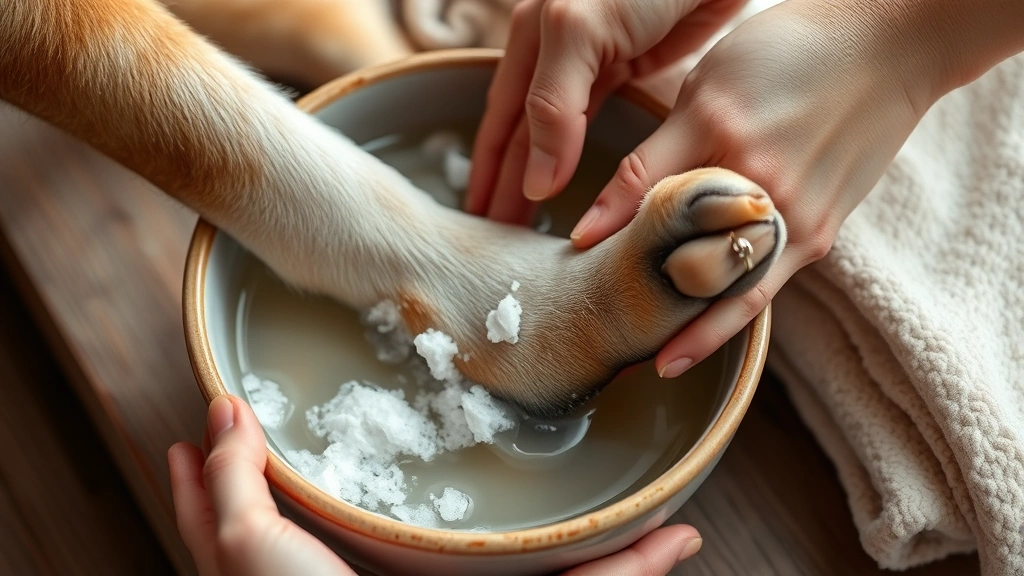
Fill a shallow basin with warm (not hot) water and dissolve a small amount of Epsom salt. Let your dog soak their paws for 5–10 minutes, once or twice daily. This helps remove allergens, bacteria, and irritants clinging to the skin.
Pat paws dry thoroughly afterward—moisture trapped between the toes can worsen yeast infections. Many pet owners notice improvement within a few days of consistent soaking.
Remedy 2: Use Paw Balms and Protective Barriers
Topical paw balms create a protective layer that locks in moisture and shields paws from irritants. Look for products with natural ingredients like shea butter, coconut oil, or beeswax.
Apply balm after paw soaks or before bedtime. Some pet owners also use soft booties or paw wraps to prevent licking while the balm works—this gives the skin time to heal without constant friction.
Protective barriers are especially helpful if your dog licks due to anxiety, since they interrupt the habit loop while you address the underlying cause.
Remedy 3: Address Food Allergies with an Elimination Diet
If your dog’s paw licking started suddenly or happens year-round, food allergies may be the culprit. Common triggers include beef, chicken, dairy, wheat, and corn.
An elimination diet feeding plan removes suspected allergens and reintroduces them one at a time to identify the problem. This process takes patience (usually 8–12 weeks) but gives you concrete answers.
Your vet can guide you through a proper food trial to ensure your dog gets balanced nutrition while testing. Many dogs show dramatic improvement once the trigger food is removed.
Remedy 4: Keep Paws Clean and Dry
Simple hygiene is surprisingly powerful. Dirt, allergens, and moisture accumulate on paws throughout the day, fueling irritation and infection.
Wipe your dog’s paws with a damp cloth after walks, especially if they’ve been outside in grass or on dusty surfaces. Dry thoroughly, paying special attention to the spaces between the toes where moisture and yeast love to hide.
For dogs prone to yeast infections, a weekly paw wash with a gentle, pet-safe antifungal cleanser can prevent flare-ups.
Remedy 5: Try Natural Anti-Inflammatory Supplements
Omega-3 fatty acids, found in fish oil and flaxseed, support skin health from the inside out. They reduce inflammation and strengthen your dog’s skin barrier over time.
Other supplements like quercetin and probiotics may help manage allergic reactions naturally. Always check with your vet before starting supplements to ensure they’re safe for your dog and won’t interact with other treatments.
While supplements aren’t a quick fix, consistent use over weeks can noticeably reduce itching and licking.
Remedy 6: Manage Environmental Allergens
If seasonal paw licking spikes in spring or fall, environmental allergies are likely. Pollen, mold, and dust settle on your dog’s paws and trigger itching.
Simple steps help:
- Wipe paws after outdoor time to remove allergens.
- Wash dog bedding weekly in hot water.
- Use a HEPA air filter indoors to reduce airborne triggers.
- Consider keeping your dog indoors during peak pollen times if possible.
These adjustments work best combined with other remedies rather than alone, but they reduce overall allergen load significantly.
Remedy 7: Address Anxiety with Behavioral Support
If your vet rules out medical causes, anxiety or boredom may be driving the licking. Dogs lick paws as a self-soothing behavior when stressed.
Increase exercise, provide mental enrichment (puzzle toys, training sessions), and establish a calm bedtime routine. Some dogs benefit from calming supplements or anxiety wraps designed to apply gentle pressure.
Consistency and patience matter here—behavioral changes take time, but they work when paired with environmental changes.

When Should You Talk to an Online Vet?
You don’t need to wait for an in-person appointment to get professional guidance. An online vet consultation about dog licking paws is a practical first step that saves time and money.
Schedule a telehealth visit if:
- Licking has lasted more than a week with no improvement.
- You notice redness, swelling, discharge, or a bad smell from the paws.
- Your dog is limping or avoiding putting weight on a paw.
- The licking is affecting sleep, appetite, or mood.
- You’re unsure whether home remedies are safe for your dog.
If you are unsure whether your pet needs urgent care, a quick telehealth check-in can give you peace of mind—no appointment needed. Your vet can see photos of the paws, ask detailed questions about onset and triggers, and recommend next steps without the hassle of driving to a clinic.
How Dog Skin Allergies Natural Remedies Support Your Treatment Plan
Once your vet identifies the cause, natural remedies often complement professional treatment beautifully. Whether it’s oatmeal baths, herbal salves, or dietary changes, these approaches work alongside (not instead of) veterinary care.
The key is consistency and patience. Skin issues take time to resolve, but most dogs improve significantly within 2–4 weeks of starting the right combination of remedies.
Frequently Asked Questions
Is it normal for dogs to lick their paws?
Yes, occasional paw licking is normal grooming. However, constant or obsessive licking—where your dog focuses on paws for extended periods—signals an underlying issue that needs attention.
Can I treat paw licking at home without seeing a vet?
Home remedies can help manage mild cases, but if licking persists beyond a week or worsens, professional guidance is important to rule out infections or serious conditions. An online vet visit is a low-pressure way to get answers.
How long does it take for remedies to work?
Most dogs show improvement within 3–7 days of starting treatment, though some cases take 2–4 weeks for full resolution. Consistency is key—stick with your chosen remedy plan.
Could my dog’s paw licking be a sign of a serious condition?
While most cases stem from allergies or minor irritation, persistent licking can indicate parasites, infections, or anxiety. That’s why professional evaluation—even via telehealth—is worth the investment in your dog’s health.
What’s the difference between paw licking from allergies versus anxiety?
Allergy-related licking often targets specific paws or areas and may be seasonal, while anxiety-driven licking is usually more generalized and happens during stressful times. Your vet can help distinguish between the two.
What To Do Now
- Observe and document: Note when the licking started, which paws are affected, and whether you’ve noticed redness, odor, or discharge. This information helps your vet narrow down the cause.
- Start a paw soak routine: Begin daily warm water and Epsom salt soaks (5–10 minutes) to provide immediate relief and reduce inflammation.
- Schedule a telehealth consultation: Book an online vet appointment to discuss your observations and get a professional assessment. Your vet may recommend specific tests or treatments based on what they see.
- Apply a protective paw balm: After soaks, use a pet-safe balm to lock in moisture and shield paws from irritants while you investigate the root cause.
- Review diet and environment: Consider whether timing correlates with food changes or seasonal factors, and share these observations with your vet to guide next steps.
Summary: Getting Your Dog Relief Fast
Excessive paw licking is your dog’s way of signaling discomfort, and the good news is that most cases respond well to a combination of home care and professional guidance. Whether it’s allergies, parasites, infections, or anxiety, identifying the cause is the first step toward relief.
The seven remedies outlined here—paw soaks, protective balms, dietary trials, cleanliness, supplements, allergen management, and behavioral support—address the most common triggers. But they work best when paired with professional insight from an online vet who can rule out serious conditions and tailor recommendations to your dog’s specific situation.
Don’t wait weeks for an in-person appointment. A quick telehealth check-in gives you answers, peace of mind, and a clear action plan—often within hours. Your dog deserves to feel comfortable in their own paws, and you deserve the reassurance that comes from knowing you’re helping them the right way.