
If your puppy is trembling during thunderstorms, hiding when guests arrive, or pacing anxiously at night, you’re not alone—and an online vet for puppy anxiety can help you understand what’s happening and explore treatment options without the stress of a clinic visit. Puppy anxiety is incredibly common, affecting puppies of all breeds and backgrounds, and the good news is that modern veterinary medicine offers several effective approaches to help your furry friend feel calmer and more secure.
Table of Contents
- Understanding Puppy Anxiety: Why It Happens
- When Should You Contact an Online Vet About Your Puppy’s Anxiety?
- How Medications Help Puppy Anxiety
- Common Medications Used for Puppy Anxiety
- What to Expect When Starting Medication
- Combining Medication with Behavioral Training
- Environmental and Lifestyle Modifications
- The Benefits of Online Vet Consultations for Anxiety
- Monitoring Your Puppy’s Progress
- Common Concerns About Medicating Your Puppy
- Frequently Asked Questions
- What to Do Now: Your Action Plan
- Summary: Supporting Your Anxious Puppy
This article is for informational purposes only and is not a substitute for professional veterinary advice. Always consult a licensed veterinarian for diagnosis and treatment.
Understanding Puppy Anxiety: Why It Happens
Puppies experience anxiety for many reasons. Loud noises, separation from their littermates, new environments, or past trauma can all trigger anxious behaviors. Some puppies are naturally more sensitive or have genetic predispositions to nervousness.
The key difference between normal puppy caution and clinical anxiety is persistence and intensity. A puppy that’s nervous once in a while is showing healthy caution. A puppy that can’t settle, exhibits destructive behavior, or shows signs of distress regularly may be experiencing true anxiety that benefits from professional support.
Catching anxiety early puts you in a great position to help your puppy develop confidence and resilience as they grow.
When Should You Contact an Online Vet About Your Puppy’s Anxiety?
You don’t need to wait for a crisis to reach out. Many pet owners find that consulting an online veterinarian for anxiety concerns early saves time and prevents behaviors from worsening. Consider scheduling a telehealth visit if your puppy:
- Shows extreme fear during specific triggers (storms, fireworks, car rides)
- Exhibits destructive behavior when left alone
- Has difficulty eating or sleeping due to nervousness
- Displays aggression stemming from fear
- Has had anxiety for more than a few weeks
If you’re unsure whether your pet needs urgent care, a quick telehealth check-in can give you peace of mind—no appointment needed. Your vet can assess your puppy’s specific situation and recommend the best path forward.
How Medications Help Puppy Anxiety
Medications for puppy anxiety work in different ways. Some help calm the nervous system in the moment, while others work over time to reduce overall anxiety levels. Most veterinarians recommend combining medication with behavioral training and environmental modifications for the best results.
It’s important to understand that medication isn’t a replacement for training or socialization—it’s a tool that makes your puppy more receptive to learning and feeling safe while you work on the underlying issues.
Common Medications Used for Puppy Anxiety
Your veterinarian may discuss several medication options depending on your puppy’s age, health status, and the type of anxiety they’re experiencing. Here are some commonly prescribed categories:
Selective Serotonin Reuptake Inhibitors (SSRIs)
SSRIs are often considered first-line medications for ongoing anxiety in puppies. These medications work by increasing serotonin levels in the brain, which helps regulate mood and reduce anxiety over time. Results typically take 2–4 weeks to become noticeable, making them ideal for chronic anxiety rather than situational fear.
Tricyclic Antidepressants
These medications have been used in veterinary medicine for decades and can be effective for anxious puppies. Like SSRIs, they work gradually and are best for long-term anxiety management. Your vet will monitor your puppy to ensure they’re responding well.
Benzodiazepines
These fast-acting medications can help with situational anxiety, such as before a vet visit or during a thunderstorm. They work quickly but are typically used short-term because puppies can develop tolerance. Your veterinarian will advise on appropriate use.
Azapirones
This class of medication is gentler and works well for some puppies with mild to moderate anxiety. They’re less sedating than some alternatives and may be combined with other approaches for better results.
Alpha-2 Agonists
These medications can be helpful for acute anxiety and fear responses. They work relatively quickly and are sometimes used in combination with other treatments. Your vet will determine if this is appropriate for your puppy’s situation.
Natural Calming Supplements
While not medications in the traditional sense, some veterinarians recommend supplements containing L-theanine, hemp-derived products, or herbal blends as adjuncts to behavioral training. Always discuss these with your vet before starting, as quality and effectiveness vary widely.
Combination Approaches
Many veterinarians find that combining a longer-acting medication with situational support works best. For example, your puppy might be on an SSRI for baseline anxiety while also having a fast-acting option available for specific triggers.
What to Expect When Starting Medication
When you work with an online vet for puppy anxiety, they’ll typically start with a thorough assessment. This might include questions about your puppy’s history, triggers, and daily behavior patterns. Your vet may recommend starting with the lowest effective dose and adjusting based on response.
Most medications require a waiting period before you’ll see results. During this time, continue with behavioral training, provide a safe space, and maintain consistent routines. Your puppy’s brain is learning new patterns even while the medication is helping them feel calmer.
Regular follow-ups are important. Your vet will want to know how your puppy is responding and may adjust the plan as needed. Many puppies eventually need lower doses or can transition off medication as they mature and gain confidence.
Combining Medication with Behavioral Training
The most successful anxiety management combines medication with behavioral work. When your puppy is calmer, they’re better able to learn that scary situations aren’t actually dangerous. This is where desensitization and counter-conditioning come in.
Work with a certified professional dog trainer or veterinary behaviorist alongside your medication plan. They can teach you how to gradually expose your puppy to anxiety triggers in a controlled, positive way. Your puppy learns new associations: thunderstorms mean treats and safety, not danger.
This combination approach often leads to lasting improvement and sometimes allows puppies to eventually manage without medication as they mature.
Environmental and Lifestyle Modifications
Beyond medication, simple environmental changes can significantly reduce puppy anxiety:
- Create a safe space: A quiet room, crate, or designated area where your puppy can retreat helps them feel secure
- Use white noise: Background sound can mask triggering noises like traffic or fireworks
- Maintain routine: Predictable schedules for feeding, play, and sleep reduce uncertainty and anxiety
- Exercise appropriately: Regular, age-appropriate activity helps burn nervous energy and promotes better sleep
- Avoid forcing exposure: Never push an anxious puppy into scary situations; let them progress at their own pace
- Stay calm yourself: Puppies pick up on our anxiety; your relaxed demeanor helps them feel safer
The Benefits of Online Vet Consultations for Anxiety
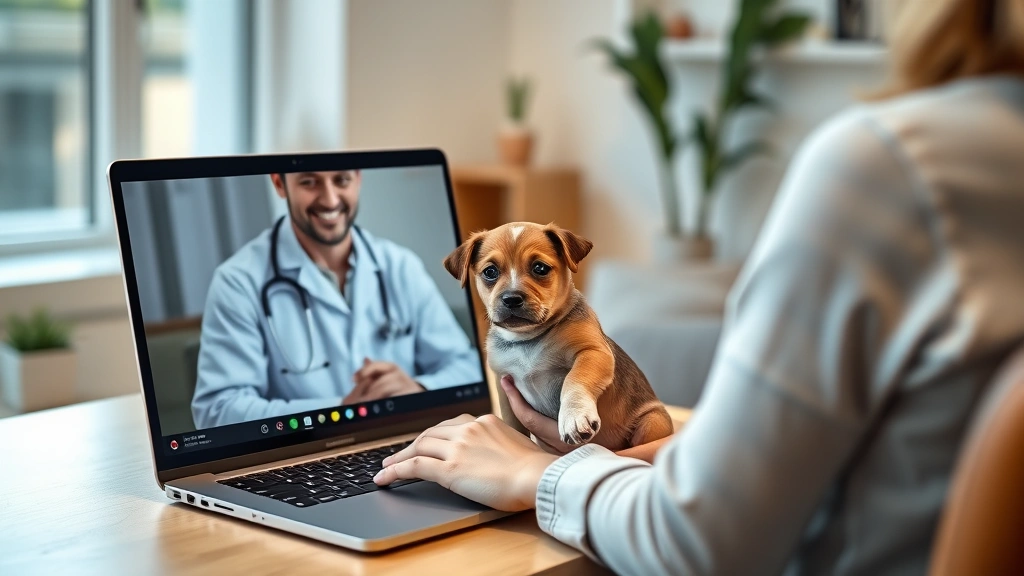
Consulting an online vet for puppy anxiety offers several advantages. You can have the conversation from your home, which is often less stressful for both you and your anxious puppy. There’s no car ride anxiety or waiting room stress to compound the problem.
Telehealth appointments are often more flexible and accessible, making it easier to get professional guidance quickly. Your vet can observe your puppy in their home environment through video, which sometimes gives them better insight into real-world anxiety patterns than a clinic visit would.
Additionally, online consultations are often more affordable than traditional clinic visits, making professional guidance more accessible when you’re exploring treatment options.
Monitoring Your Puppy’s Progress
Keep detailed notes about your puppy’s behavior, especially during the first few weeks of medication. Document triggers, intensity of anxiety, and any changes you notice. This information is invaluable for your vet when determining if the current approach is working or if adjustments are needed.
Look for improvements like increased willingness to explore, better sleep, less destructive behavior, and calmer responses to triggers. Progress might be gradual, and that’s normal. Some puppies show improvement within days; others take weeks.

If you’re not seeing improvement after the expected timeframe, contact your vet. They may recommend a different medication, dosage adjustment, or additional behavioral strategies.
Common Concerns About Medicating Your Puppy
Many pet owners worry about medicating young animals. It’s natural to want to avoid drugs if possible. The important thing to understand is that untreated anxiety can actually harm your puppy’s development and quality of life. Anxious puppies may miss critical socialization windows, develop more severe phobias, or exhibit behavioral problems that are harder to address later.
When prescribed by a veterinarian and used appropriately, anti-anxiety medications are safe and can be life-changing. Your vet will monitor for any side effects and adjust as your puppy grows.
Think of medication as giving your puppy’s brain and nervous system a chance to learn that the world is safe—while you provide training and support to reinforce that lesson.
Frequently Asked Questions
Can puppies take anti-anxiety medication safely?
Yes, when prescribed and monitored by a veterinarian, anti-anxiety medications are safe for puppies. Your vet will choose medications appropriate for your puppy’s age and health status.
How long does it take for anxiety medication to work?
Fast-acting medications may work within hours, while medications like SSRIs typically take 2–4 weeks to show noticeable improvement. Your vet will set realistic expectations based on the medication chosen.
Will my puppy need anxiety medication forever?
Not necessarily. Many puppies can eventually reduce or discontinue medication as they mature and gain confidence through training and positive experiences. Your vet will help determine the right timeline.
Is an online vet consultation enough for puppy anxiety?
An online vet consultation is an excellent starting point for assessment and medication options. For severe anxiety or behavioral concerns, your vet may recommend additional in-person evaluation or referral to a veterinary behaviorist.
What if medication alone doesn’t help my puppy’s anxiety?
Medication works best combined with behavioral training and environmental modifications. If your puppy isn’t improving, discuss with your vet about adjusting medication, trying a different approach, or adding professional training support.
What to Do Now: Your Action Plan
- Schedule a telehealth consultation: Contact The Pet Vet or your preferred online veterinary service to discuss your puppy’s anxiety symptoms and get a professional assessment.
- Document your puppy’s anxiety: Write down specific triggers, how often anxiety occurs, and how severe it is. This information will help your vet make the best recommendations.
- Create a safe space: Set up a quiet, comfortable area where your puppy can retreat when feeling anxious. Include familiar toys, bedding, and perhaps white noise.
- Research local trainers: Look for certified professional dog trainers or veterinary behaviorists in your area who can work alongside medication to address anxiety through training.
- Start a symptom journal: Once you begin any treatment, track changes daily so you can report accurate progress to your vet at follow-up appointments.
Summary: Supporting Your Anxious Puppy
Puppy anxiety is treatable, and seeking help from an online vet for puppy anxiety is a smart first step. Whether your puppy needs medication, behavioral training, environmental changes, or a combination of approaches, professional guidance makes all the difference.
Remember that anxiety doesn’t mean your puppy is broken or that you’ve done something wrong. Many puppies experience nervousness, and with the right support, they grow into confident, happy adults. Start by reaching out to a veterinarian who can assess your puppy’s unique situation and create a personalized plan.
Your puppy is counting on you to help them feel safe. With patience, professional support, and consistent effort, you absolutely can.
Ready to get help? Connect with The Pet Vet today for a convenient online consultation about your puppy’s anxiety. You can also explore related concerns like puppy skin issues, puppy vomiting, or puppy diarrhea if your puppy is experiencing multiple health concerns.
External Resources: For more information on anxiety in dogs, visit the American Veterinary Medical Association (AVMA) or PetMD’s behavioral health section for peer-reviewed articles on canine anxiety and treatment options.
This article is for general education and is not a substitute for care from your own veterinarian. Learn about The Pet Vet and our editorial policy.