
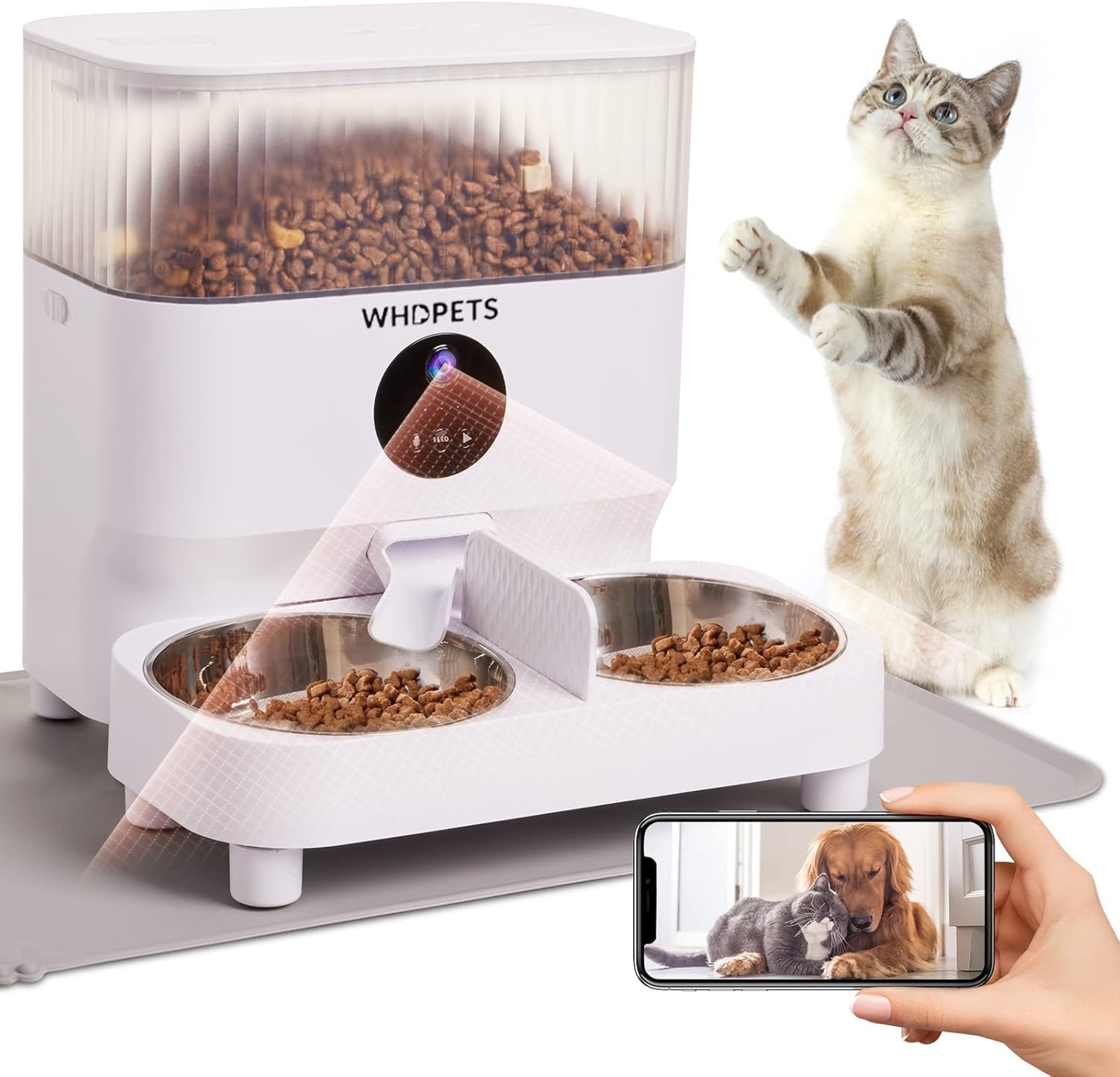
An automatic feeder can release food on a schedule while someone is away, but it cannot tell you whether each cat actually ate its intended portion. Products advertising two-cat feeding and Wi-Fi or camera functions, such as WHDPETS, should be evaluated for reliability and animal welfare rather than assumed to make unattended care safe.
Two bowls do not mean equal meals
One cat can move to the other bowl or block access, especially when animals have different appetites or social relationships. The AAFP and ISFM Feline Environmental Needs Guidelines recommend separate feeding areas to reduce competition and allow cats to choose where they eat. When individual portions matter, separate rooms or individually controlled feeders may be more dependable than two bowls beside one dispenser.
Calories are not the same as scoop size
A dispenser’s serving setting may release different weights of food depending on kibble shape and hopper fill. Measure several cycles with the exact food you use and compare them with the veterinarian’s prescribed calorie plan. Do not assume the default number of portions equals an appropriate meal for a small, senior or overweight cat. Wet food, prescription diets and medications create different storage and scheduling concerns.
What can go wrong?
Power outages, wireless problems, food jams, empty reservoirs, pet tampering and programming errors can interrupt meals. A camera does not reliably verify the amount eaten. Test the equipment while someone is present and keep a plan for human check-ins. Do not leave medically fragile, diabetic or recovering animals dependent on an unverified feeder alone.
Cleaning and food safety
Wash removable food-contact parts according to the manual and dry them thoroughly. Check for stale food, moisture, insects and damaged seals. Store dry food according to its package instructions. Never use an incompatible formula or improvised add-on to dispense medications; discuss medication timing and feeding instructions with the veterinary clinic.
Choosing a useful feeder
Look for clear portion calibration, an easy-to-read schedule, accessible cleaning parts, reliable power options and a manual you can understand without an app. Confirm that every cat can eat without intimidation. A feeder should support a daily care routine, not replace observation, fresh water, environmental enrichment or veterinary follow-up.
We have not independently tested the advertised WHDPETS unit, confirmed its current features or verified seller claims. For individualized nutrition planning, see the WSAVA nutrition toolkit.
Affiliate disclosure: The Pet Vet may earn a commission from qualifying purchases. Prices and product specifications can change. See current product listing.
This article is for general education and is not a substitute for care from your own veterinarian. Learn about The Pet Vet and our editorial policy.