
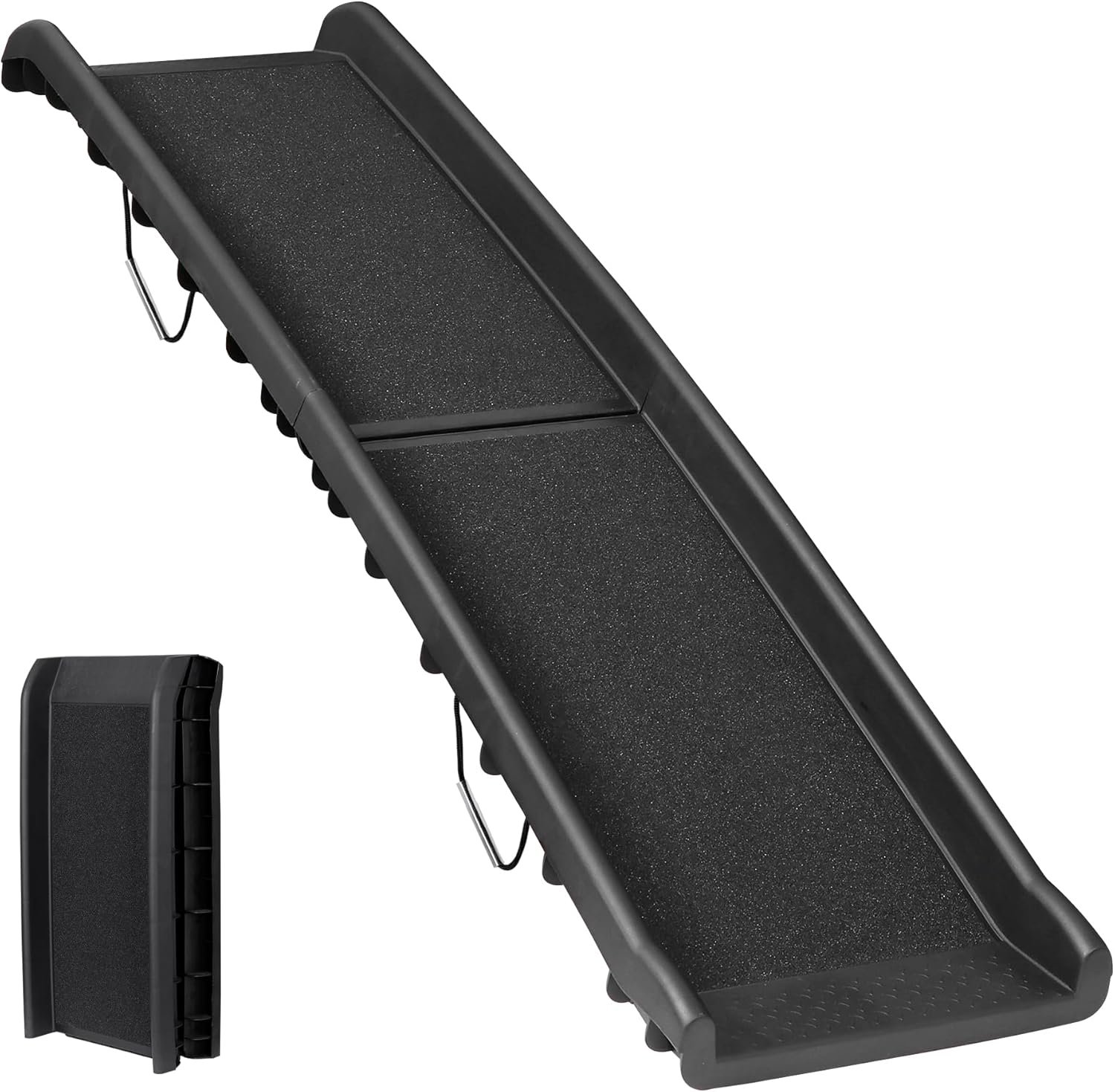
Portable folding dog ramps, including products sold under the ZENY name, are marketed as a convenient alternative to lifting a dog into an SUV. Whether a particular ramp is appropriate depends on the dog, vehicle height, actual dimensions, traction and structural stability. This article is a buying checklist, not a claim of firsthand testing or verified load performance.
Start with the dog, not the product photo
A dog that has trouble jumping because of age or stiffness may need a gradual slope. A dog with sudden lameness, hind-leg weakness or severe spinal pain should have veterinary care before attempting new climbing exercises. The VCA guide to canine osteoarthritis suggests vehicle ramps as one possible home adjustment, alongside traction improvements and appropriate clinical treatment.
Check the usable length and slope
Measure how high your vehicle’s entry point is above the ground. A short ramp set against a tall SUV can be very steep even when it is marketed for large vehicles. Consider the dog’s stride, leg length, balance and comfort. A ramp should be long and wide enough for steady walking and should not rock as weight shifts. Test its stability before inviting an animal onto it.
What does a weight rating tell you?
A manufacturer’s load rating is not a promise that every dog can safely use the ramp. Hinge design, attachment points, floor surface, wet conditions and the animal’s movement affect stability. Look for a clear load rating, current instructions, anti-slip surface and a secure way to prevent the top edge from sliding off the vehicle. Avoid improvised extensions that alter the manufacturer’s design.
Teach the dog gradually
Put the ramp flat on the ground for calm practice with rewards. Once the dog walks over it confidently, try a very low incline, then a suitable vehicle height. A harness can help guide an animal when appropriate; never force movement by pulling on the collar. Stop if the dog freezes, slips, becomes painful or refuses to continue.
Compare a ramp with other options
For some dogs, steps or a supportive lifting technique recommended by the veterinary team may be better. For others, minimizing car travel until an injury is evaluated is the safest choice. Ask about weight management, pain treatment and rehabilitation rather than treating a ramp as a cure for arthritis.
Related reading: dog limping symptoms and care. Before buying any brand, check its current measurements and manual directly; we have not independently tested the ZENY ramp or established its crash or load safety.
Affiliate disclosure: The Pet Vet may earn a commission from qualifying purchases. Prices and product specifications can change. See current product listing.
This article is for general education and is not a substitute for care from your own veterinarian. Learn about The Pet Vet and our editorial policy.