
Boxer cardiomyopathy, often called ARVC, is a heart condition that shows up more often in this breed than in most others. If you share your life with a Boxer, understanding the warning signs can help you get your dog seen quickly when something seems off. This guide walks you through what the condition looks like, how vets diagnose it, and how you can support your dog’s heart health going forward.
Table of Contents
- What Is Boxer Cardiomyopathy?
- Why Boxers Are Prone to This Heart Condition
- Early Warning Signs to Watch For
- Fainting Episodes: What They Look Like and Why They Happen
- Sudden Collapse: A Red Flag You Cannot Ignore
- How Vets Diagnose ARVC in Boxers
- The Role of Genetic Testing
- Holter Monitoring Explained
- Treatment Options Your Vet May Discuss
- Living With a Boxer Who Has ARVC
- Exercise and Activity Adjustments
- Diet and Lifestyle Support
- Monitoring Your Boxer at Home
- When to Seek Emergency Care
- Breeding Considerations and Screening
- Working With Your Vet Long-Term
What Is Boxer Cardiomyopathy?
Boxer cardiomyopathy, more formally known as arrhythmogenic right ventricular cardiomyopathy or ARVC, is a heart muscle disease that affects the electrical rhythm of the heart. In dogs with this condition, areas of heart muscle are gradually replaced with fatty or fibrous tissue, which disrupts the normal electrical signals that keep the heartbeat steady. This can lead to irregular heartbeats, known as arrhythmias, that range from mild to life-threatening.
Unlike some heart conditions that cause obvious changes in the heart’s size or shape early on, ARVC often affects the heart’s electrical system before any structural changes are visible. That means a Boxer can look completely healthy on the outside while their heart is already experiencing rhythm disturbances. This is part of what makes the condition tricky to catch without specific testing.
Why Boxers Are Prone to This Heart Condition
ARVC is seen far more frequently in Boxers than in most other breeds, which has led many veterinary cardiologists to consider it a breed-associated condition. Researchers believe there is a genetic component involved, though not every Boxer who carries a related gene marker will develop clinical signs, and not every affected Boxer has been screened for it.
Because the condition tends to run in family lines, dogs with close relatives who have been diagnosed with ARVC may be at higher risk. If you know anything about your Boxer’s parents or littermates, it can be worth mentioning to your vet, since family history can help guide how closely your dog’s heart should be monitored over the years.
Early Warning Signs to Watch For
In the earliest stages, Boxer cardiomyopathy often produces no outward signs at all. As the condition progresses, though, many owners start to notice subtle changes in their dog’s energy or behavior before anything dramatic happens. Catching these early clues can make a real difference in how quickly your vet can start monitoring your dog’s heart.
Some Boxers show intermittent signs that come and go, which can make them easy to dismiss as a one-off event. Paying attention to patterns over time, rather than treating each episode as isolated, is one of the most helpful things you can do as an owner.
- Occasional weakness or wobbliness, especially after exercise or excitement
- Brief episodes of what looks like disorientation
- Reduced stamina during walks or play compared to before
- A resting heart rate that seems unusually fast or irregular when you check it
Fainting Episodes: What They Look Like and Why They Happen
Fainting, medically referred to as syncope, is one of the more recognizable signs associated with ARVC. It typically happens when an abnormal heart rhythm briefly reduces blood flow to the brain. Owners often describe it as their dog suddenly going limp, collapsing to the ground, and then getting back up within seconds to a couple of minutes as if nothing happened.
These episodes can be frightening to witness, and it is natural to wonder whether your dog is simply overheated, dehydrated, or just tired. Because fainting from a heart rhythm problem can look similar to other causes of collapse, it is not something you should try to diagnose on your own. Any fainting episode in a Boxer deserves a prompt call to your vet.

Sudden Collapse: A Red Flag You Cannot Ignore
Sudden collapse without an obvious trigger, such as heat, dehydration, or overexertion, is one of the more serious signs linked to arrhythmias in Boxers. In some cases, a dangerous heart rhythm can cause a collapse that does not resolve on its own and instead requires emergency intervention.
If your Boxer collapses and does not recover within a minute or two, or shows pale gums, labored breathing, or unresponsiveness, this is an emergency. Do not wait to see if your dog improves. Get to an emergency veterinary clinic right away, since rhythm problems affecting the heart can escalate quickly.
How Vets Diagnose ARVC in Boxers
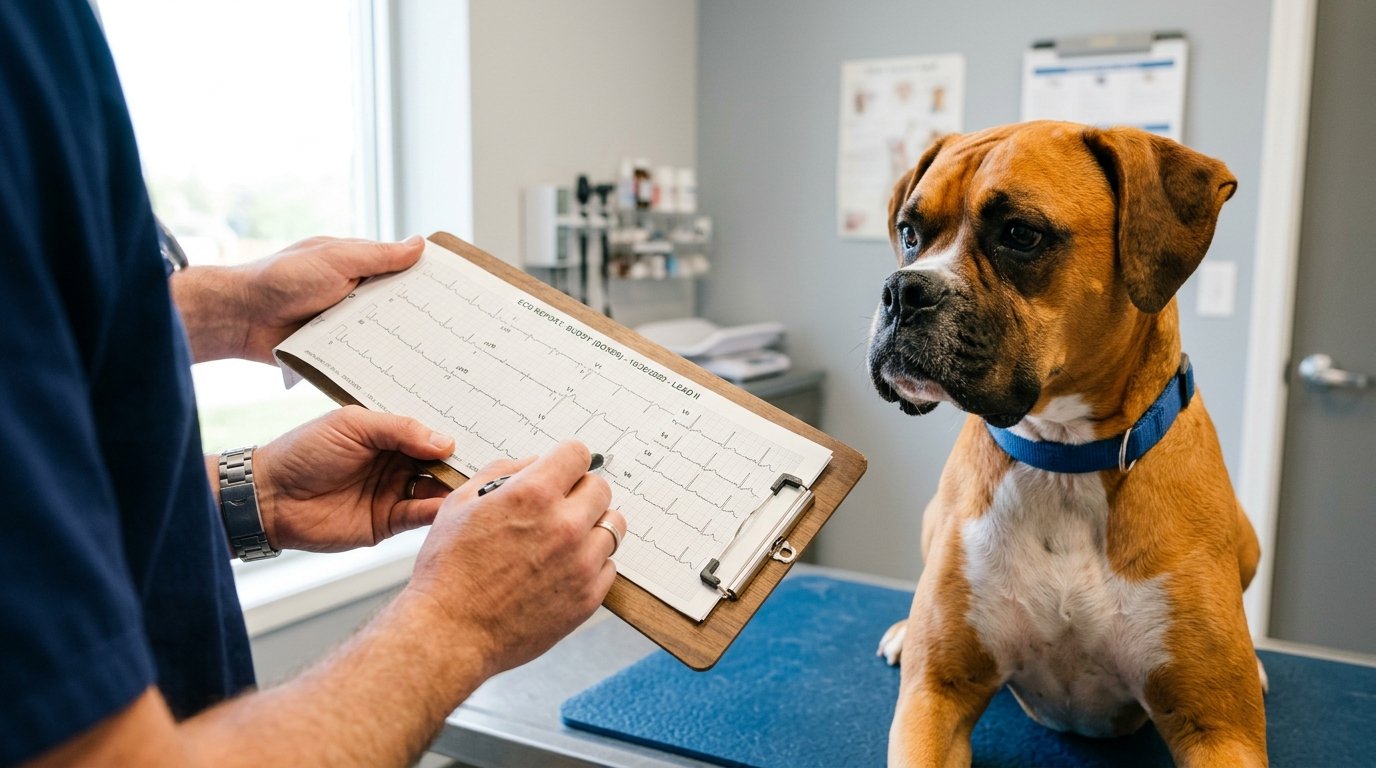
Diagnosing Boxer cardiomyopathy usually starts with a thorough physical exam and a conversation about any signs you have noticed at home, including when they happen and how long they last. From there, your vet may recommend a combination of tests designed to look at the heart’s electrical activity and structure.
Because ARVC can be intermittent, a single normal test result does not always rule out the condition. Your vet may suggest repeating certain tests over time or referring you to a veterinary cardiologist who specializes in interpreting these results for breeds prone to heart rhythm issues.
- A standard electrocardiogram (ECG) to check the heart’s electrical rhythm at that moment
- Blood pressure and general bloodwork to rule out other causes of weakness or collapse
- Chest X-rays to look at the heart’s overall size and shape
- Referral to a cardiologist for more specialized testing if initial results are inconclusive
The Role of Genetic Testing
A genetic test exists that looks for a specific marker associated with ARVC in Boxers. This test can be a helpful piece of the puzzle, particularly for owners who are curious about their dog’s risk profile or who are involved in breeding decisions. It is usually done with a simple cheek swab or blood sample.
It is important to understand that a positive genetic result does not guarantee a dog will develop clinical signs, and a negative result does not guarantee they never will. Your vet can help you understand what a genetic test result means in the context of your individual dog and how it should factor into your monitoring plan.
Holter Monitoring Explained
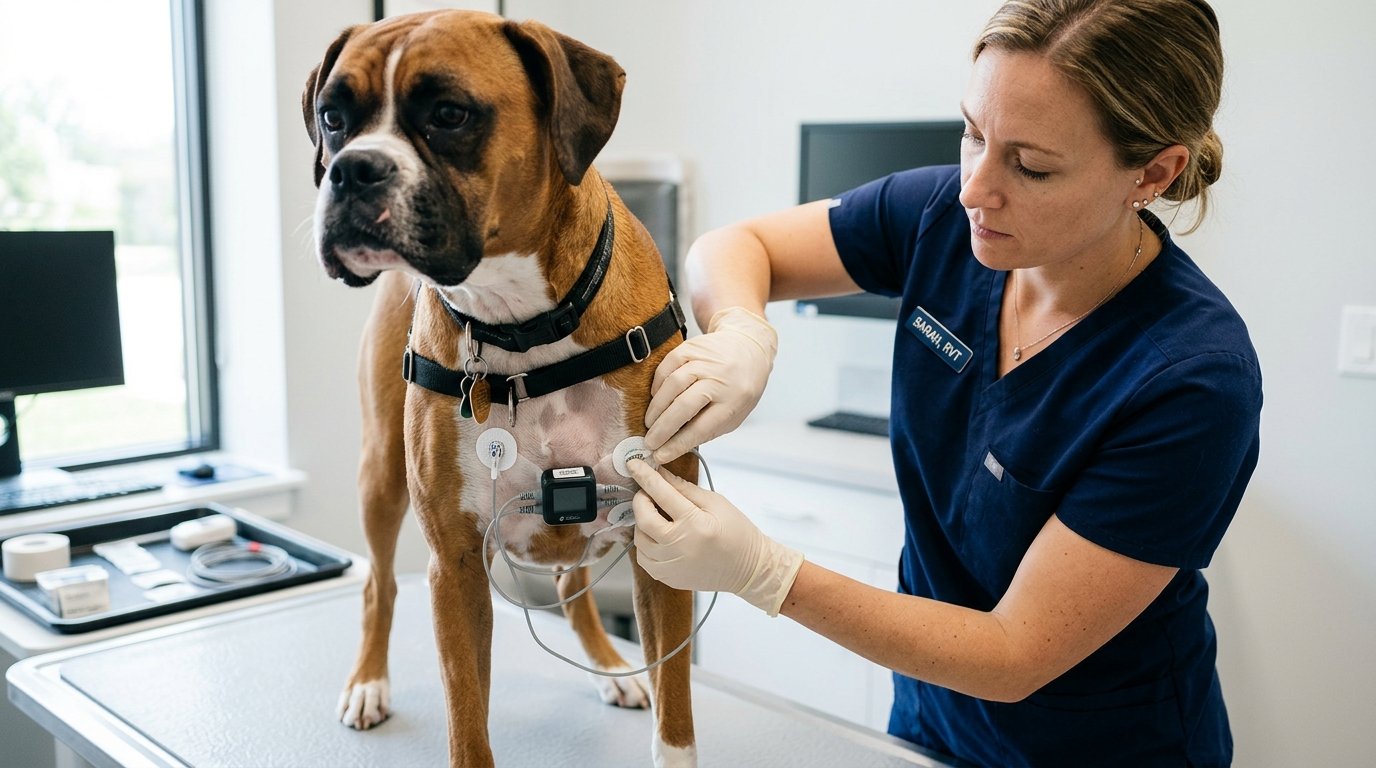
A Holter monitor is a small, portable device that records your dog’s heart rhythm continuously over a period of time, often 24 hours, while your dog goes about normal daily life at home. This extended recording gives your vet a much fuller picture than a brief in-clinic ECG, since it can capture irregular heartbeats that only happen occasionally.
Your vet may recommend Holter monitoring if your Boxer has had unexplained fainting or collapse episodes, or as part of routine screening for dogs considered at higher risk due to family history. The device is generally well tolerated and does not require sedation, though your vet will walk you through exactly how it works before sending you home with it.
Treatment Options Your Vet May Discuss
Treatment for Boxer cardiomyopathy is tailored to each individual dog based on the severity of their arrhythmia and how it is affecting them day to day. Some dogs with mild, infrequent rhythm disturbances may simply need regular monitoring, while others with more significant arrhythmias may benefit from medication prescribed and managed by a veterinary cardiologist.
Because heart medications require careful dosing and ongoing adjustment based on follow-up testing, this is never something to manage without direct veterinary guidance. Your vet or cardiologist will determine the right approach for your dog and will want to recheck your dog’s heart periodically to see how they are responding.
Living With a Boxer Who Has ARVC
A diagnosis of ARVC does not necessarily mean your Boxer’s quality of life has to change dramatically. Many dogs with mild to moderate forms of the condition continue to enjoy a good quality of life for years with the right monitoring and care plan in place. What changes most is how closely you and your vet keep an eye on things.
Building a routine around regular checkups, keeping a log of any unusual episodes, and staying in close contact with your vet can help you feel more in control, even though living with a heart condition in your dog can understandably feel stressful. You are not managing this alone, and your veterinary team is there to help you interpret changes as they come up.

Exercise and Activity Adjustments
Boxers are naturally energetic dogs, and it can be hard to imagine slowing them down. Depending on the severity of your dog’s condition, your vet may recommend some adjustments to exercise intensity, particularly avoiding activities that cause extreme exertion or overheating.
This does not usually mean your dog needs to give up walks or play entirely. Instead, your vet can help you figure out a level of activity that keeps your Boxer happy and engaged while reducing strain on the heart. Watching for early signs of fatigue during exercise and stopping before your dog seems overly tired is a reasonable habit to build.
Diet and Lifestyle Support
While diet alone cannot treat ARVC, keeping your Boxer at a healthy weight can reduce unnecessary strain on the heart and support overall wellness. Your vet may also discuss whether certain dietary considerations make sense for your dog based on their specific heart findings.
Avoiding extreme heat, managing stress where possible, and maintaining a predictable daily routine can also contribute to your dog’s comfort. If your vet recommends any supplements or dietary changes, it is best to follow their specific guidance rather than trying products marketed generally for heart health without professional input.
Monitoring Your Boxer at Home
Between vet visits, you play an important role in keeping track of how your Boxer is doing day to day. Learning to check your dog’s resting respiratory rate, for example, can give you a simple baseline to compare against if you ever feel something seems different.
Keeping a written or phone log of any fainting episodes, unusual weakness, or changes in appetite and energy can be incredibly useful information to bring to your vet appointments. Even details that seem minor, like the time of day an episode happened or what your dog was doing beforehand, can help your vet piece together a clearer picture.
- Count breaths per minute while your dog is resting calmly, not panting
- Note the date, time, and duration of any fainting or collapse episodes
- Track changes in appetite, thirst, or general energy levels
- Bring your log to every checkup, even if nothing seems urgent
When to Seek Emergency Care
Some signs associated with Boxer cardiomyopathy warrant immediate emergency attention rather than waiting for a regular appointment. Knowing the difference ahead of time can save precious minutes if something happens.
If your dog collapses and struggles to get back up, has pale or bluish gums, is breathing heavily or with obvious effort, or seems disoriented for more than a couple of minutes after fainting, treat this as an emergency. Call your nearest emergency veterinary clinic on your way there so they can prepare for your arrival.
Breeding Considerations and Screening
If you are involved in Boxer breeding, or considering adding a Boxer puppy to your family, it is worth asking breeders about heart screening within their breeding lines. Reputable breeders often have their dogs screened using ECG, Holter monitoring, or genetic testing before breeding decisions are made.
This kind of screening does not eliminate the possibility of ARVC appearing in offspring, but it does reflect a responsible approach to reducing risk over time. If you already have a Boxer and are curious about their background, your vet can help you understand what screening might make sense for your individual dog.
Working With Your Vet Long-Term
Boxer cardiomyopathy is best managed as an ongoing partnership between you and your veterinary team, often including a veterinary cardiologist for more detailed monitoring. Regular checkups allow your vet to track any changes in your dog’s heart rhythm over time and adjust the care plan as needed.
If you ever notice new or worsening signs in your Boxer, even ones that seem minor, do not hesitate to reach out to your vet rather than waiting for the next scheduled visit. Early communication gives your vet the best chance to catch changes before they become emergencies, and it gives you peace of mind that you are doing everything you can for your dog’s heart health.
This article is for general education and is not a substitute for care from your own veterinarian. Learn about The Pet Vet and our editorial policy.