
Ear infections in Labrador Retrievers are one of the most common reasons this breed ends up at the vet, and if you own a Lab, chances are you have already dealt with at least one bout of head shaking and smelly ears. Labs are prone to ear trouble because of their floppy ears, love of swimming, and skin type. This guide walks you through why it happens, what to watch for, and how to keep your dog comfortable.
Table of Contents
- Why Labrador Retrievers Are So Prone to Ear Infections
- What an Ear Infection Actually Is
- Early Signs to Watch For in Your Lab
- Chronic Versus Occasional Infections
- How Vets Diagnose Ear Infections
- Treatment Options Your Vet May Recommend
- The Role of Allergies in Recurring Ear Problems
- Everyday Prevention for Water-Loving Labs
- Grooming Habits That Support Healthy Ears
- Cleaning Your Lab’s Ears at Home
- When an Ear Infection Becomes an Emergency
- Living with a Lab Prone to Ear Trouble
- Questions to Ask Your Veterinarian
- The Bottom Line
Why Labrador Retrievers Are So Prone to Ear Infections
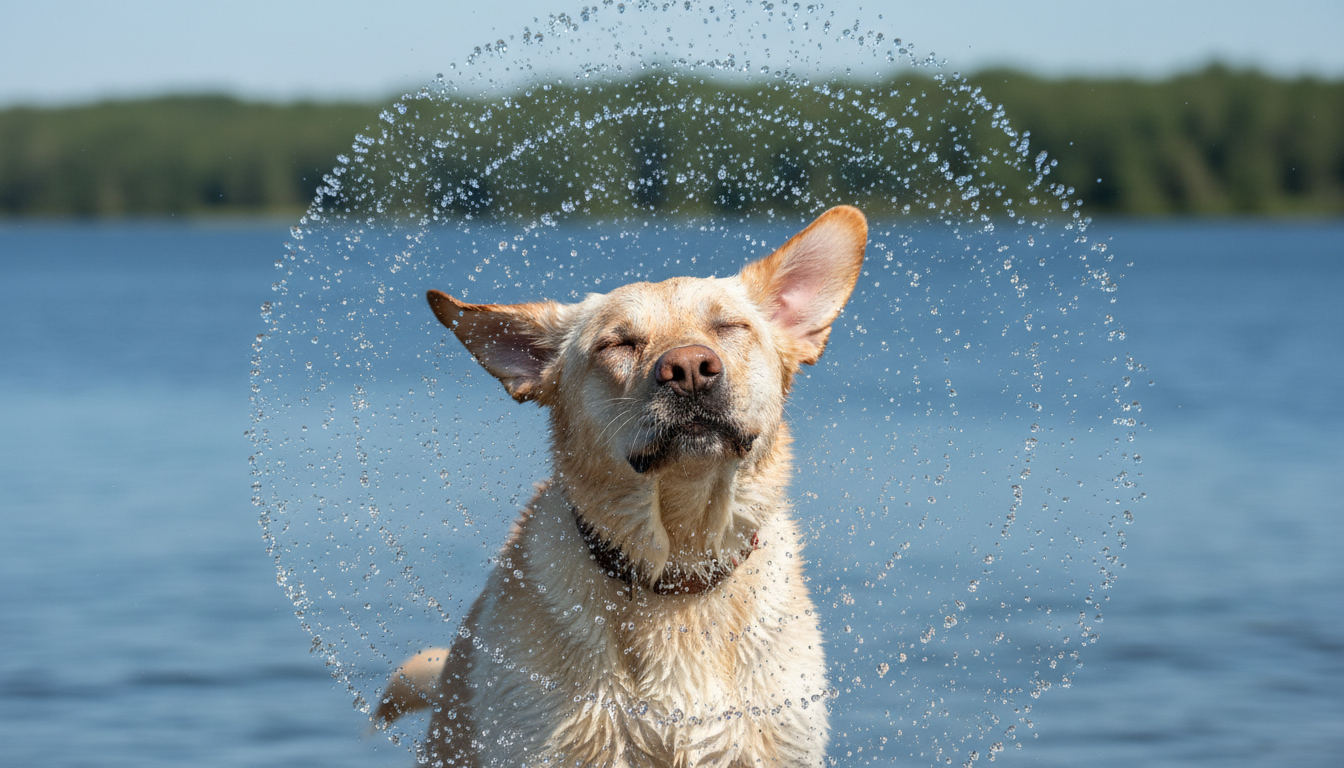
Labrador Retrievers have floppy, heavy ear flaps that sit close against the side of the head, and that shape creates a warm, dark, poorly ventilated space where moisture and debris can build up. Add in the breed’s famous love of water, whether it is a lake, a puddle, or the bathtub, and you have an ear canal that stays damp far more often than a dog with upright ears. Moisture trapped inside the ear canal is one of the biggest triggers for bacterial and yeast overgrowth, which is why swimming dogs like Labs seem to get more ear infections than breeds that avoid water.
On top of the ear shape, many Labradors also have skin allergies or food sensitivities that show up as chronic ear inflammation before anything else. Allergic skin disease changes the environment inside the ear canal, making it easier for yeast and bacteria to multiply, so a dog with allergies may cycle through repeated infections even if you are careful about drying the ears after every swim. This combination of anatomy, lifestyle, and skin sensitivity makes ear infections one of the defining health issues owners need to watch for in this breed.
Genetics also play a role in how much wax and oil a Lab’s ears naturally produce. Some dogs simply run “wetter” or “waxier” than others, and those dogs tend to need more frequent at-home ear care to stay ahead of problems. Knowing that your Lab may be predisposed does not mean infections are inevitable, but it does mean you should build ear checks into your regular routine rather than waiting for a problem to show up.
What an Ear Infection Actually Is
An ear infection, medically called otitis externa when it affects the outer ear canal, happens when bacteria, yeast, or sometimes both multiply out of control inside the ear. A small, balanced population of these organisms lives in every dog’s ear normally, but when the environment shifts, whether from moisture, allergies, or a foreign object like a grass seed, that balance tips and the organisms overgrow. The result is inflammation, discharge, odor, and pain.
Left untreated, an outer ear infection can progress deeper into the middle or inner ear, which is a much more serious and harder to treat condition that can affect balance and even hearing. This is one of the main reasons vets encourage owners to treat ear infections early rather than waiting to see if they clear up on their own.
Early Signs to Watch For in Your Lab
Catching an ear infection early makes treatment faster and more comfortable for your dog. Labrador owners are in a good position to catch problems quickly because this breed tends to be expressive and will let you know something is bothering them, often through head shaking or pawing at the ear.
- Frequent head shaking or tilting the head to one side
- Scratching at the ear or rubbing the side of the face against furniture or the floor
- A noticeable odor coming from the ear, often described as yeasty or musty
- Dark, waxy, or yellowish discharge visible in the ear canal
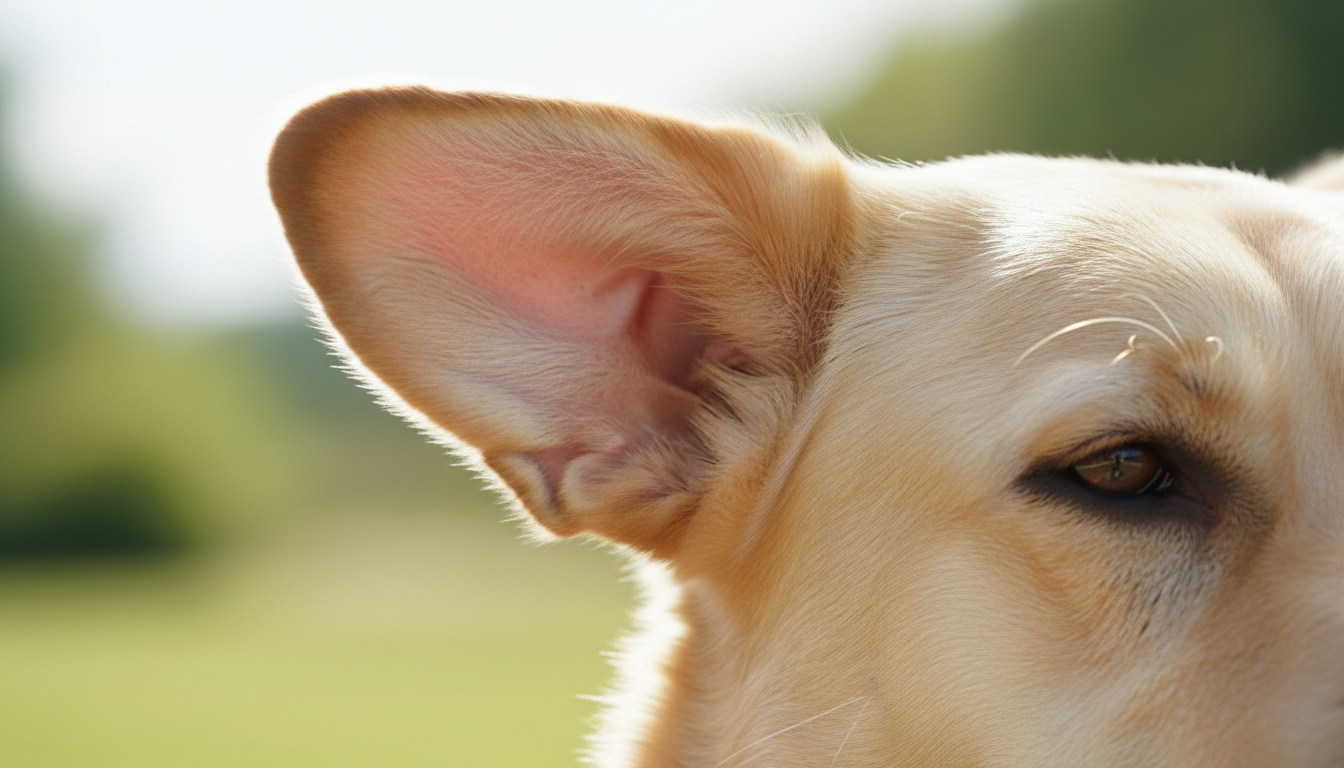
- Redness or swelling on the inside of the ear flap or at the ear opening
- Sensitivity or flinching when you touch the ears
- Whining or pulling away during grooming or bath time
Chronic Versus Occasional Infections
Some Labs get an ear infection once or twice in their life after a particularly long swim or a humid week at the lake, and that is manageable with a single round of treatment and better drying habits afterward. Other Labs seem to bounce from one infection to the next no matter how careful the owner is, and that pattern usually points to an underlying cause that needs its own diagnosis and management, such as an environmental or food allergy.
Chronic or recurrent ear infections deserve a deeper conversation with your veterinarian rather than repeated quick fixes, because treating the ear alone without addressing the root cause tends to lead to the same problem coming back every few months. Your vet may want to run allergy testing, try a diet trial, or look closely at hormone levels depending on your dog’s overall history and symptoms.
How Vets Diagnose Ear Infections
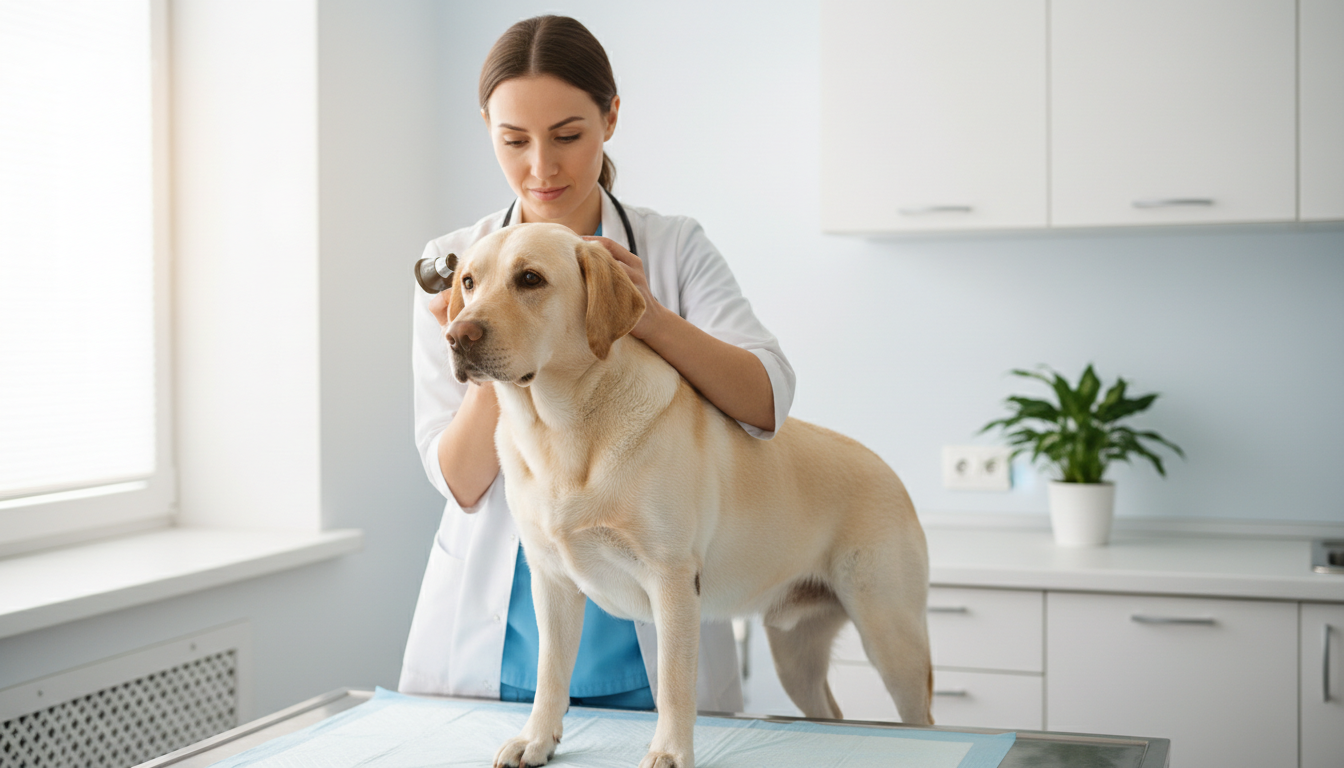
Diagnosis usually starts with a simple otoscopic exam, where your vet looks down the ear canal with a lighted instrument to check for redness, swelling, discharge, and any foreign material like a grass awn or tick. Many vets will also take a sample of the discharge and look at it under a microscope, called cytology, to determine whether the infection is caused mainly by yeast, bacteria, or a combination of both, since that changes which treatment will work best.
In cases of chronic or severe infection, your vet may also recommend a culture and sensitivity test to identify exactly which bacteria are present and which medications will be effective against them. This step is particularly important if a previous treatment did not fully resolve the problem, since resistant bacteria are more common in ears that have been treated repeatedly.
Treatment Options Your Vet May Recommend
Treatment depends entirely on what is causing the infection and how severe it is, so this is never something to guess at or treat with leftover medication from a previous infection or another pet. Your veterinarian will prescribe a treatment plan based on the exam and any test results, and it is important to complete the full course even if the ear looks better after a few days.
Never start or adjust any ear medication without your vet’s direction, and never assume a product made for one type of ear infection will work for another, since using the wrong treatment can make things worse or mask a problem that needs different care.
- A veterinary ear cleaner used to gently flush debris and discharge before applying any prescribed medication
- Topical medication prescribed by your vet to target the specific yeast or bacteria found in the ear
- Oral medication in more severe or deep infections, prescribed and dosed by your veterinarian
- A recheck appointment to confirm the infection has fully cleared, since ears can look better on the surface while infection is still present deeper in the canal
- Management of any underlying allergy or skin condition identified during the workup
The Role of Allergies in Recurring Ear Problems
Labrador Retrievers are one of the breeds commonly affected by environmental and food allergies, and the ears are often the first place those allergies show up. If your dog gets ear infections that seem to flare during certain seasons, or that show up alongside itchy paws, red skin, or frequent licking, allergies are a reasonable thing to discuss with your vet.
Managing the underlying allergy, whether through diet changes, medication, or environmental adjustments, often reduces how often ear infections happen even if it does not eliminate them completely. This is why a vet who treats recurring ear infections may spend as much time asking about your dog’s overall skin health and diet as they do looking in the ear itself.
Everyday Prevention for Water-Loving Labs
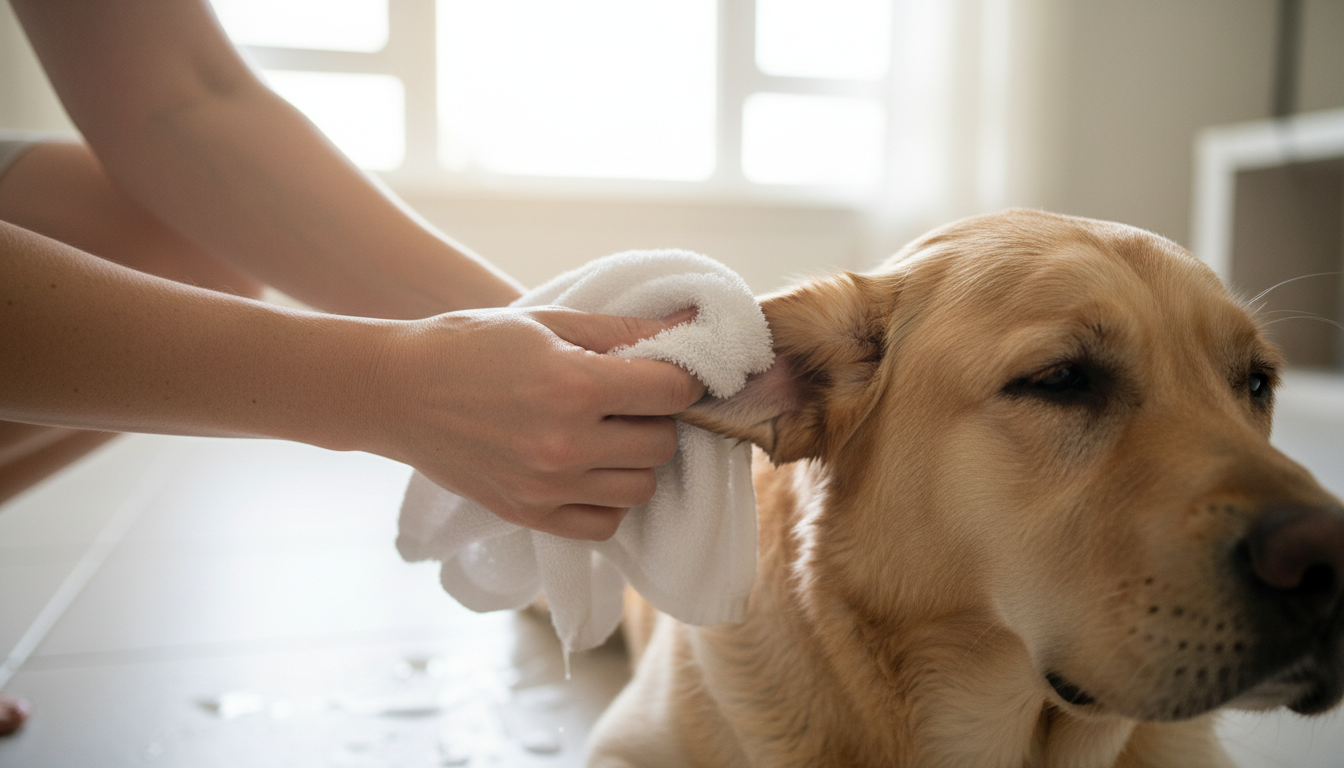
Because swimming is such a big part of many Labs’ lives, prevention usually focuses on managing moisture rather than keeping your dog out of the water altogether. Drying the ears thoroughly after every swim or bath is one of the simplest and most effective habits you can build, and many owners find it helpful to use a vet-approved drying solution afterward rather than relying on a towel alone.
- Dry your dog’s ears gently with a towel after every swim, bath, or rainy walk
- Ask your vet about a drying ear solution safe for regular use after water exposure
- Check your dog’s ears weekly for odor, redness, or discharge, even when nothing seems wrong
- Keep the hair around the ear opening trimmed if your vet recommends it for better airflow
- Avoid inserting cotton swabs deep into the ear canal, since this can push debris further in or damage the canal
Grooming Habits That Support Healthy Ears
Regular grooming is one of the easiest ways to stay ahead of ear problems in a Lab. A quick lift-and-look at the ear during weekly brushing sessions lets you catch changes in color, smell, or discharge before your dog is even showing obvious discomfort.
Building this check into an existing routine, like after a bath or during a nail trim, makes it much more likely you will actually keep up with it long term. If you are ever unsure whether what you are seeing is normal wax or something more concerning, a quick photo sent to your vet’s office or a same-day appointment is a reasonable way to get peace of mind.
Cleaning Your Lab’s Ears at Home
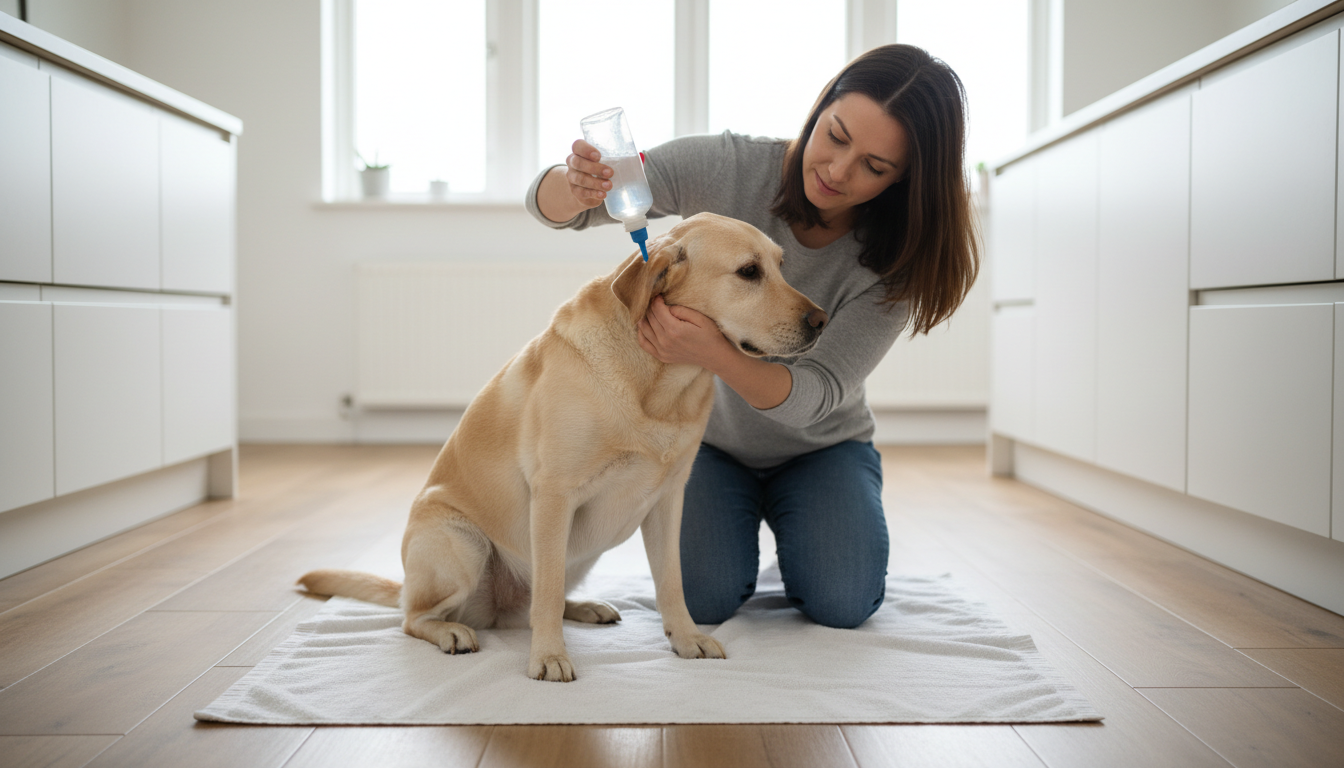
Routine ear cleaning can help prevent buildup that leads to infection, but it should always be done with a product your veterinarian has approved for your dog specifically, since some ingredients can be irritating or even harmful if the eardrum is not intact. Ask your vet to show you the correct technique at an appointment so you can replicate it confidently at home.
- Use only a veterinarian-recommended ear cleaner, never water, alcohol, or homemade solutions
- Fill the ear canal as directed, massage gently at the base of the ear, then let your dog shake
- Wipe away loosened debris from the visible part of the ear with a soft cloth or cotton ball
- Never insert anything deep into the canal
- Stop and call your vet if your dog shows pain, bleeding, or worsening discharge during cleaning
When an Ear Infection Becomes an Emergency
Most ear infections are uncomfortable but not urgent, however there are signs that mean you should seek same-day veterinary care rather than waiting for a routine appointment. A dog in significant pain, unable to eat, or showing signs of balance problems needs prompt attention because these can indicate the infection has spread beyond the outer ear canal.
- Sudden loss of balance, circling, or a head tilt that appears suddenly
- Swelling of the ear flap that appears rapidly, which can indicate a hematoma
- Bleeding from the ear canal
- Your dog crying out or refusing to let you touch the head at all
- Signs of severe pain paired with lethargy or refusal to eat
Living with a Lab Prone to Ear Trouble
If your Labrador has a history of ear infections, it can feel discouraging, especially if you have already tried several rounds of treatment. The good news is that most dogs with a tendency toward ear infections can still live full, comfortable lives once you and your vet find the right combination of prevention habits and, if needed, allergy management.
Keeping a simple log of when infections happen, what symptoms showed up first, and how your dog responded to treatment can be genuinely useful information for your vet, especially if you end up seeing a dermatologist for a harder to manage case. Patterns that are invisible day to day often become obvious once they are written down over several months.
Questions to Ask Your Veterinarian
Coming prepared to an appointment about your Lab’s ears can make the visit more productive and help you leave with a clear plan. It is worth asking direct questions rather than assuming the first round of treatment will be the last one needed.
- Is this infection bacterial, yeast, or both, and does that change the treatment?
- Could an underlying allergy be contributing to repeated infections?
- What is the correct way to clean my dog’s ears at home between now and the recheck?
- How will we know the infection is fully gone rather than just improved?
- Are there lifestyle changes, like limiting swimming temporarily, that would help this heal faster?
The Bottom Line
Ear infections in Labrador Retrievers are common because of the breed’s ear shape, love of water, and tendency toward skin allergies, but they are also very manageable with the right routine. Regular checks, prompt attention to early symptoms, and guidance from your veterinarian on both treatment and prevention will go a long way toward keeping your dog comfortable. If you notice head shaking, odor, or discharge, do not wait to see if it clears up on its own, since a quick visit to the vet now is almost always easier than treating a more advanced infection later.
This article is for general education and is not a substitute for care from your own veterinarian. Learn about The Pet Vet and our editorial policy.