
Bloat prevention in Bernese Mountain Dogs matters because this deep-chested breed is one of the most at-risk for gastric dilatation-volvulus, a life-threatening emergency. While no strategy can guarantee it never happens, certain feeding routines, exercise habits, and lifestyle choices are widely believed to lower the odds. This guide walks you through what you can control at home, what to watch for, and when to call your vet immediately.
Table of Contents
- Why Bernese Mountain Dogs Are Considered High Risk
- What Actually Happens During Bloat
- Feeding Habits That May Help
- Rethinking Mealtime Speed and Environment
- Exercise Timing Around Meals
- Stress and Temperament Considerations
- Age and Weight Factors to Keep in Mind
- The Role of Genetics and Family History
- Preventive Gastropexy: What It Is and Why Owners Consider It
- Recognizing the Early Warning Signs
- Why Bloat Is Always an Emergency
- Building a Bloat Emergency Plan Before You Need One
- Putting It All Together for Daily Life
- When to Talk to Your Vet
Why Bernese Mountain Dogs Are Considered High Risk
Bernese Mountain Dogs have deep, narrow chests, and that body shape is one of the strongest known risk factors for bloat, also called gastric dilatation-volvulus (GDV). In this condition, the stomach fills with gas and can twist on itself, cutting off blood flow and trapping gas and food inside. Large and giant breeds with this chest conformation, including Bernese Mountain Dogs, Great Danes, and Standard Poodles, appear far more often in bloat cases than smaller, barrel-chested breeds.
It helps to understand that bloat is not caused by any single factor. Genetics, chest shape, age, temperament, and feeding habits all seem to play a role together. Because you cannot change your dog’s chest shape or breed, the goal of prevention is to manage the factors that are within your control, especially around feeding and daily routine.
Owners of this breed should treat bloat awareness as part of normal care, the same way you would think about hip health or heart screening. Knowing the risk exists is not meant to frighten you, it is meant to help you make small, practical changes that may reduce the odds and help you react quickly if something does go wrong.
What Actually Happens During Bloat
In a normal digestive process, food and gas move through the stomach and intestines without much trouble. During bloat, the stomach distends with gas and sometimes fluid, and in many cases it also rotates or twists, which is the volvulus part of GDV. Once the stomach twists, blood supply to the stomach and spleen can be cut off, and the trapped gas has no way to escape on its own.
This is why bloat is considered a true emergency rather than something to monitor overnight. Tissue damage can begin within a short window, and the dog’s blood pressure and heart rhythm can be affected as the condition progresses. Even with prompt surgery, outcomes are better the earlier treatment begins.
Because the internal changes happen quickly, prevention strategies focus on lowering the chances of the stomach filling with excess air or food at once, and reducing situations that seem to be associated with twisting, such as vigorous activity right after a large meal.
Feeding Habits That May Help
Many veterinarians suggest that how you feed a deep-chested dog matters as much as what you feed. Large, fast, single meals seem to be associated with a higher bloat risk in vulnerable breeds, so a lot of guidance centers on portioning food differently throughout the day.
None of these habits are guaranteed to prevent bloat on their own, but they target the behaviors most often discussed in connection with it, particularly rapid eating and large volumes of food or water consumed quickly.
- Split daily food into two or three smaller meals instead of one large one
- Avoid feeding immediately before or after strenuous exercise
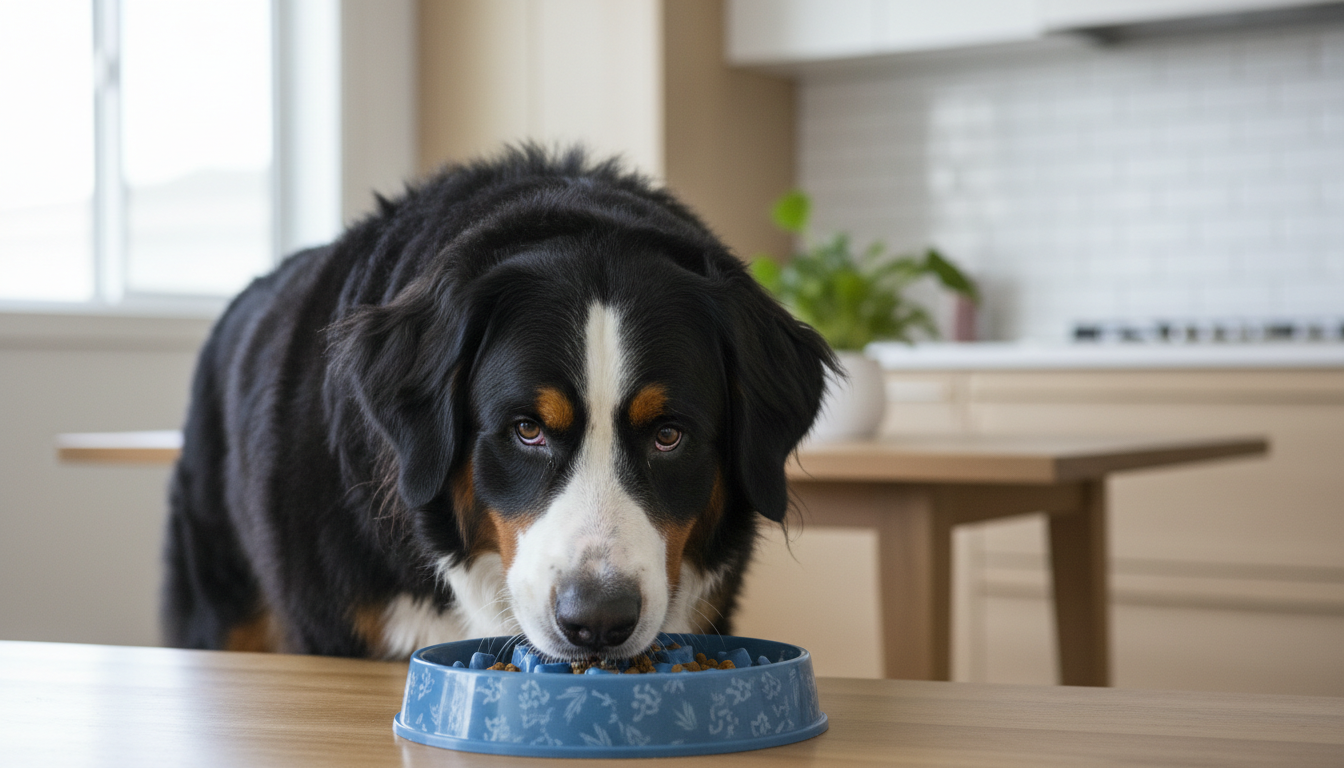
- Use a slow-feeder bowl if your dog tends to gulp food quickly
- Soak dry kibble briefly if your dog swallows a lot of air while eating
- Keep fresh water available but avoid letting your dog gulp large amounts right after a meal
Rethinking Mealtime Speed and Environment
Bernese Mountain Dogs are often eager, food-motivated dogs, and that enthusiasm can translate into fast, gulping meals. Slowing down the pace of eating is one of the more practical changes you can make at home, and there are several low-cost ways to do it without special equipment.
Feeding puzzles, snuffle mats, and bowls with raised patterns in the center all force a dog to work a little harder to get each bite, which naturally slows the process. Some owners also find that feeding in a calm, quiet spot away from other pets reduces the competitive gulping that can happen at busy mealtimes.
It is also worth paying attention to household dynamics. If you have multiple dogs, mealtime competition can encourage faster eating in a breed that already tends to be enthusiastic about food. Separating dogs during meals, even by a few feet or in different rooms, can take away that pressure.
Exercise Timing Around Meals
A common piece of guidance for deep-chested breeds is to avoid vigorous exercise for a period of time before and after eating. This includes running, jumping, playing fetch, or excited zoomies, all of which involve a lot of movement through the torso and abdomen.
Instead, aim for calmer activity around mealtimes, such as a short, gentle walk. Save more energetic exercise, hiking, or off-leash play for well before or well after your dog has eaten. This is especially relevant for Bernese Mountain Dogs, since many in this breed enjoy vigorous outdoor activity and may want to play right after finishing a meal.
- Wait before and after meals before any high-energy activity
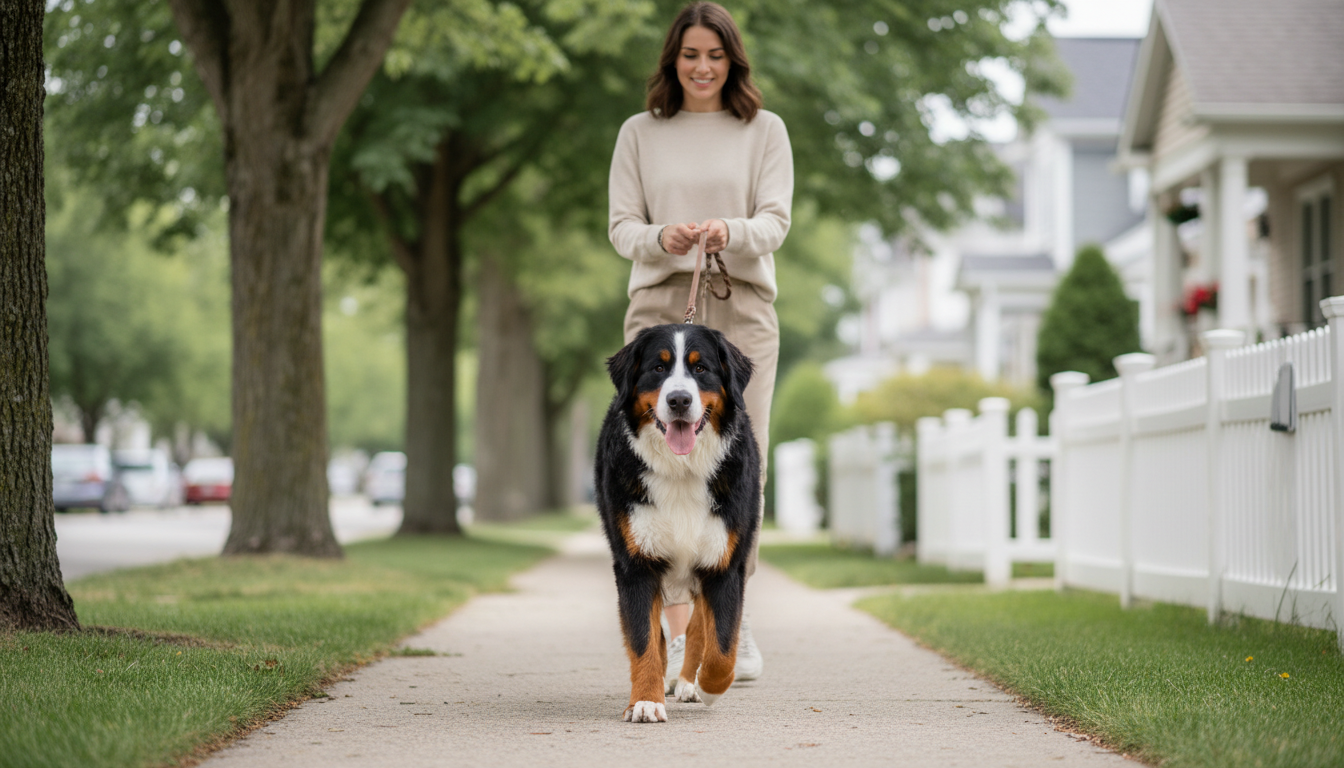
- Choose calm leash walks around mealtimes instead of running or fetch
- Watch for excited jumping or rolling shortly after eating and redirect to quiet time
- Plan big hikes or play sessions for times when your dog’s stomach is not full
Stress and Temperament Considerations
Some research and clinical observation has pointed toward a possible link between stress, anxious temperament, and bloat risk in predisposed breeds. Dogs that are naturally anxious, fearful, or easily stressed by changes in routine may be at higher risk, though this connection is still being studied and is not fully understood.
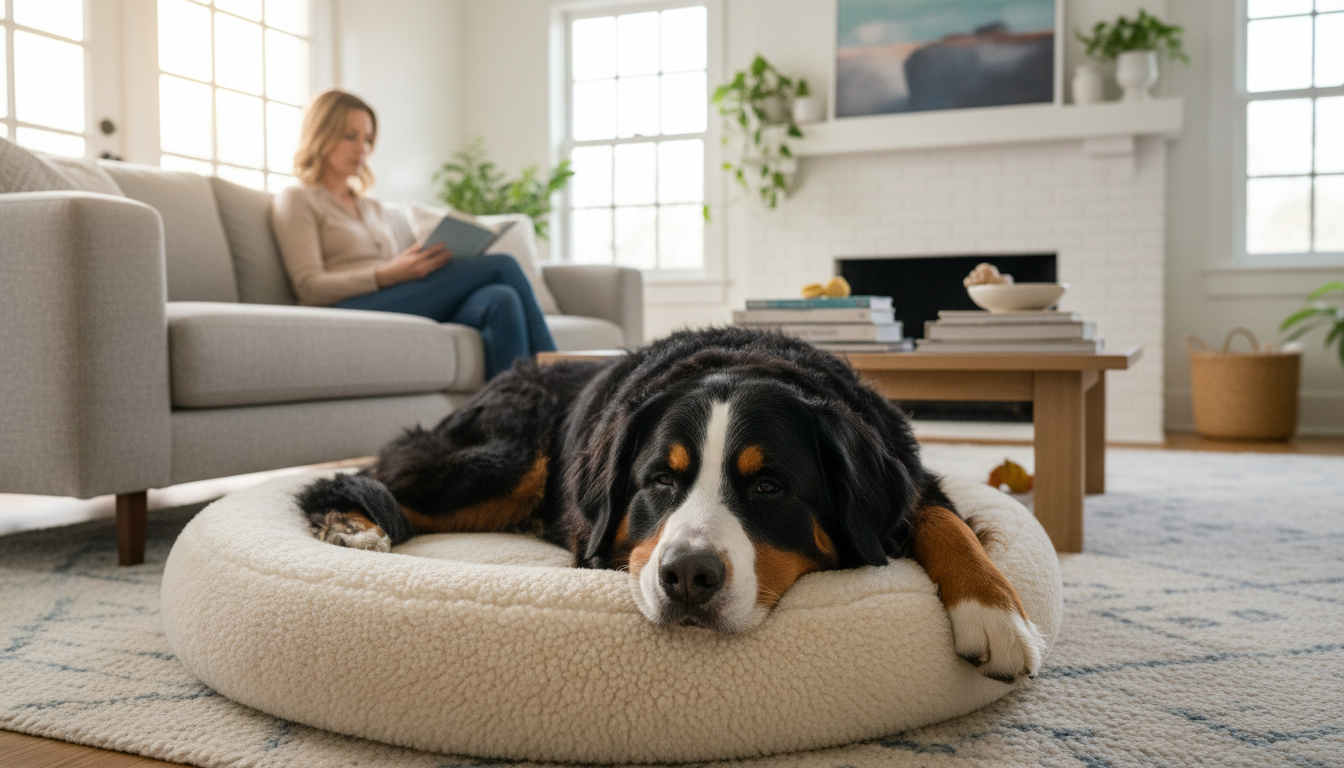
Bernese Mountain Dogs are generally known for a calm, gentle temperament, but individual dogs vary, and some can be sensitive to changes in environment, travel, or unfamiliar situations. Keeping mealtimes predictable and calm, and trying to reduce major stressors around feeding times, may be a reasonable part of an overall prevention approach.
If your dog tends to be anxious around new people, loud noises, or changes in schedule, talk to your vet about strategies to manage that stress. This is not just about comfort and behavior, it may also play a supporting role in reducing bloat risk alongside feeding and exercise habits.
Age and Weight Factors to Keep in Mind
Bloat risk in large and giant breeds tends to increase with age, and Bernese Mountain Dogs are often considered at elevated risk from middle age onward. This does not mean puppies or young adults are immune, but many veterinarians pay closer attention to bloat risk as a Bernese Mountain Dog matures.
Body condition also matters. Keeping your dog at a healthy weight, rather than underweight or overweight, supports overall digestive and organ health. Ask your vet to help you assess your dog’s body condition score at regular checkups, since it can be harder to judge visually on a breed with a thick double coat.
- Schedule regular wellness visits as your dog ages into the higher-risk years
- Keep an eye on weight trends rather than relying on appearance alone
- Discuss any digestive changes with your vet promptly, even if they seem minor
- Ask specifically about bloat risk factors at annual checkups for this breed
The Role of Genetics and Family History
If you know your Bernese Mountain Dog’s family history, it is worth asking the breeder or previous owner whether any close relatives have experienced bloat. Some research suggests a genetic component to bloat risk, meaning dogs with a first-degree relative who has had GDV may be at higher risk themselves.
This information will not change your dog’s chest shape or eliminate risk, but it can help your vet tailor recommendations to your individual dog. It may also factor into a conversation about preventive surgery, which is discussed further below.
Responsible breeders of at-risk breeds are often willing to share what they know about a litter’s health history, and this kind of transparency can be a useful part of your dog’s overall risk picture, alongside feeding and lifestyle habits.
Preventive Gastropexy: What It Is and Why Owners Consider It
Gastropexy is a surgical procedure that tacks the stomach to the abdominal wall to prevent it from twisting. It does not prevent the stomach from filling with gas, but it is intended to stop the dangerous rotation that turns simple bloating into full GDV.
Some owners of deep-chested breeds choose to have a preventive gastropexy performed, often at the same time as a spay or neuter procedure, especially if their dog has a family history of bloat or other risk factors. This is a significant decision that should be made in partnership with your veterinarian, who can walk you through the procedure, recovery, and whether it makes sense for your individual dog.
This article is not a substitute for that conversation. If you are considering preventive gastropexy for your Bernese Mountain Dog, bring it up directly with your vet so they can evaluate your dog’s specific risk factors and health history.
Recognizing the Early Warning Signs
Even with the best prevention habits, it is essential to know what bloat can look like so you can act immediately if it happens. Early signs are sometimes subtle before they become severe, and recognizing them quickly can make a real difference in outcome.
If you notice any combination of these signs, do not wait to see if they resolve on their own. Bloat can progress from mild discomfort to a life-threatening crisis within a short period, and delaying care reduces the chances of a good outcome.
- Restlessness or pacing that seems unusual for your dog
- Unproductive retching, where your dog tries to vomit but little or nothing comes up
- A visibly swollen or tight-looking abdomen
- Drooling more than usual or pacing with a hunched posture
- Rapid breathing, weakness, or collapse
Why Bloat Is Always an Emergency
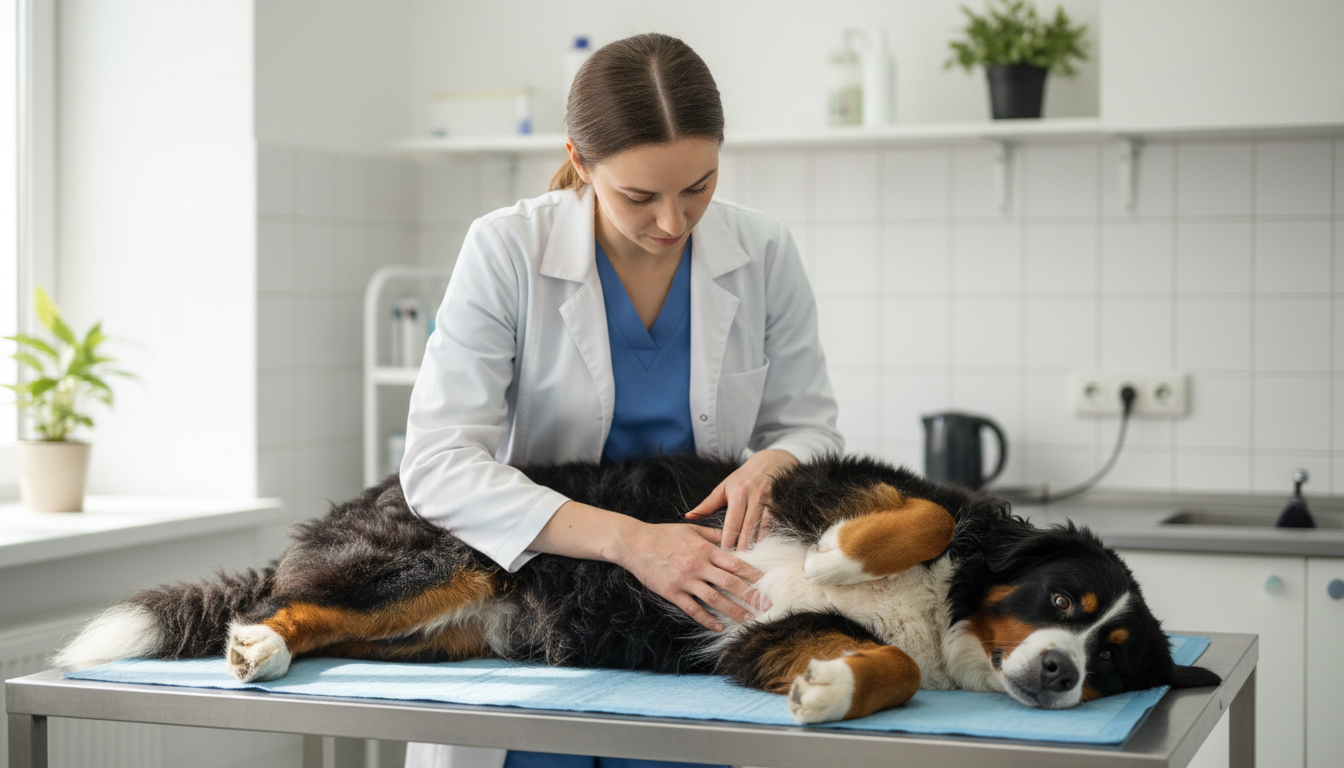
There is no home remedy or waiting period that is appropriate for suspected bloat. This condition requires immediate veterinary evaluation, often involving x-rays to confirm whether the stomach has twisted, followed by emergency stabilization and likely surgery if GDV is confirmed.
If you ever suspect your Bernese Mountain Dog is showing signs of bloat, treat it the same way you would treat any major medical emergency. Call your vet or the nearest emergency animal hospital right away and let them know you are on your way, so they can prepare for your arrival.
Do not try to induce vomiting, give any medication, or wait to see if symptoms pass. Every hour matters with this condition, and prompt care gives your dog the best possible chance.
Building a Bloat Emergency Plan Before You Need One
Because bloat can develop quickly and often happens outside of regular office hours, it helps to have a plan in place before an emergency occurs. Knowing where your nearest 24-hour emergency vet is located, and having their number saved in your phone, can save valuable minutes if something goes wrong.
Talk to your regular vet about what to do if you notice symptoms after hours, and ask whether they have a relationship with a specific emergency hospital they recommend. Some owners also keep a simple written note with their dog’s medical history, medications, and vet contact information in an easily accessible place, in case someone else needs to help in an emergency.
Having this groundwork done ahead of time means you can move faster if the moment comes, rather than searching for information while your dog is in distress.
Putting It All Together for Daily Life
None of these habits guarantee that your Bernese Mountain Dog will never experience bloat, and it is important to be honest with yourself about that. What they can do is stack the odds a little more in your dog’s favor, while also making sure you are prepared to react quickly if warning signs appear.
Small, consistent changes, like slowing down mealtime, spacing out exercise around feeding, and staying attentive to your dog’s behavior, fit naturally into everyday life without being overwhelming. Over time, these habits become routine rather than something you have to think hard about.
Your veterinarian remains your best resource for tailoring any of this advice to your individual dog, especially if your Bernese Mountain Dog has other health conditions, a family history of bloat, or a particularly anxious temperament. Regular checkups are a good time to revisit this conversation as your dog ages.
When to Talk to Your Vet
You do not need to wait for a scheduled appointment to bring up bloat prevention with your vet. If you have questions about feeding schedules, exercise timing, or whether preventive gastropexy might be right for your dog, raise these topics at your next visit or call to ask sooner.
Your vet can also help you recognize what is normal for your individual dog, since some digestive quirks are harmless while others deserve closer attention. Building this relationship over time means you will have a trusted source to call quickly if you ever suspect something is wrong.
Ultimately, staying informed and proactive is the best thing you can do for a breed with this level of risk. Bloat is frightening, but with the right habits and a clear emergency plan, you are giving your Bernese Mountain Dog a strong foundation for a long, healthy life.
This article is for general education and is not a substitute for care from your own veterinarian. Learn about The Pet Vet and our editorial policy.