
Ragdoll separation anxiety catches a lot of owners off guard because this breed is famous for being easygoing and floppy, not clingy or distressed. But Ragdolls form unusually strong bonds with their households, and that devotion has a flip side. When left alone too long, some Ragdolls struggle in ways that look nothing like the relaxed cat you know. Here’s what’s normal attachment, what’s a problem, and how to help your cat feel secure.
Table of Contents
- Why Ragdolls Bond So Intensely
- What Separation Anxiety Looks Like in Cats
- Separation Anxiety vs. Normal Attachment
- Medical Causes to Rule Out First
- Why Some Ragdolls Are More Prone to It
- Building a Predictable Routine
- Environmental Enrichment While You’re Away
- The Role of a Second Cat or Companion Pet
- Calming Aids and Pheromone Products
- When to Consider Professional Behavioral Help
- Could Medication Help?
- What Not to Do
- Helping Your Ragdoll Feel Secure Long-Term
Why Ragdolls Bond So Intensely
Ragdolls were bred for companionship above almost everything else, and it shows in how they move through a household. Many Ragdoll owners describe their cats as following them from room to room, waiting outside bathroom doors, or draping themselves across a lap the moment someone sits down. This is not neediness in the way we might think of it in people, it is simply how the breed was shaped generation after generation, with calm, affectionate, people-oriented temperaments selected for over flightier or more independent ones.
That history matters because it means a Ragdoll’s attachment to you is not a personality quirk you can train away, it is closer to a baseline trait. A cat who is wired to seek out closeness is also a cat who notices, more than most, when that closeness disappears for hours at a time. Understanding this helps explain why some Ragdolls cope fine with alone time while others seem to unravel a little when the house goes quiet.
It is worth saying clearly that strong bonding is not the same thing as anxiety. Plenty of Ragdolls nap contentedly while their people are at work and greet them warmly at the door with no distress in between. The concern arises only when that attachment tips into genuine distress signals while you are gone or as you are leaving.
What Separation Anxiety Looks Like in Cats
Separation anxiety in cats can be easy to miss because much of it happens when no one is watching. Owners often only piece it together after noticing a pattern over time, or after reviewing pet camera footage and realizing their cat is pacing, crying, or hiding for long stretches rather than sleeping peacefully.
Some signs show up before you even leave, with your cat following you to the door, meowing persistently, or trying to block your exit. Others only appear once you are gone and are discovered later, such as evidence of chewing, scratching at doors, or soiling outside the litter box in a cat who is otherwise reliably clean.
- Excessive vocalization that starts as you prepare to leave and may continue for a while after
- Pacing near doors or windows, or repeatedly returning to the spot where you last were
- Overgrooming to the point of bald patches, often on the belly or legs
- Eliminating outside the litter box despite no change in the box itself
- Loss of appetite while you are away, with normal eating resuming once you return
- Excessive greeting behavior that seems more frantic than happy when you come home
Separation Anxiety vs. Normal Attachment
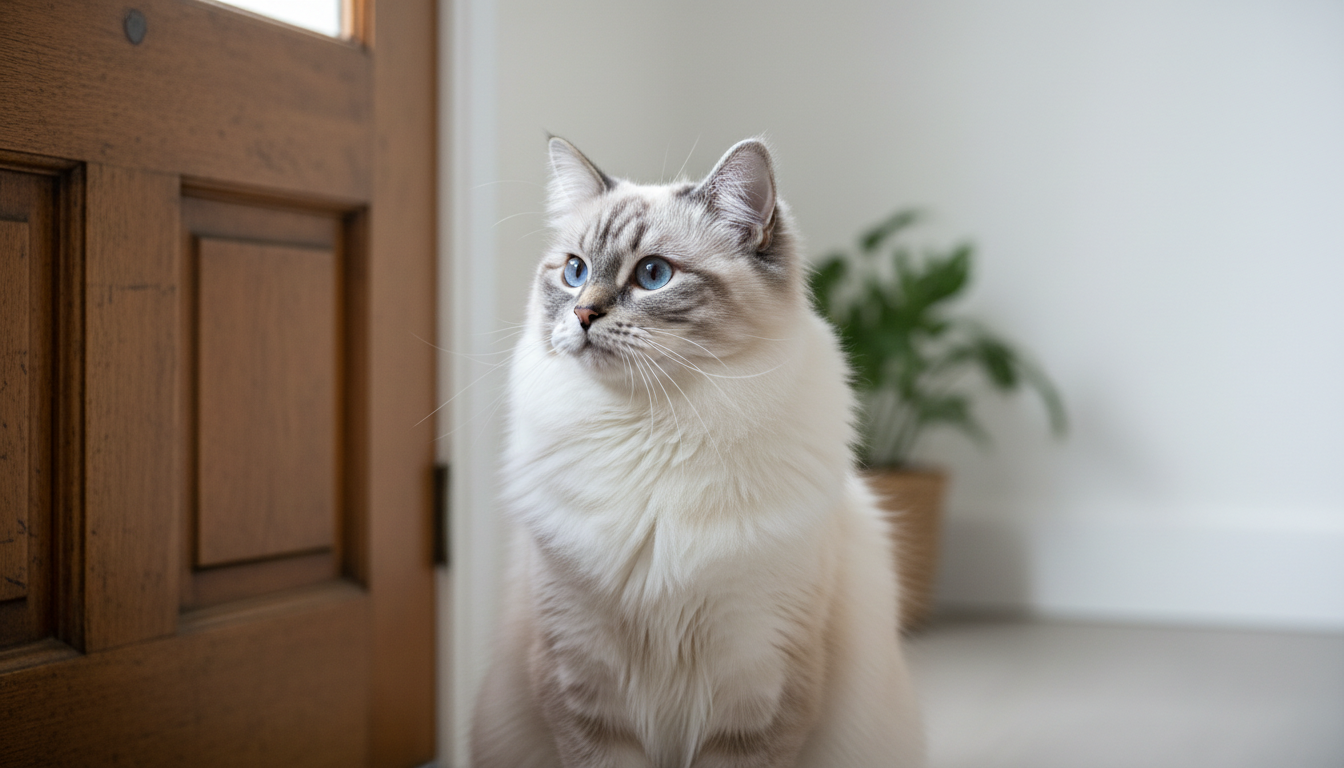
Because Ragdolls are naturally affectionate, it can be hard to tell where healthy bonding ends and a problem begins. A cat who wants to be near you, who purrs when you pick him up, or who prefers sleeping on your bed is simply displaying typical Ragdoll behavior. The key difference with anxiety is the presence of distress, not just a preference for your company.
Watch for behaviors that only happen in your absence or specifically around departures and returns. A cat who naps calmly on the couch most of the day but becomes agitated the moment you pick up your keys is showing a pattern tied to separation itself, not just general friendliness. Similarly, a cat who is fine being left for an hour but clearly struggles after four or five hours may have a threshold worth working around rather than a cat who is broadly anxious all the time.
If you are unsure, a vet or a cat behaviorist can help you interpret what you are seeing. This matters because some of these same signs, like changes in appetite or litter box habits, can also point to a medical issue, so ruling that out first is an important step.
Medical Causes to Rule Out First
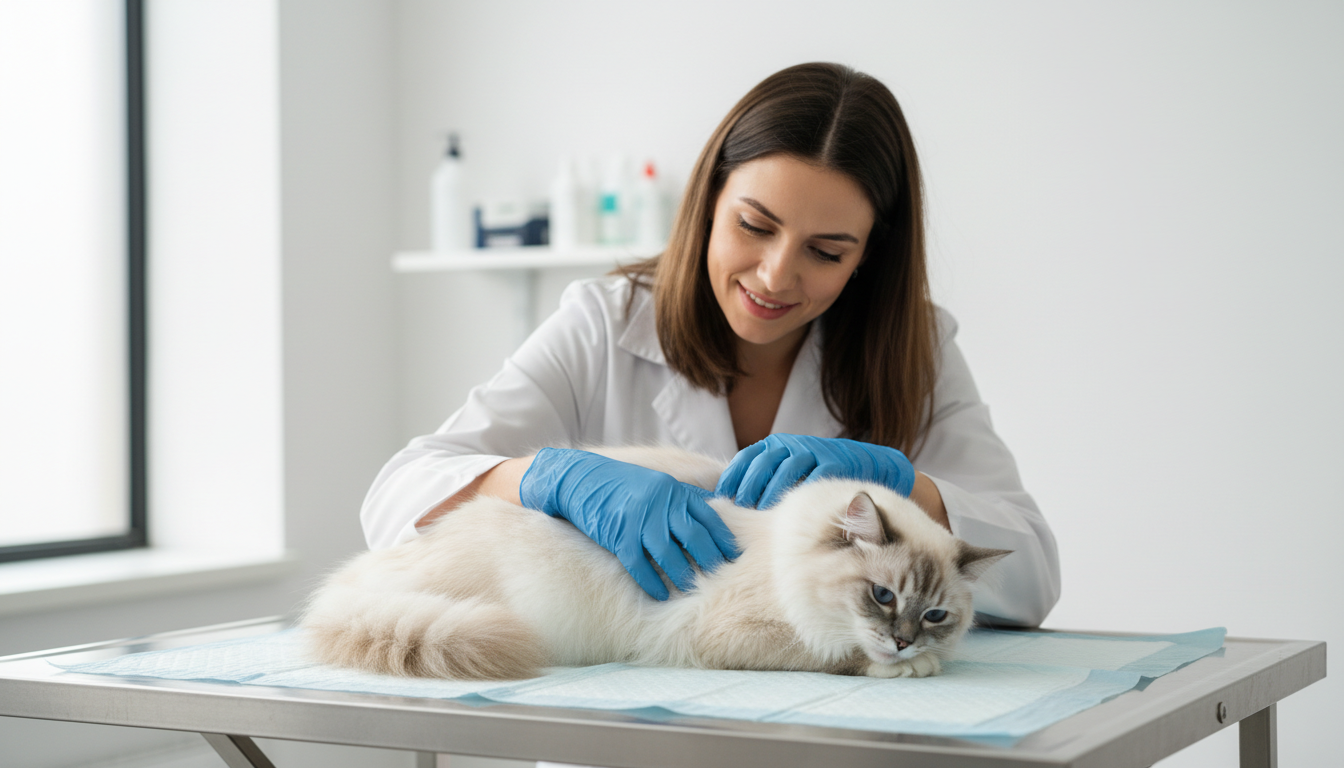
Before assuming a behavior is purely emotional, it is worth having your cat checked by a vet, especially if you are seeing changes in appetite, elimination habits, or grooming. Conditions like urinary tract issues, gastrointestinal discomfort, or skin problems can produce symptoms that look a lot like anxiety but actually have a physical cause that needs treatment.
Overgrooming in particular deserves attention, since it can stem from allergies, parasites, or pain in a specific area just as easily as it can stem from stress. A vet can examine the skin, check for fleas or other triggers, and run basic tests if needed to make sure nothing medical is being missed before you focus entirely on behavioral strategies.
Older cats who suddenly become clingier or more vocal should also be evaluated for cognitive changes or underlying illness, since new separation-related behavior that appears later in life is not always simply about attachment. Getting a clean bill of physical health gives you a clearer picture and makes any behavioral plan more likely to actually help.
Why Some Ragdolls Are More Prone to It
Not every Ragdoll develops separation anxiety, and genetics alone does not guarantee it. But a few factors tend to show up often in cats who do struggle with being alone. Cats who were hand-raised or bottle-fed as kittens, who were adopted very young, or who have had only one primary caregiver their whole lives sometimes form a tighter, more singular attachment than cats raised in busier, more varied households.
Household changes can also trigger or worsen anxious behavior in a breed already prone to closeness. A move, a new pet, a change in work schedule, or even rearranged furniture can unsettle a Ragdoll who relies heavily on routine and familiar presence to feel secure. Because this breed is so tuned in to its environment and the people in it, shifts that other cats shrug off can register more strongly.
Multi-cat or multi-pet households sometimes buffer this tendency, since a Ragdoll left with a companion animal may settle more easily than one left entirely alone. This is not universal, some Ragdolls bond so specifically to one person that even other pets do not ease their distress, but it is a pattern worth considering if you are trying to understand your own cat’s situation.
Building a Predictable Routine
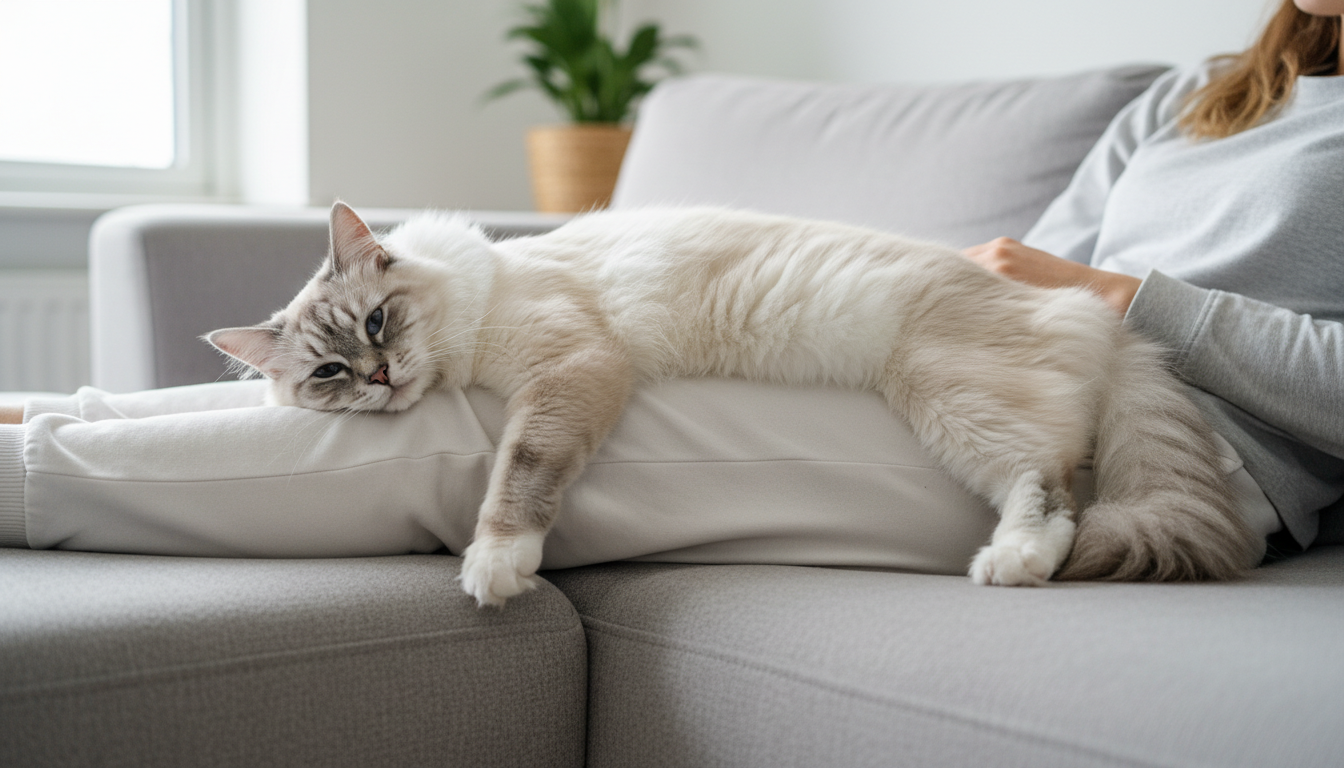
Cats generally find comfort in predictability, and anxious cats especially benefit from knowing what to expect. Feeding, play, and quiet time at roughly the same points in the day can help your Ragdoll feel more settled, because uncertainty about when you will appear again is part of what fuels distress during longer absences.
Try to keep departures and arrivals low-key rather than making a big emotional production of leaving or coming home. Overly enthusiastic greetings can reinforce the idea that your absence was a significant event, while a calm, matter-of-fact entrance helps your cat learn that you leaving and returning is simply a normal part of the day, not something to brace for.
- Keep feeding times consistent, even on weekends
- Offer a short play session before you leave to help burn off some energy
- Leave and return without excessive fuss or prolonged goodbyes
- Use consistent cues, like a specific toy or treat, that signal you will be back later
Environmental Enrichment While You’re Away
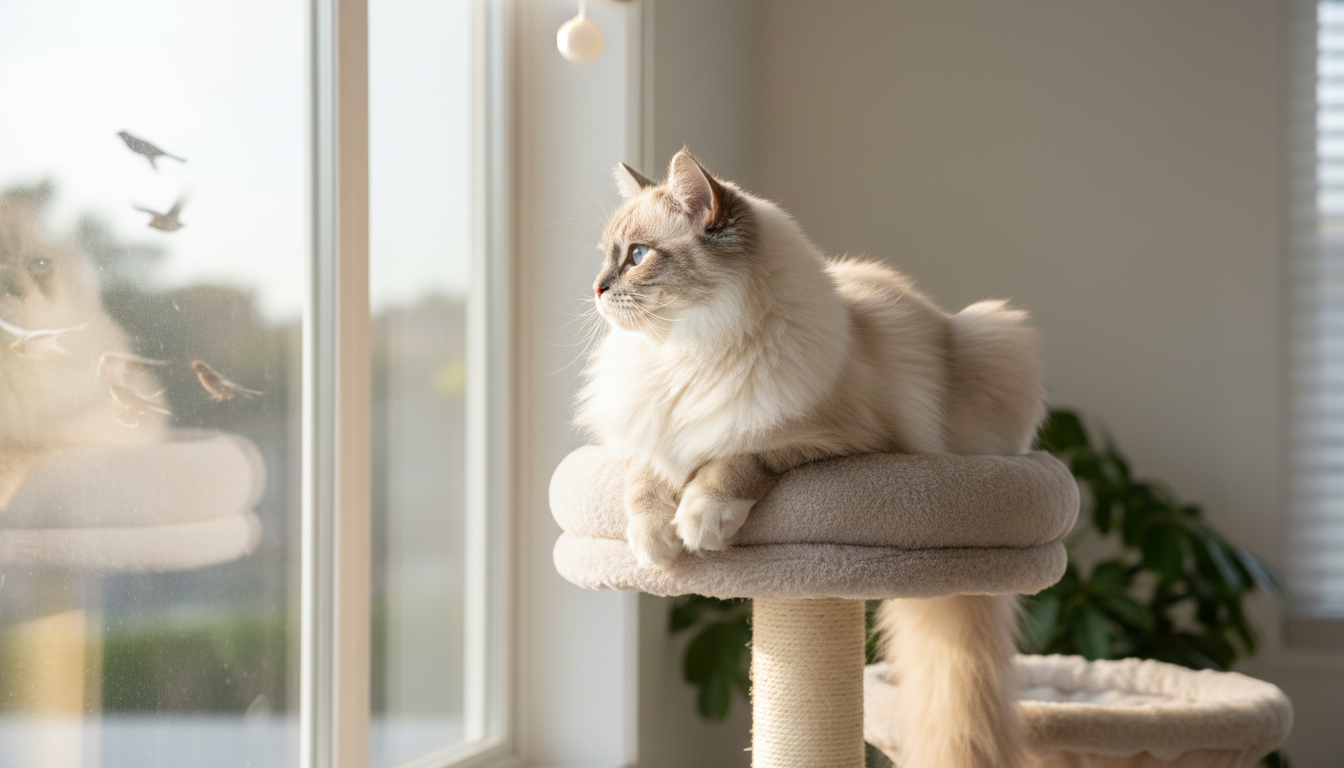
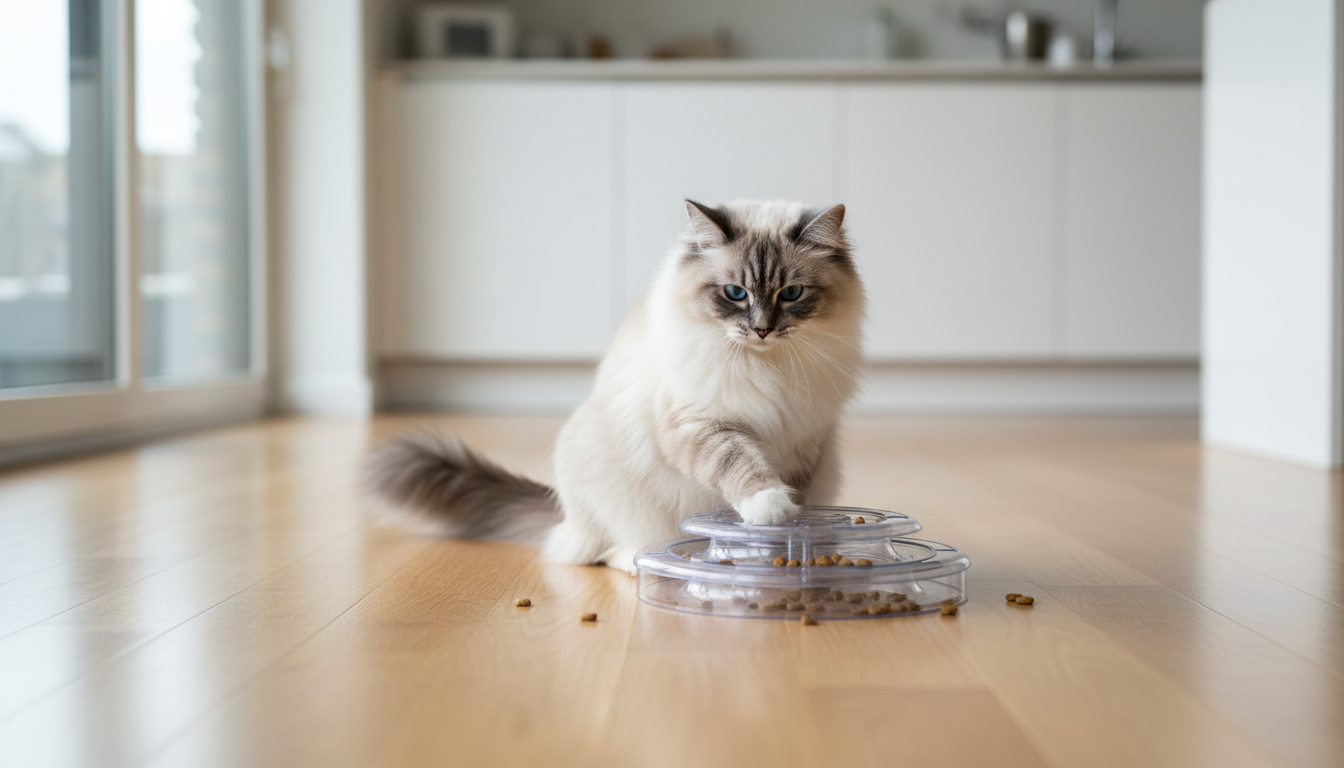
A cat who has engaging things to do while you are gone is often less focused on your absence than one left in an empty room with nothing to occupy their attention. Window perches that offer a view of birds or outdoor activity, puzzle feeders that make mealtime more interactive, and rotating toys can all help fill the hours in a way that feels less like waiting and more like living.
Vertical space matters too, since cats often feel more secure when they can observe their environment from a height. A cat tree near a window, shelving designed for climbing, or even a tall cat condo can give your Ragdoll a vantage point that makes solo time feel less vulnerable.
- Puzzle feeders or slow feeders to add mental stimulation at mealtimes
- A window perch with a view of birds, trees, or outdoor movement
- Rotating toys every few days so nothing becomes boring
- Vertical climbing space like a cat tree or wall shelves
- Background noise such as a radio or television left on low volume
The Role of a Second Cat or Companion Pet
Some owners find that a compatible second cat dramatically eases their Ragdoll’s distress when left alone, since having company changes the entire experience of those hours. Two cats who get along can groom each other, play together, and simply be present in a way that reduces the sense of isolation that triggers anxious behavior in the first place.
That said, this is not a guaranteed fix, and introducing a new cat purely to solve separation anxiety can backfire if the match is not right. A poorly matched companion can add stress rather than reduce it, so any introduction should be done slowly and thoughtfully, ideally with guidance if you are unsure how to proceed. If you are already considering another pet for other reasons, it may offer a secondary benefit here, but it should not be the sole justification for bringing a new animal into your home.
Calming Aids and Pheromone Products
Synthetic pheromone diffusers and sprays are commonly used to help anxious cats feel calmer in their environment, and many owners find them a useful piece of a broader plan. These products are designed to mimic natural feline facial pheromones associated with contentment, and plugging one in near your cat’s main resting area is a low-risk way to see if it makes a difference.
Calming collars, certain supplements, and anxiety wraps are also available, but their effectiveness varies from cat to cat, and not every product is appropriate for every situation. Before trying any calming product, especially anything ingested, talk to your vet to make sure it is safe for your individual cat and will not interact with other health conditions or medications.
When to Consider Professional Behavioral Help
If you have tried routine changes, enrichment, and environmental adjustments without much improvement, it may be time to bring in additional support. Veterinary behaviorists and certified cat behavior consultants specialize in exactly this kind of problem and can help design a more tailored plan based on your specific cat’s triggers and history.
This is especially worth pursuing if your cat’s anxiety is severe, if it is causing physical harm through overgrooming or injury, or if it is significantly affecting quality of life for your cat or your household. There is no need to feel like you have failed if home strategies are not enough on their own, some cats genuinely need more structured behavioral intervention to make real progress.
Could Medication Help?
In more serious cases, a vet may discuss whether anti-anxiety medication could be a helpful part of managing your cat’s separation anxiety alongside behavioral strategies. This is a decision that should only be made with your veterinarian, based on a full evaluation of your cat’s health, the severity of the anxiety, and how other approaches have gone so far.
Medication is generally considered a tool to reduce distress enough that behavioral techniques can actually take hold, not a standalone fix. If this path comes up for your cat, your vet will walk you through what monitoring is needed and what to watch for, and you should never start, stop, or adjust any medication without their direct guidance.
What Not to Do
It can be tempting to try to fix anxious behavior with punishment, especially if you come home to damage or an accident outside the litter box. But punishing a cat after the fact does nothing to address the anxiety itself and often makes cats more fearful or more secretive about their stress, which can make the underlying problem harder to track and treat.
Similarly, try to avoid dramatically increasing your cat’s exposure to being alone all at once as a way to “get them used to it.” Cats generally do better with gradual desensitization than with being thrown into longer stretches of alone time before they are ready, and pushing too fast can reinforce the very fear you are trying to reduce.
- Avoid scolding or punishing your cat for anxiety-related accidents or damage
- Do not isolate your cat further as a way to force independence
- Avoid sudden, drastic changes to routine while working on anxiety
- Do not assume the behavior will simply resolve on its own without any changes
Helping Your Ragdoll Feel Secure Long-Term
Managing separation anxiety is rarely about one single fix, it tends to be the sum of small, consistent choices that add up over weeks and months. A predictable routine, an enriched environment, realistic expectations about greetings and departures, and professional input when needed can all work together to help your Ragdoll feel more secure even when you are not physically present.
It also helps to remember that this is simply part of who your cat is, shaped by a breed bred specifically to love closeness with people. Rather than viewing the attachment itself as the problem, the goal is helping your cat feel safe within that attachment, even during the hours you cannot be there. With patience and the right support, most Ragdolls can learn to settle more comfortably, even if their devoted, people-focused nature never fully changes.
If you are seeing persistent signs of distress despite trying these approaches, or if you notice any physical symptoms alongside the behavioral ones, schedule a visit with your vet. They can rule out medical causes, discuss behavioral strategies suited to your specific cat, and help you figure out the right next steps so both you and your Ragdoll can feel more at ease.
This article is for general education and is not a substitute for care from your own veterinarian. Learn about The Pet Vet and our editorial policy.