
Degenerative myelopathy in German Shepherds is one of the most heartbreaking conditions this breed faces, because it creeps in slowly and is easy to mistake for ordinary stiffness or old age. If your dog has started dragging a back paw, stumbling, or seeming unsteady on the stairs, it’s natural to feel worried and confused about what’s happening. This guide walks you through what the disease is, how it progresses, and what you and your vet can do to support your dog.
Table of Contents
- What Degenerative Myelopathy Actually Is
- Why German Shepherds Are Especially Prone
- The Age When Symptoms Usually Begin
- Early Signs to Watch For
- How DM Differs From Arthritis and Joint Pain
- How Veterinarians Diagnose the Condition
- What a Typical Progression Looks Like
- There Is No Cure, But There Is Support
- Managing Daily Life With a Dog Who Has DM
- When Incontinence Becomes a Concern
- The Emotional Side of a DM Diagnosis
- Questions Worth Asking Your Vet
- Can Degenerative Myelopathy Be Prevented?
- When to See a Vet Right Away
- The Bottom Line for Worried Owners
What Degenerative Myelopathy Actually Is
Degenerative myelopathy, often shortened to DM, is a progressive disease of the spinal cord. It affects the nerve fibers that carry signals between the brain and the hind legs, and over time those fibers break down. Unlike a slipped disc or a pulled muscle, DM is not something that flares up and then settles down. It is a slow, steady decline that typically unfolds over many months.
German Shepherds are one of the breeds most commonly associated with this condition, and researchers believe there is a genetic component involved, though not every dog who carries the related gene mutation will go on to develop symptoms. This is part of why DM can feel so confusing for owners. Your dog might be eating well, acting happy, and showing no signs of pain, yet still be losing function in the back end. It’s a disease of the nervous system, not the joints or muscles directly, even though the muscles eventually weaken from disuse.
Because the symptoms overlap so much with arthritis, hip dysplasia, and normal aging, DM is often misunderstood or misdiagnosed early on. That’s exactly why it helps to know what sets it apart and why a proper veterinary workup matters so much.
Why German Shepherds Are Especially Prone
German Shepherds carry a higher-than-average rate of the gene mutation linked to this disease compared to many other breeds. That doesn’t mean every German Shepherd will develop DM, but it does mean the breed shows up disproportionately in cases vets see. Other breeds are affected too, but German Shepherds remain one of the faces most associated with this condition in veterinary medicine.
The exact reason some dogs with the gene mutation develop clinical signs while others never do isn’t fully understood. It’s thought to involve a combination of genetics and other factors that researchers are still studying. If you have a German Shepherd, especially an older one, it’s worth having an honest conversation with your vet about this disease even before any symptoms appear, just so you know what to watch for.
The Age When Symptoms Usually Begin
Most dogs affected by degenerative myelopathy start showing signs in their senior years, often somewhere around eight years old and beyond, though this can vary. Because the onset is so gradual, many owners don’t notice anything unusual until the symptoms have already been present for a while. A dog might seem a little clumsy on walks for weeks before anyone thinks to mention it to the vet.
This slow start is part of what makes DM so sneaky. A young, healthy-looking German Shepherd in the prime of life is unlikely to raise alarm bells, but as dogs age into their senior years, any new hind-leg weakness deserves a closer look rather than being brushed off as “just getting old.”
Early Signs to Watch For
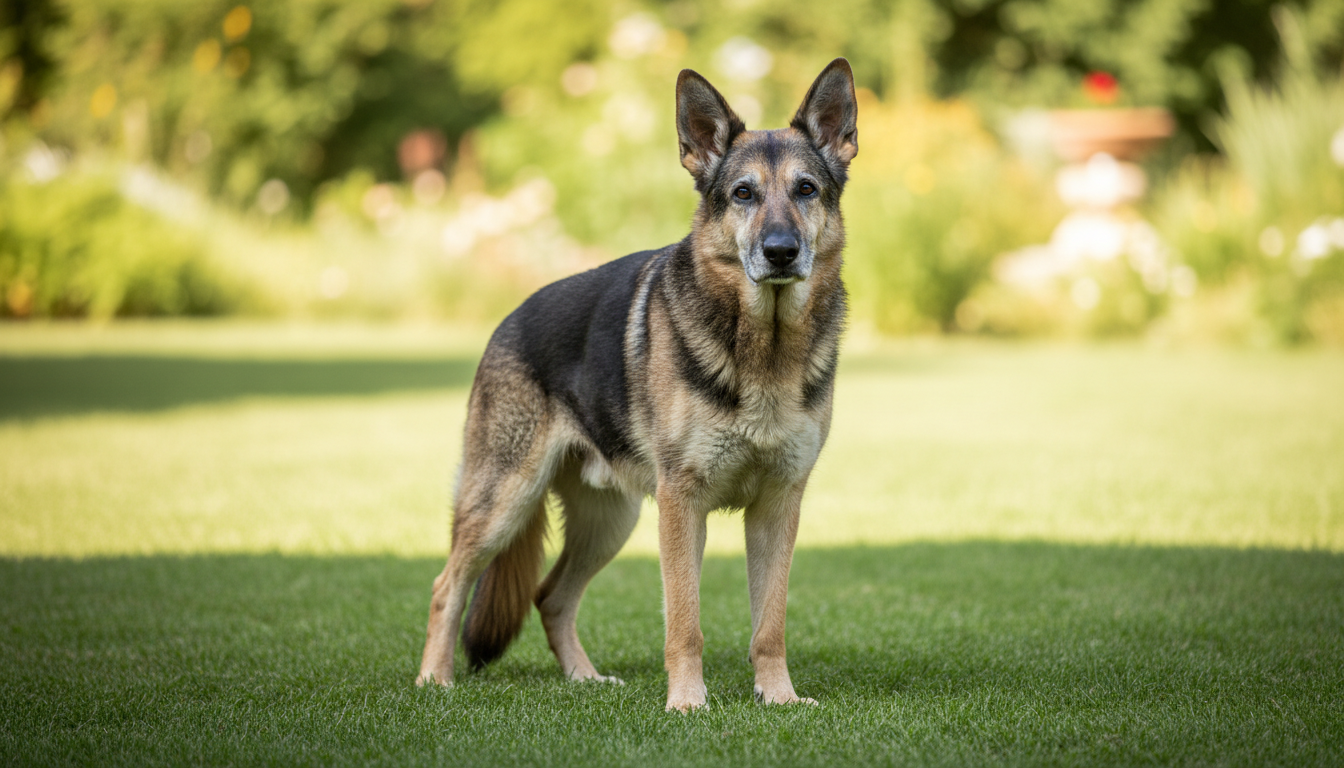
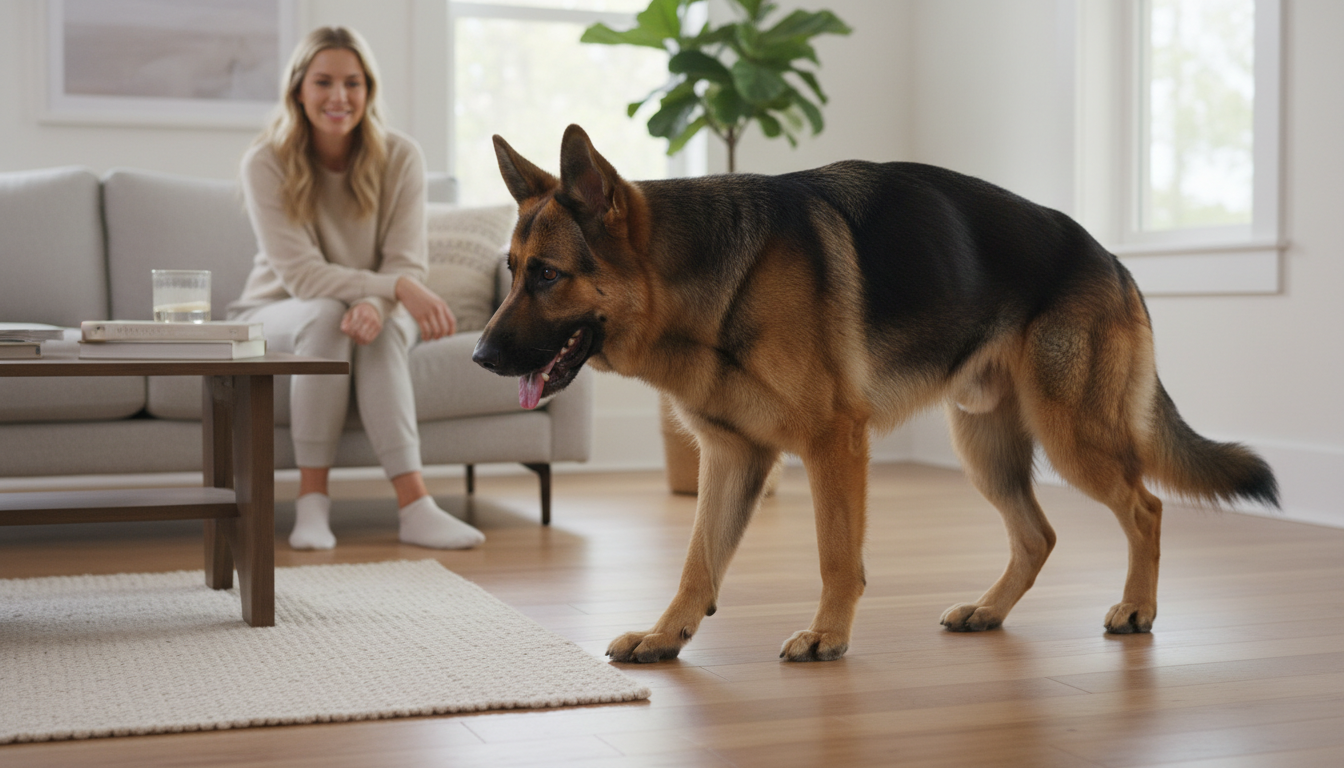
The earliest signs of DM tend to be subtle and easy to miss or explain away. Owners often notice their dog’s back feet scuffing the ground slightly during walks, or hear nails dragging on hard floors. The hind end may start to sway or wobble when the dog is standing still, and getting up from lying down can start to look more effortful than it used to.
As the disease progresses, these early signs tend to become more obvious and more frequent. Watching for a pattern over several weeks, rather than a single bad day, can help you and your vet understand whether something is truly changing.
- Dragging or scuffing of the back paws, especially the nails
- Wobbliness or swaying in the hind end when standing
- Difficulty judging where the back feet are placed
- Hind legs crossing or knuckling under while walking
- Hesitation or struggle going up and down stairs
How DM Differs From Arthritis and Joint Pain
One of the most important distinctions between DM and conditions like arthritis or hip dysplasia is pain. Dogs with joint disease typically show discomfort, they may yelp, limp more on cold mornings, or resist having a leg touched. Dogs with DM generally do not seem to be in pain from the disease itself, at least in its early and middle stages. The weakness comes from nerve signal loss, not from aching joints.
This doesn’t mean a dog with DM can’t also have arthritis at the same time, because many senior German Shepherds do have both conditions layered on top of each other. This is exactly why it’s so important not to assume you know what’s going on without proper veterinary testing. A dog who seems painless but weak in the hind end deserves a neurological exam, not just a joint supplement and hope.
How Veterinarians Diagnose the Condition
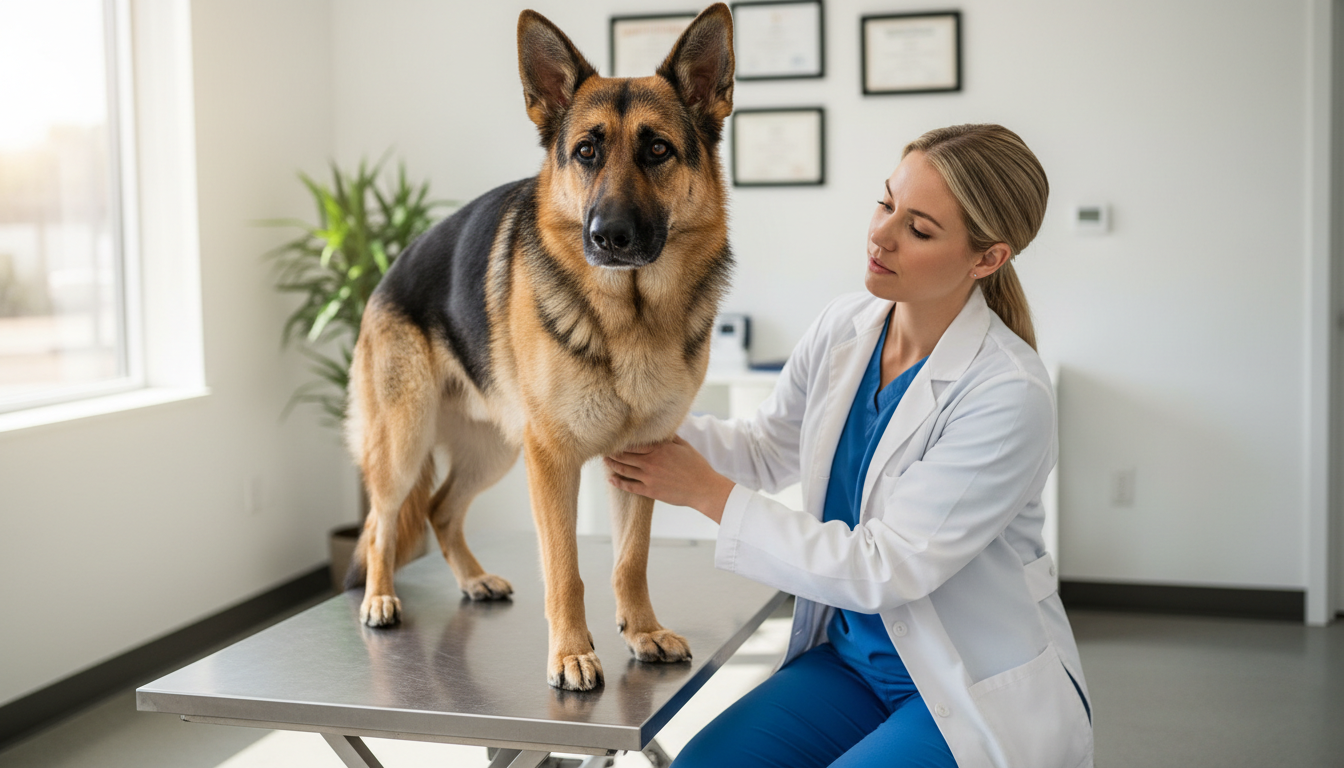
There isn’t a single simple blood test that confirms degenerative myelopathy in a living dog. Instead, vets typically diagnose it by ruling out other causes of hind-leg weakness, things like disc disease, tumors, infections, or severe arthritis, through a combination of neurological examination, imaging such as MRI, and sometimes genetic testing for the known mutation. A neurological exam alone can reveal a lot, since vets look for specific reflex changes and patterns of weakness that are characteristic of spinal cord disease.
Genetic testing can show whether your dog carries the mutation associated with DM, but a positive result doesn’t confirm the diagnosis on its own, since plenty of dogs carry the gene without ever developing symptoms. Your vet will likely want to combine genetic information with the clinical picture and, if needed, referral to a veterinary neurologist for more advanced imaging. This thorough process matters because some treatable conditions can look remarkably similar in the early stages.
What a Typical Progression Looks Like
Degenerative myelopathy tends to move through recognizable stages, though the pace varies quite a bit from dog to dog. In the early stage, weakness and incoordination are mild and may only be noticeable during longer walks or on slippery floors. As the disease advances, the hind legs become progressively weaker, and dogs may start to drag their feet more consistently or lose the ability to walk without support.
In later stages, dogs can lose voluntary movement in the back legs altogether, and the weakness may eventually begin to affect the front end as well, along with bladder and bowel control in some cases. This progression is part of why early recognition and planning matter so much, because it gives you and your vet time to prepare rather than reacting in a crisis.
There Is No Cure, But There Is Support
It’s important to be honest that there is currently no cure for degenerative myelopathy. This is a difficult thing to hear, and it’s completely normal to feel grief and fear when a vet first raises DM as a possibility. What you can do is focus on supportive care that keeps your dog as comfortable, mobile, and engaged with life as possible for as long as possible.
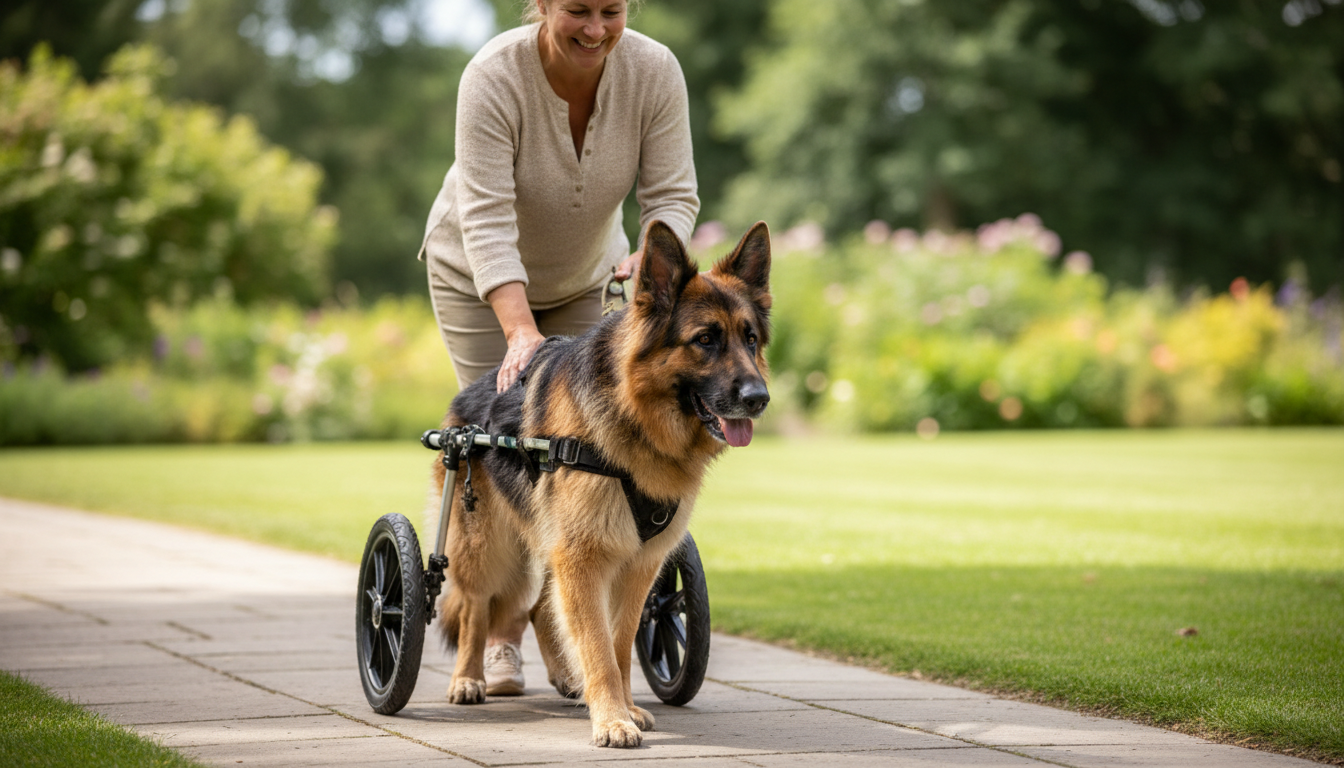
Your vet may discuss physical therapy, which has been associated with helping some dogs maintain muscle strength and mobility longer than they might otherwise. Assistive equipment, like harnesses with handles or wheeled carts for dogs who have lost significant hind-leg function, can also help maintain quality of life and let your dog keep moving around the house and yard.
- Working with a vet or veterinary rehabilitation specialist on a tailored exercise plan
- Using non-slip mats and rugs on hard floors to prevent slipping and falls
- Considering a supportive harness for walks and getting up
- Keeping nails trimmed to reduce catching and tripping
- Watching closely for signs of pressure sores if mobility becomes limited
Managing Daily Life With a Dog Who Has DM
Living with a dog who has degenerative myelopathy means adapting your home and routine as the disease progresses. Simple changes, like adding ramps instead of stairs, placing rugs over slick flooring, and keeping food and water bowls easily accessible, can make a real difference in your dog’s daily comfort and independence. Many owners find that a predictable routine helps their dog feel more secure as physical abilities change.
As mobility decreases, you may need to assist with more day-to-day tasks, from help standing up to support during bathroom breaks. This is a big adjustment, both physically and emotionally, and it’s worth leaning on your vet team for practical guidance rather than figuring it all out alone. Many veterinary clinics can point you toward rehabilitation specialists or in-home care resources that specialize in mobility-impaired dogs.
When Incontinence Becomes a Concern
As DM advances into later stages, some dogs lose bladder and bowel control because the nerves controlling those functions are affected too. This isn’t a behavioral problem and isn’t something your dog can help, so it’s not something to scold or punish. Instead, it’s a sign that the disease has progressed and that your care routine will need to adapt further.
Your vet can offer guidance on managing incontinence in ways that protect your dog’s skin and comfort, such as more frequent bathroom breaks, protective bedding, and careful hygiene to prevent urine scald or infections. If you notice sudden changes in urination or bowel habits, it’s worth a vet visit to rule out a urinary tract infection or other treatable issue layered on top of the DM itself.
The Emotional Side of a DM Diagnosis
Caring for a dog through a progressive, incurable disease is emotionally exhausting, and it’s okay to admit that. Many owners describe a complicated mix of love, grief, guilt, and exhaustion as they watch a once-athletic German Shepherd slowly lose mobility. There is no “right” way to feel during this process, and reaching out for support, whether from your vet, a pet loss support group, or friends who understand, can make a real difference.
It also helps to remember that a DM diagnosis doesn’t erase the good days that are still possible. Many dogs continue to enjoy walks, play, affection, and daily routines well into the progression of the disease, especially with supportive care in place. Focusing on quality of life in the present, rather than only on what’s being lost, can help both you and your dog navigate this chapter together.

Questions Worth Asking Your Vet
If your German Shepherd has been showing any hind-leg weakness, bringing a list of questions to your vet appointment can help you leave with real clarity instead of more worry. It’s easy to forget what you wanted to ask once you’re in the exam room, especially if the conversation is emotional.
- Could anything else be causing these symptoms besides DM?
- Would genetic testing or referral to a neurologist be helpful in this case?
- What physical therapy or rehab options are available locally?
- How will we know if pain develops alongside the weakness?
- What signs should prompt an emergency visit rather than a routine appointment?
Can Degenerative Myelopathy Be Prevented?
Because DM has a genetic component, there isn’t a reliable way to prevent it entirely in a dog who carries the associated mutation. Responsible breeders can use genetic testing to make more informed breeding decisions, which may help reduce the prevalence of the mutation in future litters over time, but this doesn’t help an individual dog who already carries it.
For dogs already diagnosed or suspected to have DM, staying on top of general health, maintaining a healthy weight, and keeping up with regular veterinary checkups can help ensure that other conditions, like arthritis or obesity, don’t compound the challenges of the disease. There’s no magic supplement or diet proven to stop DM in its tracks, so be cautious of any product that claims otherwise, and always run new supplements by your vet first.
When to See a Vet Right Away
Any new hind-leg weakness, wobbliness, or dragging of the paws in your German Shepherd is worth a veterinary visit, even if your dog doesn’t seem to be in pain. Early evaluation gives you the best chance of identifying treatable causes and, if it does turn out to be DM, starting supportive care sooner rather than later.
Certain changes should prompt a same-day or emergency visit rather than waiting for a routine appointment, since they could indicate a different, potentially more urgent problem happening alongside or instead of DM.
- Sudden, rapid loss of hind-leg function over hours rather than months
- Signs of pain, yelping, or sensitivity when the back or legs are touched
- Loss of bladder or bowel control appearing suddenly
- Dragging of the front legs in addition to the back legs
- Any sign of significant distress or inability to rise at all
The Bottom Line for Worried Owners
Degenerative myelopathy in German Shepherds is a difficult diagnosis, but it is not something you have to face without support. A thorough veterinary workup is essential to rule out other, sometimes treatable, causes of hind-leg weakness, and if DM is confirmed, there are real ways to help your dog stay comfortable and mobile for as long as possible. Trust your instincts if something seems off with your dog’s gait or strength, and don’t hesitate to bring it to your vet’s attention sooner rather than later.
This article is for general education and is not a substitute for care from your own veterinarian. Learn about The Pet Vet and our editorial policy.