
Progressive retinal atrophy in Siamese cats is an inherited eye condition that gradually breaks down the retina, often leaving owners unaware until vision is already fading. Because the disease moves slowly and cats are masters at compensating for sensory loss, many families don’t notice anything wrong until their cat bumps into furniture or hesitates at night. Understanding how this condition develops, what signs to watch for, and how to support a cat who is losing sight can make a real difference in quality of life.
Table of Contents
- What Progressive Retinal Atrophy Actually Is
- Why Cats Hide Vision Loss So Well
- Early Signs Worth Watching For
- How Vets Diagnose the Condition
- Is There a Treatment for PRA?
- Helping a Cat Adjust to Vision Loss
- Supporting Other Senses
- Keeping the Home Safe
- Behavioral Changes to Expect
- The Emotional Side for Owners
- Genetic Testing and Breeding Considerations
- When to See a Vet Right Away
- Living Well with a Visually Impaired Cat
What Progressive Retinal Atrophy Actually Is
Progressive retinal atrophy, often shortened to PRA, is a group of inherited conditions that cause the light-sensing cells in the retina to break down over time. The retina sits at the back of the eye and converts light into the signals the brain uses to form images. When those cells degenerate, vision fades gradually, usually starting with night vision and progressing toward complete blindness over months or years.
In Siamese cats, PRA is believed to have a genetic basis, which is why the breed is more frequently associated with this condition than many others. The disease is not caused by injury, infection, or anything an owner did wrong. It is simply a trait passed down through breeding lines, and it can show up even in cats who seem perfectly healthy in every other way.
Because PRA affects both eyes and progresses slowly, cats often adapt so well that the condition goes unnoticed for a long time. This is part of what makes it tricky for owners to catch early, and why understanding the pattern of symptoms matters so much.
Why Cats Hide Vision Loss So Well
Cats are remarkably good at compensating for sensory changes, and vision loss is no exception. A cat who knows her home environment by heart can navigate using memory, whiskers, scent, and hearing, often without ever appearing clumsy or confused. This means a cat could be significantly further along in vision loss than an owner realizes, simply because she has learned to move confidently through familiar spaces.
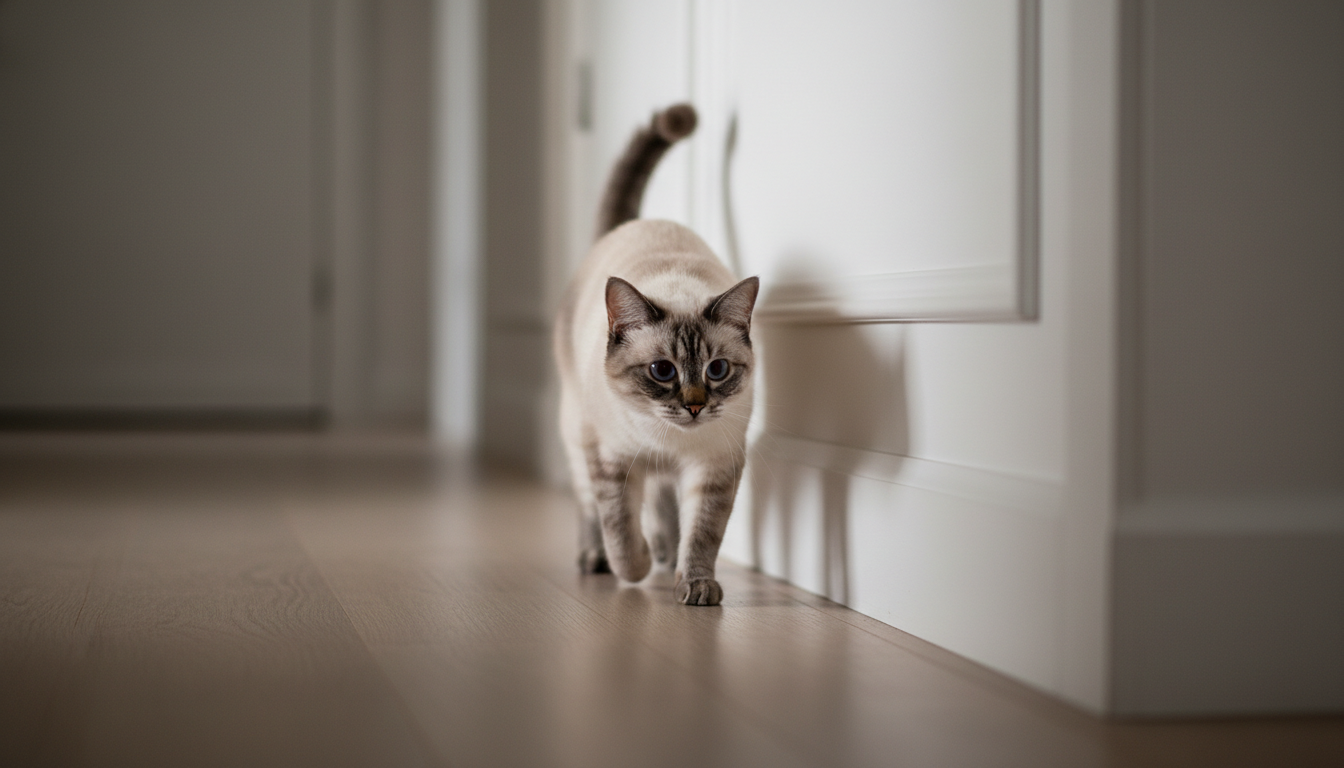
Problems tend to surface first in situations that challenge those compensatory strategies. A cat might seem completely normal in a well-lit living room she knows intimately, but hesitate or bump into things in a dim hallway, at a friend’s house, or when furniture gets rearranged. These inconsistent moments are often the first real clue something is changing with her vision.
Because the signs can be so subtle at first, regular eye checks become especially valuable for Siamese cats, even when nothing seems obviously wrong.
Early Signs Worth Watching For
Night vision is usually the first thing affected, since the rod cells responsible for low-light vision tend to degenerate before the cone cells used in daytime vision. Owners often notice their cat becoming more hesitant at dusk or avoiding dark rooms she used to walk through without a second thought. Over time, as the disease progresses, daytime vision becomes affected as well.
Some behavioral shifts can be easy to miss if you aren’t looking for them specifically. A cat may start staying closer to walls when walking, as if using them for guidance, or she may seem startled more easily since she doesn’t see things approaching the way she once did.
- Hesitating or freezing in dim lighting or at night
- Bumping into furniture that hasn’t moved, especially in low light
- Reluctance to jump onto surfaces she used to use confidently
- Eyes that appear more reflective or have a different shine than before
- Increased clinginess or reluctance to explore unfamiliar spaces
- Pupils that seem unusually dilated even in bright light
How Vets Diagnose the Condition
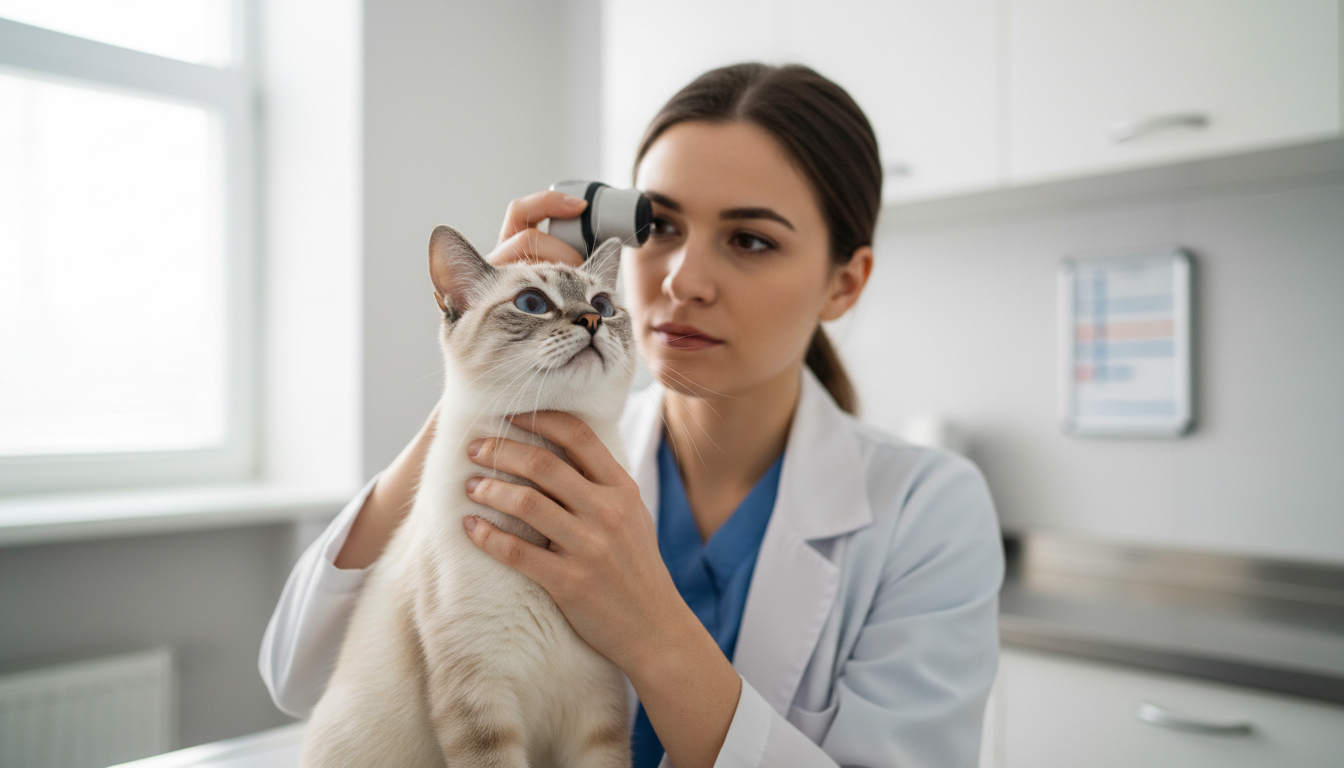
If you suspect something is off with your Siamese cat’s vision, a veterinary visit is the right next step. A vet will typically start with a general eye exam, checking pupil response, looking at the structure of the eye, and observing how your cat tracks objects or moves through the exam room. These basic observations can already give a vet useful clues about what might be going on.
For a more detailed look at the retina itself, a vet may use an instrument called an ophthalmoscope to examine the back of the eye directly. In some cases, referral to a veterinary ophthalmologist is recommended, since these specialists have more advanced tools for evaluating retinal health and can offer a clearer picture of how advanced the condition is.
It’s worth noting that vision loss can have other causes too, including high blood pressure, certain infections, or other eye diseases, so a proper diagnosis matters before assuming PRA is the cause. Only a veterinarian can determine what’s truly happening with your cat’s eyes.
Is There a Treatment for PRA?
There is currently no cure for progressive retinal atrophy, and the degeneration of the retina cannot be reversed once it has occurred. This can be a hard thing to hear, but it’s important to understand that PRA is not painful, and cats generally continue to live happy, full lives even as their vision declines.
Veterinary care at this stage shifts from trying to stop the disease toward managing the cat’s overall eye health and ruling out other treatable conditions that could be contributing to vision changes. Your vet may also want to monitor for secondary issues, since cats with reduced vision can sometimes be more prone to eye injuries or infections if they bump into things more often.
Management mostly comes down to supporting your cat through the transition and helping her adapt her environment, which is something owners have a lot of control over even without a medical cure available.
Helping a Cat Adjust to Vision Loss
Cats are incredibly adaptable, and many cats with significant vision loss go on to live confident, content lives with a few thoughtful adjustments at home. The key is giving your cat a consistent, predictable environment where she can rely on memory and other senses rather than sight.
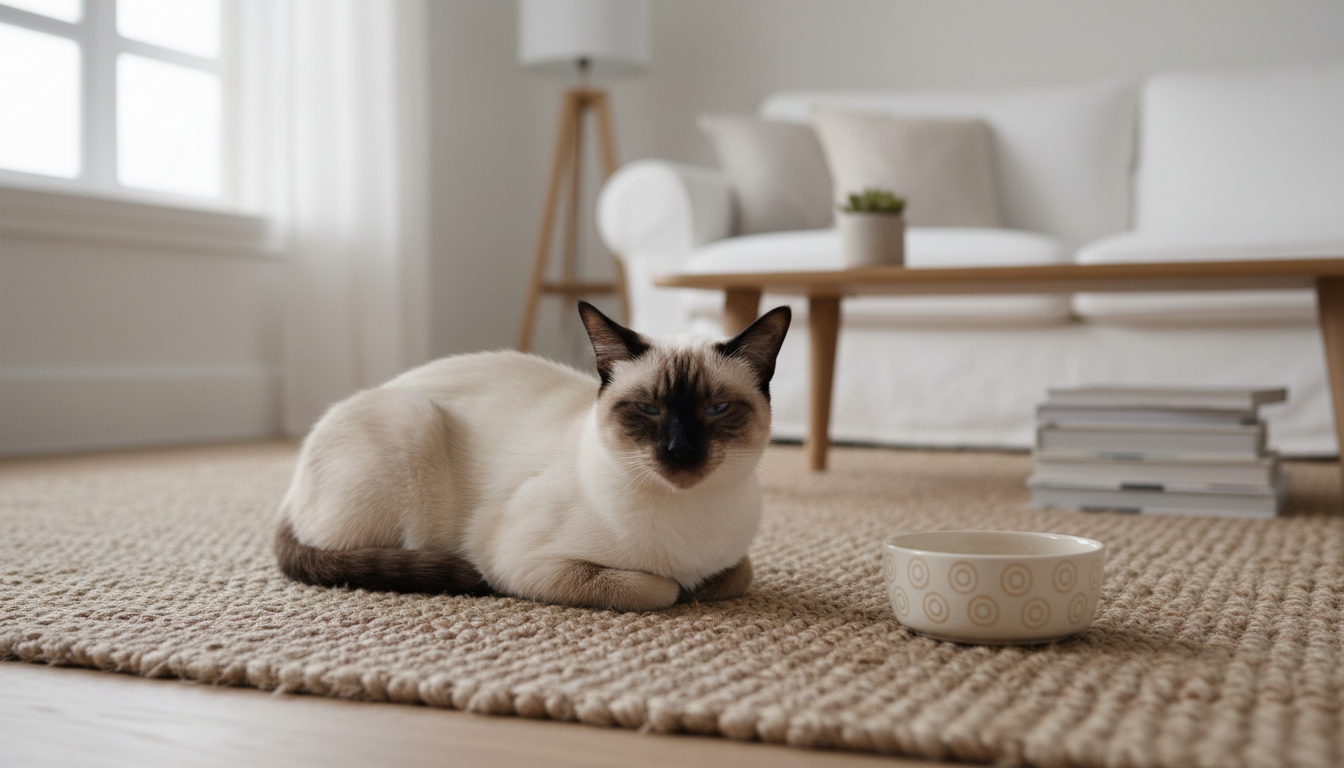
Keeping furniture, food bowls, litter boxes, and resting spots in the same locations helps enormously, since a cat who has mapped out her home doesn’t need to re-learn it every time something shifts. Reducing clutter in walkways and avoiding leaving unexpected objects like shoes or bags in the middle of the floor can prevent painful collisions.
- Keep furniture and key items in consistent locations
- Use rugs or mats with different textures to mark areas like the litter box or food station
- Avoid rearranging rooms unnecessarily once your cat has adjusted
- Add nightlights in rooms she uses after dark
- Talk to her before approaching so she isn’t startled
- Consider baby gates near stairs or ledges if balance seems affected
Supporting Other Senses
As vision declines, a cat’s other senses often become more important tools for navigating the world. Hearing and smell can become heightened sources of information, so anything you can do to support these senses helps your cat feel more secure. Some owners find that using a particular scent near key locations, like a specific mat by the food bowl, helps their cat locate things more easily.
Talking to your cat more often as you move around the house can also help her track where family members are, since sound becomes a bigger part of how she understands her surroundings. Many owners notice their cat becomes more vocal herself during this adjustment period, almost as if she is using sound more deliberately to stay oriented, which fits well with the famously chatty nature of the Siamese breed.
Toys that make noise or have a distinct scent can also keep a visually impaired cat engaged in play, since she can still locate and interact with things that stimulate her other senses even without clear sight.
Keeping the Home Safe
Safety becomes a bigger consideration once a cat’s vision starts to decline, particularly around hazards that could cause falls or injuries. Open stairwells, balconies, and elevated surfaces deserve extra attention, since a cat who misjudges a jump could be seriously hurt.
Sharp-edged furniture corners, open flames, and hot surfaces like stovetops also warrant a closer look, since a cat navigating primarily by memory and scent may not notice these dangers the way a fully sighted cat would. It’s also wise to think about outdoor access, since a cat with reduced vision is at much higher risk outside, where the environment is unpredictable and unfamiliar hazards are everywhere.
- Block access to stairs, balconies, and high ledges where falls could happen
- Keep the layout of furniture consistent throughout the home
- Avoid open flames, exposed cords, or hot surfaces within easy reach
- Consider keeping the cat strictly indoors if she previously went outside
- Use baby gates or barriers near pools, fireplaces, or other hazards
Behavioral Changes to Expect
As vision fades, it’s common for a cat’s personality and habits to shift somewhat. Some cats become more cautious or withdrawn, sticking closer to familiar rooms and avoiding exploration they used to enjoy. Others seem to compensate so well that family members struggle to notice much difference at all day to day.
Increased anxiety around sudden noises or unexpected handling is also common, since a cat who can’t see something coming may startle more easily. Patience and gentle, predictable routines go a long way in helping a cat feel secure despite the sensory changes she’s experiencing.
It’s worth remembering that these behavioral shifts are not a sign of suffering. Many visually impaired cats continue to eat well, play, groom themselves, and interact affectionately with their families, simply adapting the way they do these things.
The Emotional Side for Owners
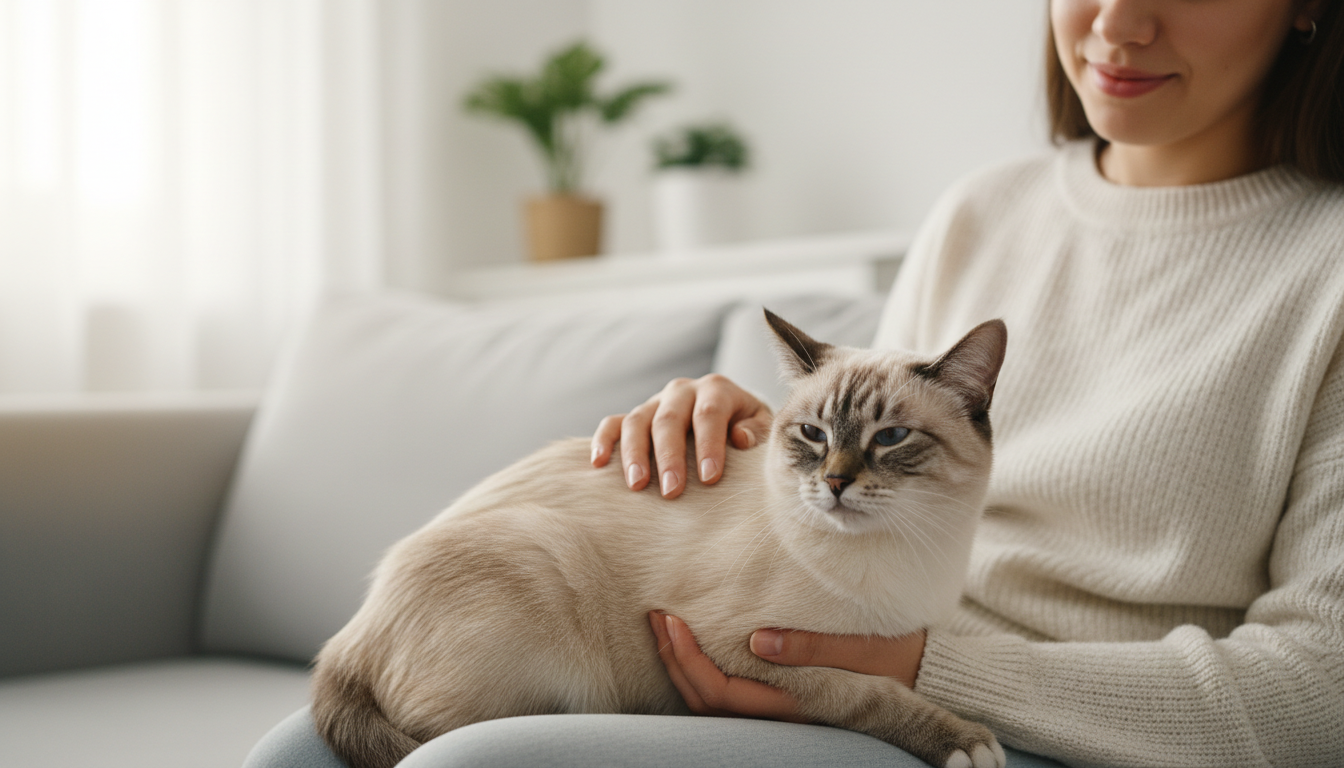
Watching a beloved cat lose her vision can be emotionally difficult, even when you understand the condition isn’t painful. It’s natural to feel worried or even grieve the change, especially if your cat was previously very active or adventurous. Give yourself permission to feel that way while also recognizing how resilient cats tend to be in these situations.
Many owners find that focusing on practical steps, like adjusting the home environment and establishing new routines, helps channel worry into something productive. Watching your cat gradually regain confidence as she adapts to her new way of experiencing the world can also be reassuring, since it shows just how capable she is of thriving despite the change.
Genetic Testing and Breeding Considerations
If you have a Siamese cat diagnosed with PRA, or if you’re considering getting a Siamese kitten in the future, it’s worth discussing genetic testing with your veterinarian or a reputable breeder. Some forms of inherited retinal disease can be identified through genetic testing before symptoms ever appear, which can be valuable information for breeding decisions.
Responsible breeders typically test for known hereditary conditions in the lines they work with, and asking about this history before bringing home a kitten is a reasonable question to raise. This won’t guarantee a cat will never develop PRA, since not every genetic marker is fully understood, but it does reflect a breeder’s commitment to reducing inherited health issues over time.
If your own cat is diagnosed with PRA and you’re involved in breeding, your vet can help you understand the implications for any future litters and whether genetic counseling makes sense for your situation.
When to See a Vet Right Away
While PRA itself typically progresses slowly, certain changes in your cat’s eyes warrant a prompt veterinary visit rather than a wait-and-see approach. Sudden vision loss, as opposed to a gradual decline, can signal a different and potentially more urgent problem, such as high blood pressure affecting the retina or other acute eye conditions.
Any sign of pain, such as squinting, pawing at the eye, excessive tearing, or visible redness and swelling, should also prompt a same-day visit, since these symptoms are not typical of PRA and may point to something that needs faster treatment. Cloudiness or a visible change in eye color is another reason to check in with your vet sooner rather than later.
- Sudden vision loss rather than gradual decline
- Visible redness, swelling, or discharge from the eye
- Squinting, pawing at the eye, or clear signs of pain
- Cloudiness or a noticeable color change in the eye
- Dilated pupils that don’t respond normally to light
- Any new eye symptom appearing alongside other signs of illness
Living Well with a Visually Impaired Cat
Many cats with progressive retinal atrophy go on to live long, content lives well after their vision has significantly declined. The condition itself isn’t life-threatening, and with some environmental adjustments, most cats adapt remarkably well to navigating the world through their other senses. Owners are often surprised at just how little their cat’s overall happiness changes once the household adjusts to her new needs.
Regular veterinary checkups remain important even after a PRA diagnosis, since your vet can help monitor for any secondary complications and ensure your cat’s overall health stays on track. Staying observant at home and keeping your vet in the loop about any new changes gives your cat the best possible chance at a comfortable, enriched life despite the vision loss.
If you ever have concerns about your Siamese cat’s eyes or behavior, don’t hesitate to reach out to your veterinarian. Early conversations, even before a diagnosis is clear, help ensure your cat gets the right support as soon as possible.
This article is for general education and is not a substitute for care from your own veterinarian. Learn about The Pet Vet and our editorial policy.