
If you share your home with a Pembroke Welsh Corgi, you’ve probably noticed that low, long body that makes them so recognizable. That same build puts extra strain on the spine, and it’s something every Corgi owner should understand. This guide walks you through why the breed faces this risk, what signs to watch for, and how you can help protect your dog’s back for years to come.
Table of Contents
- Why Corgis Are Built for Back Trouble
- Recognizing the Early Warning Signs
- What Happens During a Veterinary Workup
- Mild Cases Versus Emergencies
- Everyday Habits That Support Spinal Health
- The Weight Connection
- Exercise That Protects Rather Than Strains
- Living With a Corgi Recovering From Back Injury
- The Role of Genetics and Breeding
- When Surgery Becomes Part of the Conversation
- Supporting Senior Corgis With Back Concerns
- A Final Word for Corgi Owners
Why Corgis Are Built for Back Trouble
Pembroke Welsh Corgis belong to a group of dogs sometimes called chondrodystrophic breeds, meaning they carry a gene that gives them those short legs and long torsos everyone loves. That same genetic trait affects the cartilage in their spinal discs, causing the discs to harden and lose flexibility earlier in life than in dogs with more typical proportions. This process can start well before a dog shows any outward signs of trouble, which is part of why back disease catches so many owners off guard.
The discs that cushion the vertebrae are meant to act like shock absorbers, but in Corgis these discs can calcify and become brittle over time. When a disc degenerates enough, it can bulge or rupture, pressing on the spinal cord. This condition is often grouped under the term intervertebral disc disease, and it is one of the more common orthopedic concerns vets discuss with Corgi owners during routine visits.
Because the breed’s body shape is essentially baked into its genetics, you can’t eliminate the risk entirely just through good habits. But understanding what’s happening inside that long back helps explain why certain everyday choices, like how your dog gets on and off furniture, matter so much more for a Corgi than they might for a dog with a more conventional build.
Recognizing the Early Warning Signs
Catching back problems early gives your dog the best chance at a good outcome, so it helps to know what subtle changes might look like. Many Corgis won’t yelp or cry out dramatically when a disc first starts causing trouble. Instead, the signs tend to be quieter and easier to dismiss as your dog just having an off day.
Watch for any change in how your Corgi moves, especially reluctance to jump, climb stairs, or get up from lying down. A hunched back, lowered head carriage, or a tucked tail can also signal discomfort along the spine. Some dogs become unusually clingy or irritable when touched near the back or neck, while others simply slow down and seem less interested in their usual activities.
If you notice any combination of these signs, it’s time to call your veterinarian rather than wait to see if things improve on their own.
- Reluctance to jump onto the couch or into the car
- Stiffness after resting that improves slightly with movement
- Yelping when picked up or when pressure is applied to the back
- Dragging a hind paw or knuckling while walking
- Noticeable weakness or wobbliness in the back legs
- Reduced appetite or withdrawal from normal interaction
What Happens During a Veterinary Workup
When you bring your Corgi in for a suspected back issue, your vet will start with a thorough physical and neurological exam. They’ll check your dog’s reflexes, watch how they walk, and gently feel along the spine to identify areas of pain or sensitivity. This hands-on exam often gives a lot of useful information about how severe the problem might be and which part of the spine is involved.
Depending on what the exam reveals, your vet may recommend imaging such as X-rays, and in more serious or unclear cases, advanced imaging like an MRI or CT scan performed at a specialty hospital. These tools help pinpoint exactly which disc is affected and how much pressure is being placed on the spinal cord, which matters a great deal when deciding between medical management and surgery.
It’s worth noting that mild cases and severe cases can look surprisingly similar in the first hour or two, so even if your dog seems to be moving a little better after some rest, a proper evaluation is still important. Spinal injuries can worsen quickly, and what starts as mild wobbliness can progress to more serious weakness within a day.

Mild Cases Versus Emergencies
Not every back issue in a Corgi requires emergency surgery, and your vet will help you understand where your dog’s case falls on that spectrum. Dogs with mild pain and no significant neurological deficits are sometimes managed with strict rest and a tailored treatment plan under veterinary guidance. This approach relies heavily on the dog staying calm and confined, since even a little too much activity during healing can undo progress.
On the other end of the spectrum, a dog who suddenly can’t use their back legs, loses bladder or bowel control, or shows signs of significant pain combined with paralysis needs emergency veterinary attention right away. This is considered a true emergency because the window for the best possible recovery is often measured in hours, not days. Any sudden, dramatic change in your Corgi’s ability to walk or stand should never be treated as something to watch and wait on.
If you’re ever unsure whether your dog’s symptoms qualify as an emergency, it’s always safer to call your vet or an emergency animal hospital and describe exactly what you’re seeing. They can help you decide whether you need to come in immediately or whether a next-day appointment is reasonable.
Everyday Habits That Support Spinal Health
While you can’t change your Corgi’s genetics, plenty of daily habits can reduce the everyday stress placed on their back. Simple adjustments around the house go a long way toward protecting a spine that’s already working at a disadvantage.
None of these habits guarantee your Corgi will never develop back problems, but they do lower the day-to-day wear and tear on a spine that’s already more vulnerable than most. Small, consistent choices tend to add up more than people expect.
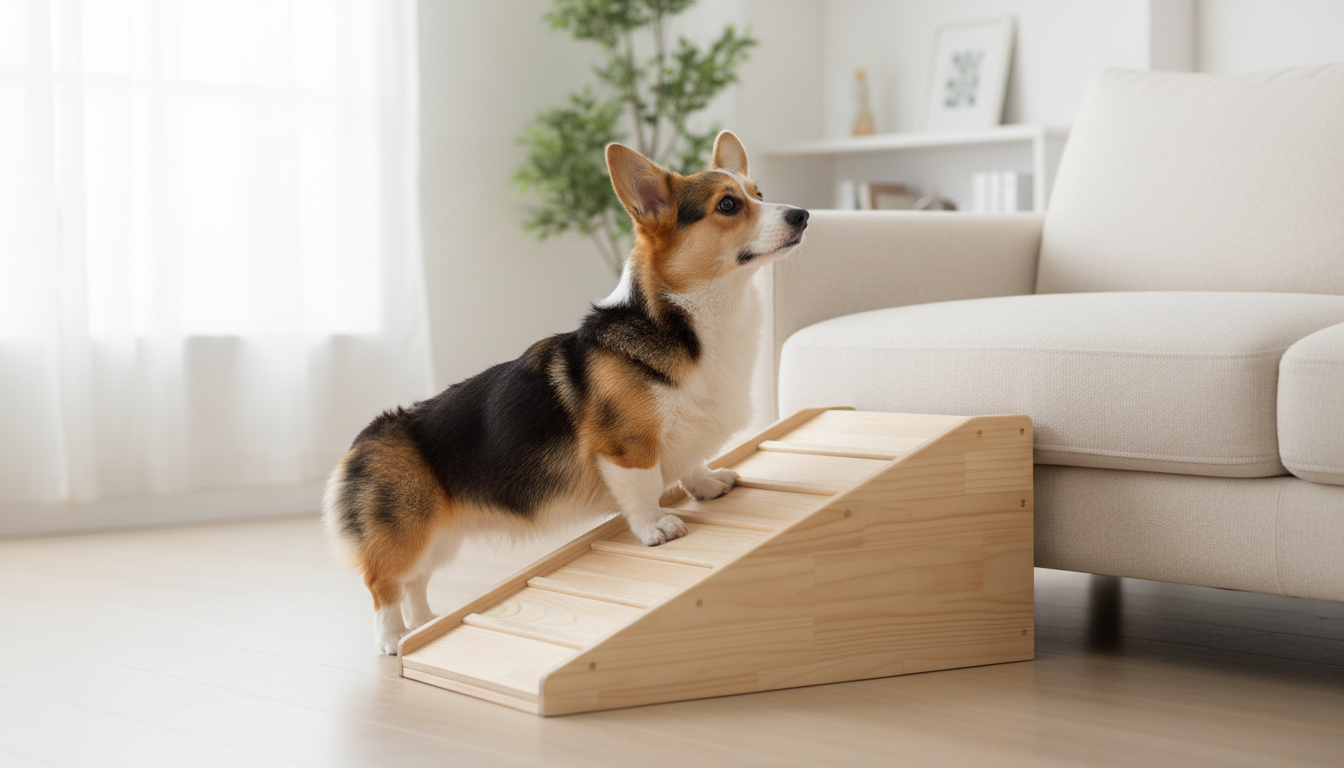
- Use ramps or steps for couches, beds, and vehicles instead of letting your dog jump
- Keep your Corgi at a lean, healthy weight to reduce strain on the spine
- Avoid encouraging rough play that involves twisting or sudden jumps
- Support your dog’s body properly when picking them up, with one hand under the chest and one under the hindquarters
- Use a harness instead of a collar for walks to reduce pressure near the neck and upper spine
- Provide traction on slippery floors with rugs or non-slip mats
The Weight Connection
Extra weight is one of the most modifiable risk factors when it comes to spinal health in Corgis, and it’s worth taking seriously. Because their legs are already short relative to their body length, even a few extra pounds translate into a noticeably heavier load on the spine and joints. Corgis also have a reputation for being food-motivated, which can make weight management a genuine daily effort for many owners.
Working with your vet to determine an appropriate body condition score for your individual dog is a good starting point. Rather than guessing at portion sizes, ask your vet to help you calculate how much food your Corgi actually needs based on their age, activity level, and current weight. Regular weigh-ins, whether at home or during vet visits, help you catch slow weight creep before it becomes a bigger problem.
Keeping your Corgi active with appropriate, low-impact exercise also supports a healthy weight without adding unnecessary strain on the back. Swimming, when supervised and appropriate for your dog, can be a gentler option compared to high-impact activities like jumping for a ball repeatedly.
Exercise That Protects Rather Than Strains
Exercise is still important for a Corgi’s overall health, but the type of activity matters more than it might for other breeds. Activities that involve repeated jumping, sharp twisting, or sudden stops and starts put more stress on a spine that’s already prone to disc problems. This doesn’t mean your Corgi needs to live a sedentary life, but it does mean being thoughtful about the games you play together.
Steady leash walks, controlled play sessions, and supervised swimming tend to be easier on the back than activities like frisbee catching or jumping on and off furniture repeatedly. If your Corgi loves to play fetch, consider rolling the ball along the ground rather than throwing it high in the air, since dogs often twist awkwardly in the air or upon landing when chasing a bouncing or flying toy.
Talk with your vet about an exercise routine that fits your individual dog’s age, weight, and any existing joint or back concerns. What’s appropriate for a lean, young adult Corgi may look different from what’s recommended for a senior dog or one who has already had a back injury in the past.

Living With a Corgi Recovering From Back Injury
If your Corgi has already experienced a disc-related back injury, recovery often involves a period of strict rest, sometimes called crate rest, where activity is deliberately limited to allow healing. This can be one of the hardest parts of the process for owners, since Corgis are naturally energetic and social dogs who don’t always understand why they suddenly can’t follow you around the house.
Setting up a small, safe confinement area with easy access to food, water, and a comfortable bed can help make this period more manageable for both of you. Short, supervised bathroom breaks on a leash, rather than free roaming, are usually part of the plan during initial recovery. Your vet will give you specific guidance on how long this period should last and what signs of progress or concern to watch for along the way.
Physical rehabilitation, sometimes involving a veterinary physical therapist, can also play a valuable role in helping a Corgi regain strength and mobility after a back injury. These programs are tailored to the individual dog and are typically introduced once your vet feels your dog is ready for that next phase of recovery.
The Role of Genetics and Breeding
Because the risk for spinal disc disease is tied closely to the genetics responsible for the Corgi’s distinctive shape, it’s a topic worth understanding if you’re considering adding a Corgi puppy to your family or are curious about your current dog’s background. Responsible breeders are often aware of this risk and may take it into account when planning litters, though there’s currently no way to fully eliminate the possibility through breeding alone.
If you’re getting a Corgi puppy, asking the breeder about the health history of the parents and any known back issues in the line can give you a little more insight, even though it won’t provide guarantees. For dogs you already have, this genetic background simply reinforces why preventive habits around weight, exercise, and furniture access matter so much throughout their life, not just after a problem shows up.
Understanding this connection can also help you feel less like you did something wrong if your Corgi does eventually develop back issues despite your best efforts. Sometimes genetics play a bigger role than anything happening day to day in the home.

When Surgery Becomes Part of the Conversation
For Corgis with more severe disc herniations, especially those involving significant neurological deficits, surgery may be recommended as the best path toward recovery. This is a decision that’s made together with your veterinarian, and often a veterinary neurologist or surgeon, based on the location and severity of the disc problem along with your dog’s overall health.
Surgical options aim to relieve pressure on the spinal cord and are generally most successful when performed promptly after severe symptoms appear. Recovery after spinal surgery typically involves a structured rehabilitation plan and continued restriction of activity for a period of weeks, with gradual increases in movement as your dog heals.
Cost, your dog’s age, and the severity of nerve damage all factor into this decision, and it’s completely reasonable to ask your vet plenty of questions about expected outcomes and what life might look like for your dog during and after recovery. There’s no one-size-fits-all answer here, and a thoughtful conversation with your veterinary team is the best way to figure out the right path for your individual dog.
Supporting Senior Corgis With Back Concerns
As Corgis age, the cumulative effect of years of wear on the spine can become more noticeable, even in dogs who never had an acute injury. Senior Corgis may show more general stiffness, a slower gait, or increased reluctance to navigate stairs, and some of this can overlap with arthritis rather than disc disease specifically. Your vet can help sort out which factors are contributing to your older dog’s mobility changes.
Supportive care for senior Corgis with back or joint concerns often includes continued weight management, orthopedic bedding, and environmental adjustments like ramps and non-slip flooring. Your vet may also discuss options to help keep your senior dog more comfortable, always tailored to your individual dog’s needs and health history.
Regular check-ins with your vet become even more valuable as your Corgi ages, since early detection of new or worsening issues gives you more options for keeping your dog comfortable and mobile for as long as possible.

A Final Word for Corgi Owners
Loving a Pembroke Welsh Corgi means embracing everything that makes the breed so charming, including that long back and those short legs that give them their signature look. Being aware of the spinal risks that come with this body shape isn’t about living in fear, but about giving you the tools to act quickly and confidently if something does come up. Small daily habits, paired with a good relationship with your veterinarian, go a long way toward protecting your dog’s quality of life.
If you ever notice changes in how your Corgi moves, sits, or reacts to touch along their back, don’t wait to see if it resolves on its own. A quick call to your vet, even just to ask a question, is always worth it when it comes to your dog’s spine. Catching problems early consistently leads to better outcomes and less discomfort for your dog in the long run.
This article is for general education and is not a substitute for care from your own veterinarian. Learn about The Pet Vet and our editorial policy.