
Bloat in Bernese Mountain Dogs is one of the most frightening emergencies a large-breed owner can face, because it can turn a normal evening into a race against the clock. This deep-chested breed carries a higher risk than most, and the difference between a good outcome and a tragic one often comes down to minutes. This guide walks you through what bloat is, why Bernese Mountain Dogs are especially vulnerable, and what to do if you suspect it.
Table of Contents
- What Bloat Actually Means
- Why Bernese Mountain Dogs Are Especially Vulnerable
- Early Warning Signs You Should Never Ignore
- Why This Is Always an Emergency
- Feeding Habits That May Lower Risk
- The Role of Genetics and Family History
- Preventive Surgery: What Gastropexy Means
- What Happens During Emergency Treatment
- Recovery and Monitoring After Bloat
- Stress and Bloat: Is There a Connection
- Other Digestive Issues That Can Look Similar
- Building an Emergency Plan Before You Need One
- When to Call the Vet Immediately
What Bloat Actually Means
Bloat in Bernese Mountain Dogs refers to a condition where the stomach fills with gas, food, or fluid and expands rapidly. On its own, this stage is called gastric dilatation, and it is uncomfortable and dangerous but sometimes manageable. The real crisis happens when the distended stomach twists on itself, a condition called gastric dilatation-volvulus, or GDV. Once the stomach twists, blood flow gets cut off to the stomach and often the spleen, and the dog can go into shock within a short period of time.
This is not a condition you can wait out at home or treat with home remedies. GDV is considered one of the true life-threatening emergencies in veterinary medicine, and every hour of delay lowers the odds of a good outcome. Understanding why this breed faces elevated risk can help you recognize trouble early and get your dog to emergency care before the situation becomes critical.
Why Bernese Mountain Dogs Are Especially Vulnerable
Large, deep-chested breeds are disproportionately affected by bloat, and the Bernese Mountain Dog fits that profile closely. The shape of this breed’s chest, which is deep from spine to sternum rather than wide, seems to allow more room for the stomach to shift position and twist. Breeds built this way, including other working and giant breeds, consistently show up at the top of risk lists in veterinary literature.
Body size plays a role as well. Bernese Mountain Dogs are large dogs, often in the 70 to 115 pound range, and bigger dogs generally carry more bloat risk than smaller ones. Age matters too, since risk tends to climb as dogs get older, meaning middle-aged and senior Berners deserve extra vigilance from their owners.
- Deep, narrow chest conformation typical of the breed
- Large adult body size
- Increasing age, particularly past the age of five
- A family history of bloat in related dogs
- Eating very quickly or in large single meals
Early Warning Signs You Should Never Ignore
The signs of bloat can appear suddenly, often within an hour or two of eating, though they can also develop at other times. Owners frequently describe a dog that was fine one moment and visibly distressed the next. Catching these signs early and acting fast is the single biggest thing you can do to protect your Bernese Mountain Dog.
Watch for a swollen or tight-looking abdomen, especially if your dog seems restless and cannot get comfortable lying down. Unproductive retching, where the dog tries to vomit but brings nothing up, is one of the most telling signs of GDV and should never be dismissed as a simple upset stomach. Pacing, drooling, a hunched posture, and labored breathing often accompany these episodes.
- A visibly distended or hard abdomen
- Repeated attempts to vomit with little or nothing coming up
- Restlessness, pacing, or inability to settle
- Excessive drooling
- Rapid breathing or obvious discomfort when touched near the belly
Why This Is Always an Emergency
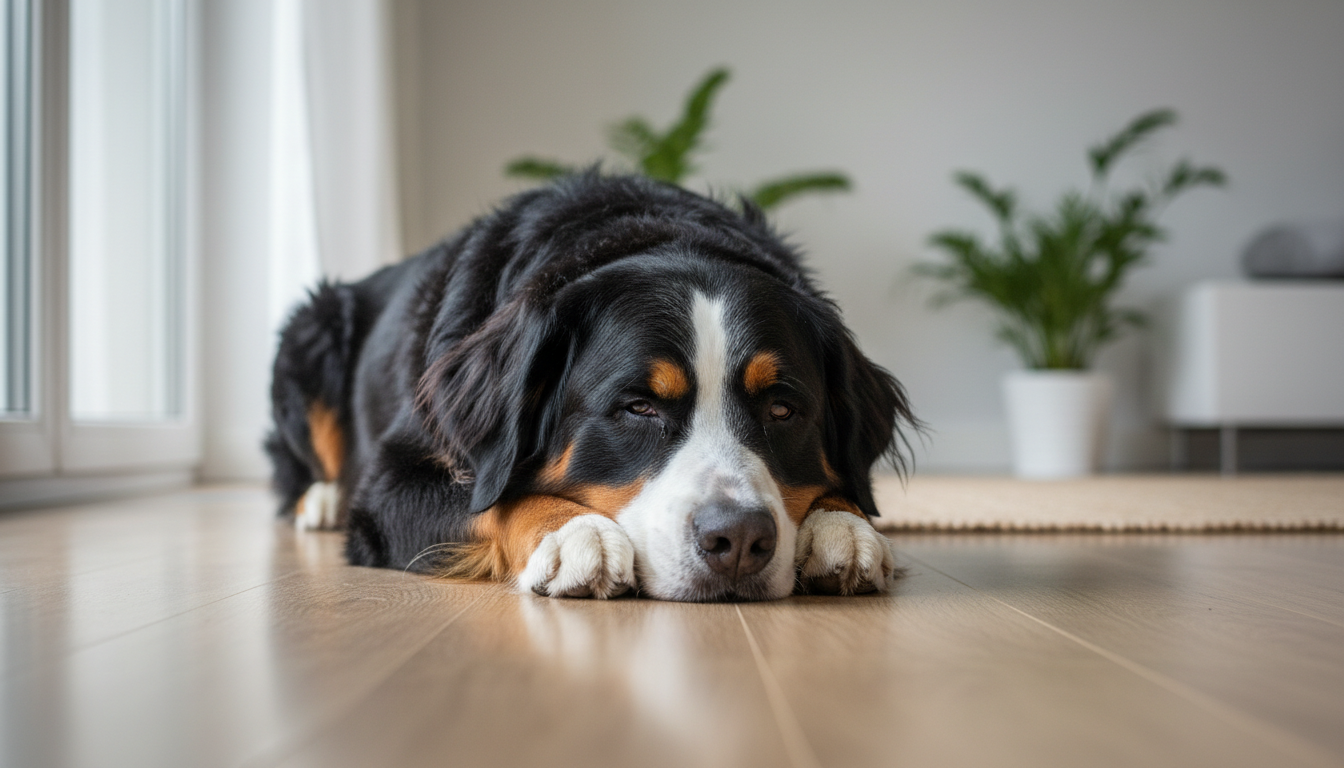
If you notice any combination of these signs, you should treat it as an emergency and call your vet or the nearest emergency animal hospital immediately, even if it is the middle of the night. GDV progresses quickly, and dogs can deteriorate from mildly uncomfortable to critically unstable within a short window. There is no home treatment for bloat, and waiting to see if symptoms improve can cost your dog’s life.
Veterinary teams typically confirm the diagnosis with a physical exam and X-rays, then work to stabilize the dog before surgery. Surgery is usually necessary to untwist the stomach and secure it in place to help prevent recurrence. The sooner your dog receives care, the better the chances of a full recovery, so do not wait for symptoms to worsen before heading to the clinic.
Feeding Habits That May Lower Risk
While no feeding strategy can guarantee your Bernese Mountain Dog never develops bloat, certain habits are commonly recommended by veterinarians to help reduce the odds. Feeding two or three smaller meals throughout the day instead of one large meal is one of the most frequently suggested changes, since a very full stomach is thought to be more prone to shifting and twisting.
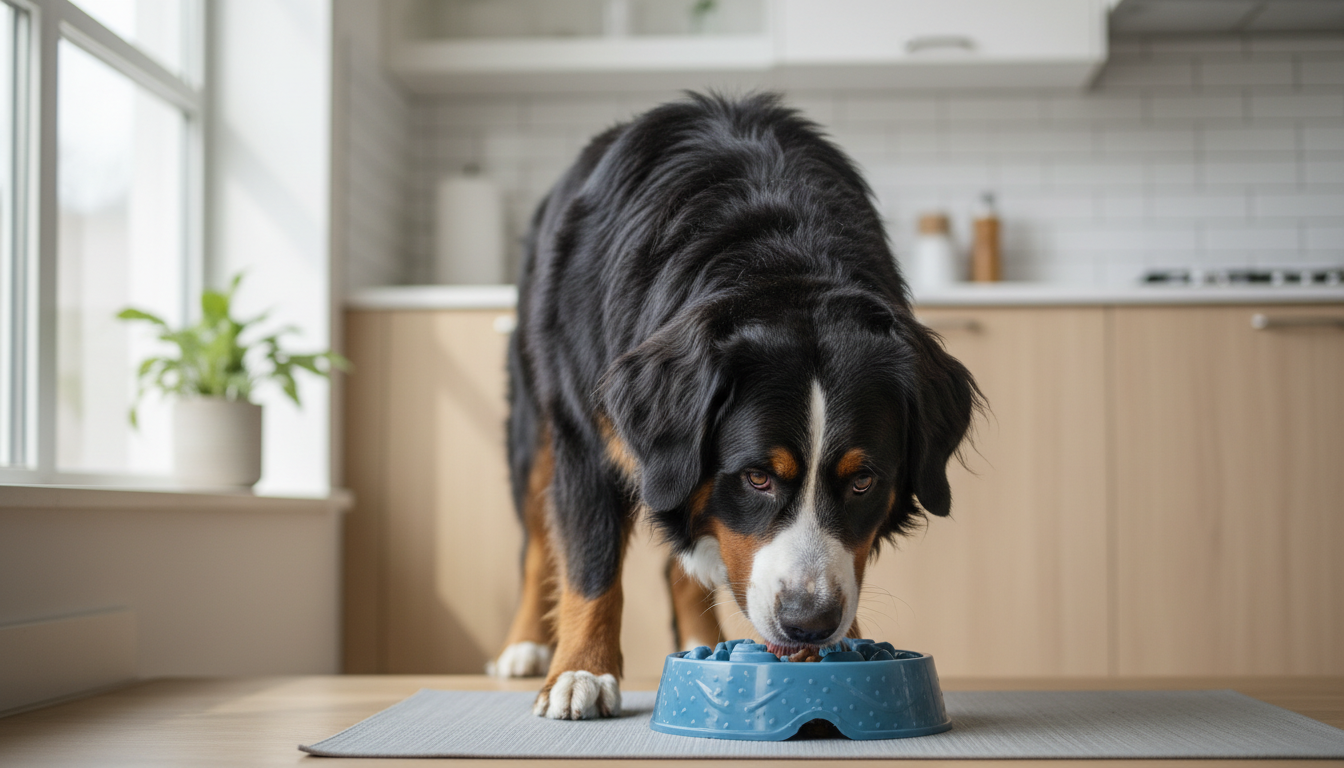
Slowing down a dog that eats too fast can also help, since gulping air along with food may contribute to gas buildup in the stomach. Many owners find that slow-feeder bowls or puzzle feeders naturally stretch out mealtime and reduce the amount of air swallowed. It is also generally advised to avoid vigorous exercise for a period before and after meals, giving the stomach time to settle.
- Feed two or three smaller meals rather than one large one
- Use a slow-feeder bowl if your dog eats quickly
- Avoid strenuous exercise right before and after meals
- Keep fresh water available but avoid letting your dog gulp large amounts all at once
- Talk to your vet about your dog’s specific feeding schedule and portions
The Role of Genetics and Family History
Because bloat has a tendency to run in certain lines, breeders and owners of Bernese Mountain Dogs are often encouraged to pay attention to family history. If a dog’s parents, littermates, or close relatives have experienced GDV, that dog may carry a higher personal risk even with good feeding management. This does not mean bloat is entirely predictable or preventable through breeding alone, but it is a useful piece of information to discuss with your vet.
If you are getting a Bernese Mountain Dog puppy, it is reasonable to ask the breeder whether bloat has occurred in the dog’s lineage. This conversation will not eliminate risk, but it gives you a clearer picture of what to watch for as your dog matures, and it can help your veterinarian tailor advice to your specific dog.
Preventive Surgery: What Gastropexy Means
Many veterinarians discuss a procedure called gastropexy with owners of high-risk breeds like the Bernese Mountain Dog. During this surgery, the stomach is attached to the inside of the abdominal wall, which helps prevent it from twisting even if it becomes distended with gas. This does not prevent bloat itself but significantly reduces the chance of the life-threatening twisting that makes GDV so dangerous.
Gastropexy is sometimes performed at the same time as spaying or neutering, which can reduce the number of times a dog needs anesthesia. It is also performed as a standalone preventive procedure in dogs considered at high risk, or as part of emergency surgery after a bloat episode to help prevent recurrence. This is a significant decision that should be made in partnership with your veterinarian after weighing your dog’s individual risk factors.

What Happens During Emergency Treatment
When a dog arrives at the clinic with suspected GDV, the veterinary team typically moves quickly to assess vital signs and stabilize the dog before anything else. This often includes intravenous fluids to address shock and sometimes a procedure to relieve pressure in the stomach before surgery can take place. X-rays help confirm whether the stomach has simply dilated or has actually twisted, since the treatment path differs depending on the answer.
Surgery to correct GDV involves untwisting the stomach, assessing the health of the stomach wall and spleen, and performing a gastropexy to reduce the risk of it happening again. Recovery from this surgery requires hospitalization and close monitoring, since complications can arise even after the stomach has been repositioned. Your vet will walk you through what to expect at each stage, and it is normal to have many questions during such a stressful event.
Recovery and Monitoring After Bloat
Dogs that survive GDV surgery typically need a period of rest and careful monitoring at home once they are discharged. Your vet will likely recommend a bland, easily digestible diet in small portions as the digestive system recovers, along with limited activity while the incision heals. Watching the incision site for swelling, redness, or discharge is an important part of the recovery process.
It is also worth discussing a longer-term feeding and exercise plan with your veterinarian once your dog is home, since the goal is to reduce the chances of future digestive upset. Some dogs recover fully and go on to live normal, active lives after a gastropexy, while others may need ongoing monitoring depending on how the surgery went and their overall health. Regular follow-up visits give your vet the chance to catch any lingering issues early.

Stress and Bloat: Is There a Connection
Some veterinary professionals have observed that stressful situations, such as boarding, travel, or changes in routine, seem to coincide with bloat episodes in certain dogs. While this connection is not fully understood, it is reasonable to pay closer attention to your Bernese Mountain Dog during times of disruption, especially around mealtimes. Anxious or nervous dogs may also eat differently when stressed, gulping food quickly or eating irregularly, which could compound other risk factors.
If your dog tends to get anxious in new environments or during changes to the household, talk to your vet about strategies to keep mealtimes calm and predictable. Keeping a consistent routine, even while traveling or boarding, may help reduce one more variable in an already complex picture.
Other Digestive Issues That Can Look Similar
Because bloat can start with symptoms like restlessness and an upset stomach, it is worth knowing how to tell it apart from more common, less dangerous digestive issues. Simple indigestion or mild gas usually does not come with a hard, visibly swollen abdomen, nor does it typically include the repeated, unproductive retching seen with GDV. A dog with ordinary stomach upset is often still willing to lie down comfortably and may show interest in food again within a few hours.
That said, you should never try to make this distinction on your own if you have any doubt. If your dog is showing abdominal swelling, repeated dry heaving, or clear signs of distress, treat it as an emergency rather than trying to wait and watch. It is always better to have a vet rule out bloat than to assume it is something minor and lose valuable time.
Building an Emergency Plan Before You Need One
Because bloat moves so quickly, having a plan in place before an emergency happens can make a real difference. Know the location and phone number of the nearest emergency veterinary hospital, and keep it saved somewhere easy to find, such as on your phone or posted in your kitchen. If you have a regular vet, ask in advance what their protocol is for after-hours emergencies and whether they have a relationship with a nearby emergency facility.
It also helps to keep your dog’s basic health information, such as weight, current medications, and any known health conditions, written down or saved somewhere accessible. In a crisis, having this information ready can save precious time when you arrive at the clinic and need to answer questions quickly.
- Save the number and address of your nearest emergency vet clinic
- Ask your regular vet about their after-hours emergency protocol
- Keep your dog’s weight, medications, and health history easily accessible
- Discuss preventive gastropexy with your vet if your dog is high risk
- Learn the early signs of bloat so you can act without hesitation
When to Call the Vet Immediately
If your Bernese Mountain Dog shows a swollen abdomen, repeated unproductive retching, restlessness, drooling, or obvious distress, do not wait to see if it passes. Call your vet or head to an emergency animal hospital right away, since every minute matters with this condition. Even if you are not entirely sure what you are seeing, it is always better to have a professional examine your dog than to assume it will resolve on its own.
Bloat in Bernese Mountain Dogs is frightening precisely because it can escalate so quickly, but being informed about the signs and risk factors puts you in a much stronger position to act fast. Talk to your veterinarian about your dog’s individual risk, ask about preventive options like gastropexy, and keep emergency contact information close at hand so you are never caught off guard.
This article is for general education and is not a substitute for care from your own veterinarian. Learn about The Pet Vet and our editorial policy.