
Scottish Fold joint problems are something every owner of this breed needs to understand, because the same gene that gives these cats their famously folded ears also affects cartilage throughout the body. This condition, called osteochondrodysplasia, can lead to painful, progressive changes in the legs, tail, and joints. In this article, you will learn what causes it, how to spot early signs, and what steps you can take to keep your Scottish Fold comfortable for life.
Table of Contents
- What Causes Joint Problems in Scottish Folds
- Why the Tail Is Often the First Clue
- How Joint Problems Show Up in the Legs and Paws
- Recognizing Pain in a Cat That Hides It Well
- Why Early Diagnosis Matters
- What a Veterinary Exam Typically Involves
- Living With a Cat That Has Joint Changes
- The Role of Pain Management
- Weight Management as a Protective Measure
- Creating a Joint-Friendly Home Environment
- When Joint Pain Signals an Emergency
- Breeding Considerations and Prevention
- Supporting Your Cat’s Quality of Life Long-Term
- A Final Word for Scottish Fold Owners
What Causes Joint Problems in Scottish Folds
The folded ear that makes this breed so recognizable comes from a genetic mutation affecting cartilage development. That same mutation does not stop at the ears. It affects cartilage and bone formation throughout the cat’s body, which means the tail, legs, and paws are often involved as well. This condition is known as osteochondrodysplasia, and it is considered an inherent part of the Scottish Fold breed rather than a rare complication.
Cats that inherit two copies of the folded-ear gene (one from each parent) tend to have much more severe skeletal problems than cats with just one copy. This is why responsible breeders only pair a Scottish Fold with a straight-eared cat, never two folded-ear cats together. Even with careful breeding, though, some degree of cartilage abnormality is common in this breed, which is why owners need to stay alert to changes in how their cat moves.
Unlike many joint conditions in cats that develop later in life from wear and tear, osteochondrodysplasia in Scottish Folds often has a genetic head start. That does not mean every Scottish Fold will develop severe symptoms, but it does mean the risk is baked into the breed’s biology from birth.
Why the Tail Is Often the First Clue
Many owners notice changes in their Scottish Fold’s tail before anything else. The tail may become stiff, thickened, or shortened in its range of motion. Some cats hold their tails lower than usual or seem reluctant to let anyone touch the base of the tail.
Because the tail is made of small vertebrae connected by cartilage, it is often one of the first places where abnormal cartilage growth becomes visible or palpable. A tail that feels unusually rigid along its length, or that your cat flinches away from when touched, is worth mentioning to your veterinarian even if nothing else seems wrong yet.
How Joint Problems Show Up in the Legs and Paws
Beyond the tail, the condition can affect the ankles, knees, and wrists. Owners sometimes describe their cat’s gait as stiff, short-strided, or almost “wooden.” The paws themselves may look thicker or less flexible than you would expect, and the toes can sometimes appear fused or stubby in appearance.
These changes can be subtle at first and easy to mistake for your cat simply “slowing down” or becoming more relaxed with age. That is part of what makes this condition tricky to catch early.
- A reluctance to jump onto furniture or climb stairs that used to be easy
- A stiff, shuffling walk instead of the usual smooth cat gait
- Thickened or inflexible-looking paws and ankles
- Sitting or lying in unusual positions to avoid putting weight on certain joints
- Reduced interest in play or activity that involves running and jumping
Recognizing Pain in a Cat That Hides It Well
Cats are notoriously good at masking pain, and Scottish Folds are no exception. A cat with sore joints will not limp dramatically or cry out the way a dog might. Instead, the signs tend to be quiet and easy to miss unless you know what to look for.
Watch for a cat that grooms less than usual, especially around the lower back and hindquarters, since reaching those areas can become uncomfortable. You might also notice a change in litter box habits, since climbing in and out of a high-sided box can be painful for a cat with sore ankles or wrists. Some cats become more irritable or withdrawn, not because their personality has changed, but because movement itself has started to hurt.
- Decreased grooming, especially in hard-to-reach areas
- Avoiding the litter box or having accidents near it
- Increased irritability when picked up or handled
- Sleeping more and in different, less active positions
- A noticeable drop in overall activity level
Why Early Diagnosis Matters
Getting a diagnosis early does not cure the underlying genetic condition, but it does give you and your veterinarian a chance to manage symptoms before they become severe. Early intervention can also help prevent secondary problems, like muscle loss from reduced activity or compensatory strain on other joints as your cat shifts its weight to avoid pain.
If you notice any of the signs above, it is important to schedule a veterinary exam rather than waiting to see if things improve on their own. X-rays are typically needed to assess how much the cartilage and bone have been affected and to rule out other causes of lameness or stiffness. Your veterinarian can then help you put together a management plan tailored to your cat’s specific situation.
What a Veterinary Exam Typically Involves
When you bring your Scottish Fold in for a joint evaluation, expect a thorough physical exam that includes careful palpation of the tail, legs, and paws. Your vet will likely watch your cat walk and may gently manipulate the joints to check for stiffness, pain response, or reduced range of motion.
Imaging, usually X-rays, is the standard way to confirm the diagnosis and understand its severity. These images can show the characteristic changes in bone and cartilage associated with osteochondrodysplasia, including shortened or fused tail vertebrae and abnormal joint surfaces in the legs. Your veterinarian may also recommend blood work to rule out other conditions that could be contributing to discomfort or mobility changes.
Living With a Cat That Has Joint Changes
There is no cure for osteochondrodysplasia, but that does not mean your cat is destined for a life of pain. Many Scottish Folds live comfortable, happy lives with thoughtful management and a home environment adjusted to their needs. The goal is to reduce strain on affected joints while keeping your cat as mobile and engaged as possible.
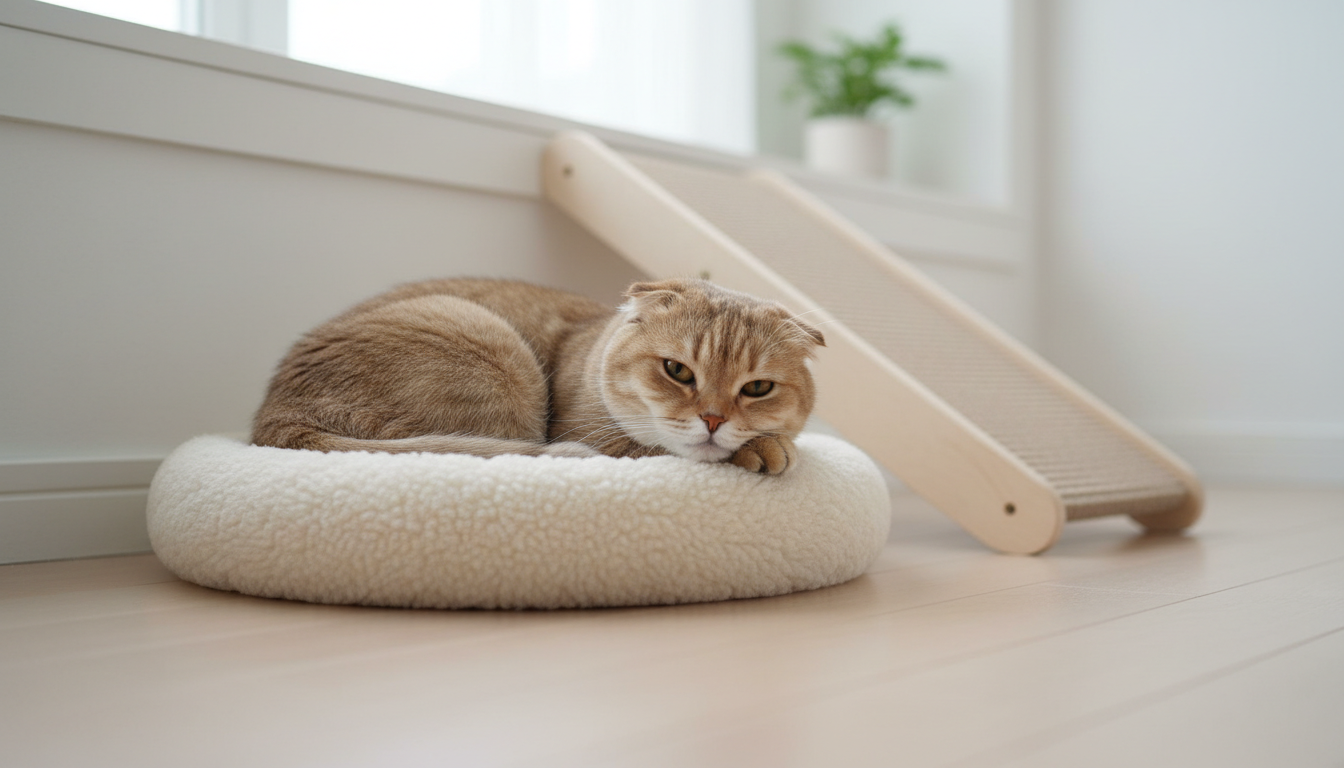
Small changes around the house can make a meaningful difference. Lowering the sides of a litter box, providing ramps or steps to favorite perches, and choosing softer bedding can all reduce the physical demands placed on sore joints. Keeping your cat at a healthy weight is especially important, since extra pounds place additional stress on already compromised cartilage.
- Use low-sided litter boxes that are easy to step into
- Add ramps or pet stairs near beds, sofas, and windowsills
- Choose soft, supportive bedding in a few easily accessible spots
- Keep nails trimmed to support stable footing
- Maintain a healthy body weight through portion control and vet-approved activity
The Role of Pain Management
If your veterinarian confirms joint pain or stiffness, they may discuss pain management options suited to your cat’s age, health status, and the severity of the condition. This is a conversation to have directly with your vet, since pain control in cats requires careful, individualized decisions and should never be approached with over-the-counter human medications or guesswork.
Alongside any prescribed approach, many owners find that supportive therapies like gentle massage, warm resting spots, and low-impact play can help maintain comfort and quality of life. Always run any supplement or therapy idea past your veterinarian first, since some options that seem harmless can interact with other treatments or are simply not appropriate for a cat’s specific condition.
Weight Management as a Protective Measure
Because extra weight puts more pressure on joints that are already dealing with abnormal cartilage, keeping your Scottish Fold lean is one of the most effective things you can do. This is especially relevant for this breed, since their calmer, less acrobatic nature can sometimes lead to lower activity levels and weight gain over time.
Work with your veterinarian to determine an appropriate body condition target and feeding plan. Regular, gentle play sessions that do not involve high jumps or hard landings can help maintain muscle tone and mental stimulation without placing unnecessary strain on the joints.
Creating a Joint-Friendly Home Environment
Think about your home from your cat’s perspective and look for ways to reduce the physical effort required to get around. Cats with joint changes often still want to reach high places, so providing gradual routes upward rather than requiring big leaps can keep them engaged without causing pain.
- Place soft rugs or mats on slippery floors to improve traction
- Position food, water, and litter boxes on the same level to reduce unnecessary climbing
- Offer multiple resting spots so your cat does not have to travel far between favorite areas
- Keep the home at a comfortable, consistent temperature, since cold can stiffen sore joints
- Monitor your cat during play and stop before they show signs of fatigue or discomfort
When Joint Pain Signals an Emergency
While osteochondrodysplasia is typically a gradual, chronic condition, there are situations that warrant immediate veterinary attention rather than a routine appointment. Sudden inability to move a limb, extreme pain when touched, or a complete refusal to walk should always be treated as urgent.
If you see any of these signs, contact your veterinarian or an emergency animal hospital right away rather than waiting for a scheduled visit.
- Sudden collapse or inability to bear weight on any leg
- Visible swelling that appears quickly
- Crying out in pain when touched or moved
- Complete loss of appetite alongside mobility changes
- Dragging a limb or an oddly positioned leg or tail
Breeding Considerations and Prevention
If you are considering adding a Scottish Fold to your family, it is worth understanding the breeding practices behind your cat. Reputable breeders avoid pairing two folded-ear cats, since doing so significantly increases the severity of joint problems in kittens. Asking about the health history of both parents, including whether either carries one or two copies of the fold gene, can give you useful information before bringing a kitten home.
For current owners, there is no way to reverse the genetic basis of this condition, but understanding your cat’s risk can help you be proactive rather than reactive. Regular veterinary checkups, even when your cat seems fine, give your vet the chance to catch subtle changes before they become significant problems.
Supporting Your Cat’s Quality of Life Long-Term
Living with a Scottish Fold that has joint changes is ultimately about balance. You want to protect your cat from unnecessary pain and strain while still allowing them to live a full, enriched life. Many affected cats continue to enjoy play, affection, and exploration for years when their environment and care are adjusted thoughtfully.
Stay observant, keep up with regular veterinary visits, and do not hesitate to reach out to your vet whenever something seems off, even if it feels minor. Catching changes early and working closely with your veterinary team gives your Scottish Fold the best possible chance at a comfortable, happy life despite this breed-specific challenge.
A Final Word for Scottish Fold Owners
Scottish Fold joint problems are a lifelong consideration for this breed, not a one-time diagnosis to manage and forget. With consistent attention, a joint-friendly home, and a strong partnership with your veterinarian, you can help your cat navigate this condition with as much comfort and dignity as possible. If you ever have concerns about your cat’s mobility, pain level, or overall comfort, reach out to your veterinarian rather than waiting, since early conversations often lead to the best outcomes.
This article is for general education and is not a substitute for care from your own veterinarian. Learn about The Pet Vet and our editorial policy.