
Overview
Many common household foods can seriously poison cats, but most poisoning cases are preventable with proper awareness and precautions. The article outlines dangerous foods like chocolate, caffeine, onions, and garlic, along with prevention strategies to keep your cat safe from toxic substances in your home.
“`html
Table of Contents
- Introduction
- Chocolate and Caffeine
- Onions and Garlic
- Grapes and Raisins
- Avocado
- Alcohol and Raw Dough
- Xylitol
- Raw Fish and Eggs
- Salt and Fatty Foods
- Bones and Small Foods
- Dairy and Lactose
- Dog Food and Medications
- Creating a Safe Home
- What To Do Right Now
- FAQs
Foods Cats Should Avoid: Keep Your Cat Safe
If your cat has eaten something you’re worried about, you’re not alone—and it’s good that you’re looking for answers. Many common household foods can make cats seriously ill, but the good news is that most poisoning cases are preventable.
This article is for informational purposes only and is not a substitute for professional veterinary advice. Always consult a licensed veterinarian for diagnosis and treatment.
Your cat may look at you with those irresistible eyes during dinner, but sharing human food can be dangerous. Let’s walk through which foods to avoid and why.
Chocolate and Caffeine: Hidden Dangers in Your Home
Chocolate contains a compound that cats cannot break down efficiently. Even small amounts can accumulate in their system and cause serious harm.
Dark chocolate and baking chocolate are more dangerous than milk chocolate because they contain higher concentrations of this toxic compound.
If your cat eats chocolate, watch for:
- Vomiting or diarrhea
- Increased heart rate
- Tremors or seizures
Any suspected chocolate ingestion needs immediate veterinary attention.
Caffeine is another hidden danger found in coffee, tea, energy drinks, and some medications. It can overstimulate your cat’s nervous system, causing restlessness, rapid breathing, tremors, and elevated heart rate.
Prevention tips:
- Keep all chocolate products sealed and stored out of reach
- Be aware of cocoa powder in baking and cooking areas
- Secure your coffee and tea while they’re hot
- Check medication labels for caffeine content
Onions and Garlic: Common Kitchen Ingredients That Are Toxic
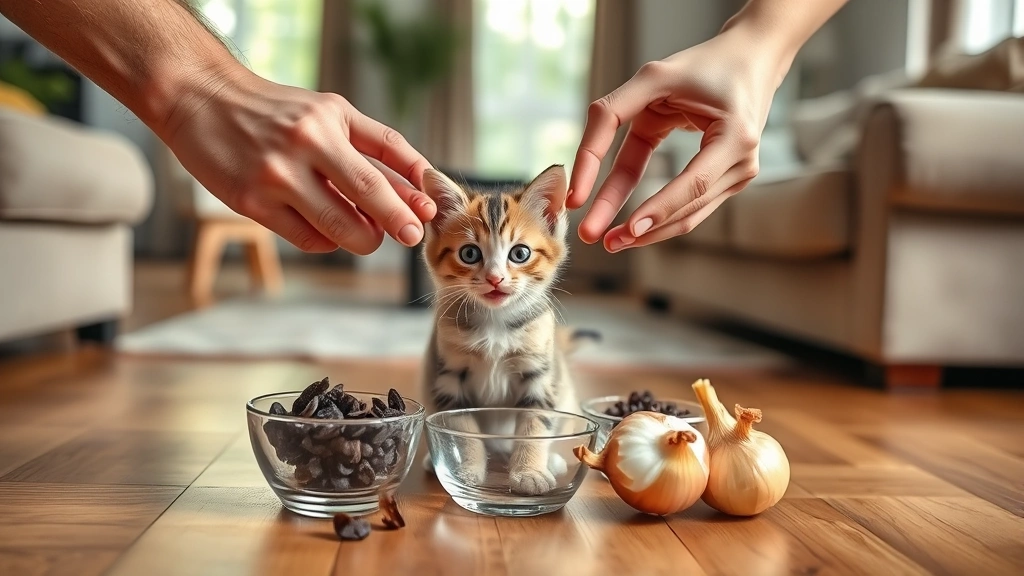
These vegetables contain compounds that can damage your cat’s red blood cells. Both raw and cooked forms are equally toxic—cooking doesn’t reduce the danger.
Even small amounts eaten regularly can accumulate and cause serious harm.
Onion and garlic powder in seasoning blends and processed foods are just as dangerous as fresh versions. Always check labels before sharing anything with your cat.
Signs develop gradually, which is why they’re easy to miss. Watch for:
- Weakness or lethargy
- Pale gums
- Orange-tinted urine
- Vomiting or decreased appetite
It’s completely normal to feel worried about accidental exposure—catching this early puts you in a great position to help.
Prevention tips:
- Read ingredient labels on all processed foods and seasonings
- Keep cooking areas clear of loose onion and garlic pieces
- Never give your cat table scraps from dishes containing these ingredients
- Educate family members about this danger
Grapes and Raisins: Why There’s No Safe Amount
We don’t completely understand why grapes and raisins cause kidney problems in cats, but we know they absolutely can.
The response is unpredictable—some cats might get sick from one grape, while others might seem fine after eating more. This uncertainty means there’s no safe amount.
Symptoms typically appear within 24 to 72 hours and may include:
- Vomiting or diarrhea
- Lethargy or loss of appetite
- Decreased urination
- Abdominal pain
If your cat has eaten grapes or raisins, seek help immediately—don’t wait to see if symptoms develop.
The good news is that avoiding this is straightforward: keep all grapes and raisins completely out of reach, including fresh fruit, dried fruit, and baked goods containing raisins.
Avocado: A Creamy Threat in Your Kitchen
Avocados contain a compound that may be toxic to cats. It’s found in the fruit, pit, and leaves.
The highest concentration is near the pit, but the flesh contains it too. That means guacamole is off-limits as well.
If your cat eats avocado, watch for:
- Vomiting or diarrhea
- Lethargy or abdominal pain
- Difficulty breathing or chest pain (in more serious cases)
Contact your veterinarian if you notice any of these signs.
Alcohol and Raw Dough: Fermentation Creates Hidden Dangers
Alcohol is extremely toxic to cats, even in tiny amounts. A cat’s small body means that a single sip of beer, wine, or liquor can cause serious intoxication.
Symptoms may include disorientation, lack of coordination, tremors, seizures, and potentially coma or death.
Raw bread dough presents a sneaky danger many people don’t think about. When your cat eats unbaked dough, the yeast ferments inside their warm stomach.
This creates carbon dioxide gas and alcohol—both toxic. The expanding dough can also cause dangerous bloating.
Symptoms of raw dough ingestion may include:
- Abdominal distension
- Lethargy or vomiting
- Disorientation
This situation escalates quickly and requires immediate veterinary care. Always keep pizza dough, bread dough, and any yeast-containing products secured where your cat cannot access them.
Xylitol: The Sugar-Free Sweetener That’s Deadly
Xylitol is found in many “sugar-free” products marketed as healthy alternatives. For cats, it’s remarkably dangerous.
It causes a rapid and dangerous release of insulin, leading to severe low blood sugar within 15 to 30 minutes. This is a medical emergency.
Common products containing xylitol include:
- Sugar-free candy and baked goods
- Diet sodas
- Sugar-free peanut butter
- Some medications, mouthwash, and toothpaste
Most people don’t realize how widespread xylitol is. Reading ingredient labels carefully is crucial.
Symptoms may include lethargy, vomiting, loss of coordination, seizures, and collapse. Xylitol can also cause liver damage.
If your cat ingests xylitol, this is a true emergency requiring immediate veterinary intervention.
Raw Fish and Eggs: Bacterial Risk and Enzyme Problems
Raw fish contains an enzyme that breaks down thiamine (vitamin B1). Without adequate thiamine, cats may develop serious neurological problems including seizures and loss of coordination.
Raw fish and raw eggs also expose cats to bacterial contamination like Salmonella and E. coli.
Raw eggs contain a protein that binds to biotin, a B vitamin, preventing its absorption. This can lead to skin and coat problems over time.
Cooking fish and eggs completely eliminates these dangers.
If you want to include fish or eggs in your cat’s diet, ensure they’re cooked thoroughly and don’t contain any toxic seasonings. Always discuss any dietary changes with your veterinarian first.
Salt and Fatty Foods: Inflammation and Serious Complications
Excess salt can cause sodium poisoning in cats. While cats need some sodium, the amounts in processed human foods are far too high for their small bodies.
Symptoms of salt poisoning may include increased thirst, increased urination, lethargy, vomiting, diarrhea, and potentially seizures.
Fatty foods pose an even bigger danger through pancreatitis, an inflammation of the pancreas that can be life-threatening. Rich meats, fatty table scraps, bacon, fried foods, and butter are all problematic.
A single meal of very fatty food can trigger pancreatitis in susceptible cats, causing:
- Severe abdominal pain
- Vomiting
- Loss of appetite
Processed foods including deli meats, cheese, and packaged snacks contain dangerous levels of both salt and fat. The safest approach is simple: don’t give your cat any human food from your table. Stick to approved feline treats instead.
Bones and Small Foods: Choking and Blockage Risks
Cooked bones become brittle and splinter easily, creating sharp fragments that can cut your cat’s mouth, throat, or digestive tract. Even raw bones can cause problems if your cat doesn’t chew thoroughly before swallowing.
Bone fragments can lodge in the throat causing choking, or pass through the digestive system where they may puncture the intestines or cause complete blockages.
An intestinal blockage is a surgical emergency. Symptoms may include:
- Vomiting or loss of appetite
- Lethargy
- Straining in the litter box
- Abdominal pain
Small foods like nuts, seeds, corn kernels, and candies also pose choking hazards. Always supervise your cat in the kitchen and immediately clean up any food scraps that might be dangerous.
Dairy and Lactose: Why Milk Isn’t the Right Choice
Most adult cats are lactose intolerant. Even though they may enjoy the taste of milk, they lack sufficient lactase enzyme to digest it properly.
This causes vomiting, diarrhea, and abdominal discomfort.
While kittens produce adequate lactase and can digest their mother’s milk, most cats lose this ability as they mature. Adult cats should not regularly have milk, yogurt, ice cream, cheese, or cream.
If you want to give your cat a special treat, choose products specifically formulated for felines instead.
Dog Food and Human Medications: Wrong Nutrition and Drug Dangers
Cat and dog nutrition requirements differ significantly. Cats are obligate carnivores requiring meat, and they need taurine for heart and eye health.
If your cat regularly eats dog food, they won’t get proper nutrition and may develop serious health problems.
Some dog foods contain ingredients like onion powder that are fine for dogs but toxic for cats. In households with both pets, feed them separately and ensure your cat only accesses appropriate feline food.
Human medications pose another serious danger. Prescription medications, over-the-counter pain relievers, cold medicines, and supplements can all be toxic to cats.
Never give your cat any medication without explicit veterinary approval. Store all medicines securely where cats cannot access them.
If your cat accidentally ingests human medication, contact poison control or seek immediate veterinary care.
Creating a Safe Home: Prevention Strategies
The foundation of safety is understanding that human food generally doesn’t belong in your cat’s diet unless explicitly approved by your veterinarian.
Cats have specific nutritional requirements best met through high-quality commercial cat food formulated by nutritional experts.
Practical prevention steps:
- Establish clear family rules about feeding the cat
- Educate children that sharing snacks with the cat is not safe
- Keep all dangerous foods and products in secured cabinets
- Check ingredient labels on everything before purchasing
- Clean up food scraps immediately after meals
- Keep your veterinarian’s number easily accessible
- Know the location of your nearest emergency veterinary clinic
If your cat accidentally ingests something toxic, act quickly. Contact your veterinarian immediately for guidance, or call your local emergency clinic if it’s after hours.
Have the name of the substance and the approximate amount ingested ready to share.
What To Do Right Now
If you’re worried your cat may have eaten something toxic, follow these steps:
- Write down the substance name and the approximate amount your cat ate
- Note the time it happened and any symptoms you’ve observed so far
- Call your veterinarian immediately with this information—don’t wait for symptoms to appear
- If it’s after hours, contact your local emergency veterinary clinic right away
- If you’re unsure whether your pet needs urgent care, a quick telehealth check-in can give you peace of mind—no appointment needed
Understanding toxic foods is an important part of responsible pet ownership. You might also find it helpful to learn about human foods cats can eat so you know what’s safe to share on occasion.
Research has shown that most cases of pet poisoning from household items are preventable through education and awareness.
Frequently Asked Questions
Can cats eat any human food safely?
Yes, some human foods are safe for cats, including cooked chicken, cooked turkey, cooked salmon, and plain cooked vegetables like carrots and green beans. Always introduce new foods gradually and consult your veterinarian if you’re unsure.
What should I do if my cat eats something toxic?
Contact your veterinarian or animal poison control immediately. Provide the name of the substance and the approximate amount your cat ingested. Don’t wait for symptoms to appear—prompt treatment is often more effective.
Are there any toxic foods that don’t show symptoms right away?
Yes, grapes, raisins, and foods containing xylitol can cause serious internal damage before symptoms appear. Onions and garlic toxicity also develops gradually, which is why prevention is so important.
Is it safe to give my cat table scraps occasionally?
It’s best to avoid table scraps entirely since many contain ingredients toxic to cats or are too high in salt and fat. Stick to approved cat treats and foods designed for feline nutrition instead.
How can I keep my cat from eating dangerous foods?
Store all potentially dangerous foods in secured cabinets, clean up food scraps immediately, supervise your cat in the kitchen, and educate family members about which foods are toxic. Prevention is always easier than treatment.
“`