
Devon Rex skin problems are more common in this breed than in most other cats, and if you share your home with one of these curly-coated companions, you have probably already noticed how different their skin and fur feel. Their fine, wavy coat and naturally oily skin make them prone to issues that other cats rarely deal with. Understanding these quirks can help you catch problems early and keep your cat comfortable.
Table of Contents
- What Makes Devon Rex Skin Different
- Common Skin Conditions in Devon Rex Cats
- Malassezia Dermatitis (Yeast Infections)
- Greasy Skin and Waxy Buildup
- Sunburn Risk in Devon Rex Cats
- Hereditary Skin Fragility
- Allergies and Sensitive Skin Reactions
- Bacterial Skin Infections
- Signs Your Devon Rex Needs Veterinary Care
- Bathing and Grooming for Skin Health
- Ear Cleaning and Special Attention Areas
- Diet and Skin Health Connection
- Environmental Factors That Affect Devon Rex Skin
- Preventive Care Tips
- When to See a Vet Immediately
- Living with a Devon Rex’s Sensitive Skin
What Makes Devon Rex Skin Different
Devon Rex cats have a genetic mutation that affects their hair follicles, giving them that signature soft, wavy coat. This same mutation means their fur is thinner and more sparse than a typical cat’s, which leaves their skin more exposed and vulnerable to irritation, temperature changes, and environmental factors.
Because their coat does not provide the same protective barrier as a normal cat’s fur, Devon Rex skin tends to produce more natural oils to compensate. This overproduction of sebum is part of what makes them prone to greasiness, odor, and buildup in certain areas of their body, particularly around the ears, paws, and tail base.
Common Skin Conditions in Devon Rex Cats
Owners of Devon Rex cats often report a handful of recurring skin issues that seem to show up more in this breed than in others. While not every Devon Rex will experience these problems, it helps to know what to watch for so you can act quickly if something seems off.
Some of the most frequently reported concerns include oily skin buildup, yeast overgrowth, bacterial infections, and increased sensitivity to sun exposure. Because their skin is thinner and their coat offers less protection, even minor irritations can escalate faster than they might in a cat with a full, dense coat.
- Greasy or waxy patches, especially near the tail and ears
- Persistent itching or scratching
- Redness or flaky skin
- Unusual odor coming from the skin or coat
- Bald patches or thinning fur in specific spots
Malassezia Dermatitis (Yeast Infections)
Malassezia is a type of yeast that naturally lives on cat skin in small amounts, but Devon Rex cats seem particularly prone to overgrowth of this organism. When yeast multiplies beyond normal levels, it can cause an oily, sometimes musty-smelling residue along with itching and irritation.
This condition often shows up around the ears, chin, and paws, though it can appear anywhere on the body. If you notice a greasy film that does not go away with regular grooming, or if your cat seems bothered by certain areas of their skin, a veterinary visit is the safest way to confirm whether yeast is the culprit.
Greasy Skin and Waxy Buildup
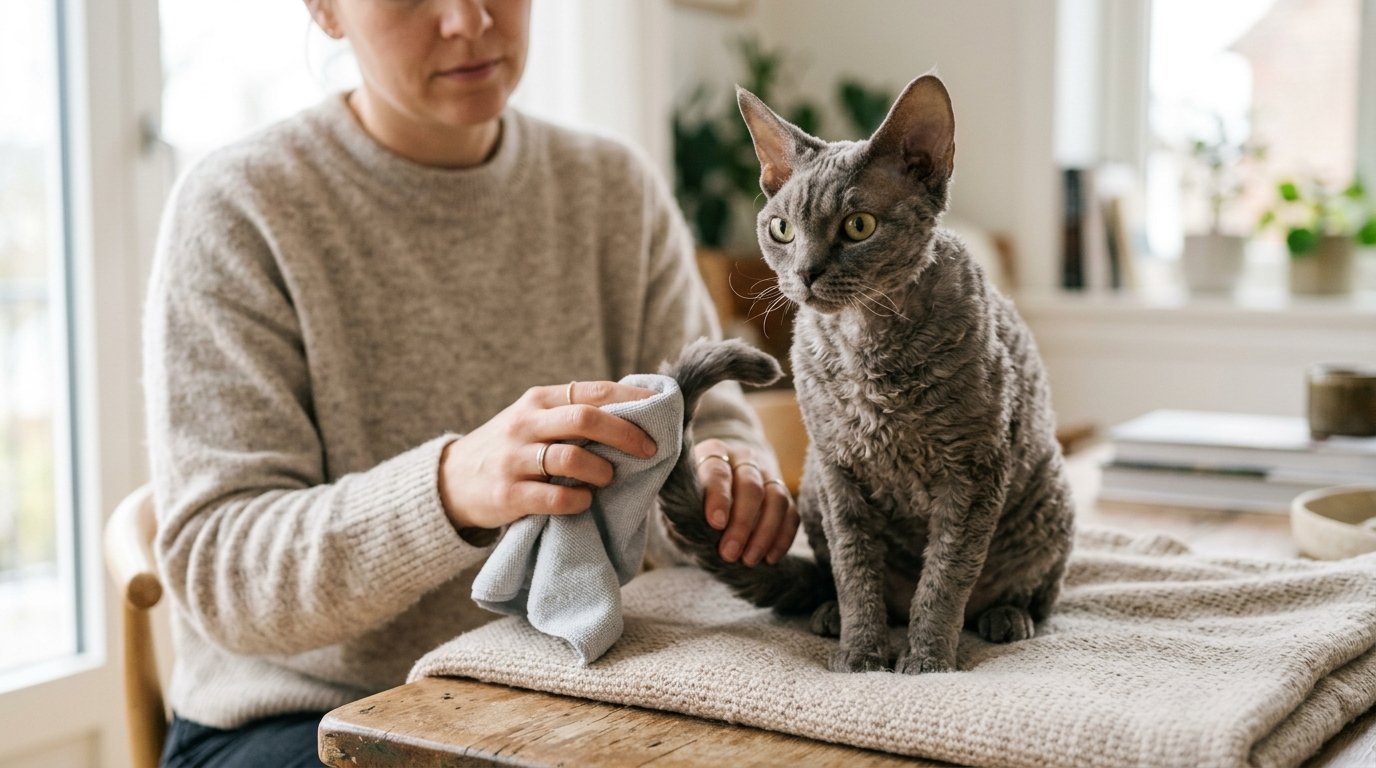
One of the most talked-about Devon Rex skin problems is the tendency toward greasy or waxy buildup, particularly along the tail. This is sometimes referred to informally as a dirty tail, and it happens because oil glands in that area can become overactive.
While this buildup is not always a sign of a serious problem, it can lead to matting, odor, and skin irritation if left unmanaged. Regular gentle cleaning of the affected area, along with monitoring for any signs of redness or discomfort, can help keep this from becoming a bigger issue.
Sunburn Risk in Devon Rex Cats
Because Devon Rex cats have such thin coats, their skin is more exposed to sunlight than most other breeds. This means they can be at higher risk for sunburn, especially on areas with lighter pigmentation like the ears, nose, and belly.
If your cat enjoys lounging in sunny windows or spending time outdoors, keep an eye on any areas that seem pink, sensitive, or flaky after sun exposure. Repeated sun damage over time can also raise concerns about skin health down the road, so limiting direct sun exposure during peak hours is a reasonable precaution.
Hereditary Skin Fragility
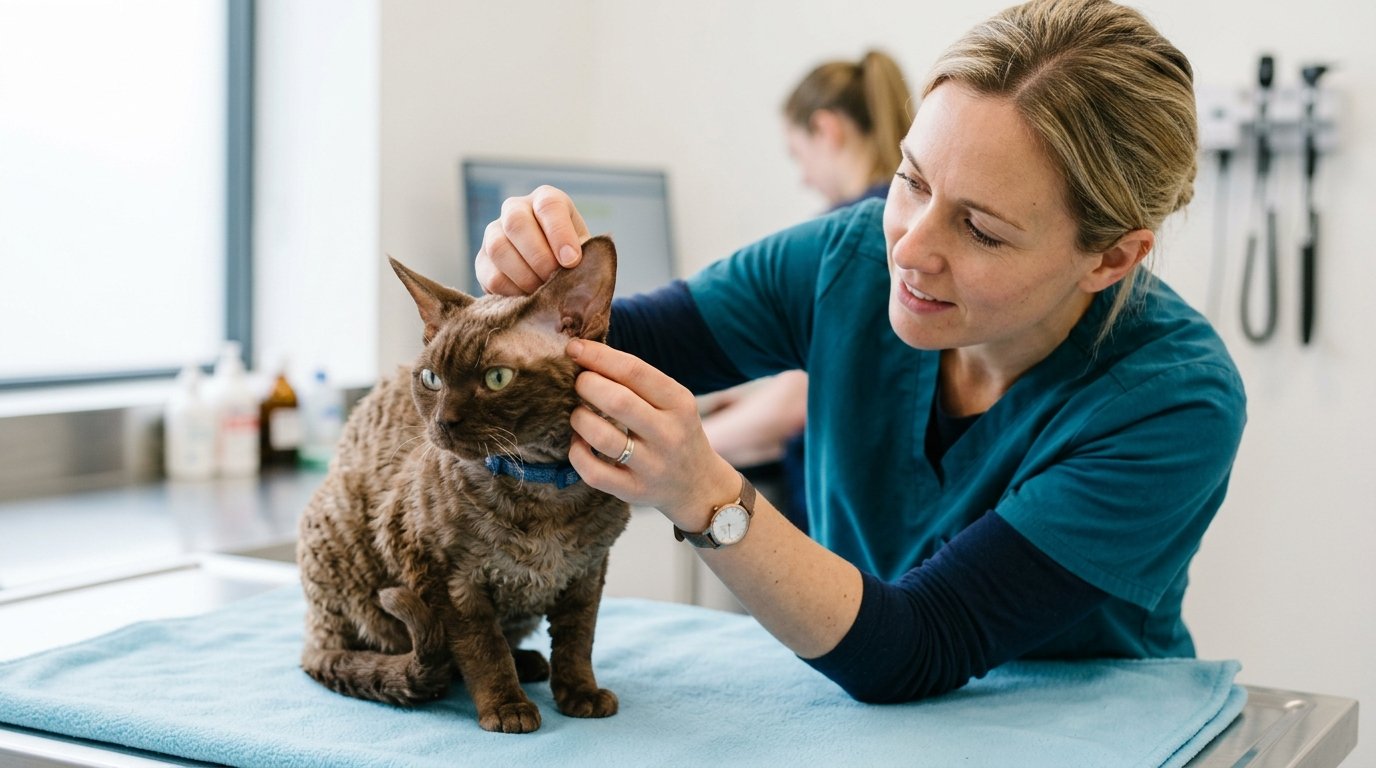
Some cats, including certain Devon Rex individuals, can be born with a rare inherited condition that affects the strength and elasticity of their skin. This condition makes the skin more fragile and prone to tearing, even from normal handling or play.
This is not something you can diagnose at home, and it requires veterinary evaluation to confirm. If your cat’s skin seems unusually delicate, bruises easily, or tears from minor bumps, your vet can help determine whether further testing is needed.
Allergies and Sensitive Skin Reactions
Like many cats, Devon Rex cats can develop allergies to things like certain foods, flea bites, pollen, or household cleaning products. Because their skin is already more exposed and reactive, allergic responses can sometimes appear more visibly than in cats with thicker coats.
Watching for patterns can help you and your vet narrow down potential triggers. Keeping a simple log of when flare-ups happen, what your cat was exposed to, and how long symptoms lasted can be genuinely useful information during a vet visit.
- Excessive licking or chewing at the skin
- Small scabs or bumps, especially around the head and neck
- Watery eyes or sneezing alongside skin symptoms
- Digestive upset if a food allergy is suspected
Bacterial Skin Infections
When the skin barrier is compromised, whether from excess oil, scratching, or an underlying condition, bacteria can take advantage and cause secondary infections. These infections often appear as redness, swelling, or small pustules on the skin.
Bacterial infections generally need veterinary attention because they do not usually resolve on their own and can worsen quickly. Your vet can examine the affected area and determine the best course of treatment based on what they find.
Signs Your Devon Rex Needs Veterinary Care
It can be tricky to know when a skin issue is minor and when it needs professional attention. Because Devon Rex skin problems can sometimes escalate faster than in other breeds due to their thinner protective coat, it is better to err on the side of caution.
If you notice any of the following signs, it is time to schedule a visit with your veterinarian rather than waiting to see if things improve on their own.
- Skin that looks raw, cracked, or open
- Persistent scratching that disrupts sleep or normal activity
- A strong or worsening odor
- Swelling, discharge, or visible discomfort
- Hair loss that spreads or does not resolve with grooming
Bathing and Grooming for Skin Health
Because Devon Rex cats produce more natural oils than most breeds, occasional bathing can help manage buildup and keep their skin comfortable. Many owners find that a gentle, cat-safe cleanser used every few weeks helps control greasiness without stripping the skin of necessary moisture.
It is important to use products specifically formulated for cats, since human shampoos and even some dog products can be too harsh for their sensitive skin. If you are unsure how often to bathe your Devon Rex or which products are safe, your veterinarian can give you guidance tailored to your cat’s specific needs.
Ear Cleaning and Special Attention Areas
Devon Rex cats often need more frequent ear cleaning than other breeds because their ears can accumulate wax and oil buildup similar to their skin. Regularly checking the ears for excess debris, odor, or redness can help you catch problems before they turn into infections.
The tail base and paw pads are two other areas that tend to need a bit more attention in this breed. A gentle wipe-down during regular grooming sessions can help keep oil buildup from becoming excessive, though any redness or irritation should be evaluated by a vet.
Diet and Skin Health Connection
What your cat eats can play a meaningful role in the health of their skin and coat. A well-balanced diet that supports healthy skin function may help reduce some of the oiliness and irritation that Devon Rex cats are prone to.
If you suspect your cat’s diet might be contributing to skin issues, talk with your veterinarian before making any changes. They can help you figure out whether a dietary adjustment makes sense for your specific cat, rather than guessing on your own.
Environmental Factors That Affect Devon Rex Skin
Because their coat offers less insulation and protection, Devon Rex cats can be more sensitive to environmental extremes than other breeds. Very dry indoor air, for example, may contribute to flaky or irritated skin, especially during colder months when heating systems run frequently.
Keeping your home at a comfortable, stable temperature and considering a humidifier during dry seasons may help support healthier skin. Reducing exposure to harsh cleaning chemicals or fragranced products in areas where your cat spends time can also make a noticeable difference.
Preventive Care Tips
While you cannot completely prevent every possible skin issue in a Devon Rex, there are steps you can take to reduce the likelihood of problems developing or worsening over time.
Consistency is key. Regular monitoring, gentle grooming routines, and staying on top of veterinary checkups can go a long way toward keeping your cat’s skin as healthy as possible.
- Schedule regular veterinary wellness checks, even when nothing seems wrong
- Keep grooming supplies specifically formulated for sensitive cat skin on hand
- Limit direct sun exposure during peak daylight hours
- Monitor your cat’s skin weekly for any changes
- Maintain a consistent, vet-approved diet
When to See a Vet Immediately
Some skin symptoms warrant a same-day or emergency veterinary visit rather than waiting for a routine appointment. If your Devon Rex shows sudden, severe skin changes, it is always safer to have them evaluated promptly.
Trust your instincts here. You know your cat’s normal behavior and appearance better than anyone, and if something feels seriously wrong, it is worth the trip to the vet even if you are not entirely sure what is happening.
- Sudden, widespread hair loss
- Open wounds or bleeding from the skin
- Signs of severe pain when touched
- Fever, lethargy, or loss of appetite alongside skin symptoms
Living with a Devon Rex’s Sensitive Skin
Owning a Devon Rex means embracing both the charm of their unique coat and the extra care their skin sometimes requires. Most skin issues in this breed are manageable with attentive grooming, a good relationship with your veterinarian, and a willingness to act quickly when something seems off.
With the right routine in place, many Devon Rex cats live comfortably without major ongoing skin problems. Staying informed and proactive is really the best gift you can give your curly-coated companion.
This article is for general education and is not a substitute for care from your own veterinarian. Learn about The Pet Vet and our editorial policy.