
Entropion in Bernese Mountain Dogs is a condition where the eyelid rolls inward, letting fur and lashes rub against the surface of the eye. It’s more common in this breed than many owners realize, and it can lead to real discomfort if left unaddressed. This guide walks you through what causes it, how to spot the early signs, and what your vet can do to help your dog stay comfortable and protect their vision.
Table of Contents
- What Entropion Actually Is
- Why Bernese Mountain Dogs Are Prone to It
- Early Signs to Watch For
- When to See a Vet
- How Vets Diagnose Entropion
- Treatment Options Your Vet May Discuss
- What Surgery Involves and Recovery
- Living With a Dog Who Has Entropion
- Can Entropion Be Prevented?
- Other Eye Conditions That Can Look Similar
- A Note on Puppies and Developing Entropion
- Supporting Your Dog Through the Process
- The Bottom Line
What Entropion Actually Is
Entropion is a structural eyelid problem where the edge of the eyelid, usually the lower lid, turns inward toward the eyeball instead of lying flat against it. When this happens, the hair on the outside of the lid and sometimes the eyelashes themselves end up brushing against the cornea, the clear surface of the eye, with every blink. That constant friction is uncomfortable at best and damaging at worst, since the cornea is not built to withstand ongoing rubbing from hair and skin.
In Bernese Mountain Dogs, entropion tends to show up because of the breed’s facial structure and the amount of loose skin many of these dogs carry around their eyes and face. It can affect one eye or both, and in some dogs it only involves part of the lid rather than the whole thing. The severity also varies quite a bit, from a mild inward roll that causes occasional irritation to a more pronounced fold that keeps the eye irritated almost constantly.
It’s worth knowing that entropion isn’t something a dog “grows out of” on its own in most cases. Structural eyelid conformation tends to stay the same or can even worsen with age, especially if there’s ongoing squinting or rubbing that creates more skin folding around the eye. That’s part of why vets usually recommend addressing it rather than just monitoring indefinitely.
Why Bernese Mountain Dogs Are Prone to It
Large, heavy-skinned breeds with loose facial skin are generally more likely to develop eyelid conformation issues, and Bernese Mountain Dogs fit that description. The breed’s broad head, heavy brow, and relatively loose skin around the eyes can predispose some individuals to eyelids that don’t sit quite right against the eyeball. This is considered a breed tendency rather than something that happens to every dog, so plenty of Bernese Mountain Dogs never develop it at all.
Genetics play a role here too. Because entropion has a hereditary component in several breeds, responsible breeders often screen breeding dogs for eyelid conformation before pairing them. If you got your dog from a breeder, it can be worth asking whether the parents were evaluated for eye conformation, though this isn’t always something owners think to ask about until after a problem shows up.
Weight and skin laxity can also influence how much of a factor this is for an individual dog. A Bernese Mountain Dog carrying extra weight may have more loose tissue around the face, which can make mild entropion more noticeable or encourage a lid to roll further inward over time.
Early Signs to Watch For
Catching entropion early makes a real difference in how comfortable your dog stays and how straightforward treatment ends up being. Many owners first notice something is off because their dog seems to be squinting more than usual, especially in bright light or wind. That squinting is often the dog’s way of protecting an eye that’s already irritated from lid rubbing.
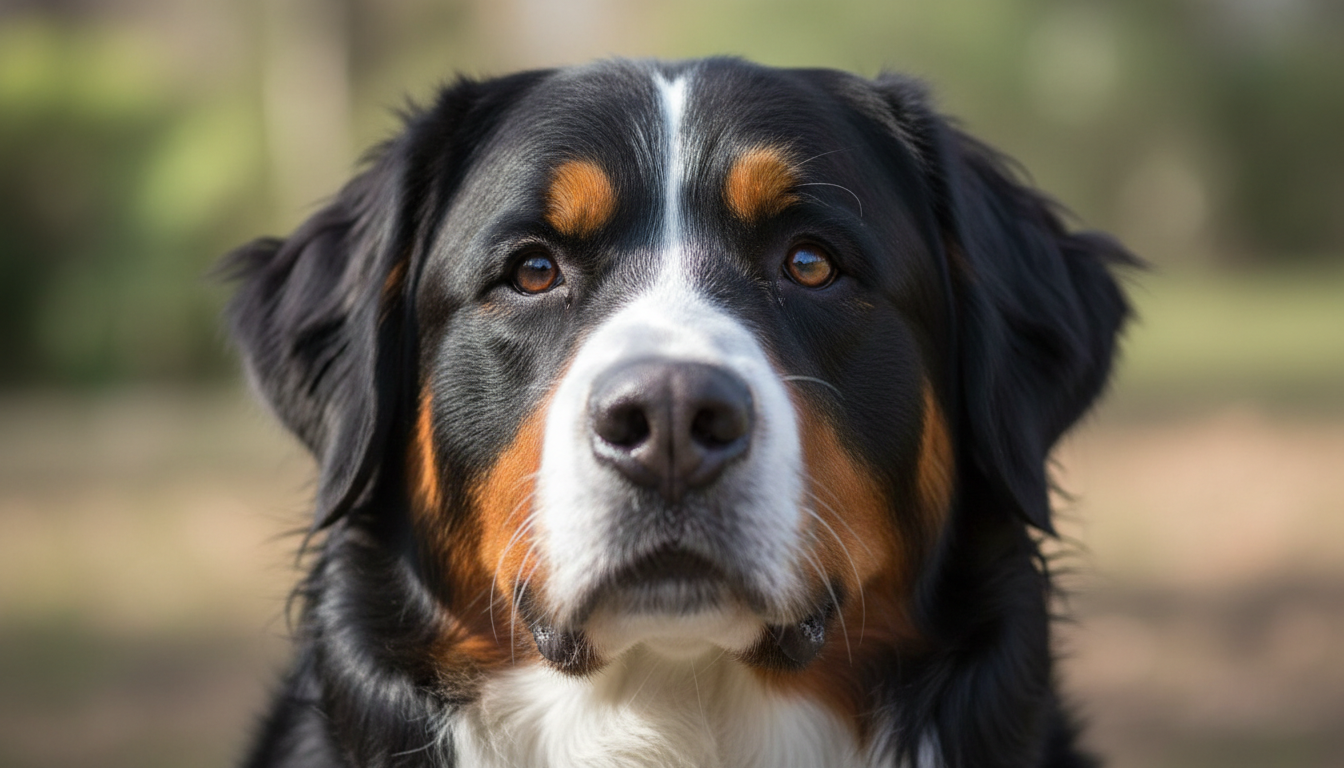
Other early clues include excessive tearing, a watery discharge that seems to run down the fur below the eye, or your dog pawing and rubbing at their face more than normal. You might also notice redness in the white of the eye or along the rims of the eyelids themselves. Some dogs develop a slight cloudiness on the surface of the eye if irritation has been going on for a while, which can be a sign the cornea itself is affected.
- Frequent squinting or holding one eye partly closed
- Watery eyes or crusty discharge around the lids
- Redness of the eye or eyelid margins
- Pawing, rubbing, or scratching at the face
- A visible inward fold or roll of the eyelid, especially the lower lid
- Cloudy or hazy appearance on the surface of the eye
When to See a Vet
Any time you notice these signs in your Bernese Mountain Dog, it’s worth getting them checked out rather than waiting to see if things improve. Eye problems can go downhill faster than owners expect, partly because dogs can’t tell you how much something hurts, and partly because ongoing corneal irritation can lead to ulcers if it isn’t addressed.
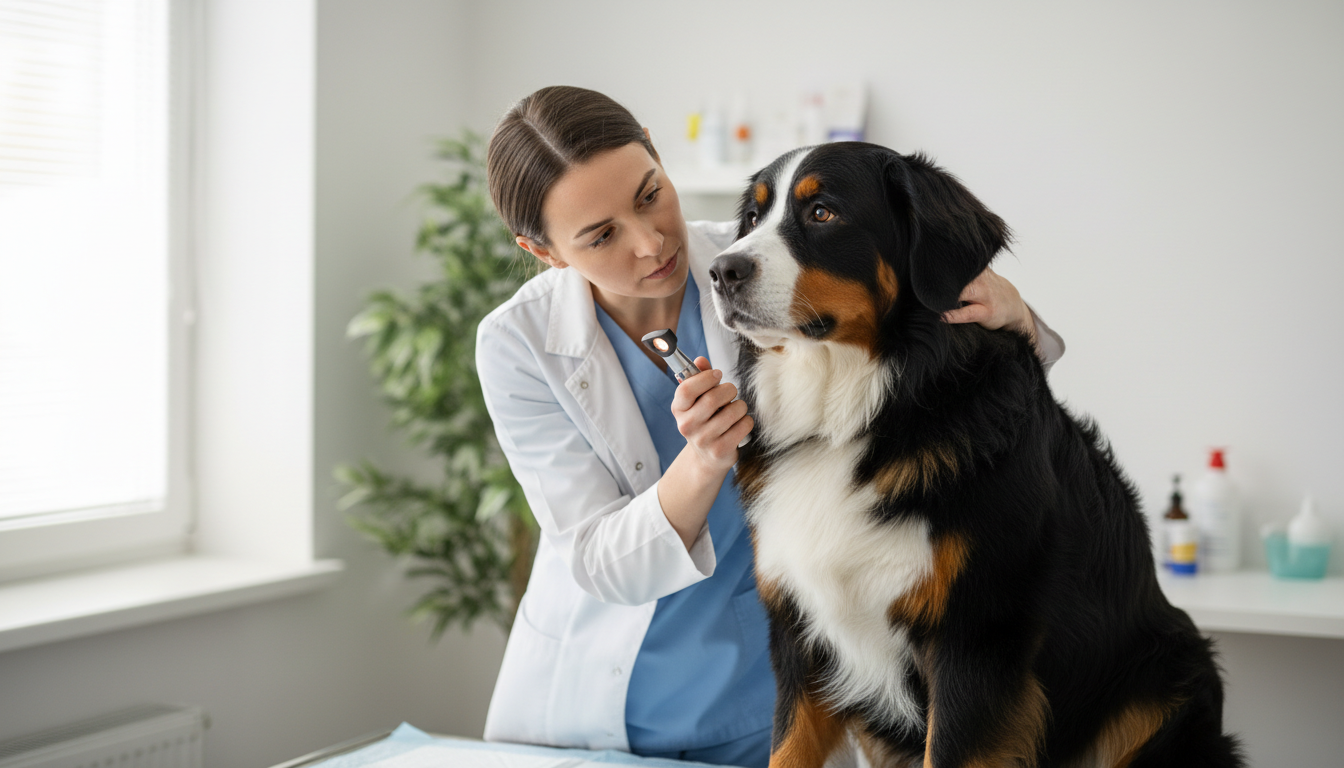
A veterinarian will examine the eyelid conformation closely, often using a bright light and magnification to see exactly how the lid is rolling and whether the cornea has any visible damage. They may also use a special stain that highlights scratches or ulcers on the surface of the eye that aren’t visible to the naked eye otherwise. This exam helps determine not just whether entropion is present, but how urgent treatment needs to be.
If your dog is squinting heavily, keeping an eye closed most of the time, or seems to be in obvious pain, that’s a sign to get veterinary attention promptly rather than waiting for a routine appointment slot. Corneal ulcers in particular can worsen quickly and are something a vet needs to manage directly.
How Vets Diagnose Entropion
Diagnosis usually starts with a straightforward physical exam of the eyelids and surrounding structures. Your vet will look at how the lids sit when your dog’s eyes are open normally, and they may also check how the lid behaves when your dog blinks or squints, since some mild cases are more obvious during blinking than at rest.
Staining the eye with a fluorescent dye is a common next step, since it reveals any areas where the cornea’s surface has been scratched or ulcerated by lash or hair contact. Your vet may also check tear production and look for any other eye conditions that could be contributing to irritation, since entropion can sometimes occur alongside other issues rather than in isolation.
In some cases, especially with puppies or young dogs, a vet may want to monitor a mild case for a short period to see whether it’s truly structural entropion or a temporary spasm-related rolling that can happen with squinting from an unrelated irritant. This distinction matters because the treatment approach differs depending on the underlying cause.
Treatment Options Your Vet May Discuss
Treatment for entropion depends heavily on severity. Mild cases that aren’t causing corneal damage might be managed initially with lubricating eye drops or ointments to reduce friction and protect the surface of the eye while your vet monitors the situation. This approach buys some comfort but typically doesn’t fix the underlying structural issue.
For more significant or persistent entropion, surgical correction is the standard treatment. A veterinary surgeon or ophthalmologist can reshape the eyelid so it sits properly against the eye instead of rolling inward. This is a well-established procedure, and many dogs do very well afterward with lasting relief from the irritation they were experiencing.
Your vet will talk through what approach makes sense based on your dog’s specific case, including whether surgery is needed right away or whether a watch-and-wait approach with supportive care is reasonable first. It’s important to have this conversation directly with your vet rather than deciding on your own, since corneal damage can worsen quickly if structural entropion is left untreated for too long.
- Lubricating eye drops or ointments for mild or early cases
- Temporary eyelid tacking in some younger dogs to relieve pressure while growth continues
- Surgical correction for moderate to severe or persistent entropion
- Follow-up exams to confirm the cornea is healing properly after treatment
What Surgery Involves and Recovery
If your vet recommends surgical correction, it typically involves removing a small amount of skin near the affected eyelid so that when the incision heals, the lid is pulled into a more normal position rather than rolling inward. This is done under general anesthesia, and the amount of tissue removed is carefully calculated based on the degree of correction needed.
Recovery generally involves a period of rest, an e-collar to prevent your dog from rubbing at the surgical site, and follow-up visits to check healing. Most dogs tolerate this procedure well, and many owners notice their dog seems more comfortable and less squinty within days to a couple of weeks as swelling resolves.
Your vet will give you specific aftercare instructions tailored to your dog’s procedure, including how to apply any prescribed eye medication and what activity restrictions to follow during healing. It’s important to stick closely to these instructions, since disturbing the surgical site early on can affect how well the correction holds.

Living With a Dog Who Has Entropion
If your Bernese Mountain Dog has been diagnosed with entropion, day-to-day life can still look pretty normal, especially once treatment is underway. Many dogs with mild, well-managed entropion live comfortably with regular monitoring and occasional supportive eye care. Dogs who’ve had surgical correction often go on to have no further issues with that eye.
Keeping up with any recommended follow-up exams matters, since your vet will want to confirm the cornea has fully healed and that the eyelid position remains stable over time. If you notice any return of squinting, redness, or discharge after treatment, it’s worth having that checked again rather than assuming it will resolve on its own.
Day-to-day care at home mostly involves keeping the area around the eyes clean and watching for any new signs of irritation. Gently wiping away discharge with a clean, damp cloth can help keep your dog comfortable, though you should ask your vet before using any over-the-counter eye cleaning products, since some aren’t appropriate for irritated or healing eyes.
Can Entropion Be Prevented?
Because entropion in Bernese Mountain Dogs often has a structural and hereditary basis, it’s not always something that can be fully prevented. However, there are a few things that may help reduce risk or catch problems early. Choosing a breeder who screens for eye conformation and avoids breeding dogs with a history of entropion is one meaningful step if you’re getting a puppy.
Keeping your dog at a healthy weight can also help, since excess weight contributes to loose skin and tissue that may worsen mild eyelid conformation issues over time. Regular vet checkups that include an eye exam are another useful tool, since they give your vet a chance to notice early changes in eyelid position before they progress into something more uncomfortable for your dog.
- Ask breeders about eye conformation screening in parent dogs
- Keep your dog at a healthy body weight
- Schedule regular veterinary checkups that include eye exams
- Address any chronic squinting or eye irritation promptly rather than waiting

Other Eye Conditions That Can Look Similar
Entropion isn’t the only cause of squinting, tearing, or redness in dogs, which is part of why a veterinary exam is so important rather than guessing at home. Conjunctivitis, corneal ulcers from unrelated injuries, allergies, and foreign material like grass seeds in the eye can all cause similar-looking symptoms. Some of these conditions can also occur at the same time as entropion, complicating the picture further.
There’s also a related condition called ectropion, where the eyelid rolls outward instead of inward, which can cause its own set of problems including a dry or exposed-looking eye surface. Distinguishing between these conditions requires a proper eye exam, since the treatment approaches differ quite a bit depending on which direction the lid is rolling and why.
If your dog has ongoing eye symptoms that don’t resolve quickly, it’s best to let your vet sort out exactly what’s going on rather than assuming it’s “just” entropion or any other single condition based on symptoms alone.
A Note on Puppies and Developing Entropion
Some Bernese Mountain Dog puppies show signs of entropion quite young, sometimes even before they’re fully grown. In certain cases, what looks like entropion in a very young puppy can actually improve somewhat as the dog’s face and skull continue to develop, though this isn’t guaranteed and shouldn’t be assumed without veterinary guidance.
Vets sometimes use temporary measures like eyelid tacking in young dogs to relieve pressure on the eye while monitoring how the face develops, delaying permanent surgical correction until the dog is closer to full growth if that seems like the more appropriate path. This decision is made on a case-by-case basis depending on how much discomfort or corneal damage is present.
If you have a Bernese Mountain Dog puppy showing early signs of lid rolling or persistent squinting, it’s worth getting a veterinary opinion sooner rather than later, even if surgery isn’t recommended immediately. Early monitoring gives your vet the best chance to intervene at the right time for your individual puppy.

Supporting Your Dog Through the Process
Dealing with an eye condition in your dog can feel stressful, especially when you’re watching them squint or rub at their face and wishing you could just fix it yourself. The most helpful thing you can do is stay observant, follow your vet’s guidance closely, and avoid trying unproven home remedies on the eye itself, since the wrong product can make irritation or damage worse.
Keeping a simple log of symptoms, like when squinting seems worse or how much discharge you’re noticing day to day, can be genuinely useful information to share with your vet at follow-up visits. This kind of tracking helps your vet see patterns that might not be obvious during a short exam room visit.
Above all, trust the process of working with your veterinary team. Entropion is a well-understood condition with established treatment options, and most dogs go on to live completely normal, comfortable lives once it’s properly addressed.
The Bottom Line
Entropion in Bernese Mountain Dogs is a manageable condition, but it does require veterinary attention rather than a wait-and-see approach at home. Watching for squinting, tearing, redness, or visible lid rolling gives you the best chance of catching it early, and getting your dog to a vet promptly when you notice these signs helps protect their eyes from longer-term damage.
Whether your dog needs simple lubricating drops, temporary supportive care, or surgical correction, the goal is the same: keeping their eyes comfortable and their vision protected for the long run. If you have any concerns about your Bernese Mountain Dog’s eyes, don’t hesitate to reach out to your veterinarian for a proper exam and personalized guidance.
This article is for general education and is not a substitute for care from your own veterinarian. Learn about The Pet Vet and our editorial policy.