
Exocrine pancreatic insufficiency in German Shepherds is one of the more overlooked reasons a dog can eat heartily yet keep losing weight. This breed has a known predisposition to the condition, and the signs can look like a dozen other digestive problems at first. Understanding what is actually happening inside the pancreas can help you recognize the pattern sooner and get your dog the testing and support they need.
Table of Contents
- What Exocrine Pancreatic Insufficiency Actually Is
- Why German Shepherds Are Especially Prone
- Recognizing the Core Signs
- How the Condition Is Diagnosed
- Why the Weight Loss Happens Even With a Big Appetite
- The Role of Diet in Managing EPI
- Enzyme Replacement Therapy
- Living With a Dog That Has EPI
- Potential Complications to Watch For
- Other Conditions That Can Look Similar
- When to Call Your Vet
- A Hopeful Long-Term Outlook
What Exocrine Pancreatic Insufficiency Actually Is
Exocrine pancreatic insufficiency, often shortened to EPI, happens when the pancreas stops producing enough digestive enzymes to break down fats, proteins, and carbohydrates. Unlike the pancreas’s other job of making insulin, this is about the exocrine portion of the organ, the part responsible for secreting enzymes into the small intestine. When those enzymes are missing or severely reduced, food passes through the digestive tract largely undigested, no matter how much or how well your dog eats.
In German Shepherds, EPI is most commonly linked to a condition called pancreatic acinar atrophy, where the enzyme-producing cells of the pancreas gradually waste away. This is different from the slow scarring process called chronic pancreatitis that can eventually lead to the same outcome. Because the pancreas usually has to lose a large majority of its functional tissue before symptoms appear, the condition can seem to come on quickly even though the underlying process has likely been building for a while.
Genetics appear to play a meaningful role in why German Shepherds are overrepresented among dogs diagnosed with EPI compared to many other breeds. That does not mean every German Shepherd will develop it, but it does mean owners of this breed benefit from knowing the warning signs earlier than owners of breeds with lower risk.
Why German Shepherds Are Especially Prone
Researchers have long noted that German Shepherds account for a disproportionate share of EPI diagnoses relative to their population. The leading theory involves an inherited predisposition toward pancreatic acinar atrophy, where the immune system may mistakenly target and damage the enzyme-producing cells over time. This process tends to unfold gradually, which is part of why the breed can look completely healthy for years before signs appear.
It is worth noting that EPI can show up at almost any age in this breed, though it is often identified in young to middle-aged dogs rather than only in seniors. This sets it apart from many digestive conditions that are more strongly tied to aging. A young, active German Shepherd who suddenly cannot maintain weight despite eating well is a scenario that should prompt a conversation with your vet about EPI as a possible cause.
Recognizing the Core Signs
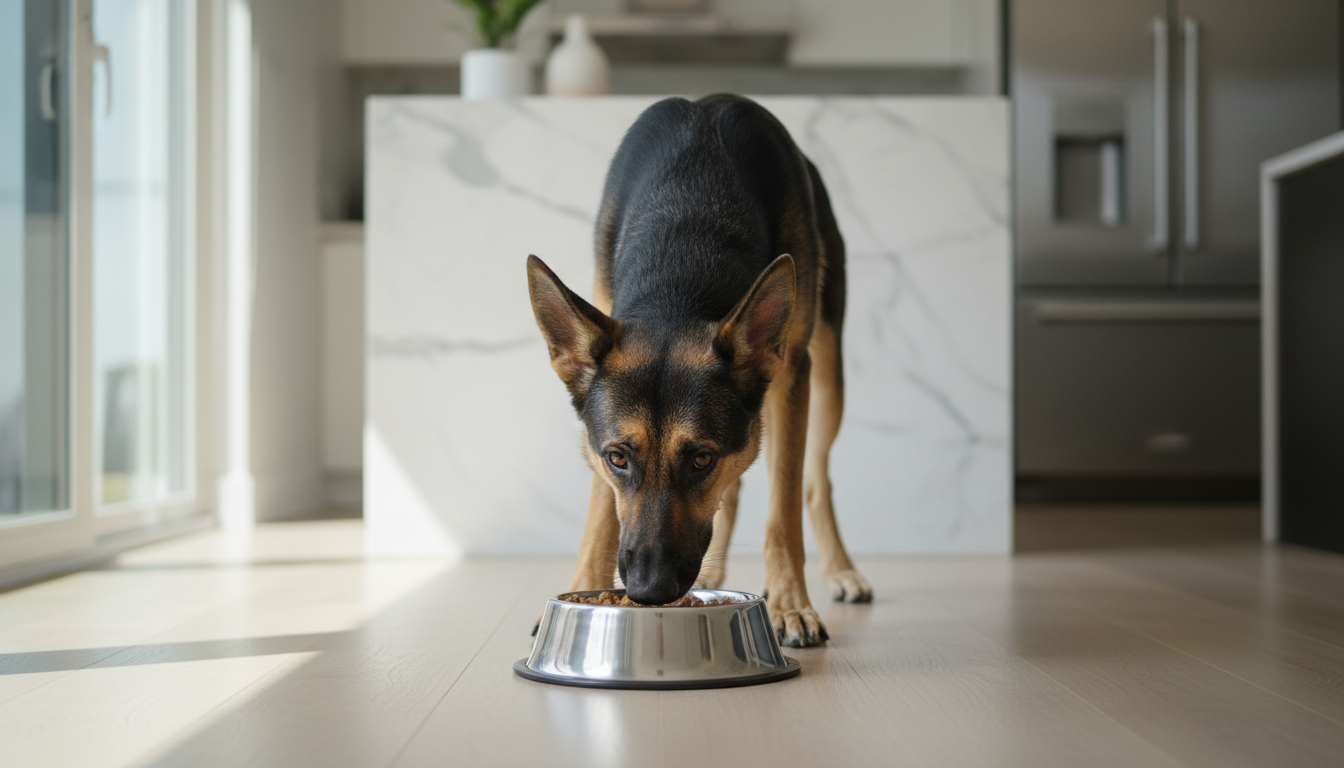
The hallmark presentation of EPI is a dog who is eating as much as ever, sometimes even more than usual, yet steadily losing weight and body condition. This combination confuses many owners because it runs counter to the assumption that weight loss means a dog has stopped eating. With EPI, the problem is not appetite but absorption, since the nutrients in the food are never properly broken down for the body to use.
Alongside weight loss, many dogs develop large volumes of pale, greasy, or foul-smelling stool. The stool may look yellowish or gray rather than the typical brown, and it can appear almost oily or cow-pie like in texture. Some dogs also pass stool more frequently than normal, and owners sometimes notice the dog seems to be eating but still acting hungry right after a meal.
- Noticeable weight loss despite a normal or increased appetite
- Large, pale, greasy, or unusually foul-smelling stools
- Increased frequency of bowel movements
- A dull, poor-quality coat that seems to lack luster
- Occasional vomiting or soft stool episodes
- General lethargy or reduced energy over time
How the Condition Is Diagnosed
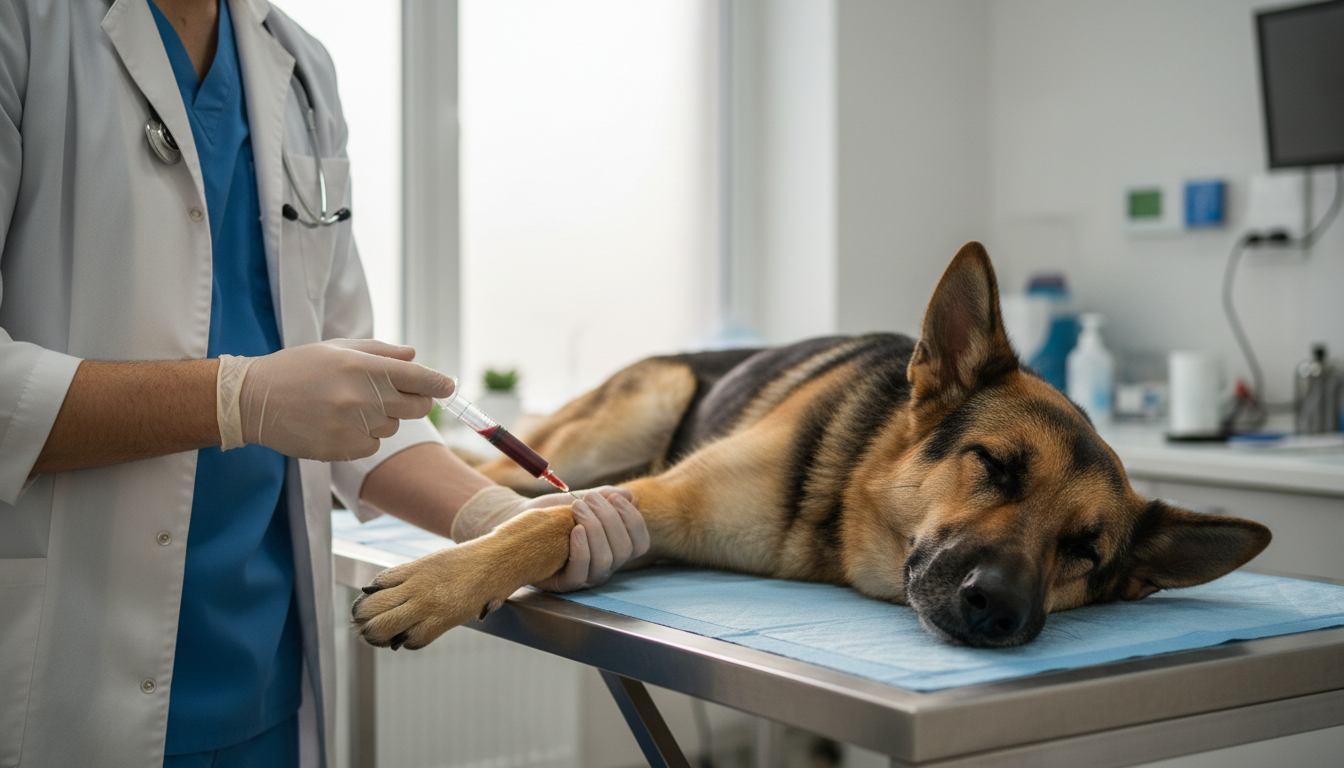
Because the signs of EPI overlap with so many other digestive and metabolic diseases, your vet will need more than a physical exam and a description of symptoms to confirm it. The standard diagnostic test is a blood test that measures trypsin-like immunoreactivity, which tends to be markedly low in dogs with EPI compared to dogs with other causes of digestive upset. This test is specific enough that a low result, combined with a fitting history, gives vets strong confidence in the diagnosis.
Your vet may also want to run additional bloodwork to rule out other conditions that can cause similar weight loss and digestive signs, since dogs with EPI sometimes have overlapping issues such as small intestinal bacterial overgrowth or vitamin deficiencies. Fasting blood samples are typically required for accurate results, so your vet will give you specific instructions about preparing your dog before the test. Never attempt to interpret these results yourself or assume a diagnosis without professional guidance, since several other diseases can mimic the same pattern of symptoms.
Why the Weight Loss Happens Even With a Big Appetite
It can feel strange to watch a dog eat a full bowl of food and then act hungry again an hour later while still losing weight. The explanation lies in how digestion actually works. Without adequate enzymes, fats, proteins, and starches move through the intestines largely intact, meaning the body absorbs only a fraction of the calories and nutrients contained in the meal.
This creates a kind of internal starvation even though the dog’s stomach is full. The body senses that it is not getting what it needs and responds by increasing hunger signals, which is why so many affected dogs seem ravenous. Over time, this mismatch between intake and absorption leads to muscle wasting, a thinning coat, and the progressive weight loss that is often the first thing owners notice.
The Role of Diet in Managing EPI
Dietary management is a central part of helping a dog with EPI, and your vet will likely recommend a highly digestible diet that is easier for the compromised digestive system to process. Some dogs do better on a lower-fiber formula, since excess fiber can interfere with enzyme activity, though this varies from dog to dog and should be guided by your veterinary team rather than general assumptions. Your vet may also suggest dividing meals into smaller, more frequent portions rather than one or two large feedings.
Many dogs with EPI also benefit from vitamin supplementation, particularly for fat-soluble vitamins that are poorly absorbed when fat digestion is impaired. Vitamin B12 levels are often checked as part of ongoing management, since deficiency is common in dogs with this condition and can contribute to lingering symptoms even after enzyme therapy begins. Any supplementation should be guided and monitored by your vet rather than added on your own, since needs vary significantly between individual dogs.
- A highly digestible, often lower-fat diet tailored to your dog’s response
- Smaller, more frequent meals rather than large infrequent ones
- Monitoring and supplementing vitamin B12 as directed by your vet
- Avoiding sudden diet changes without veterinary guidance
- Tracking weight and stool quality to gauge how well management is working
Enzyme Replacement Therapy
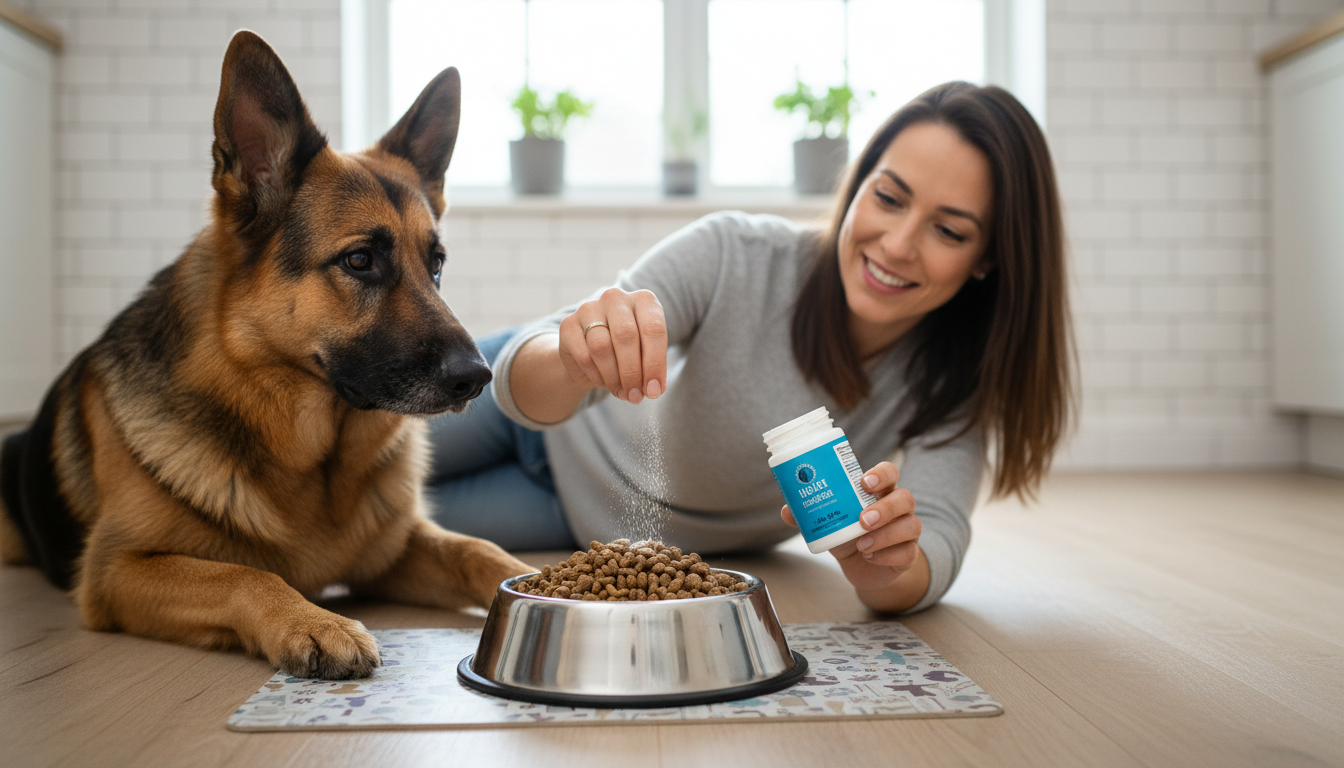
The cornerstone of treating EPI is replacing the missing digestive enzymes so food can actually be broken down and absorbed. This usually involves adding a prescribed enzyme supplement to every meal, which helps the body process fats, proteins, and carbohydrates in a way the pancreas alone can no longer manage. Your vet will determine the appropriate product and guide you on exactly how to introduce and adjust it, since individual dogs respond differently and the approach often requires some fine-tuning in the early weeks.
Many owners describe a noticeable improvement in stool quality and energy once the right enzyme routine is established, though it can take some trial and adjustment to find what works best for your particular dog. It is important to follow your vet’s instructions closely and report back on how your dog is responding, since under- or over-supplementing can both cause problems. Never adjust enzyme amounts on your own or borrow a routine that worked for a different dog, since EPI management is highly individualized.
Living With a Dog That Has EPI
A diagnosis of EPI can feel overwhelming at first, but many dogs go on to live full, active lives once a management routine is in place. It typically takes some patience during the early adjustment period as you and your vet work out the right combination of enzymes, diet, and any needed supplements. Keeping a simple log of your dog’s weight, stool appearance, and general energy can be incredibly helpful for your vet when fine-tuning the plan over time.
Consistency matters a great deal with this condition. Sudden changes in food, skipped enzyme doses, or inconsistent meal timing can all cause setbacks even in dogs who were previously doing well. Building a steady daily routine around meals and medication administration tends to produce the most stable results for dogs managing EPI long term.
Potential Complications to Watch For
Dogs with EPI are more prone to certain secondary issues that your vet will want to monitor alongside the primary condition. Small intestinal bacterial overgrowth is one of the more common complications, where the altered digestive environment allows bacteria to multiply beyond normal levels and contribute to ongoing digestive upset. This can sometimes require additional treatment beyond standard enzyme therapy.
Nutritional deficiencies are another concern, particularly involving fat-soluble vitamins and B12, since impaired fat digestion can limit how well these nutrients are absorbed even with enzyme support. Regular veterinary checkups and bloodwork help catch these issues early, before they significantly affect your dog’s overall health. If your dog seems to be doing well on a treatment plan but then begins losing weight again or develops new digestive symptoms, it is worth returning to your vet rather than assuming it is simply a flare of the original condition.
- Small intestinal bacterial overgrowth causing recurring digestive upset
- Vitamin B12 and fat-soluble vitamin deficiencies
- Weight regain difficulties if enzyme dosing needs adjustment
- Secondary pancreatitis flares in some dogs
- General nutritional setbacks if management lapses
Other Conditions That Can Look Similar
Because EPI shares symptoms with several other diseases, it is easy to see why some cases take time to properly diagnose. Intestinal parasites, inflammatory bowel disease, and certain thyroid disorders can all cause weight loss and changes in stool quality that resemble what is seen in EPI. This is exactly why the specific blood test for trypsin-like immunoreactivity is so valuable, since it can distinguish EPI from these other possibilities rather than relying on symptoms alone.
If your German Shepherd has been treated for suspected parasites or a different digestive issue without improvement, it is reasonable to ask your vet whether EPI testing should be considered next. Persistent symptoms that do not respond to standard treatments are often the clue that points toward a less commonly tested condition like this one.
When to Call Your Vet
Any unexplained weight loss in your dog, especially when paired with a healthy or increased appetite, deserves a veterinary evaluation rather than a wait-and-see approach. Changes in stool color, volume, or smell that persist for more than a few days are also worth mentioning at your next visit, or sooner if they are severe. Because EPI tends to progress gradually, catching it earlier generally makes management more straightforward and helps prevent the more significant nutritional setbacks that can occur with prolonged, untreated malabsorption.
You should also contact your vet promptly if your German Shepherd has already been diagnosed with EPI and seems to be declining despite treatment, since this can signal the need for a dosage adjustment, a secondary complication, or an entirely separate issue that needs attention. Never attempt to self-diagnose or manage this condition at home without veterinary oversight, since the testing and treatment both require professional guidance tailored to your individual dog.
- Unexplained weight loss despite a normal or increased appetite
- Chronic pale, greasy, or foul-smelling stools
- No improvement after standard parasite or digestive treatment
- Signs of vitamin deficiency such as a dull coat or low energy
- Any decline in a dog already diagnosed and being treated for EPI
A Hopeful Long-Term Outlook
While EPI is a lifelong condition, it is also one that many dogs manage successfully for years with the right combination of enzyme therapy, diet, and veterinary monitoring. The initial diagnostic process and adjustment period can feel like a lot to take in, but most owners find that once a stable routine is established, their dog’s quality of life improves significantly. Regular follow-up visits allow your vet to track your dog’s progress and make small adjustments as needed, which is often all it takes to keep things running smoothly.
Staying attentive to your German Shepherd’s weight, coat condition, and stool quality over time gives you an early warning system if something starts to shift. Partnering closely with your veterinary team, rather than trying to manage changes on your own, remains the most reliable way to keep your dog comfortable and thriving despite this diagnosis.
This article is for general education and is not a substitute for care from your own veterinarian. Learn about The Pet Vet and our editorial policy.