
Eye discharge in dogs is one of those symptoms that can mean almost nothing or something quite serious, and the color, thickness, and accompanying signs make all the difference. If you’ve noticed your dog’s eyes looking goopy, red, or watery, this guide walks you through the common causes, what different types of discharge usually mean, and exactly when you need to stop waiting and see a vet.
Table of Contents
- What Normal Eye Discharge Looks Like
- Clear, Watery Discharge
- Thick White or Gray Mucus
- Yellow or Green Discharge
- Discharge With Redness or Swelling
- Discharge From Only One Eye
- When Eye Discharge Signals an Emergency
- Eye Discharge and Underlying Allergies
- Breed Differences in Eye Discharge Risk
- How Vets Diagnose the Cause
- What You Can Do at Home
- What to Avoid Doing
- Preventing Eye Irritation Day to Day
- When to Call Your Vet
What Normal Eye Discharge Looks Like
A small amount of clear or slightly tinted crust in the corners of your dog’s eyes, especially after sleep, is usually nothing to worry about. This is similar to the “sleep” humans get and is made up of mucus, oil, dust, and dead cells that the eye naturally clears out overnight. It tends to be minimal, dries into a light crust, and doesn’t bother your dog or make the eye look red or irritated.
Breeds with prominent eyes or longer fur around the face, including Australian Shepherds with their thick coats, may show slightly more of this normal discharge simply because hair traps moisture and debris near the eye. The key is consistency. If your dog’s eyes have always had a little morning crust and nothing else has changed, that pattern alone usually isn’t a reason for alarm.
What matters is tracking changes. An increase in volume, a shift in color, or new behaviors like squinting or pawing at the face are the signals that something has moved beyond the ordinary and deserves closer attention.
Clear, Watery Discharge
Clear, watery discharge, also called epiphora, often points to irritation rather than infection. Allergies, dust, wind, or a bit of shampoo that got into the eye during bath time can all trigger excess tearing. Dogs with allergies sometimes show watery eyes alongside itchy skin or sneezing, so it helps to notice if other symptoms are showing up at the same time.
Watery discharge can also mean something is physically irritating the eye, such as an eyelash growing in the wrong direction, a small foreign object like a grass seed, or even early stages of a scratch on the cornea. Because these causes range from mild to needing prompt treatment, persistent watery discharge that doesn’t resolve in a day or two is worth a vet visit.
- Allergies to pollen, dust, or household products
- Wind or environmental irritation during walks or car rides
- A foreign object like a seed, hair, or debris trapped under the eyelid
- Shallow scratches on the surface of the eye
Thick White or Gray Mucus
When discharge turns thick and white or gray but your dog’s eye doesn’t look particularly red or painful, this can sometimes point to dry eye, also known as keratoconjunctivitis sicca, where the eye isn’t producing enough tears to stay properly lubricated. Without enough natural moisture, the eye compensates with mucus, which can look stringy or pasty, especially in the morning.
This condition tends to be more common in certain breeds and can become chronic if not addressed, so a dog with recurring thick discharge and a dull-looking cornea should be examined. Left untreated, dry eye can lead to more serious corneal damage over time, which makes early diagnosis valuable.
Yellow or Green Discharge
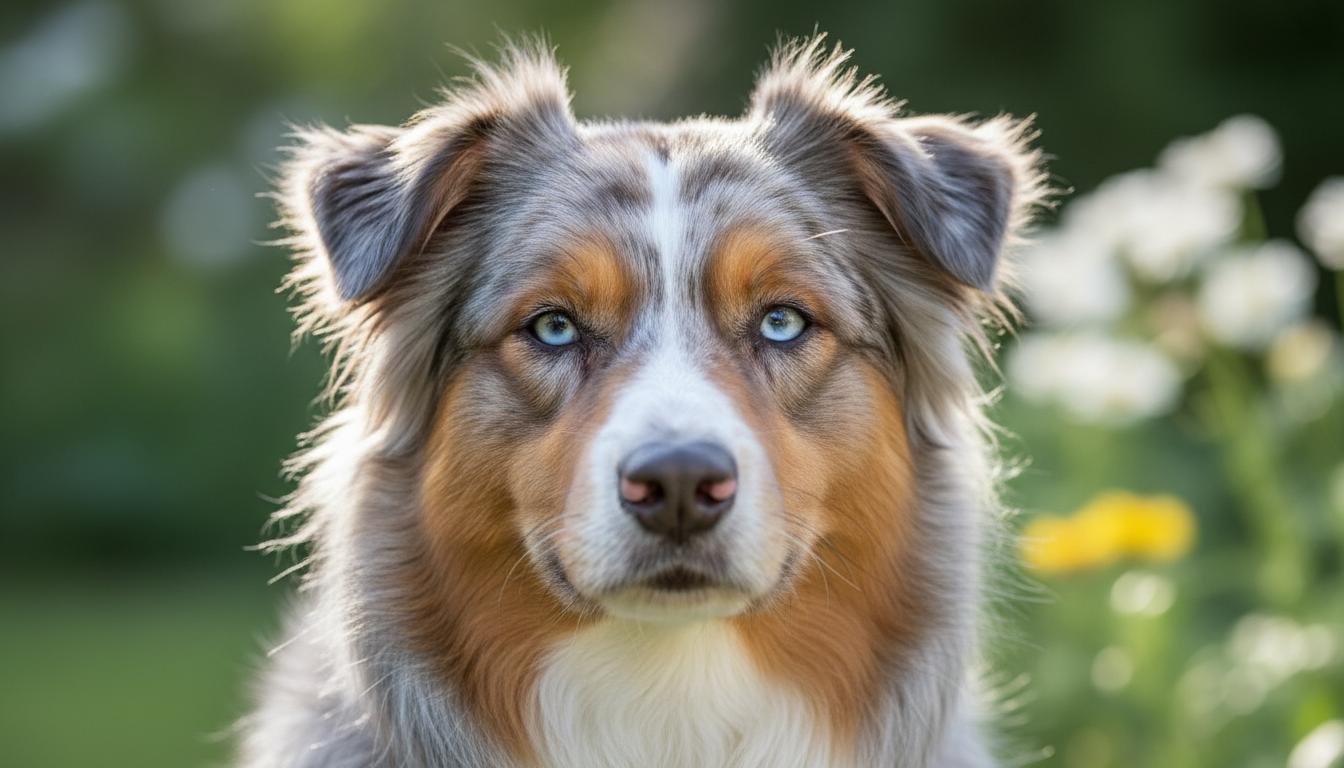
Yellow or green discharge is one of the clearer signs that an infection may be present. This type of discharge, sometimes resembling pus, often comes with redness, swelling, or your dog squinting and keeping the eye partially closed. Bacterial conjunctivitis is a common cause, but yellow or green discharge can also show up alongside upper respiratory infections or more serious eye conditions like ulcers.
Because an untreated infection can worsen quickly and sometimes threaten your dog’s vision, this type of discharge should not be managed at home with guesswork. A vet will typically examine the eye closely, possibly using a special dye to check for scratches or ulcers, and determine the right course of treatment based on what’s actually happening in the eye.
- Thick yellow or green discharge, especially from one eye
- Redness or visible swelling around the eyelid
- Squinting, pawing at the eye, or reluctance to have the area touched
- Cloudiness or a change in the normal clarity of the eye
Discharge With Redness or Swelling
When discharge shows up alongside a red, inflamed eye or puffy eyelids, it usually means there’s active irritation or infection happening, not just simple buildup. Conjunctivitis, allergic reactions, or an injury to the eye itself can all cause this combination. Sometimes the redness is confined to the white part of the eye, and other times the entire area around the eye looks swollen and uncomfortable.
If you notice your dog pawing at their face repeatedly, rubbing their head against furniture or the floor, or seeming unusually sensitive when you approach their face, these are strong indicators that the eye hurts. Discomfort combined with visible redness is a combination that calls for a vet visit rather than a wait-and-see approach, since untreated inflammation can escalate.
Discharge From Only One Eye
When discharge appears in only one eye while the other looks completely normal, it often suggests something localized rather than a systemic issue like allergies, which usually affect both eyes somewhat evenly. A foreign object, an eyelash growing abnormally, a scratch, or even an early infection that hasn’t spread yet are common explanations for one-sided discharge.
This asymmetry is actually useful information to share with your vet, since it helps narrow down the possible causes faster. If you can gently check (without forcing the eyelid open if your dog resists) you might spot an obvious piece of debris, but even if you don’t see anything, one-eyed discharge still warrants a proper examination rather than home remedies.
When Eye Discharge Signals an Emergency
Some situations involving eye discharge move beyond “watch and wait” and into urgent territory. A sudden onset of thick discharge combined with your dog holding the eye completely shut, visible cloudiness, a change in the shape or size of the pupil, or any sign that the eye itself looks abnormally bulging or sunken are all reasons to seek emergency veterinary care right away.
Corneal ulcers, in particular, can progress quickly and become painful, sometimes within hours, and they need prompt treatment to prevent permanent damage. If your dog has had any recent trauma to the face, even something that seemed minor like running through brush, and is now showing discharge along with obvious pain, don’t wait for a regular appointment.
- Sudden total eye closure with visible pain
- A cloudy, blue-tinted, or visibly damaged-looking cornea
- Uneven pupil size between the two eyes
- Any suspected trauma to the eye or surrounding area
- Discharge paired with vomiting, lethargy, or fever
Eye Discharge and Underlying Allergies
Dogs with environmental or food allergies often show eye discharge as one symptom among several, rather than as an isolated problem. If your dog’s watery or mucousy eyes seem to come and go with the seasons, or if they’re paired with itchy paws, ear infections, or skin irritation, allergies are a reasonable suspicion worth discussing with your vet.
Managing the underlying allergy, rather than just the eye symptom, usually brings the most lasting relief. This might involve diet changes, environmental adjustments, or medication, but figuring out the right approach starts with an actual diagnosis rather than guessing, since treating the wrong cause wastes time while your dog stays uncomfortable.
Breed Differences in Eye Discharge Risk
Some breeds are simply more prone to eye issues because of their anatomy. Dogs with prominent, bulging eyes, like Pugs or Shih Tzus, face higher risk of corneal scratches simply because their eyes are more exposed. Breeds with loose facial skin or droopy eyelids can trap debris and moisture more easily, increasing the chance of mild chronic discharge.
Australian Shepherds don’t have extreme facial anatomy, but their thick double coat and active, outdoor lifestyle mean they can pick up dust, seeds, and debris near the eyes more often than some other breeds. Knowing your own dog’s tendencies, whether that’s a flat face, loose skin, or a coat that collects debris, helps you recognize what’s “normal” for them and notice more quickly when something changes.
How Vets Diagnose the Cause
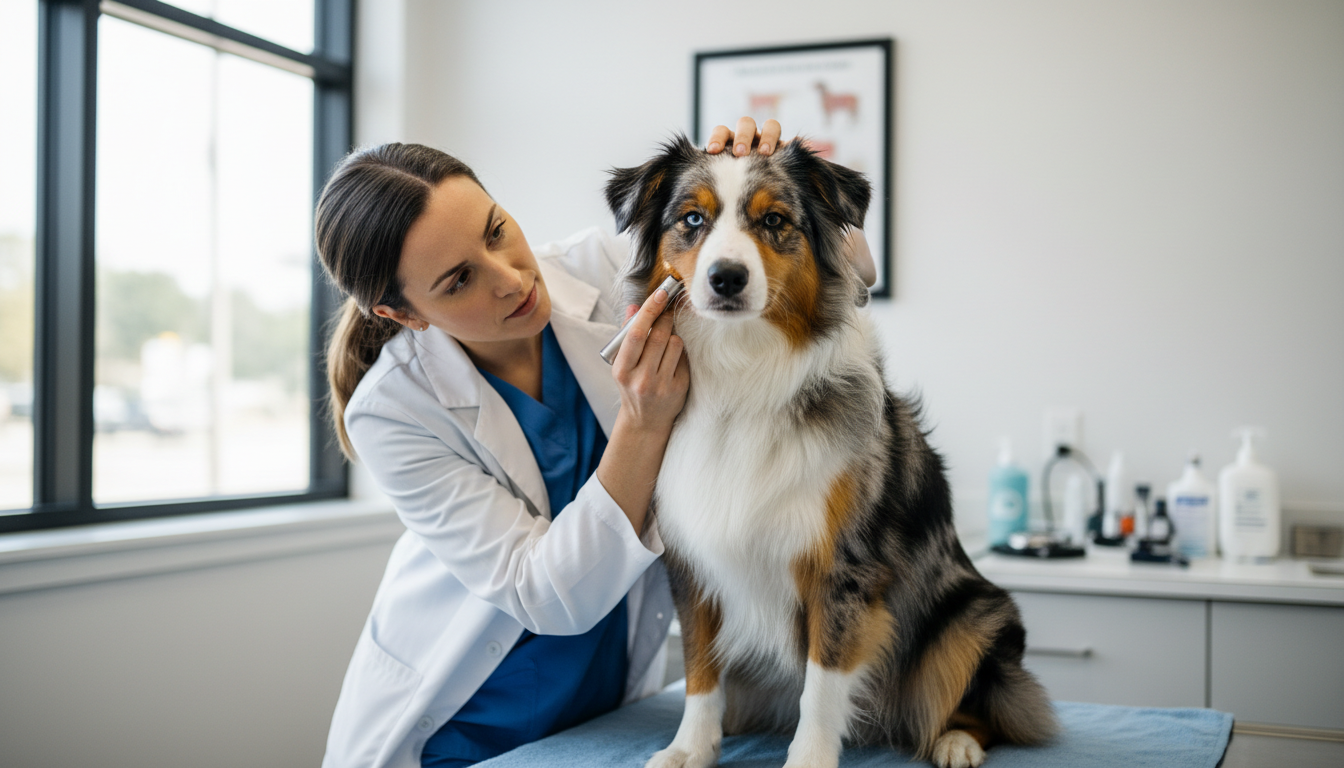
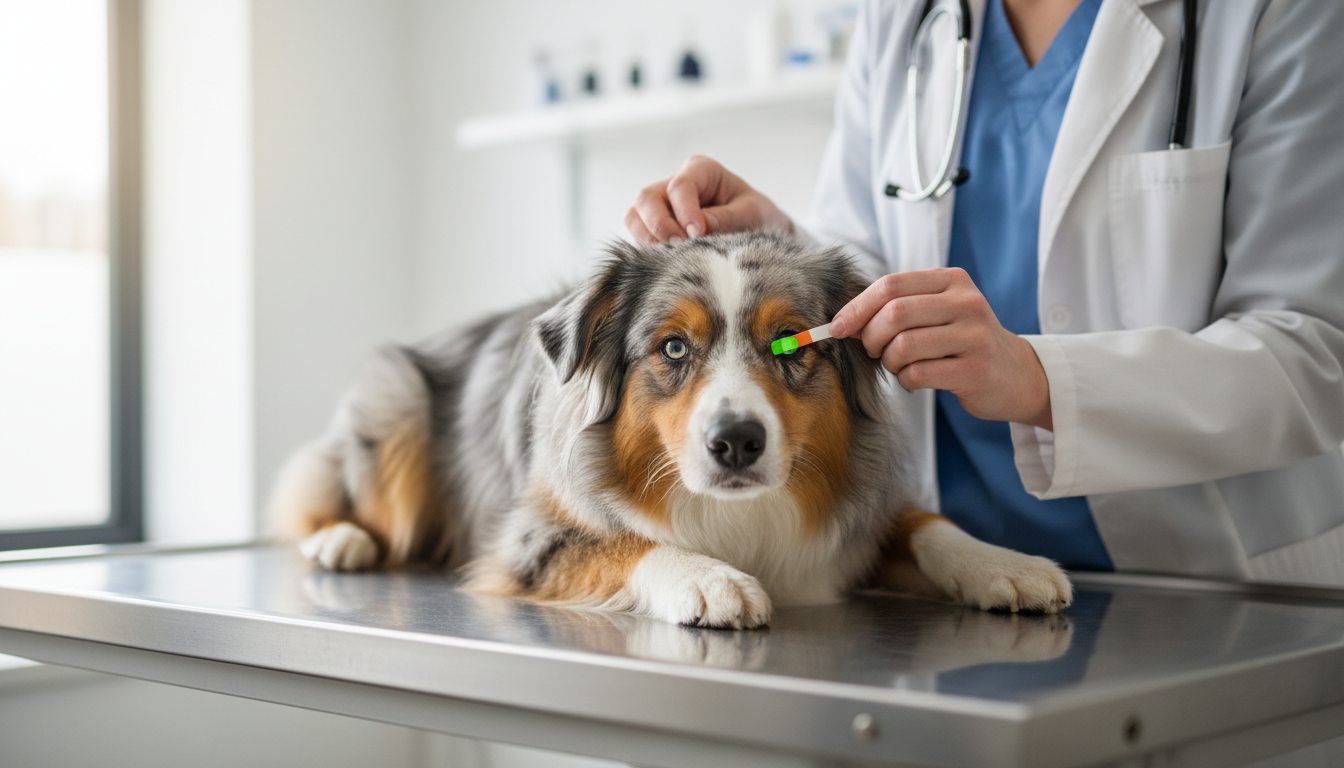
When you bring your dog in for eye discharge, your vet will likely start with a close visual exam, checking the eyelids, the surface of the eye, and the surrounding tissue for signs of irritation, injury, or infection. A common diagnostic tool is a fluorescein stain test, where a special dye is applied to the eye to reveal scratches or ulcers that aren’t visible to the naked eye otherwise.
Depending on what they find, your vet might also check tear production, measure pressure inside the eye to rule out conditions like glaucoma, or take a swab to identify bacteria if an infection is suspected. These steps help pinpoint the exact cause rather than relying on guesswork, which matters because treatments for different causes of discharge can be quite different from one another.
What You Can Do at Home
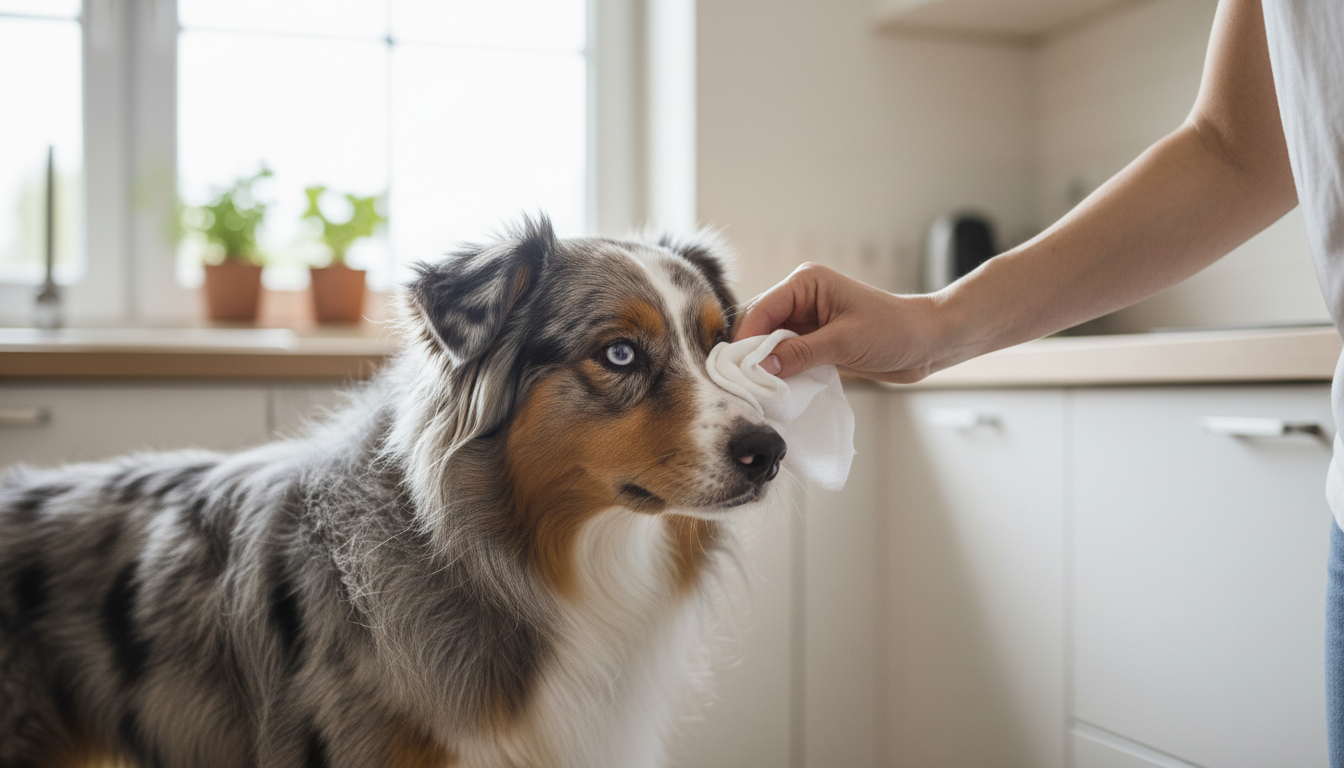
While you should never attempt to diagnose or treat significant eye discharge on your own, there are some things you can safely do. Gently wiping away minor crust with a clean, damp cloth is usually fine for everyday maintenance, especially for breeds prone to collecting debris around the eyes. Keeping your dog’s face reasonably clean and free of excess hair near the eyes, particularly for breeds like Australian Shepherds, can help reduce irritation from trapped debris.
- Use a soft, clean, damp cloth to wipe away crust, using a fresh section for each eye
- Keep hair trimmed away from the eyes if your dog’s coat tends to grow long in that area
- Avoid using over-the-counter human eye drops unless your vet specifically recommends them
- Never try to remove something lodged in the eye yourself; let your vet handle it safely
What to Avoid Doing
It’s tempting to try a home remedy when your dog’s eye looks irritated, but some common instincts can actually make things worse. Rinsing the eye with saline is sometimes appropriate, but using the wrong solution, including tap water in some cases, can introduce more irritation. Reaching for human eye drops, including ones meant for redness or allergies, is risky because many contain ingredients that aren’t safe for a dog’s eyes.
Trying to force open an eye your dog is holding shut due to pain can also cause more harm, both because it’s distressing for your dog and because you risk causing additional damage if there’s already an injury or ulcer present. If you’re ever unsure whether something is safe to try, the safer move is always to call your vet first rather than experiment.
Preventing Eye Irritation Day to Day
A few simple habits can lower the chances of eye irritation in the first place. Keeping your dog’s face and the hair around their eyes clean and trimmed, especially after outdoor activities, reduces the chance of debris becoming trapped. If your dog rides in the car with their head out the window, consider limiting this habit, since wind and flying debris are a surprisingly common cause of eye irritation and injury.
Routine grooming, including regular checks of the eyes during brushing or bath time, helps you catch small issues before they become bigger problems. For active, outdoor breeds like Australian Shepherds who spend a lot of time running through grass, fields, or brush, a quick post-walk glance at the eyes can catch a stuck seed or piece of debris before it causes real irritation.
- Limit car rides with your dog’s head out the window
- Trim facial hair regularly if your dog’s breed tends to grow it long near the eyes
- Check your dog’s eyes after walks in tall grass, brush, or dusty areas
- Keep bedding and grooming tools clean to reduce bacteria near the face
When to Call Your Vet
Any time eye discharge is accompanied by pain, redness, swelling, changes in behavior, or seems to be getting worse rather than better, it’s time to call your vet rather than wait it out. Even discharge that seems mild but persists for more than a day or two without improvement deserves a professional look, since some eye conditions can worsen quickly if left untreated.
Trust your instincts here. You know your dog’s normal patterns better than anyone, and if something about their eyes looks or seems different in a way that concerns you, that’s reason enough to get it checked. Eye problems are one area of pet health where catching things early genuinely makes a difference in the outcome, so it’s always better to ask your vet and be told it’s nothing serious than to wait and risk complications.
This article is for general education and is not a substitute for care from your own veterinarian. Learn about The Pet Vet and our editorial policy.