
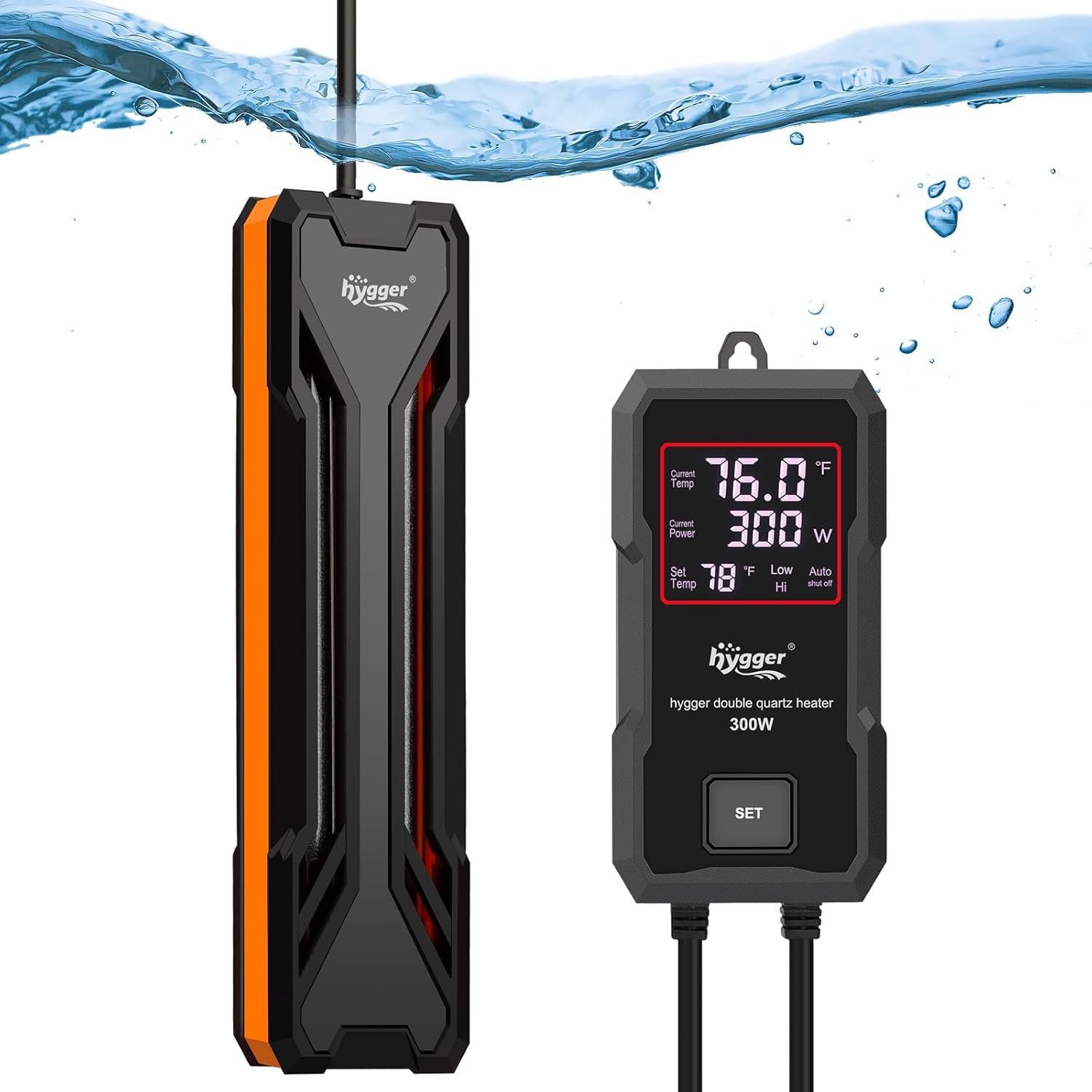
So here’s the thing — if you have a fish tank, you know that keeping the water temperature stable is basically the difference between happy, thriving fish and, well, boiled fish. (Yeah, we went there.) The hygger Aquarium Heater 300W/500W/800W/1000W has been sitting in my aquarium setup for a few months now, and I’ve got some genuinely honest thoughts to share. It’s not perfect, but it’s also not a total dud. Let me walk you through what we actually found.
Quick heads up: This article is for informational purposes only — not a substitute for actual veterinary advice. Always chat with your vet before trying something new with your pet. Also, as an Amazon Associate, The Pet Vet earns from qualifying purchases. We appreciate you!
In This Review
- So What Actually Is This Thing?
- The Good Stuff (What We Love)
- Real Customer Feedback: The Mixed Bag
- The Durability Question (Let’s Be Real)
- Temperature Control: The Accuracy Issue
- Is It Worth Your Hard-Earned Cash?
- Who Is This Actually For?
- What About Noise?
- A Quick Vet’s Perspective
- Other Options Worth Considering
- The Bottom Line
- Frequently Asked Questions
- One More Thing
So What Actually Is This Thing?
The hygger heater comes in four wattage options: 300W, 500W, 800W, and 1000W. The 1000W version we’re focusing on here is built for larger tanks — we’re talking 130 to 160 gallons. It’s a submersible heater with a digital LED controller, which means you get a fancy little display that shows you the current temperature, your preset temperature, and whether anything’s gone sideways (more on that alarm later).
The whole package runs about $63.99, and it comes with suction cups, a bracket for mounting the controller, and a hook. There’s also a 12-month warranty, which is nice but honestly, you’ll want to keep an eye on durability — more on that in a sec.
The Good Stuff (What We Love)
What We Love
- Solid heating performance in normal conditions — Multiple customers report that this heater does exactly what it’s supposed to do: maintain a steady temperature. One reviewer mentioned it handles a 200-gallon tank perfectly, keeping temps exactly where they want them. That’s the whole job, and when it works, it works.
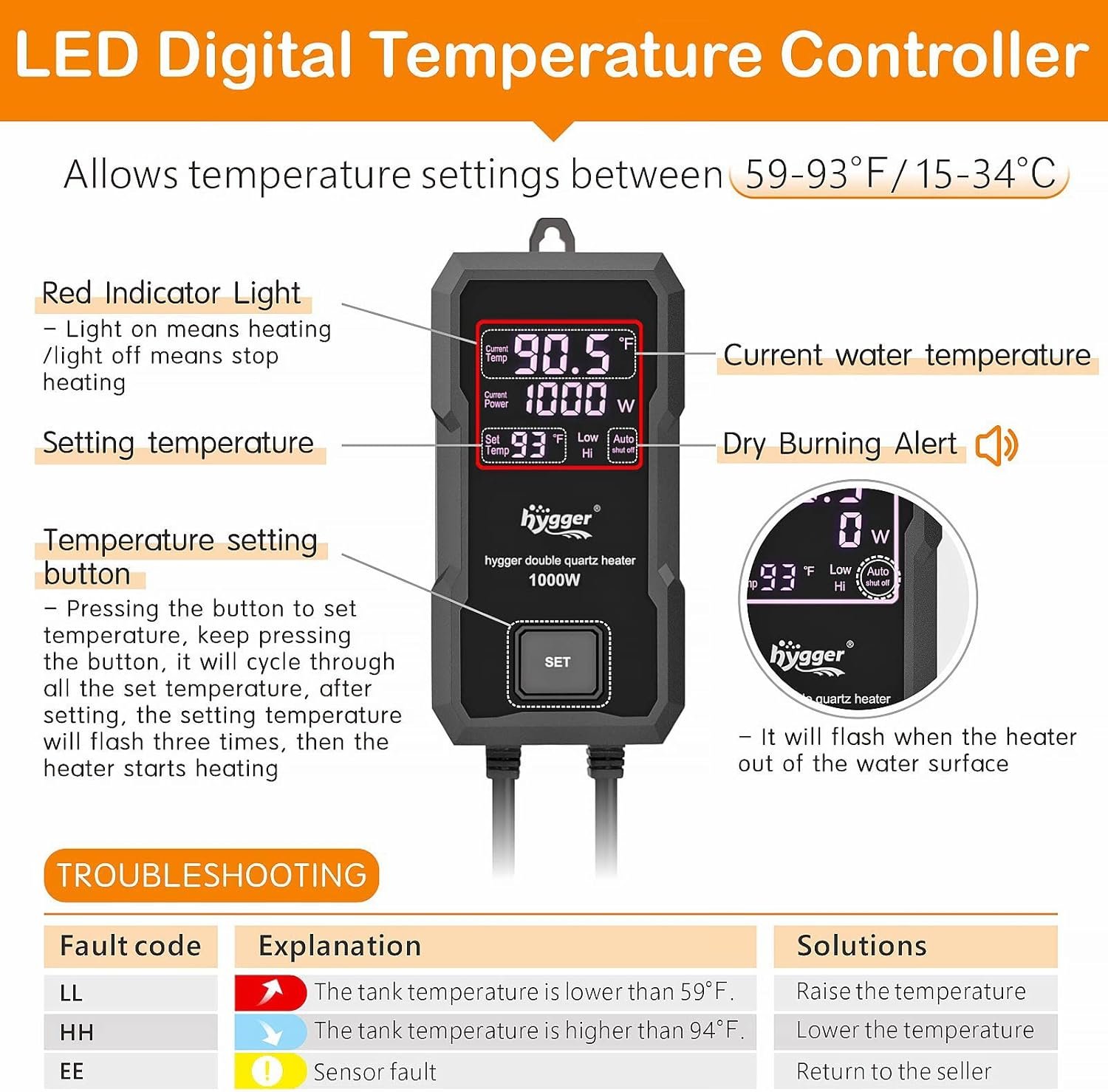
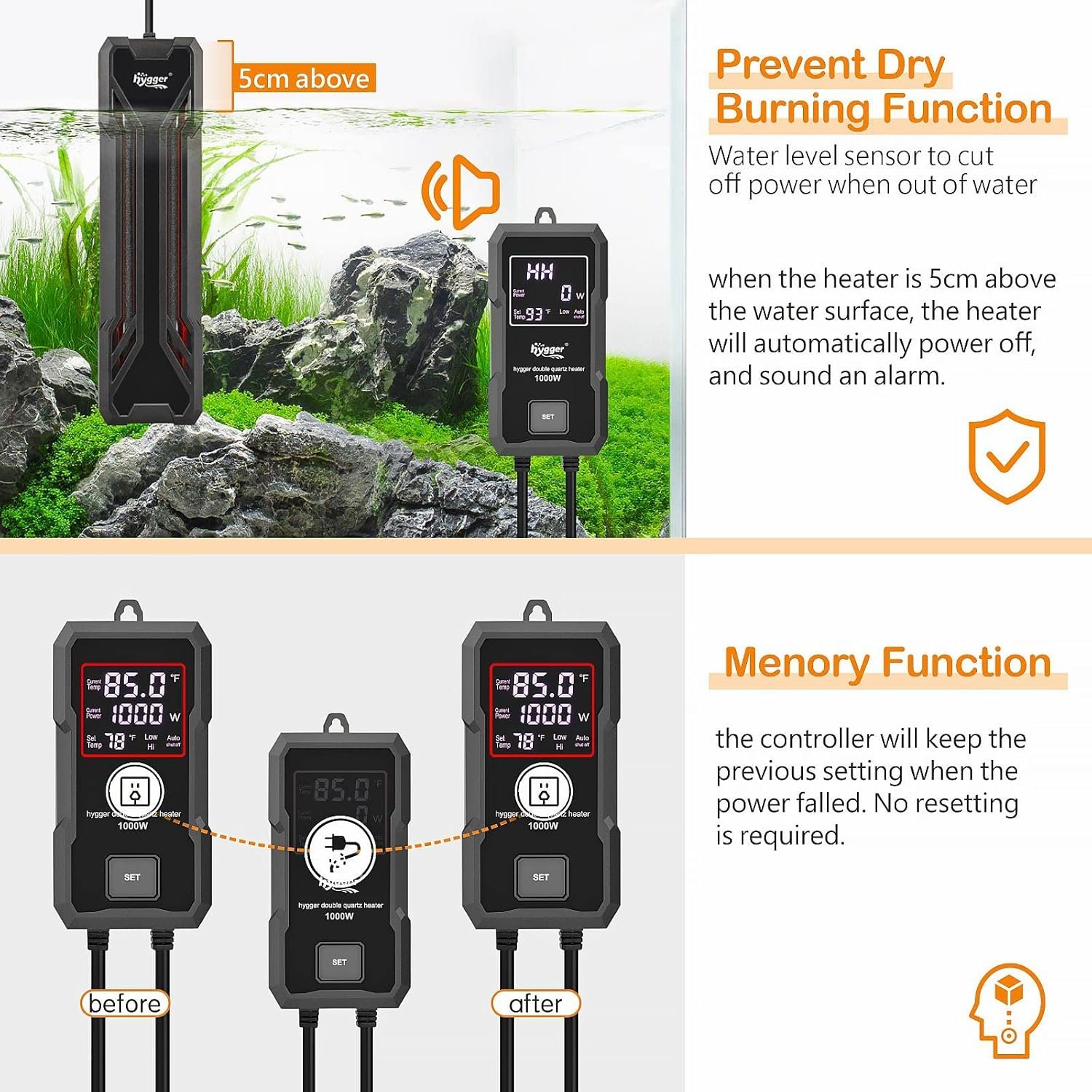
- Overheating and out-of-water protection that actually matters — This is genuinely smart. If the water temperature climbs above 94°F or the heater drops below the minimum water level, it automatically shuts off and alerts you. No more “my fish are basically soup” scenarios. The error codes (HH for high temp, LL for low temp) are clear and helpful.
- Easy to use and set up — The digital LED controller is straightforward. One button, intuitive controls, and you can adjust the temperature from 59°F to 93°F with ±1°F accuracy. No fiddling around in the water; you mount the controller on the edge and adjust from there.
- Built tough (when it lasts) — The heater is made with explosion-proof quartz glass and nickel-chromium heating wire. The guard is high-quality plastic to protect your fish from burns. When this thing holds up, it holds up well — some customers report two years of reliable service.
- Works for both freshwater and saltwater — Whether you’re keeping tropical fish or a reef setup, this heater can handle it. That’s flexibility.
What Could Be Better
- Durability is genuinely hit-or-miss — And this is the big one. While some folks get two years out of theirs, others report the heater dying within a week, breaking after two months, or burning out within a month. That’s not a great track record. We’re talking a $63 investment that might last six months or might last two years — that’s a gamble.
- Temperature control can be unreliable — Some customers report temperature readings that are way off (one mentioned the heater hitting 103°F when set to 78°F). That defeats the whole purpose of having a digital controller. Accuracy is supposed to be ±1°F, but real-world results vary wildly.
- The alarm is absolutely maddening — When the temperature gets too high, this thing beeps incessantly. One customer compared it to a siren. If your heater malfunctions and starts overheating, you’re not just dealing with the problem — you’re dealing with constant, loud beeping until you fix it or unplug it. It’s a safety feature that becomes a headache feature.
Real Customer Feedback: The Mixed Bag
Here’s where I have to be honest — the reviews are all over the place. The 1000W version sits at 3.7 stars out of 5 across 376 reviews. That’s not bad, but it’s not great either. The smaller wattage options (300W, 500W, 800W) actually rate higher, which is interesting. Could be that larger heaters are pushed harder and fail more often, or it could be a batch issue.
The most telling pattern? Customers either love this thing or they hate it. There’s not much middle ground. One person raves about perfect temperature control in their 200-gallon tank. The next person reports the heater malfunctioned and started burning. That inconsistency is the real problem here.
One customer mentioned using the 1000W version in a 300-gallon outdoor pond, and it worked great. So there’s potential here for larger setups, but again — reliability is the question mark.
The Durability Question (Let’s Be Real)
Look, we all get it. You drop $60+ on something and you hope it lasts more than a month. The mixed durability reviews are a legitimate concern. Some units hold up for years; others fail almost immediately. Without knowing what causes the difference, you’re essentially rolling the dice. Is it a manufacturing defect? Improper use? Bad luck? Hard to say.
If you go this route, I’d recommend registering your warranty immediately and keeping your receipt. If it dies early, at least you’ve got that 12-month protection to fall back on.
Temperature Control: The Accuracy Issue
The digital display is nice, but several customers report that the actual temperature control is less accurate than advertised. The spec says ±1°F accuracy with a range of 59°F to 93°F, but some real-world experiences suggest the heater can overshoot (way overshoot) the target temperature. That’s a problem, especially if you’re keeping temperature-sensitive fish or coral.
If precise temperature control is critical for your setup, you might want to pair this with a separate thermometer just to verify what’s actually happening in your tank.
Is It Worth Your Hard-Earned Cash?
At $63.99, this heater is in the mid-range price bracket. It’s not the cheapest option out there, but it’s not premium either. The question is whether you’re paying for reliability or just paying for features.
If you get a unit that works, you’re getting solid performance, good safety features, and a digital controller that looks professional. If you get a unit that fails, you’ve just wasted $60 and risked your fish’s lives.
Here’s my take: If you have a smaller tank (40-80 gallons), the 300W version might be a safer bet — it has better reviews. If you need the 1000W for a larger setup, you might want to read through those customer reviews more carefully and maybe consider alternatives. Or, check the current price and reviews on Amazon to see if the ratings have shifted.
Who Is This Actually For?
This heater makes sense if you have a larger aquarium (80+ gallons) and you want automated temperature control with safety shutoffs. It’s good for both freshwater and saltwater setups. If you’re just starting out with a small 10-gallon betta tank, you’re probably overspending and over-complicating things.
The heater is also decent if you’re willing to accept some risk in exchange for the convenience of a digital controller and automatic shutoff. But if reliability is your top priority, you might want to look at other brands or go with a simpler, proven design.
What About Noise?
Quick note on that alarm we mentioned: It’s not just annoying for you — constant beeping can stress your fish. If the heater starts malfunctioning and triggering the alarm repeatedly, you’ve got a real problem on your hands. Some customers describe it as sounding like a siren, so yeah, it’s loud.
A Quick Vet’s Perspective
While aquatic veterinarians aren’t as common as their mammal-focused counterparts, water quality and temperature stability are absolutely critical to fish health. A heater malfunction can lead to stress, disease, and death in your aquarium population. That’s why reliability matters so much here. Not sure if this product is right for your setup? A quick telehealth chat with The Pet Vet can help you figure out whether this heater fits your needs — no car ride to the vet required.
Other Options Worth Considering
If the durability concerns here are giving you pause, there are other submersible heaters on the market. Some have been around longer and have more consistent reviews. The trade-off is usually price — you might pay a bit more for proven reliability. But when you’re protecting a tank full of living creatures, that extra $10-20 might be worth the peace of mind.
The Bottom Line
The hygger Aquarium Heater 300W/500W/800W/1000W is a solid heater with smart safety features and a nice digital controller — when it works. The problem is that “when it works” is the real gamble here. Some units last years; others fail within weeks. If you’re lucky, you get a reliable performer that maintains stable temperatures and looks professional doing it. If you’re unlucky, you get a $63 paperweight that might endanger your fish.
My honest recommendation? If you need a heater for a larger tank and you’re willing to accept some risk, this could work. But read those Amazon reviews carefully, make sure you understand the warranty, and maybe keep a backup heater on hand just in case. And if you want to grab one for your aquarium, go in with eyes open about the durability concerns.
The smaller wattage versions (300W, 500W) have better ratings, so if your tank size allows, those might be the safer bet.
Frequently Asked Questions
What size tank does the 1000W heater work for?
The 1000W version is designed for 130-160 gallon tanks. If your tank is larger or smaller, you’ll want to pick a different wattage — the 300W is for 40-80 gallons, 500W for 66-135 gallons, and 800W for 80-220 gallons.
Does this heater work for saltwater aquariums?
Yes, it’s designed for both freshwater and saltwater. That said, saltwater can be more corrosive, so you might want to monitor durability more closely and rinse the controller regularly to prevent salt buildup.
What does the alarm mean, and can I turn it off?
The alarm sounds when the water temperature exceeds 94°F (HH error) or when the water level drops below the minimum (LL error or AUTO shutoff). It’s a safety feature to alert you to problems, and from what customers report, it’s pretty loud. You can’t disable it — you have to fix the underlying issue (lower the temperature, increase the water level, or fully submerge the heater).
How accurate is the temperature control?
The specs claim ±1°F accuracy, but customer reviews suggest real-world accuracy varies. Some report perfect temperature control; others report the heater overshooting by 10+ degrees. It’s worth verifying with a separate thermometer.
Is the 12-month warranty worth it?
Given the mixed durability reports, the warranty is your safety net if the unit fails early. Register it immediately and keep your receipt. If it dies within a year, you should be covered — though the warranty process itself might take time.
One More Thing
If you’re serious about this heater, snag one on Amazon and keep a close eye on performance during the first few weeks. That’s usually when defective units show their problems. And hey, if it works out and your fish are happy, you’ll have done your job. That’s worth something.
This article is for general education and is not a substitute for care from your own veterinarian. Learn about The Pet Vet and our editorial policy.