
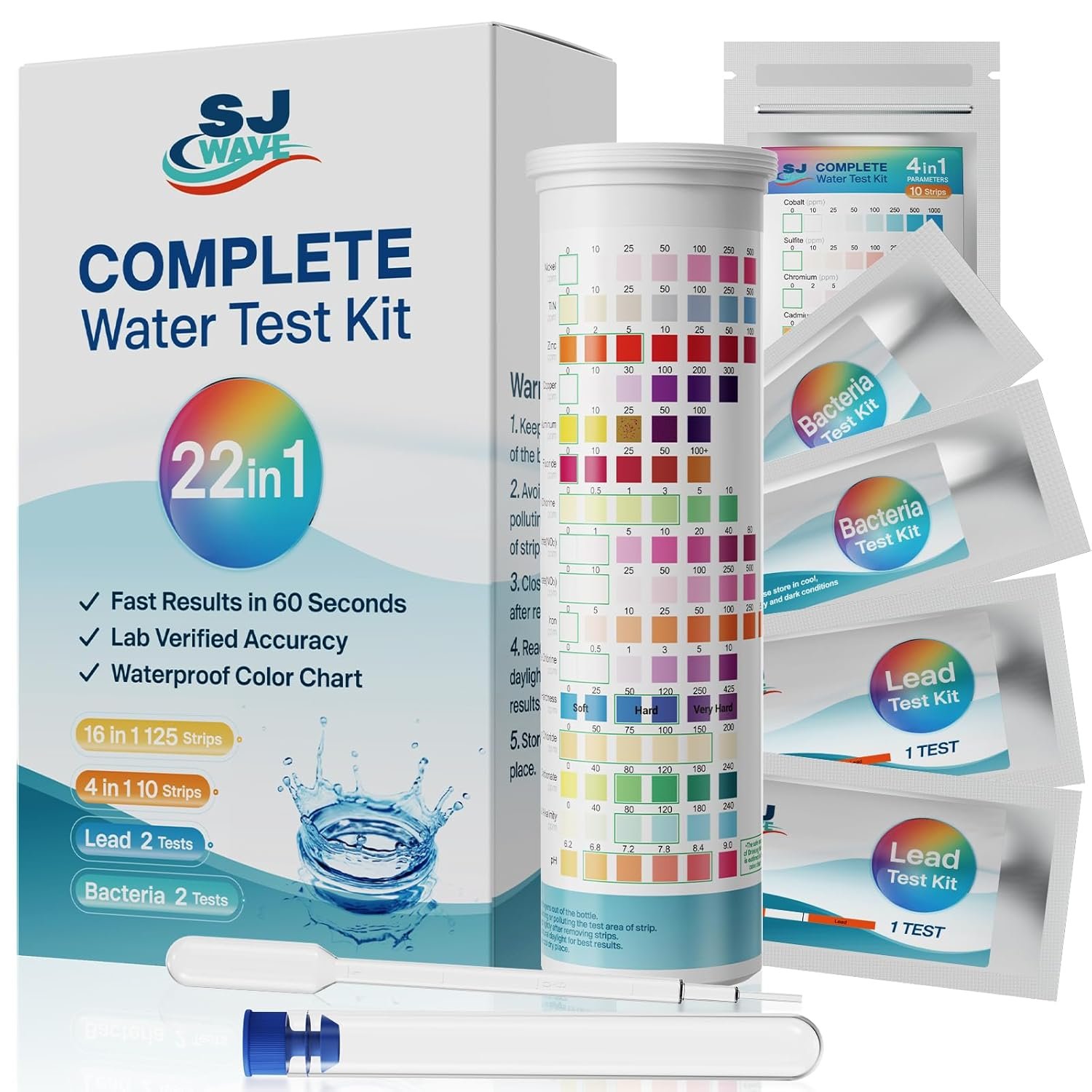
Multi-parameter water test strips can make screening aquarium water convenient, but a long list of measurements does not guarantee accurate diagnosis of a fish-health problem. Kits marketed for drinking-water checks, including SJ WAVE’s multiparameter strips, may not test every parameter an aquarium needs. The exact analytes, ranges and intended water type matter more than “22 in 1” marketing.
Check whether the tests match the aquarium
Freshwater and marine aquariums have different monitoring needs. In many new freshwater tanks, ammonia and nitrite are especially important because toxic buildup can occur before water looks cloudy. Some general drinking-water strips do not measure ammonia or use ranges appropriate for aquarium care. Confirm what the actual package tests, and use aquarium-specific methods when needed.
Why strips sometimes disagree
Color changes may be sensitive to storage, expiration, timing, lighting and the user’s interpretation. Follow the product directions exactly, keep strips dry until use and read each pad at the specified time. A clearly abnormal result should be confirmed with a suitable second test when feasible; do not wait for confirmatory testing if fish are visibly struggling.
How to use results responsibly
Record dates, water changes, temperature and results so trends become visible. If fish gasp, stop feeding, develop unusual lesions or repeatedly die, investigate the actual water chemistry promptly and consult an aquatic veterinary professional. Do not pour in multiple treatments or clarifiers just to make the readings change. Water chemistry interventions should be deliberate and species-appropriate.
Drinking water and pet bowls are different topics
A strip marketed for household drinking-water screening does not prove water is safe for every pet or suitable for marine fish. Many contaminants are not measured by basic consumer strips. If you have a local water-quality concern, follow the relevant water utility or public-health agency’s testing guidance rather than assuming a household kit can rule out all hazards.
Questions worth asking before purchase
Does the kit include ammonia and nitrite testing? Is it designed for fresh or salt water? Are detection ranges and instructions clear? When does it expire? Can you obtain replacement strips? For aquarium care, a useful smaller kit often beats an impressive number of unrelated measurements.
This article is educational and does not claim independent laboratory validation or firsthand testing of the SJ WAVE kit.
Affiliate disclosure: The Pet Vet may receive a commission from qualifying purchases. Product price and specifications can change. Check product listing.
This article is for general education and is not a substitute for care from your own veterinarian. Learn about The Pet Vet and our editorial policy.