
If your dog turns into a different animal the moment you grab your keys, separation anxiety in dogs might be behind it. This common but often misunderstood condition can leave both you and your dog stressed, exhausted, and unsure where to start. This guide walks you through the signs, the causes, and the steps that can genuinely help.
Table of Contents
- What Is Separation Anxiety in Dogs?
- Why Some Dogs Are More Prone to It
- Early Signs You Might Be Missing
- Destructive Behavior: More Than Just Bad Manners
- Excessive Barking, Howling, and Whining
- House Soiling When You’re Away
- Pacing, Panting, and Other Physical Signs
- What Causes Separation Anxiety?
- How Vets Diagnose Separation Anxiety
- Building a Departure Routine That Helps
- Crate Training and Safe Spaces
- Gradual Desensitization to Being Alone
- Enrichment and Mental Stimulation
- When Medication May Be Needed
- When to See a Vet or Veterinary Behaviorist
- Living With and Managing Separation Anxiety Long-Term
What Is Separation Anxiety in Dogs?
Separation anxiety happens when a dog becomes genuinely panicked at being left alone, or sometimes even separated from one specific person in the household. It isn’t naughtiness or a lack of training. It’s a real emotional response rooted in fear, and for many dogs, it can feel as overwhelming as being trapped in a burning building.
This condition ranges from mild restlessness to full-blown panic attacks that can injure your dog or destroy your home. Understanding that your dog isn’t choosing to misbehave is the first step toward helping them, and toward keeping your own frustration in check while you work through it together.
Why Some Dogs Are More Prone to It
Any dog can develop separation anxiety, but high-energy working breeds like the Border Collie are often more vulnerable because they’re bred to work closely alongside people all day. When that constant partnership is suddenly missing, some Border Collies struggle to settle, especially if they haven’t been gradually taught that alone time is safe and normal.
Rescue dogs, dogs who’ve experienced a major change like a move or a new work schedule, and dogs who’ve rarely been left alone as puppies can all be at higher risk too. None of this means the condition is inevitable, but it does mean prevention and early attention matter, particularly with breeds that thrive on companionship.
Early Signs You Might Be Missing
Separation anxiety doesn’t always look dramatic at first. Some dogs show subtle warning signs weeks or months before things escalate, and catching these early can make a real difference in how manageable the condition becomes.
Watching your dog’s body language in the minutes before you leave can tell you a lot. Many owners only notice the destruction or barking, but the anxiety usually starts building well before the front door closes.
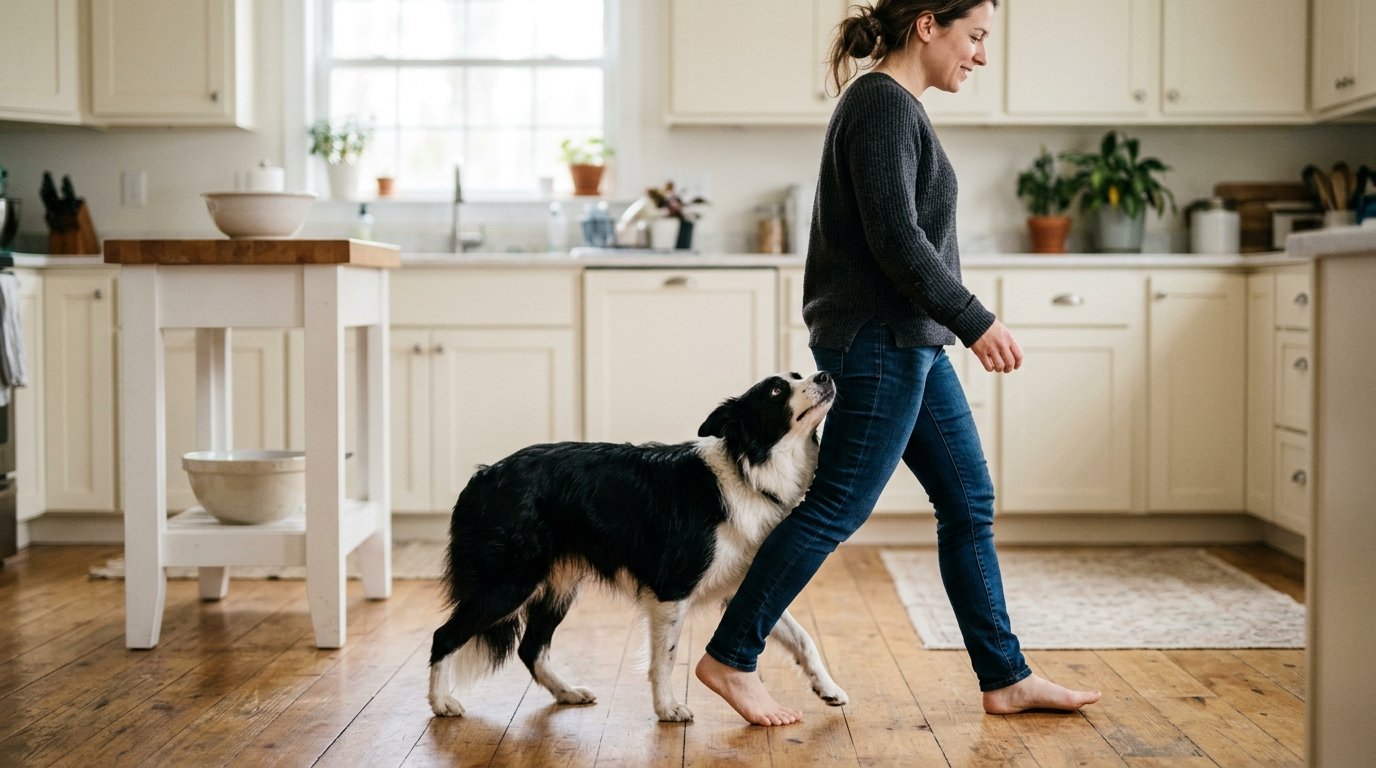
- Following you from room to room more than usual
- Whining or pawing when you pick up your keys or coat
- Trying to block the door or lie against it
- Excessive licking or lip smacking as you prepare to leave
- Loss of appetite right before you go, even for favorite treats
Destructive Behavior: More Than Just Bad Manners
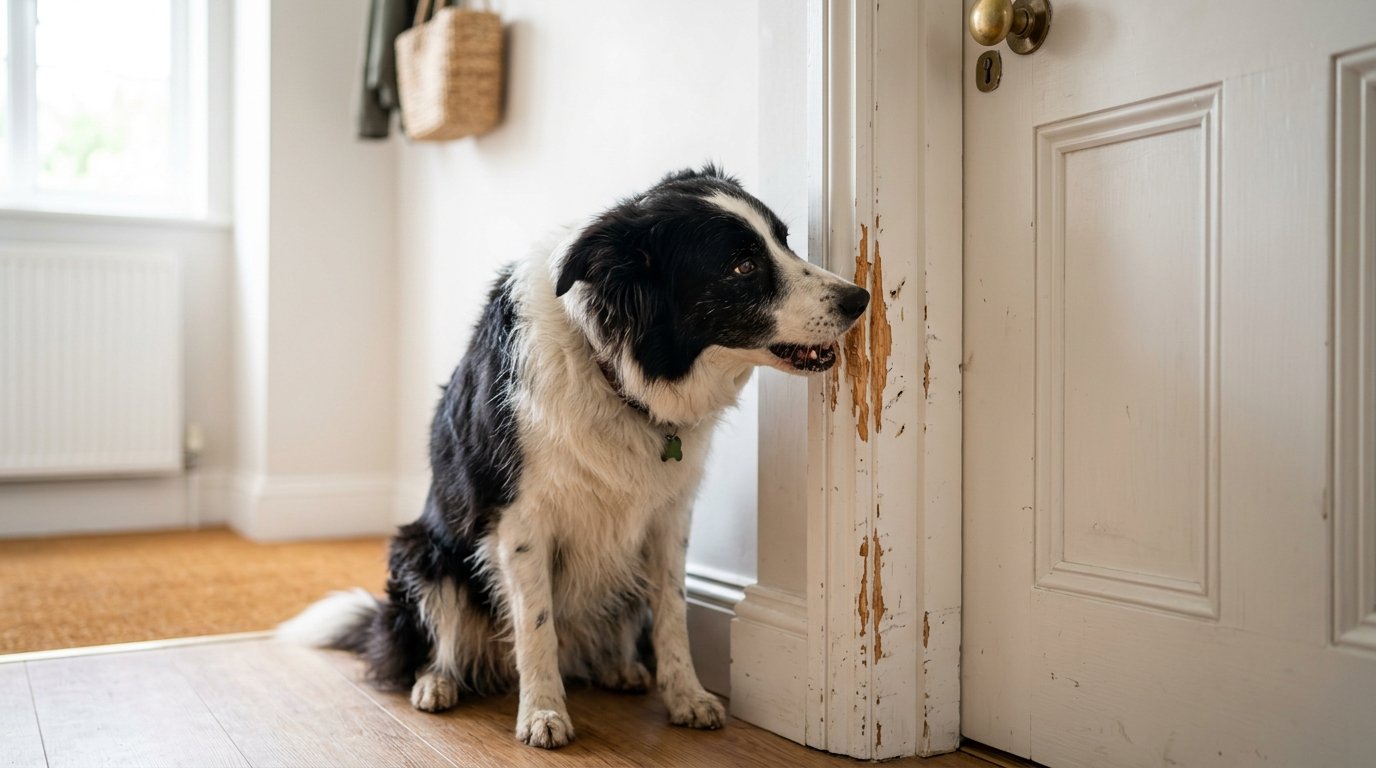
Chewed door frames, shredded cushions, and scratched-up baseboards are some of the most common signs owners report, and it’s easy to mistake this for boredom. With true separation anxiety, though, the destruction tends to concentrate around exits like doors and windows, as if the dog is trying desperately to reach you or escape.
This distinction matters because a bored dog might chew a shoe left on the floor, while an anxious dog may claw at a door until their paws bleed. If you’re noticing injury alongside the damage, that’s a strong signal this is panic, not mischief, and it deserves a vet visit rather than just a stronger crate.
Excessive Barking, Howling, and Whining
Vocalizing that starts almost immediately after you leave and continues for extended periods is a hallmark of separation anxiety. Neighbors complaining about a dog howling for hours, even when there’s no one around to hear a knock at the door, is often the first clue owners get that something is wrong.
This isn’t your dog being dramatic for attention, since there’s no one there to perform for. It’s a genuine expression of distress, and dogs experiencing it are often working themselves into a heightened, exhausting state that can persist long after you return home.
House Soiling When You’re Away
A dog who is perfectly reliable with house training but suddenly has accidents only when left alone is showing a classic sign of anxiety rather than a bathroom problem. The stress response can override normal bladder and bowel control, even in adult dogs who’ve never had accidents before.
If this sounds like your dog, it’s worth ruling out medical causes first, since urinary issues or gastrointestinal upset can look similar. A vet visit can help separate a physical problem from an emotional one, and treating the wrong cause won’t solve either.
Pacing, Panting, and Other Physical Signs
Some dogs show their anxiety mostly through their bodies rather than through noise or destruction. Pacing in tight circles or back and forth along a hallway, excessive panting even in a cool room, drooling, and trembling can all show up during or after periods alone.
These physical signs are sometimes caught on pet cameras rather than noticed directly, since they don’t leave obvious evidence behind like a chewed cushion would. If you suspect anxiety but don’t see damage, setting up a simple camera to record your dog’s first 30 minutes alone can be very revealing.
What Causes Separation Anxiety?
There’s rarely one single cause. Genetics, early life experiences, sudden changes in routine, and even a traumatic event like being lost or rehomed can all contribute. Dogs adopted from shelters sometimes carry anxiety from unknown past experiences that owners never fully learn about.
Big life shifts are common triggers too. A move to a new home, a change in work hours, a new baby, or the loss of a companion animal in the household can all set off separation-related distress, sometimes in dogs who never showed a hint of it before.
How Vets Diagnose Separation Anxiety
Because so many of these signs overlap with other medical and behavioral issues, a proper veterinary evaluation matters. Your vet will want to rule out physical causes for symptoms like house soiling, appetite changes, or excessive licking before confirming that anxiety is the driving factor.
Bring video footage if you have it, along with notes on when the behavior started and any recent changes at home. This information helps your vet, or a referral to a veterinary behaviorist, build an accurate picture and recommend a plan suited to your dog specifically rather than a generic one-size-fits-all approach.
Building a Departure Routine That Helps
Dogs often become anxious not just from being alone, but from anticipating it. If your dog has learned that keys plus shoes plus a coat means panic time, changing up that predictable sequence can help lower the tension before you even leave.
Try practicing these cues at random times when you’re not actually leaving, so they lose their power to trigger distress. Picking up your keys and then sitting down to watch television, for example, teaches your dog that the cue doesn’t always mean abandonment.
- Practice pick-up-and-put-down of keys and bags throughout the day
- Vary your routine so cues don’t always predict departure
- Keep goodbyes low-key rather than long, emotional farewells
- Keep greetings calm too, to avoid amplifying the highs and lows
Crate Training and Safe Spaces
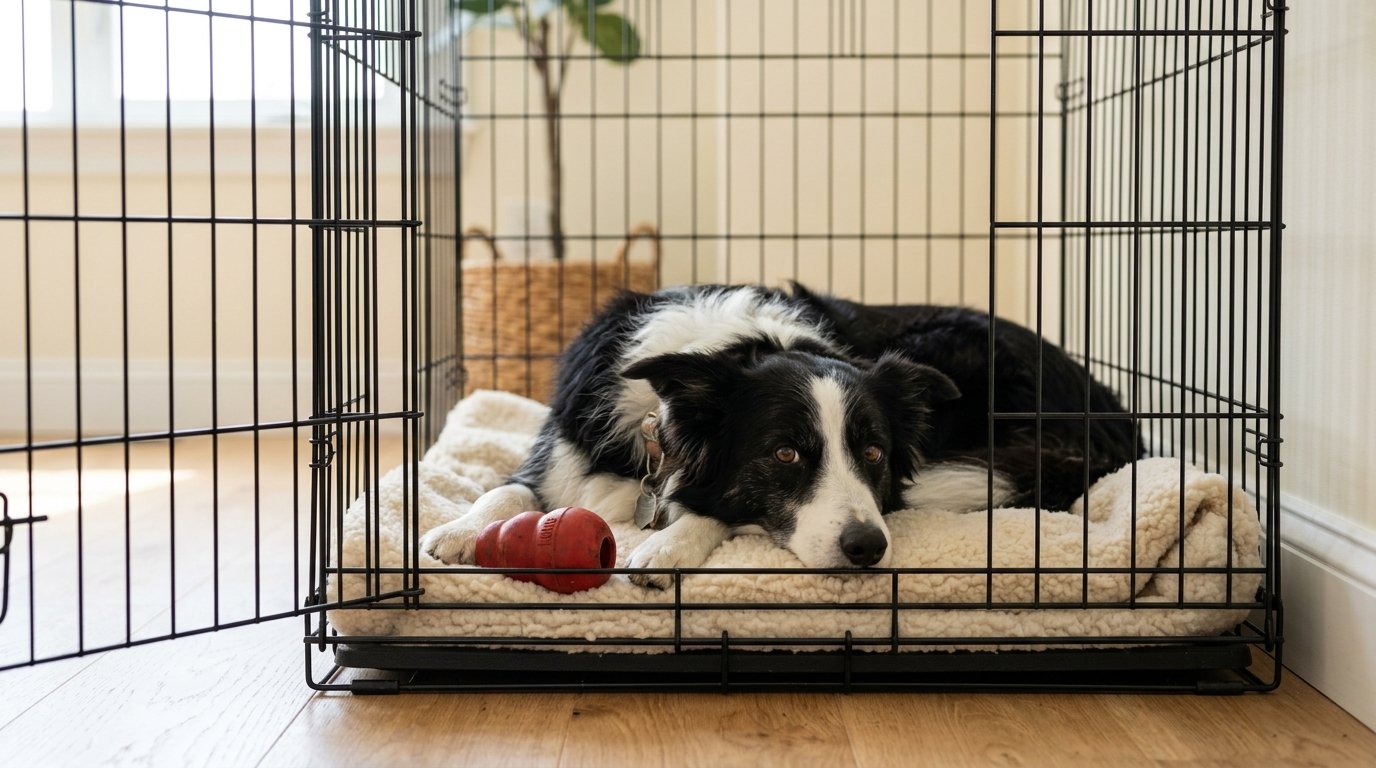
For some dogs, a properly introduced crate becomes a genuine comfort zone rather than a punishment. A den-like space with familiar bedding and a favorite chew can help a dog feel more secure, but this only works if the crate has been introduced gradually and positively long before it’s needed for real alone time.
For dogs who find crates distressing rather than calming, a safe, dog-proofed room with access to water, comfortable bedding, and a few safe toys may work better. The goal in either case is a space that feels secure, not confining, so pay close attention to how your dog actually responds rather than assuming one method fits every dog.
Gradual Desensitization to Being Alone
One of the most effective long-term approaches involves slowly building up your dog’s tolerance to being alone, starting with extremely short absences that don’t trigger anxiety at all. This might mean stepping outside for ten seconds and coming back before your dog even has time to react.
Over days and weeks, these absences can be extended gradually, always staying under the threshold where your dog becomes distressed. This process takes patience and consistency, and rushing it tends to set progress back rather than speed it along, so slow and steady really is the better path here.
Enrichment and Mental Stimulation
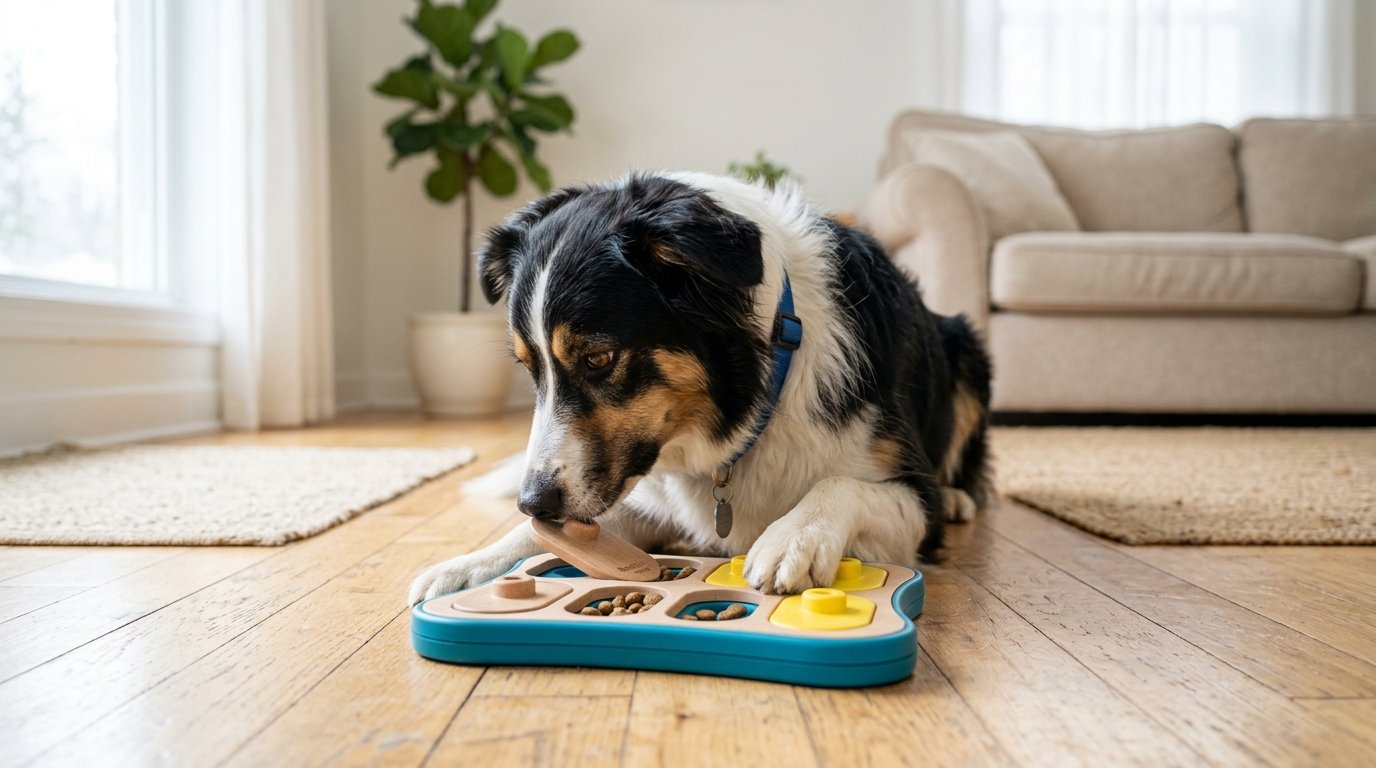
A tired, mentally satisfied dog is often better equipped to cope with time alone. Puzzle feeders, scent games, and a solid walk or play session before you leave can take the edge off restless energy that might otherwise turn into anxious pacing or destruction.
This matters especially for breeds like Border Collies, who need both physical exercise and mental challenges to feel settled. A bored, understimulated dog and an anxious dog can look surprisingly similar, so building enrichment into your daily routine helps address both possibilities at once.
- Offer a stuffed food toy right before you leave
- Rotate toys so they stay novel and interesting
- Include a sniff-focused walk earlier in the day
- Consider a short training session to tire the mind, not just the body
When Medication May Be Needed
For moderate to severe cases, behavior modification alone may not be enough, and that’s completely normal. Veterinary-prescribed medication can help take the edge off your dog’s fear response, making it possible for training techniques to actually work.
This is a decision for your vet to make after a full evaluation, taking into account your dog’s health history and the severity of the anxiety. Never give your dog any medication, supplement, or over-the-counter product intended for anxiety without veterinary guidance, since some options that seem harmless can interact badly with other conditions or medications.
When to See a Vet or Veterinary Behaviorist
If your dog is injuring themselves trying to escape, showing signs of extreme panic, or if the anxiety is worsening despite your efforts, it’s time to bring in professional help rather than continuing to manage it alone. A vet can rule out medical causes and, if needed, refer you to a veterinary behaviorist who specializes in cases like this.
Waiting too long often allows the anxiety to become more deeply ingrained and harder to treat. Early, professional support tends to lead to better outcomes, so don’t feel like you need to have exhausted every home remedy before reaching out for guidance.
Living With and Managing Separation Anxiety Long-Term
Many dogs improve significantly with time, consistency, and the right combination of training and, when necessary, medical support. Some dogs may always need a bit of extra structure around departures, and that’s okay. The goal isn’t perfection, it’s a calmer, more manageable daily life for both of you.
Celebrate small wins along the way, like an extra five minutes of calm before you notice pacing start, or a quieter house when you come home. Progress with separation anxiety is rarely a straight line, but with patience and the right support, most dogs and their owners find a rhythm that works.
This article is for general education and is not a substitute for care from your own veterinarian. Learn about The Pet Vet and our editorial policy.