
If you’ve noticed your cat hiding more than usual, you’re probably feeling a mix of confusion and worry. Cats are naturally private animals, but a sudden increase in hiding can signal stress, fear, or an underlying health problem. This guide walks you through the most common reasons, how to tell the difference between normal cat behavior and a red flag, and when it’s time to call your veterinarian.
Table of Contents
- Why Cats Hide in the First Place
- Stress and Environmental Changes
- New People, Pets, or Moves
- Illness and Pain as a Hidden Cause
- Aging and Cognitive Changes in Senior Cats
- Fear of Loud Noises or Storms
- Litter Box Problems and Hiding
- Changes in Routine or Schedule
- Siamese-Specific Sensitivity to Stress
- Signs That Hiding Is a Medical Emergency
- How to Safely Approach a Hiding Cat
- Creating Safe Spaces vs Forcing Interaction
- When to Call Your Vet
- Tips to Help Your Cat Feel Secure Again
- Long-Term Monitoring and Prevention
Why Cats Hide in the First Place
Hiding is a completely normal part of cat behavior, and it doesn’t automatically mean something is wrong. Cats are both predators and prey in the wild, and tucking themselves away in small, enclosed spaces gives them a sense of safety and control over their environment. Your Siamese cat curling up in a closet or behind the couch for a nap is often just her way of finding a quiet, low-stimulation spot to rest.
The key difference between healthy hiding and concerning hiding is the pattern. A cat who hides for an hour after a loud thunderstorm and then returns to normal play and affection is behaving typically. A cat who suddenly starts avoiding people, skipping meals, or hiding for most of the day, day after day, is telling you that something has changed in her world or her body.
Stress and Environmental Changes
Cats are creatures of habit, and even small changes to their environment can trigger noticeable stress. Rearranged furniture, a new brand of litter, construction noise outside, or even a change in your work schedule can all be enough to send a sensitive cat into hiding mode. Siamese cats in particular tend to be highly attuned to their surroundings and often react more visibly to change than some other breeds.
If you’ve recently made any changes at home, think back to the timeline. Did the hiding start right after you moved the litter box, brought home new furniture, or switched cleaning products? Identifying the trigger can help you understand whether this is a temporary adjustment period or something that needs more active management on your part.
New People, Pets, or Moves
A new baby, a new roommate, a new pet, or a household move are some of the biggest stressors a cat can experience. These changes disrupt not just the physical space but the entire social structure your cat has grown used to. It’s common for cats to retreat and hide for days or even weeks after a major life change while they slowly reassess whether their environment is safe.
Give your cat time and space during these transitions rather than forcing interaction. Set up a quiet room with her food, water, litter box, and a few familiar items like her bed or a worn blanket that smells like home. Gradual, low-pressure reintroduction to the household usually works better than trying to rush the adjustment.
Illness and Pain as a Hidden Cause
One of the most important things to understand is that cats instinctively hide pain and illness. In the wild, showing weakness makes an animal a target, so cats have evolved to mask discomfort until it becomes severe. This means that increased hiding is one of the earliest and most reliable signs that a cat doesn’t feel well, even before you notice any other symptoms.
Conditions ranging from urinary issues to dental pain to digestive upset can all cause a cat to withdraw and seek solitude. Because cats are so good at hiding illness, any unexplained change in hiding behavior deserves a closer look rather than being dismissed as “just a mood.” This is one of the main reasons vets encourage owners to take behavioral changes seriously rather than waiting for obvious physical symptoms.
Aging and Cognitive Changes in Senior Cats
As cats get older, their bodies and brains go through changes that can affect behavior in ways that mimic hiding due to stress. Joint discomfort can make climbing to favorite perches painful, so a senior cat may retreat to a low, hidden spot instead. Cognitive changes can also cause confusion or increased anxiety, leading an older cat to seek out enclosed, quiet areas more often than she used to.
If your cat is a senior and you’ve noticed a gradual increase in hiding alongside other changes like disorientation, changes in appetite, or altered sleep patterns, it’s worth scheduling a wellness visit. Your veterinarian can assess whether age-related changes are playing a role and discuss ways to keep your cat comfortable.
Fear of Loud Noises or Storms
Sudden loud noises, whether from fireworks, thunderstorms, construction, or even a vacuum cleaner, are a classic trigger for hiding in cats. This type of hiding is usually short-lived and resolves once the noise stops and your cat feels the coast is clear. Some cats are more noise-sensitive than others, and this can be an individual personality trait rather than a sign of a deeper problem.
If your cat consistently hides during specific recurring events like weekly trash pickup or a neighbor’s dog barking, you can help by creating a designated safe space in a quieter part of the home. Over time, some cats become less reactive to predictable noises, especially with a consistent, calm environment to retreat to.
Litter Box Problems and Hiding
Sometimes hiding is connected to a cat associating a certain area of the home with something unpleasant, such as being startled while using the litter box or having a bad experience near their food area. Cats can develop strong negative associations quickly, and this can lead to increased time spent in hiding spots away from those areas.
Take a look at your cat’s litter box setup and location. A box that’s too small, too dirty, in a high-traffic area, or recently changed in type of litter can all contribute to stress that shows up as increased hiding elsewhere in the home.
- Keep the litter box in a quiet, low-traffic location
- Scoop daily and do a full clean regularly
- Avoid sudden litter brand or texture changes
- Provide one box per cat, plus one extra, in multi-cat homes
Changes in Routine or Schedule
Cats thrive on predictability, and disruptions to feeding times, your work schedule, or the general rhythm of the household can unsettle them more than you might expect. A cat who is used to your consistent morning routine may become anxious and retreat to a hiding spot if that routine suddenly shifts, even if nothing else in the environment has changed.
Try to keep feeding times, playtime, and quiet time as consistent as possible, especially during periods when other changes are already happening. Predictability gives your cat a sense of control, which can reduce the need to hide as a coping mechanism.
Siamese-Specific Sensitivity to Stress
Siamese cats are known for being vocal, social, and deeply bonded to their families, which also means they can be more sensitive to disruptions in that bond or routine than some other breeds. A Siamese who suddenly stops seeking you out and starts hiding instead is often communicating that something feels wrong, whether that’s a change in the household or a physical discomfort.
Because Siamese cats are typically so interactive, a withdrawal from normal social behavior tends to stand out more clearly in this breed than in naturally more independent cats. Pay close attention if your usually chatty, people-oriented Siamese suddenly goes quiet and starts avoiding contact, as this shift is often more meaningful than it might be in a less social breed.
Signs That Hiding Is a Medical Emergency
While many causes of hiding are behavioral or related to mild stress, there are certain accompanying signs that should never be ignored. Hiding combined with straining to urinate, repeated vomiting, difficulty breathing, obvious pain, a swollen abdomen, or complete refusal to eat or drink can point to a serious medical issue that needs immediate attention.
If you notice any of these combinations, don’t wait to see if things improve on their own. These symptoms can indicate conditions that worsen quickly, and prompt veterinary care can make a significant difference in the outcome.
- Straining in the litter box with little or no urine produced
- Repeated vomiting or inability to keep food down
- Labored or rapid breathing
- Visible pain, limping, or reluctance to move
- Complete loss of appetite for more than a day
How to Safely Approach a Hiding Cat
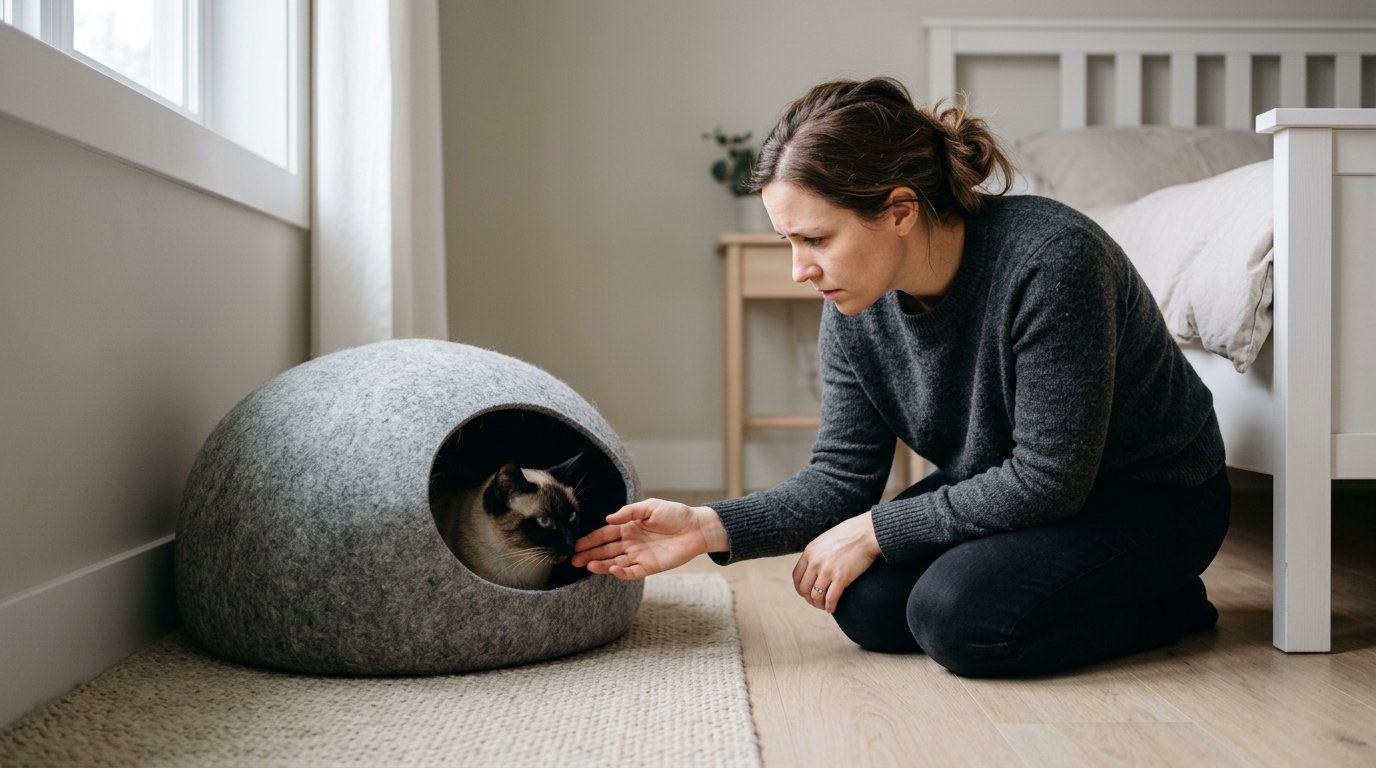
When your cat is hiding, it’s tempting to pull her out to check on her, but this approach can increase stress and even lead to a defensive scratch or bite. Instead, approach slowly and speak in a calm, low voice so your cat knows it’s you before you get close. Let her see and smell your hand before attempting any physical contact.
If you need to check on her physical condition, try offering a favorite treat or using a flashlight to visually inspect for obvious signs of injury or distress rather than immediately reaching into the hiding spot. Patience during this process helps preserve trust and reduces the chance of an escalated fear response.
Creating Safe Spaces vs Forcing Interaction
It’s important to distinguish between letting your cat have a safe retreat and inadvertently reinforcing isolation. Providing a cozy, enclosed spot like a covered bed or a cardboard box gives your cat a choice, which is different from a cat who feels she has no safe option but to hide under furniture or behind appliances.
Avoid forcing interaction when your cat is clearly stressed, but do continue to offer gentle invitations to engage, such as sitting quietly nearby or offering a toy from a distance. This balance respects your cat’s need for space while keeping the door open for her to reconnect on her own terms.
When to Call Your Vet
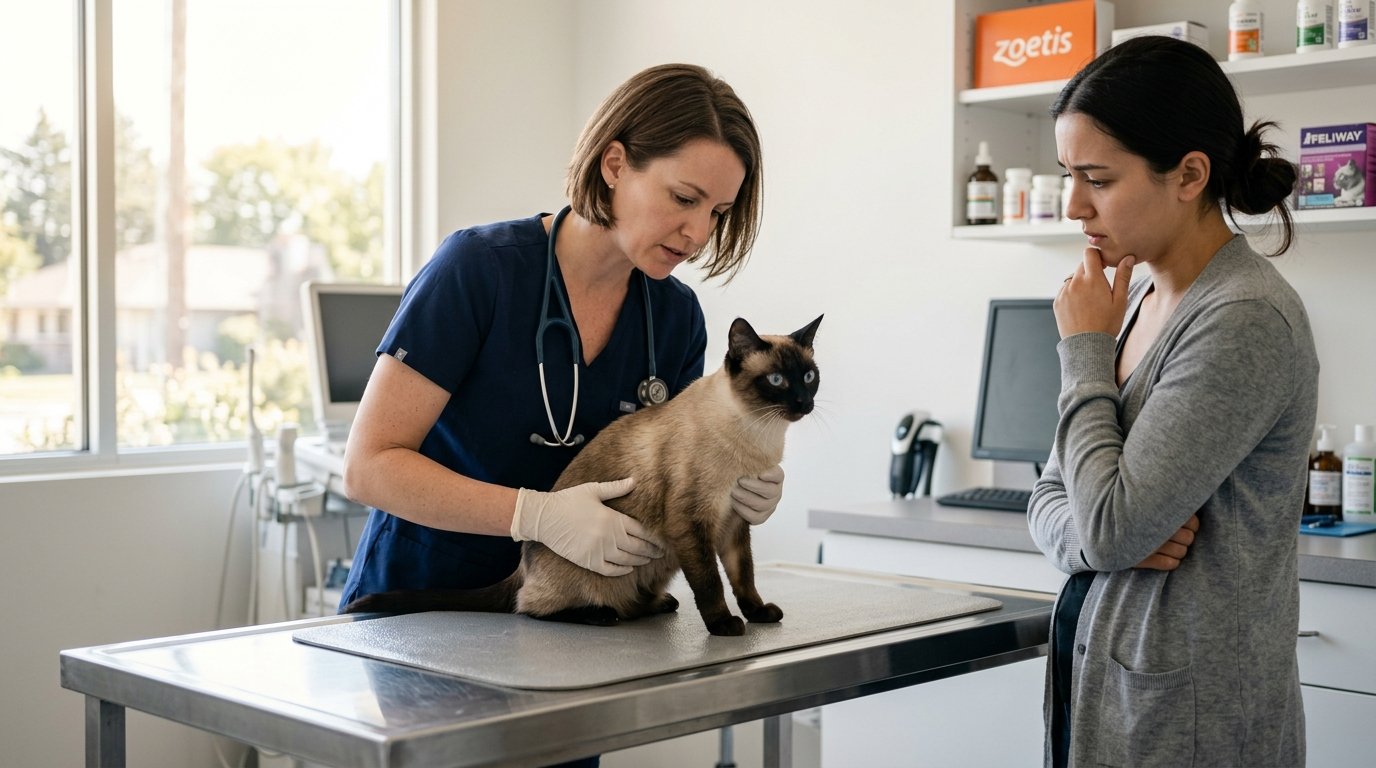
Any time hiding behavior is new, sudden, or lasts more than a day or two without an obvious environmental explanation, it’s worth reaching out to your veterinarian. This is especially true if the hiding is paired with any changes in eating, drinking, litter box habits, or energy level. Your vet can help determine whether the cause is behavioral or medical and guide you on next steps.
Even if you’re not sure the hiding is serious, a phone call to your vet’s office can help you decide whether an in-person visit is needed right away or whether it’s reasonable to monitor at home for a short time. Vets would rather field a call about a cat who turns out to be fine than see a cat who was brought in too late.
Tips to Help Your Cat Feel Secure Again
Helping a stressed or hiding cat regain confidence takes patience and consistency. Focus on maintaining predictable routines, providing multiple safe resting spots around the home, and minimizing sudden changes wherever possible. Vertical spaces like cat trees can also give your cat a sense of security since height often equals safety in a cat’s mind.
Environmental enrichment, such as regular interactive play sessions and puzzle feeders, can also help reduce overall stress levels, making your cat less likely to retreat as a default coping strategy. Small, consistent efforts over time tend to be more effective than trying to force a quick fix.
- Offer multiple hiding spots so your cat has choices, not just fear-based retreats
- Keep feeding and play times consistent
- Use pheromone diffusers designed for cats if recommended by your vet
- Introduce changes gradually rather than all at once
Long-Term Monitoring and Prevention
Once you’ve addressed the immediate cause of your cat’s hiding, keep an eye on her behavior over the following weeks. A gradual return to normal social behavior, appetite, and activity level is a good sign that things are improving. If hiding behavior returns or worsens, it’s worth revisiting the possible causes and checking in with your vet again.
Regular wellness checkups are one of the best tools you have for catching subtle health changes before they become serious, since your vet can pick up on things that are easy to miss at home. Staying attentive to your cat’s normal patterns of behavior, and noticing when those patterns shift, is one of the simplest ways to protect her health and wellbeing long term.