
Siamese cat excessive meowing can leave you wondering whether your chatty companion is simply being social or trying to tell you something important. Siamese cats are famously vocal, but a sudden increase in meowing, yowling, or crying deserves your attention. This guide walks you through the normal reasons behind the noise, the warning signs that mean something more serious is going on, and practical ways to help your cat feel calmer and more content.
Table of Contents
- Why Siamese Cats Are Naturally Talkative
- Normal Vocalization vs Excessive Meowing
- Common Reasons Behind the Meowing
- Hunger and Feeding Schedules
- Attention-Seeking and Boredom
- Stress and Environmental Changes
- Medical Causes That Can Increase Vocalization
- Age-Related Changes and Cognitive Decline
- Pain as a Hidden Trigger
- When Meowing Signals an Emergency
- How to Respond Without Reinforcing the Behavior
- Enrichment Strategies to Reduce Excessive Meowing
- Building a Predictable Routine
- When to See a Vet
- Living Happily With a Vocal Siamese
Why Siamese Cats Are Naturally Talkative
If you brought home a Siamese expecting a quiet lap cat, you probably learned quickly that this breed loves to talk. Siamese cats are known throughout the cat world for their distinctive, raspy voices and their willingness to use them often. This isn’t a flaw in your cat’s personality; it’s a hallmark trait that has been part of the breed for generations.
Siamese cats tend to be highly social and bond closely with their people, and vocalizing is one of their main tools for communication. Many owners describe living with a Siamese as having a conversation partner who comments on everything from mealtime to your comings and goings. Understanding that a certain amount of chatter is simply ‘who they are’ can help you relax about normal levels of noise while still staying alert to changes.
Normal Vocalization vs Excessive Meowing
There is a difference between a Siamese greeting you at the door and a cat who seems distressed, restless, or unable to settle. Normal vocalization usually happens in predictable situations, like when you come home, when it’s near feeding time, or during play. The tone tends to be conversational rather than urgent.
Excessive meowing, on the other hand, often feels different in quality and timing. It might happen at odd hours, sound more like crying or yowling, or continue even after you’ve responded to your cat’s obvious needs. Paying attention to these patterns over a few days can help you figure out whether you’re dealing with typical Siamese chattiness or a behavior change worth investigating further.
Common Reasons Behind the Meowing
Cats meow for a wide range of reasons, and Siamese cats simply tend to be louder about all of them. Some of the most common triggers include hunger, a desire for attention, boredom, stress, and discomfort. Because this breed is so expressive, even minor changes in their environment or routine can trigger a noticeable increase in vocalizing.
Working through the possibilities one at a time, rather than assuming the worst right away, can help you narrow down what your cat is trying to communicate. The next several sections break down these common causes in more detail so you can start connecting the dots.
Hunger and Feeding Schedules
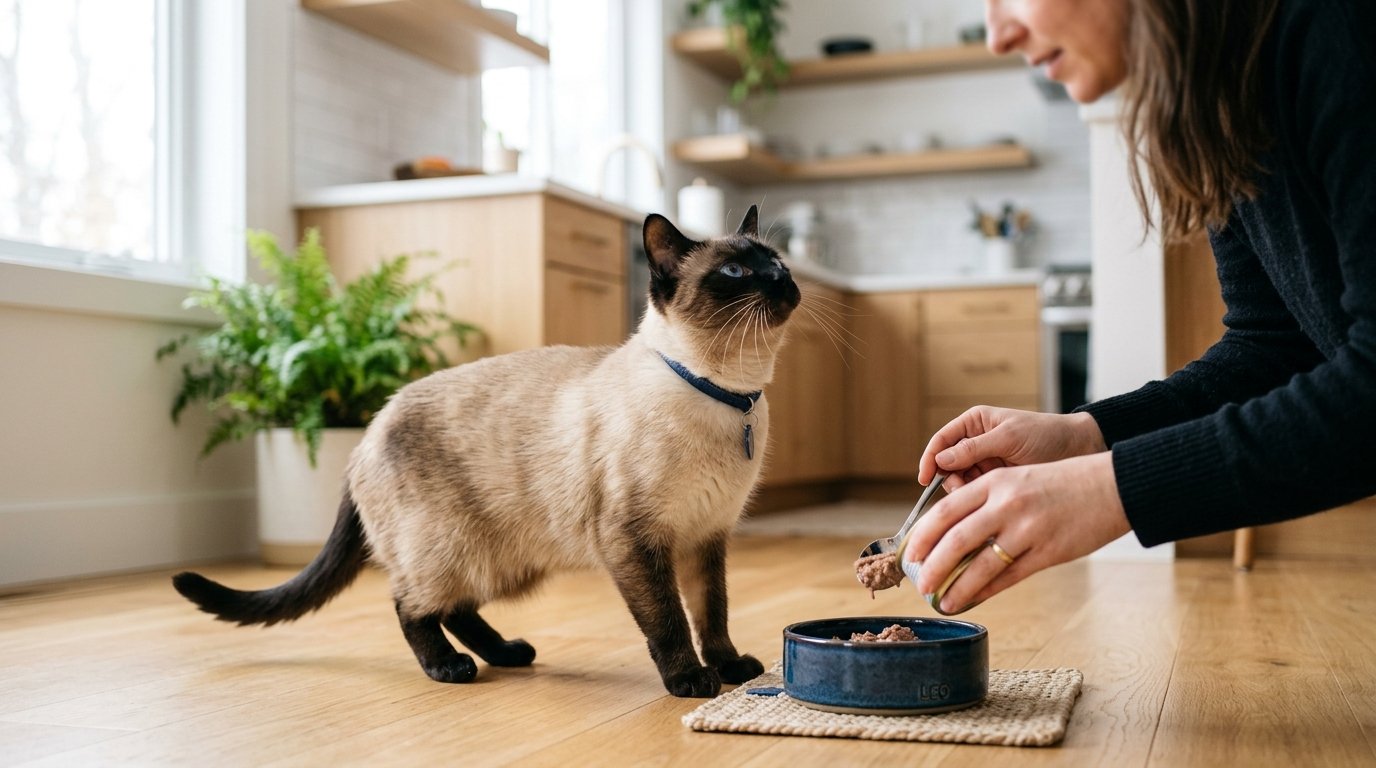
One of the simplest explanations for a vocal cat is an empty stomach or an inconsistent feeding schedule. Siamese cats are notorious for reminding their owners when mealtime is approaching, and some become quite insistent if meals are delayed or portions feel too small.
If your cat’s meowing seems to spike around specific times of day, especially early morning or right before a usual feeding, hunger is worth ruling out first. Sticking to a consistent schedule and avoiding free-feeding can sometimes reduce food-related demands, though any major changes to your cat’s diet or feeding routine should be discussed with your veterinarian.
Attention-Seeking and Boredom
Siamese cats crave interaction more than many other breeds, and a lack of mental or physical stimulation can quickly translate into constant meowing. If your cat is left alone for long stretches without toys, climbing opportunities, or playtime, vocalizing becomes an easy way to fill the silence and try to draw you in.
This kind of meowing often increases when you’re busy, on the phone, or trying to work, since your cat has learned that persistence eventually gets a reaction. While it can be frustrating, this is a solvable issue in many cases through added enrichment and dedicated one-on-one time, which we’ll cover later in this article.
- Meowing that increases when you’re on a call or focused on a task
- Following you from room to room while vocalizing
- Meowing that stops almost immediately once you engage in play
Stress and Environmental Changes
Cats are creatures of habit, and Siamese cats in particular can be sensitive to disruptions in their environment. A new pet, a move, rearranged furniture, houseguests, or even a change in your work schedule can all contribute to increased vocalization as your cat tries to process the shift.
This type of stress-related meowing sometimes comes paired with other behavior changes, such as hiding, changes in appetite, or altered litter box habits. If you’ve recently experienced a household change and your cat’s meowing has ramped up alongside other shifts in behavior, it’s worth giving your cat extra patience and predictable routines while things settle.
- A recent move or renovation
- A new pet or family member in the home
- Changes to your work hours or daily routine
- Loud construction or unfamiliar noises nearby
Medical Causes That Can Increase Vocalization
While behavioral explanations are common, excessive meowing can sometimes point to an underlying medical issue. Conditions affecting the thyroid, kidneys, or other body systems can cause increased vocalization, along with other symptoms like weight changes, increased thirst, or changes in energy level.
Because these conditions can range from mild to serious, it’s never a good idea to assume a medical cause and try to manage it at home. If your cat’s meowing has increased alongside any other physical changes, a veterinary visit is the safest next step so your cat can be properly examined and, if needed, tested.
Age-Related Changes and Cognitive Decline
Older cats, including senior Siamese, sometimes develop increased vocalization tied to age-related cognitive changes. This can include yowling at night, seeming confused or disoriented, or crying out in rooms without an obvious reason.
These changes can be distressing both for your cat and for you, but they are worth discussing with your veterinarian rather than dismissing as ‘just getting old.’ A vet can help determine whether your cat’s nighttime crying is related to cognitive changes, sensory decline, or another treatable condition, and can guide you toward ways to make your senior cat more comfortable.
Pain as a Hidden Trigger
Cats are known for hiding discomfort, but vocalization is sometimes one of the few outward signs that something hurts. Dental pain, arthritis, or internal discomfort can all cause a cat to meow more than usual, especially when moving, eating, or being handled in a particular way.
If your Siamese has started meowing when jumping, being picked up, or using the litter box, pain should be high on your list of possibilities. This is not something to diagnose or treat at home; a veterinary exam is the only reliable way to identify the source of pain and start appropriate treatment.
- Meowing when jumping on or off furniture
- Crying out when touched in a specific area
- Vocalizing during or right after using the litter box
- Reluctance to be picked up or held
When Meowing Signals an Emergency
In most cases, increased meowing is a signal to investigate calmly, but there are situations where it can indicate a true emergency. Sudden, intense crying paired with straining in the litter box, difficulty breathing, repeated vomiting, or apparent extreme pain should never wait for a routine appointment.
If you notice any of these emergency signs, contact your veterinarian or an emergency animal hospital right away rather than waiting to see if the behavior resolves on its own. Trusting your instincts here matters; you know your cat’s normal behavior better than anyone, and a sudden dramatic change is worth acting on quickly.
- Straining in the litter box with little or no output
- Labored or rapid breathing alongside crying
- Repeated vomiting combined with vocal distress
- Collapse, extreme lethargy, or apparent severe pain
How to Respond Without Reinforcing the Behavior
Once medical causes have been ruled out by your veterinarian, it’s worth thinking about how you respond to attention-seeking meowing at home. Cats are quick learners, and if meowing consistently leads to food, play, or attention, they’ll naturally repeat what works.
Instead of immediately reacting to every meow, try to reward quiet moments with attention and affection, so your cat learns that calm behavior also gets a positive response. This doesn’t mean ignoring your cat’s needs; it means being thoughtful about timing so you’re not accidentally training persistent, demanding meowing.
Enrichment Strategies to Reduce Excessive Meowing
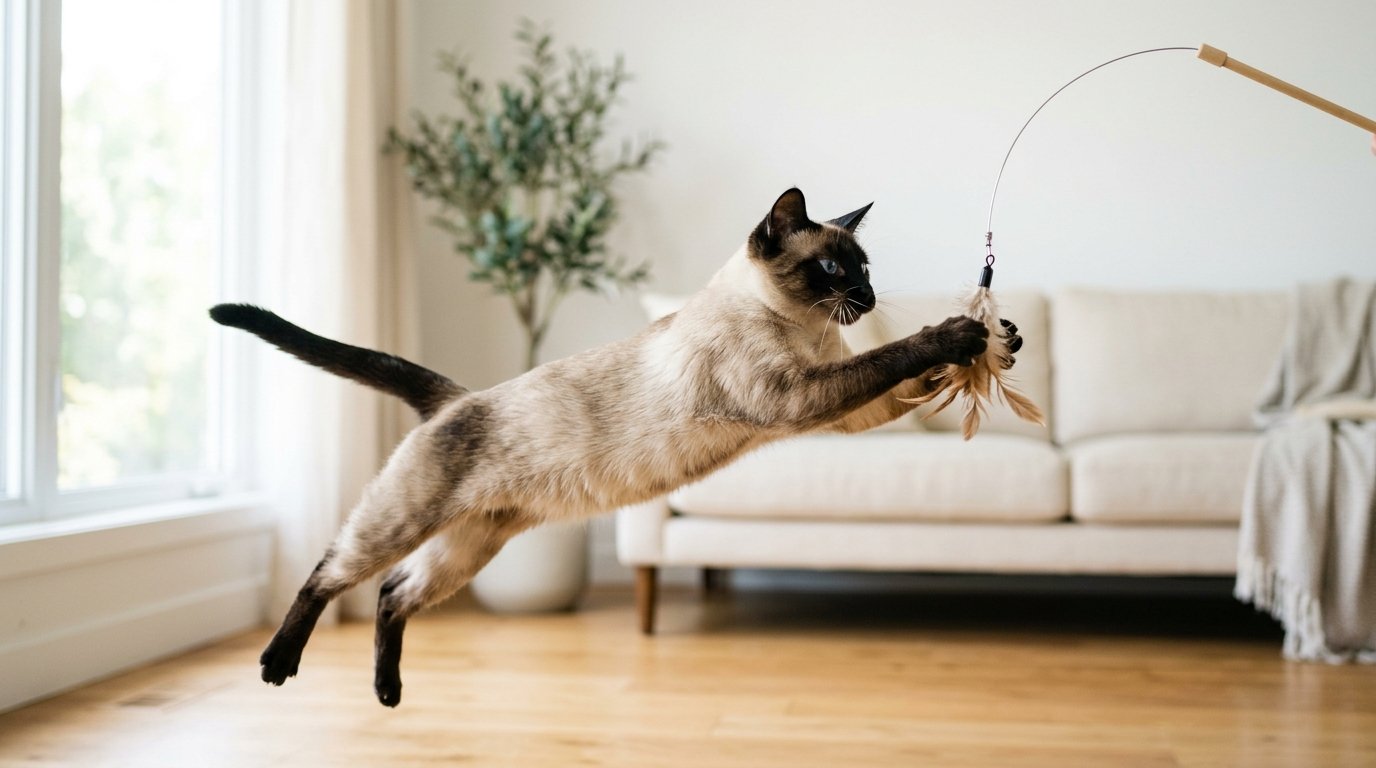
Because boredom and pent-up energy are common contributors to excessive vocalization, enrichment can make a real difference for a chatty Siamese. Interactive toys, puzzle feeders, window perches, and scheduled play sessions all give your cat healthier outlets for their energy and curiosity.
Siamese cats in particular often do well with engaging, interactive play rather than toys they’re expected to entertain themselves with. Setting aside a few dedicated play sessions each day can go a long way toward reducing the kind of meowing that’s really just a request for interaction.
- Wand toys for interactive daily play sessions
- Puzzle feeders to slow down eating and add mental stimulation
- Cat trees or window perches for observation and climbing
- Rotating toys weekly to keep novelty high
Building a Predictable Routine
Consistency can be one of the most effective tools for calming a vocal cat. Feeding at the same times each day, keeping a regular play schedule, and minimizing sudden environmental changes all help your cat feel more secure, which can naturally reduce anxious or demanding meowing.
This doesn’t mean your Siamese will suddenly become quiet, since some level of chatter is simply part of the breed. But a predictable routine often smooths out the spikes in meowing that come from uncertainty or unmet expectations, making daily life calmer for both of you.
When to See a Vet
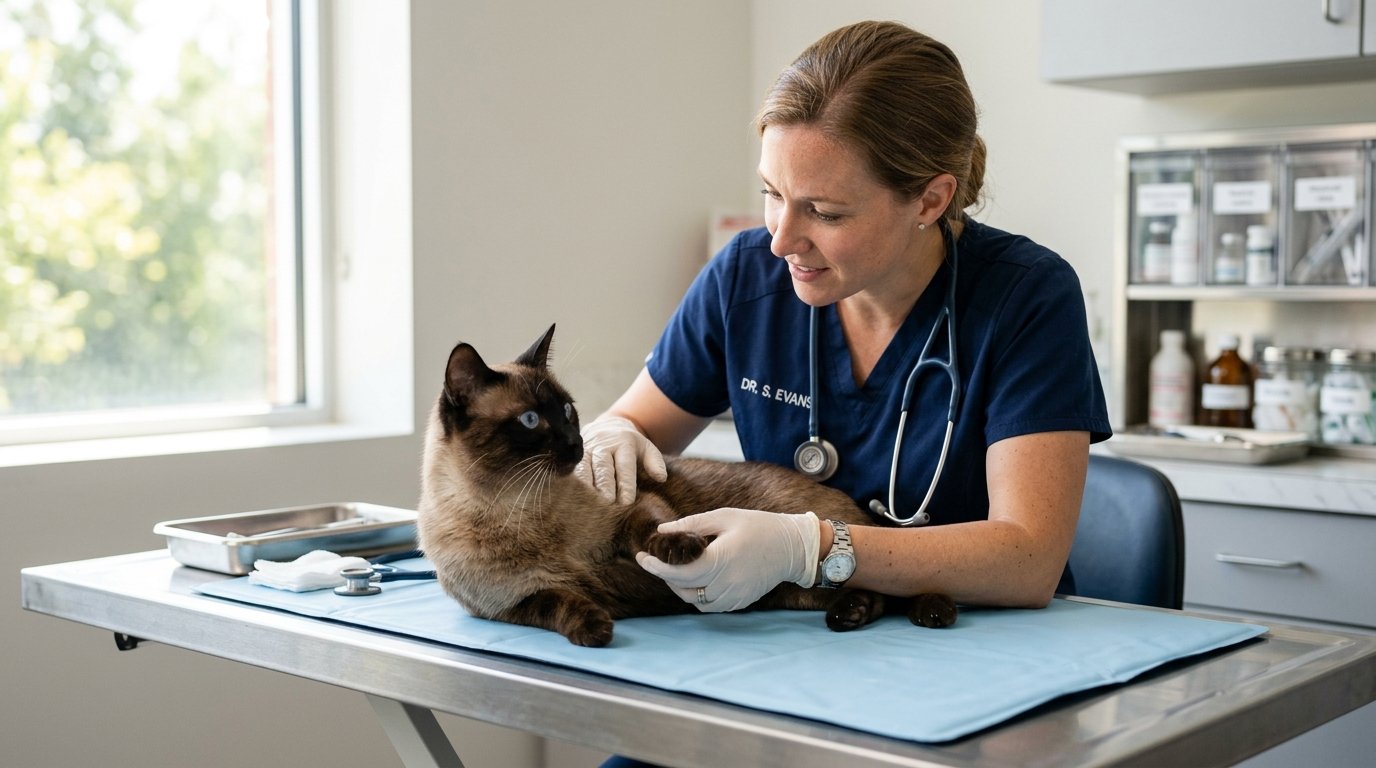
Any noticeable increase in meowing that doesn’t have an obvious behavioral explanation is worth mentioning to your veterinarian, even if your cat otherwise seems fine. This is especially true if the change has been gradual, since subtle medical issues can sometimes build slowly over weeks or months.
Your vet can perform a physical exam and recommend appropriate testing to rule out underlying health conditions, giving you peace of mind either way. Never attempt to diagnose the cause yourself or give your cat any medication, supplement, or home remedy without professional guidance, since some well-intentioned treatments can do more harm than good.
Living Happily With a Vocal Siamese
At the end of the day, choosing a Siamese often means choosing a cat who will talk to you about their day, their opinions, and their needs. Learning to distinguish your cat’s normal chatter from meaningful changes in behavior is one of the most valuable skills you can develop as their owner.
With patience, consistent routines, plenty of enrichment, and regular veterinary care, you can enjoy your Siamese’s expressive personality while staying alert to the moments when their voice is telling you something important. Your vet is always your best partner in figuring out where normal chatter ends and a real concern begins.
This article is for general education and is not a substitute for care from your own veterinarian. Learn about The Pet Vet and our editorial policy.