
Matted fur in cats is more than a messy coat, it can trap moisture, pull on skin, and hide problems you can’t see at a glance. If you own a long-haired breed like a Norwegian Forest Cat, mats can sneak up fast. Here’s what causes them, how to tell if they’re serious, and what to do about them safely.
Table of Contents
- What Matted Fur in Cats Really Means
- Why Norwegian Forest Cats Are Prone to Matting
- How Mats Form Under the Coat
- Common Areas Where Mats Develop
- Signs Your Cat Has a Mat You Haven’t Noticed
- Why Mats Are More Than a Cosmetic Problem
- Skin Irritation and Hidden Wounds Beneath Mats
- When Mats Restrict Movement or Cause Pain
- Can You Remove Mats at Home Safely?
- Tools That Help vs Tools That Hurt
- Step-by-Step: Gently Working Through a Small Mat
- When to Stop and Call a Groomer or Vet
- Preventing Mats With a Grooming Routine
- Diet, Health Conditions, and Coat Quality
- When Matting Signals a Bigger Health Issue
- When to See Your Vet
What Matted Fur in Cats Really Means
A mat is a tight clump of tangled fur that has knotted so densely it no longer separates with a simple brush stroke. Unlike a small tangle you can tease apart with your fingers, a true mat behaves almost like felt. It sits close to the skin and pulls at it with every movement your cat makes.
Mats don’t appear overnight in most cases. They usually start as loose tangles that get overlooked, then tighten over days or weeks as loose hair, dirt, and natural oils get trapped inside. By the time you notice a lump under your hand, the mat has often been forming for a while.
Why Norwegian Forest Cats Are Prone to Matting
Norwegian Forest Cats carry a thick double coat built for cold Scandinavian winters, with a dense undercoat and long, water-resistant guard hairs on top. That undercoat sheds heavily, especially during seasonal coat blow, and the shed hair can become trapped against the skin instead of falling away.
Because their coat is so voluminous, mats can hide easily under the longer top layer, especially around the britches, belly, and armpits. Owners sometimes don’t discover a mat until it’s already sizable, simply because the surrounding fur looks perfectly normal from the outside.
How Mats Form Under the Coat
Every cat sheds loose undercoat fur constantly, and normally that fur either falls out completely or gets removed during grooming, whether by you or by your cat’s own tongue. When shedding outpaces grooming, loose fur builds up close to the skin.
Friction is what turns that loose fur into a mat. Areas where fur rubs against furniture, a collar, or against itself during movement are prime spots for tangles to tighten. Moisture from saliva, urine, or humidity can make the process faster, since damp fur clumps together more readily than dry fur.
Common Areas Where Mats Develop
Some parts of a cat’s body are simply more prone to matting than others, largely because they experience more friction or are harder for your cat to reach and groom on their own.
Norwegian Forest Cats, with their extra-long fur in these regions, tend to mat in predictable places, which makes regular spot-checking easier once you know where to look.
- Behind the ears, where collars and head-rubbing create friction
- Under the front legs (armpits), a spot cats struggle to self-groom
- The belly and groin area, especially in less flexible senior cats
- The base of the tail and britches, where fur is longest and thickest
- Between the toes and around the paw pads
Signs Your Cat Has a Mat You Haven’t Noticed
Cats are good at hiding discomfort, so a mat can exist for some time before you spot obvious physical evidence. Watching behavior can tip you off before your hands find the tangle itself.
If your cat suddenly avoids being touched in a certain spot, flinches when you pet a particular area, or starts over-grooming and biting at one location repeatedly, it’s worth doing a hands-on check of that region rather than assuming it’s just moodiness.
- Sudden sensitivity or flinching when touched in one area
- Excessive licking, chewing, or biting at a specific spot
- A change in how your cat sits, walks, or grooms itself
- Visible lumps or unevenness in the coat
- A musty or unpleasant odor coming from the fur
Why Mats Are More Than a Cosmetic Problem
It’s tempting to think of a mat as simply an untidy patch of fur, but the physical effects go deeper than appearance. A mat pulls constantly on the skin beneath it, and that tension doesn’t relax the way normal fur does. Over time, this steady pulling can be genuinely painful.
The tightness also cuts off normal air circulation to the skin underneath. That trapped, humid environment close to the skin creates ideal conditions for irritation and secondary problems that are far harder to spot from the outside than the mat itself.
Skin Irritation and Hidden Wounds Beneath Mats
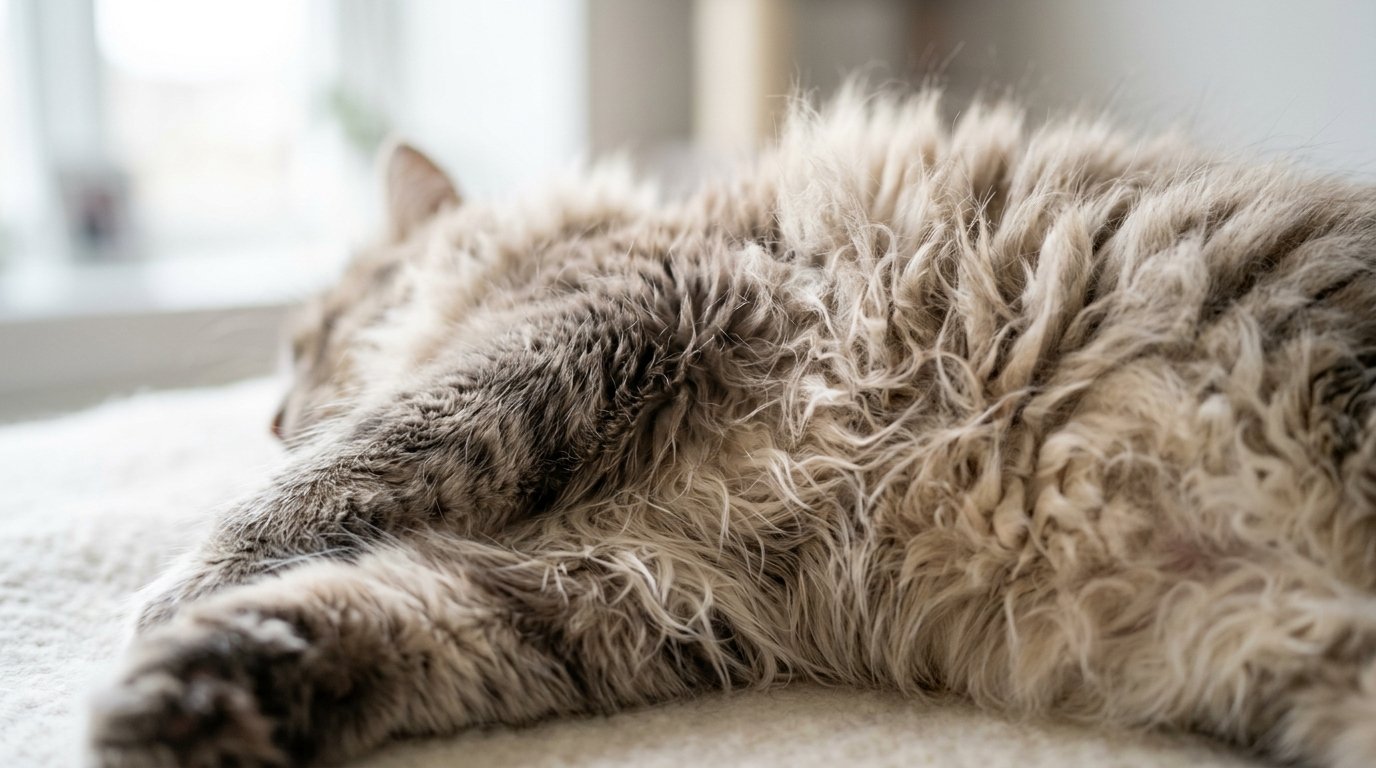
Skin that sits under a mat for an extended period often becomes red, inflamed, or raw, even though nothing looks wrong from the surface. Because the mat conceals the skin so completely, this irritation can progress without anyone noticing until the mat is removed.
In more advanced cases, the trapped moisture and lack of airflow can lead to sores or infected patches directly under the tangle. These wounds are frequently discovered only once a mat is clipped away or professionally removed, which is one reason vets and groomers approach large mats with caution rather than simply yanking them out.
When Mats Restrict Movement or Cause Pain
Mats located near joints, in the armpits, or around the groin can physically restrict how far your cat can move a limb. If a mat is tight enough, it may tug painfully with every step, causing your cat to limp, hesitate before jumping, or avoid certain movements altogether.
Severe matting across large areas of the body can also trap heat and interfere with your cat’s ability to regulate its temperature normally, particularly in warmer weather. If you notice your cat is reluctant to move, seems stiff, or is unusually withdrawn alongside heavy matting, it’s a sign the mats have gone beyond a grooming inconvenience.
Can You Remove Mats at Home Safely?
Small, loose tangles that are still fairly close to the surface can often be managed at home with patience and the right tools. The key is working slowly, in good light, so you can see exactly what you’re doing and stop before you reach the skin.
Larger or tighter mats are a different story. Because mats sit directly against the skin, cutting them out with regular scissors carries a real risk of nicking your cat, especially if your cat moves suddenly, which cats often do when they’re uncomfortable. This is where knowing your limits matters more than trying to save a grooming appointment.
Tools That Help vs Tools That Hurt
Not every grooming tool is appropriate for mat removal, and using the wrong one can make a bad situation worse. A slicker brush or wide-tooth comb works well on loose tangles but tends to snag and worsen a true mat rather than loosen it.
Purpose-made dematting tools, which use fine blades to slice gently through a mat while combing, tend to be gentler than scissors because they reduce the risk of cutting skin. Straight scissors should generally be avoided for mat removal altogether, since it’s difficult to tell where fur ends and skin begins once a mat is tight against the body.
- Dematting combs or rakes designed specifically for tangles
- Detangling sprays that can loosen fur before you work on it
- Wide-tooth combs for checking progress, not for cutting
- Avoid straight scissors directly against the skin
- Avoid pulling or tugging mats by hand, which stretches skin painfully
Step-by-Step: Gently Working Through a Small Mat
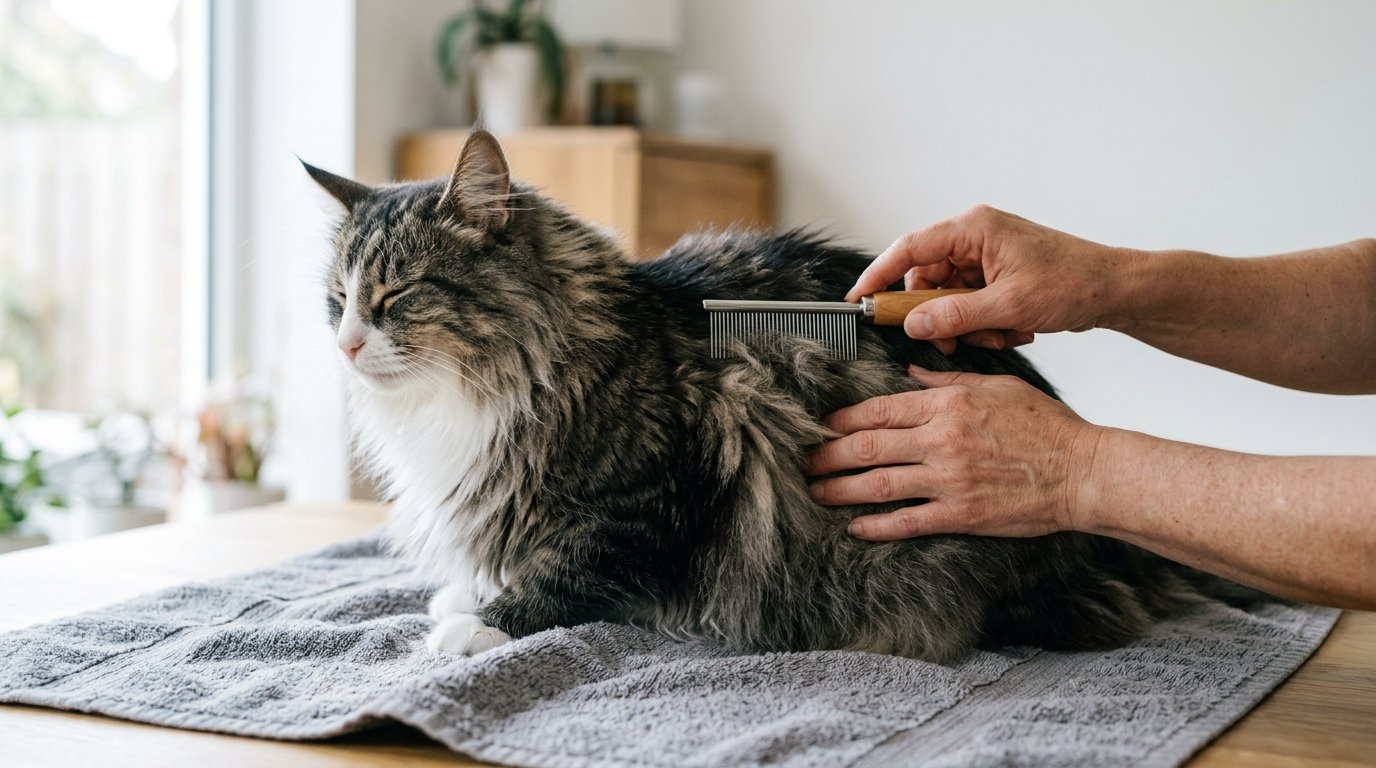
If you’ve identified a small, manageable mat, start by holding the base of the fur close to the skin with two fingers. This protects the skin from being pulled while you work, since the tension stays on your fingers rather than directly on your cat.
Use a dematting tool or wide-tooth comb to work from the outer edge of the mat inward, in short, gentle strokes, pausing frequently to check your cat’s comfort. If the mat isn’t loosening after a reasonable amount of gentle effort, or your cat becomes distressed, stop. Continuing to force it is more likely to cause pain than progress, and that’s the point to call in a professional groomer or your vet instead.
When to Stop and Call a Groomer or Vet
Some mats are simply beyond safe home removal, and recognizing that early spares your cat unnecessary stress. Mats that are large, tight against the skin, or located in sensitive areas like the groin or armpits are best left to professionals who have the training and tools to remove them without injury.
If your cat is already showing pain, skin irritation, or a foul smell near a mat, a vet visit is the safer first step rather than a grooming salon, since there may be an underlying wound or infection that needs treatment before the fur can even be addressed.
- The mat is larger than a coin or feels tight to the skin
- Your cat cries out, bites, or struggles intensely when touched near it
- You notice odor, discharge, or broken skin near the mat
- The mat is in the groin, armpit, or near the tail base
- You feel unsure at any point about your ability to remove it safely
Preventing Mats With a Grooming Routine
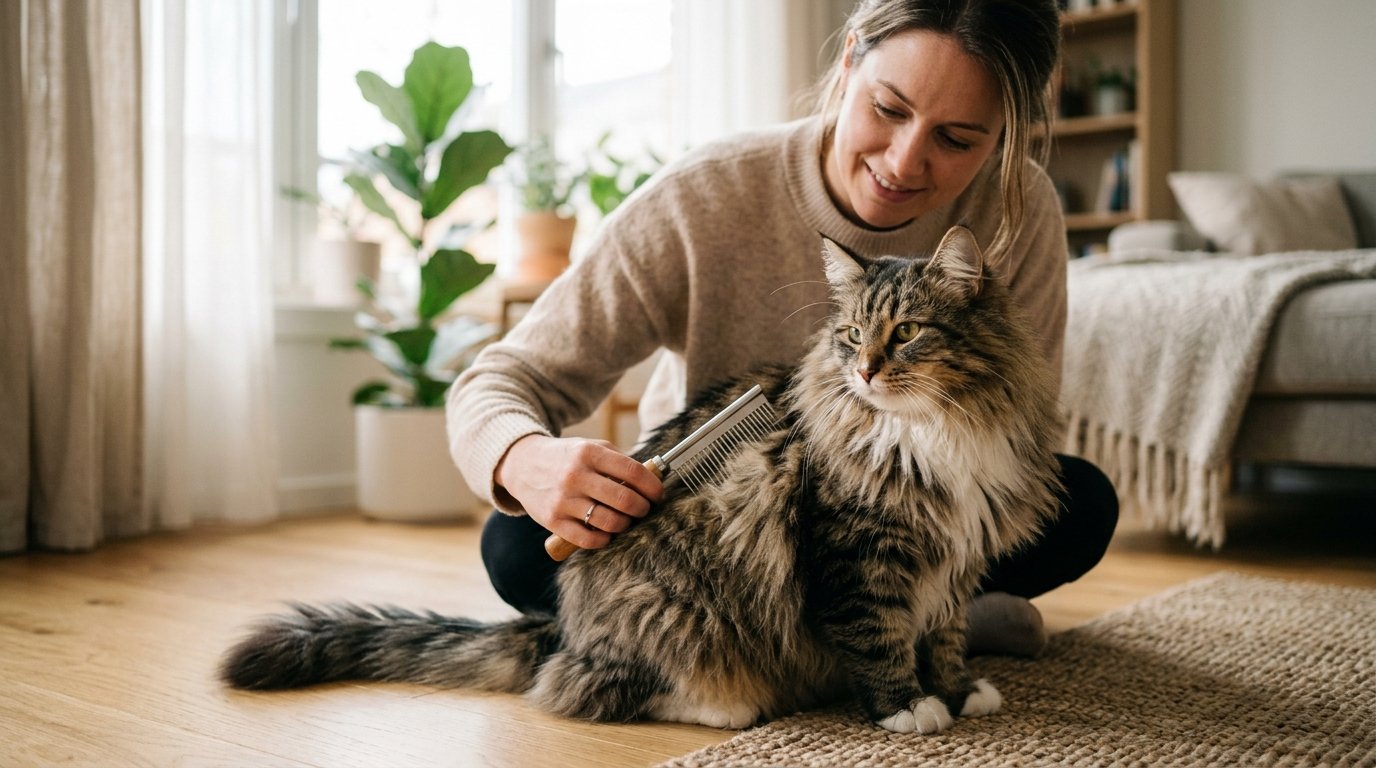
Consistent brushing is the single most effective way to prevent mats from forming in the first place, especially for a heavily coated breed like the Norwegian Forest Cat. Brushing several times a week, and daily during heavy seasonal shedding, removes loose undercoat before it has a chance to tangle against the skin.
Pay particular attention to the trouble spots mentioned earlier, since these are the areas most likely to mat even in cats that are otherwise well brushed. A few extra minutes focused on the armpits, belly, and britches during each session can prevent a small tangle from ever becoming a real problem.
Diet, Health Conditions, and Coat Quality
A cat’s coat quality is closely tied to overall health, and a dull, brittle, or easily tangled coat can sometimes reflect what’s happening internally. Poor nutrition, dehydration, or an underlying illness can all affect how oily, dry, or prone to tangling fur becomes.
Older cats or cats with arthritis often mat more easily too, simply because stiffness or joint pain makes it harder for them to reach and groom certain areas themselves. If you notice a previously well-groomed cat suddenly developing frequent mats, it’s worth mentioning to your vet, since it can be an early clue that something else needs attention.
When Matting Signals a Bigger Health Issue
Because grooming is such an instinctive behavior for cats, a sudden drop-off in self-grooming is rarely just laziness. Pain, nausea, dental disease, obesity that limits flexibility, or cognitive changes in senior cats can all reduce how much a cat grooms itself, leading to matting that wasn’t a problem before.
If your cat is matting in new areas, matting more frequently than usual, or seems generally less interested in self-care, this pattern is worth discussing with your vet rather than treating it purely as a grooming issue to fix with more brushing.
When to See Your Vet
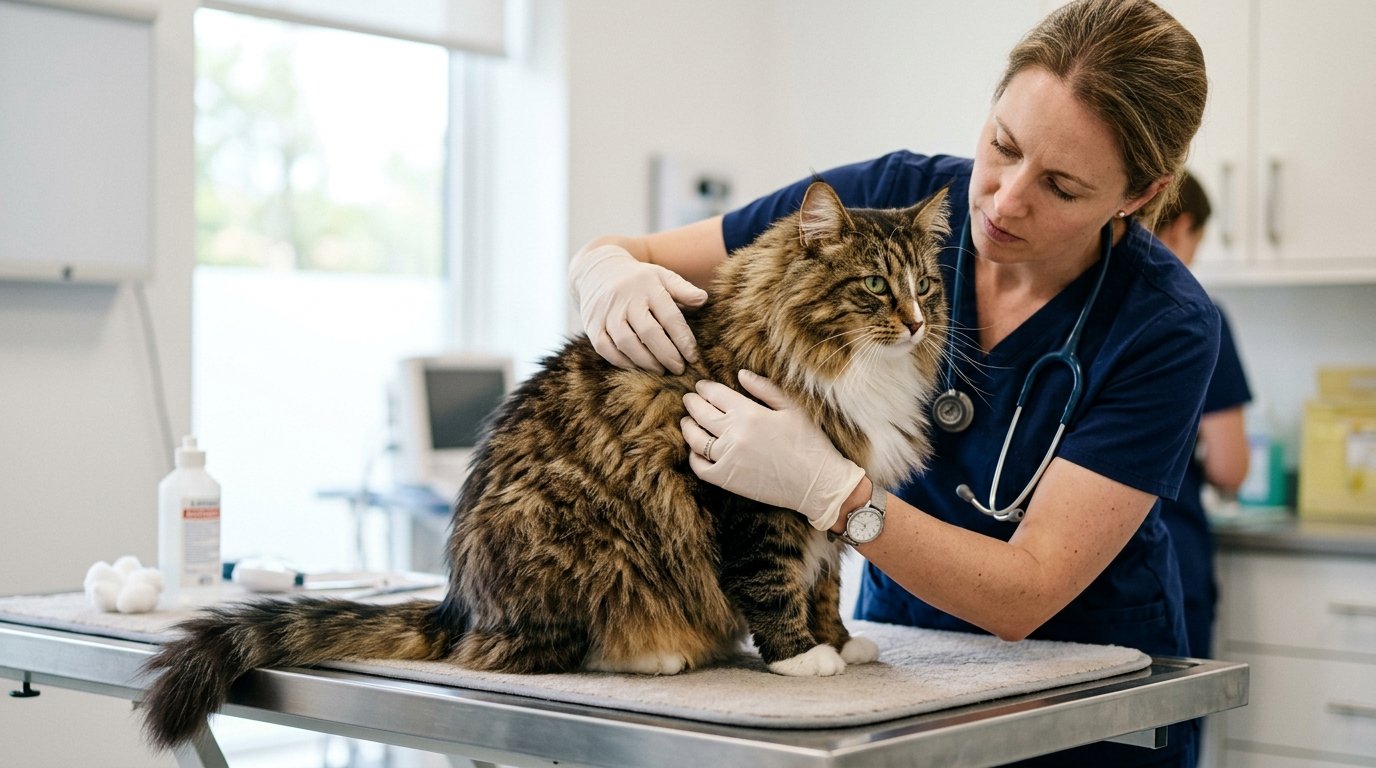
Any mat that seems to be causing your cat pain, hiding a wound, or accompanied by odor or skin changes deserves a vet visit rather than a home remedy. Your vet can safely remove severe mats, often with sedation if needed, and check the skin underneath for infection or injury that isn’t visible from the outside.
It’s also worth seeing your vet if matting has become a recurring pattern, since that can point to an underlying health or mobility issue rather than a simple grooming lapse. Never attempt to cut out a large or deeply embedded mat yourself with scissors, and always let a professional handle mats you’re not confident about, since your cat’s safety matters far more than saving a bit of time.
This article is for general education and is not a substitute for care from your own veterinarian. Learn about The Pet Vet and our editorial policy.