
If your Pembroke Welsh Corgi has started wobbling in the back legs or dragging a paw, it’s natural to feel scared. Degenerative myelopathy is a slow-moving spinal cord disease that shows up more often in this breed than most others. Here’s what you need to know about spotting it early, understanding how it progresses, and helping your dog live comfortably for as long as possible.
Table of Contents
- What Is Degenerative Myelopathy in Pembroke Welsh Corgis?
- Why Pembroke Welsh Corgis Are Prone to This Disease
- Early Signs to Watch For
- How Degenerative Myelopathy Progresses Over Time
- What Causes Degenerative Myelopathy
- The Role of Genetic Testing
- How Vets Diagnose Degenerative Myelopathy
- Conditions That Mimic Degenerative Myelopathy
- Treatment Options and Management
- Physical Therapy and Exercise
- Mobility Aids and Home Modifications
- Nutrition Considerations
- Supporting Your Corgi’s Quality of Life
- When to Consider Additional Support
- Coping as an Owner
- When to See a Vet
What Is Degenerative Myelopathy in Pembroke Welsh Corgis?
Degenerative myelopathy, often shortened to DM, is a progressive disease of the spinal cord that gradually affects a dog’s ability to control the back legs. It happens because the protective coating around nerve fibers in the spinal cord slowly breaks down, which interferes with the signals traveling between the brain and the hind limbs. Unlike a slipped disc or an injury, DM doesn’t come on suddenly, and it isn’t caused by trauma.
This condition tends to affect middle-aged and older dogs, usually starting somewhere between 8 and 14 years of age. Pembroke Welsh Corgis are one of the breeds most commonly diagnosed with DM, which means owners of this breed benefit from knowing the warning signs long before symptoms become obvious. It’s a heartbreaking diagnosis to hear, but understanding what’s happening can help you make the most of the time you have with your dog.
Why Pembroke Welsh Corgis Are Prone to This Disease
Certain breeds carry a genetic mutation that raises the risk of developing degenerative myelopathy, and the Pembroke Welsh Corgi is near the top of that list. This doesn’t mean every Corgi will develop the disease, but it does mean the breed as a whole has a higher chance of carrying the risk factor compared to many other dogs.
Because Corgis are also prone to back and joint issues due to their long, low body shape, DM symptoms can sometimes be confused with other mobility problems common in the breed. This overlap is exactly why a proper veterinary workup matters so much, rather than assuming any back-leg weakness in a Corgi is automatically DM.
Early Signs to Watch For
The early stages of degenerative myelopathy are subtle, and many owners initially write off the symptoms as normal aging or tiredness. Because Corgis are already a low-to-the-ground breed with a distinctive gait, small changes can be easy to miss at first.
Paying close attention to how your dog walks, stands, and moves around the house can help you catch changes early. If you notice any of the following, it’s worth mentioning to your vet even if the changes seem minor.
- Dragging or scuffing of the back paws, sometimes noticeable as worn nails or scraped toenails
- Wobbling or swaying in the hind end when walking, especially on turns
- Difficulty getting up from a lying position
- One back leg appearing weaker or less coordinated than the other
- Hind legs crossing or knuckling under while walking
How Degenerative Myelopathy Progresses Over Time
DM typically progresses slowly, often over the course of many months to a couple of years. In the early stages, your Corgi may only show mild weakness or occasional stumbling. As the disease advances, the hind legs become weaker and less coordinated, and many dogs eventually lose the ability to walk without support.
In later stages, the weakness can spread forward, sometimes affecting bladder and bowel control, and occasionally reaching the front legs. Every dog progresses at a different pace, so it’s impossible to predict an exact timeline for your individual pet. Your vet can help you understand what stage your dog may be in and what changes to expect next.
What Causes Degenerative Myelopathy
The exact trigger for degenerative myelopathy isn’t fully understood, but it’s believed to involve a combination of genetics and the natural aging process of nerve cells in the spinal cord. The disease damages the insulating layer around nerve fibers, which slows or blocks the messages traveling from the brain to the muscles in the back legs.
It’s important to know that DM is not caused by anything you did or didn’t do as an owner. It isn’t linked to diet, exercise habits, or an injury, which can be a relief for owners who blame themselves when symptoms first appear.
The Role of Genetic Testing
There is a genetic test available that can identify whether a dog carries the mutation associated with degenerative myelopathy. This test is often used by breeders trying to reduce the incidence of DM in future litters, but it can also give current owners useful information.
It’s worth knowing that carrying the mutation doesn’t guarantee a dog will develop clinical signs of the disease, and not every dog that develops DM tests positive for the known mutation. Because of this, genetic testing is best viewed as one piece of information rather than a definitive diagnosis. Always talk to your vet about what a genetic test result actually means for your dog’s individual situation.
How Vets Diagnose Degenerative Myelopathy
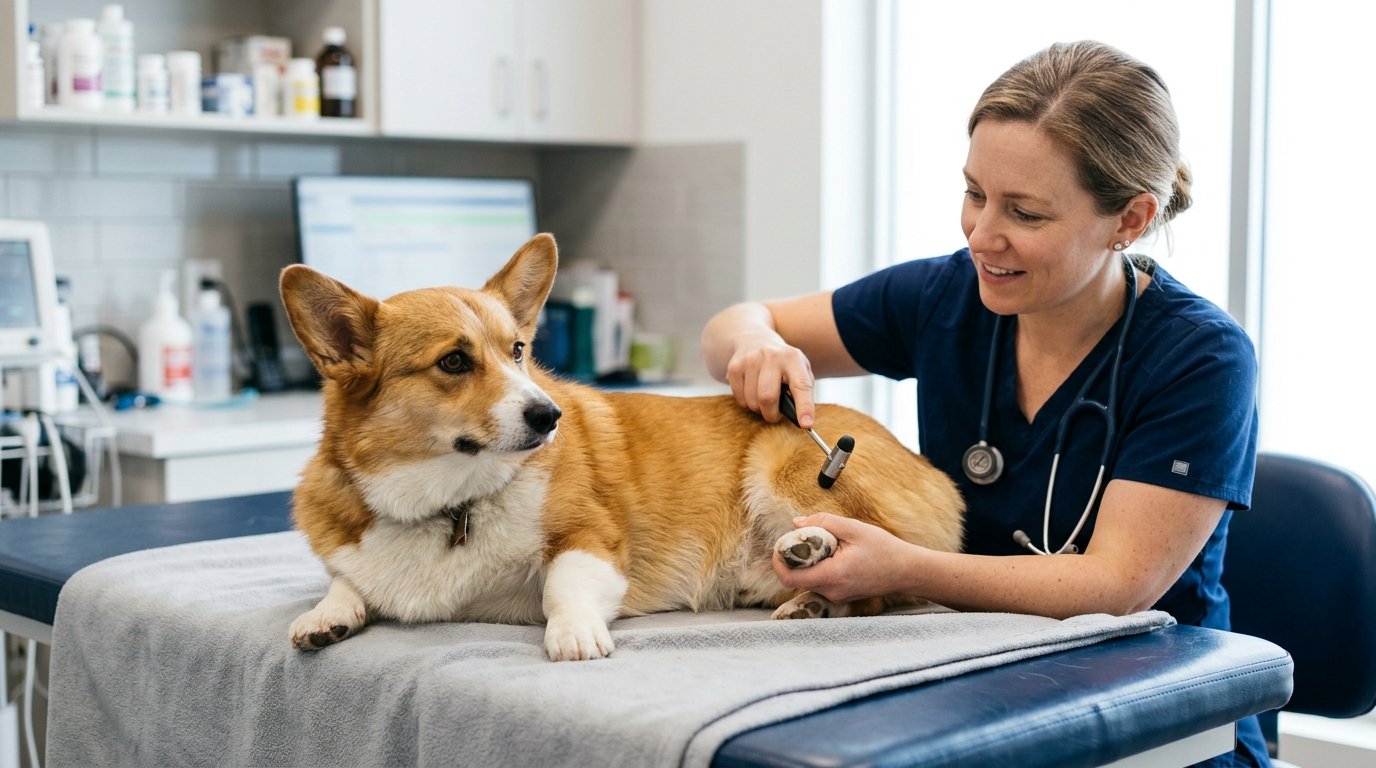
There isn’t a single simple test that confirms degenerative myelopathy while your dog is alive. Instead, your vet will typically start with a thorough neurological exam to assess reflexes, muscle strength, and coordination in the back legs.
Because several other conditions can cause similar symptoms, your vet may recommend additional testing to rule those out before settling on a working diagnosis of DM. This might include bloodwork, X-rays, or advanced imaging such as an MRI, along with the genetic test mentioned earlier. A definitive diagnosis technically requires examining the spinal cord tissue itself, which is why DM is often described as a diagnosis of exclusion made through a careful process of elimination.
Conditions That Mimic Degenerative Myelopathy
Because Corgis are prone to back problems, it’s especially important not to assume every case of hind-leg weakness is degenerative myelopathy. Several other conditions can cause very similar symptoms, and some of them are treatable if caught in time.
This is one of the biggest reasons a full veterinary evaluation matters before accepting a DM diagnosis.
- Intervertebral disc disease, which can compress the spinal cord and cause pain along with weakness
- Arthritis in the hips, knees, or spine
- Lumbosacral stenosis, a narrowing of the spinal canal in the lower back
- Tumors affecting the spinal cord
- Certain metabolic or endocrine conditions that cause generalized weakness
Treatment Options and Management
Unfortunately, there is currently no cure for degenerative myelopathy, and no treatment has been shown to reverse the nerve damage once it starts. Management instead focuses on maintaining your dog’s strength, mobility, and comfort for as long as possible.
Your vet can help you build a care plan tailored to your Corgi’s specific stage of the disease. This often includes a combination of supportive therapies rather than a single treatment, since the goal is to slow the impact of the disease on daily life rather than to stop it outright. Never start any new supplement or therapy without discussing it with your vet first, since some options may not be appropriate depending on your dog’s overall health.
Physical Therapy and Exercise
Staying active, within safe limits, is one of the most valuable things you can do for a Corgi with degenerative myelopathy. Regular, gentle movement helps maintain muscle mass and can support balance and coordination for longer than inactivity would allow.
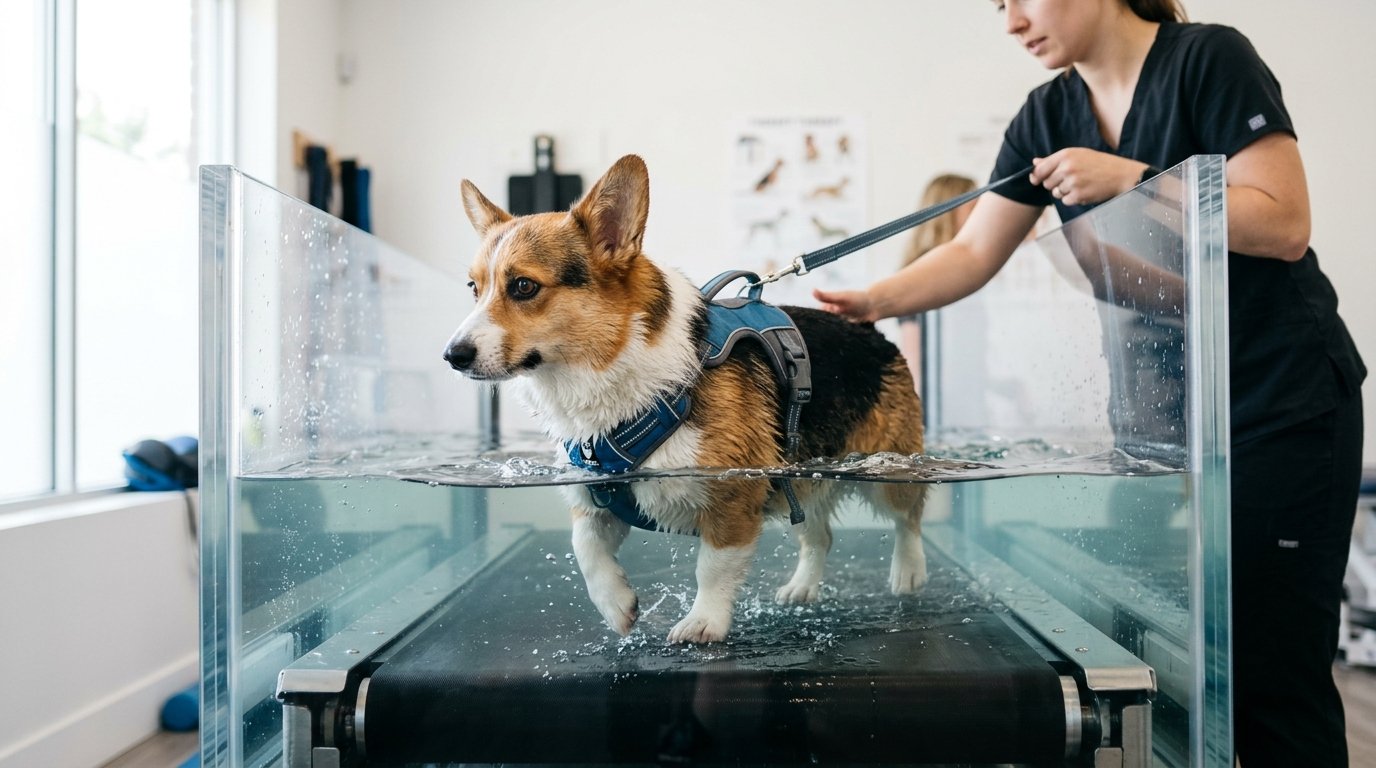
Many owners work with a veterinary physical therapist or rehabilitation specialist who can design an exercise plan specific to their dog’s needs. These programs often include supervised walking, underwater treadmill sessions, and targeted exercises to strengthen the hind end. Because every dog’s tolerance is different, it’s important to have this plan guided by a professional rather than guessing at what level of activity is safe.

Mobility Aids and Home Modifications
As DM progresses, many owners find that mobility aids make a real difference in their dog’s independence and quality of life. Simple changes around the house can also reduce the risk of slips and falls as coordination declines.
Adjusting your home environment early, before it becomes urgent, tends to make the transition smoother for both you and your dog.
- Non-slip rugs or mats over hardwood or tile floors
- A ramp to replace stairs for getting outside or into the car
- A supportive harness with a handle to assist with standing and walking
- A dog wheelchair or cart for dogs who have lost significant hind-leg function
- Raised food and water bowls to reduce strain on the back legs
Nutrition Considerations
While diet cannot stop degenerative myelopathy from progressing, keeping your Corgi at a healthy weight takes unnecessary strain off weakening legs and joints. Corgis are already prone to weight gain due to their body shape and appetite, so this becomes even more important once mobility starts to decline.
Your vet may also discuss specific nutrients that support nerve and muscle health as part of an overall care plan. Any dietary changes or supplements should be chosen in partnership with your vet, since individual needs can vary based on your dog’s weight, activity level, and other health conditions.
Supporting Your Corgi’s Quality of Life
Living with a Corgi who has degenerative myelopathy often means adapting your daily routine as the disease progresses. Many dogs remain happy, food-motivated, and mentally engaged even as their mobility declines, which is a comforting reminder that DM affects movement rather than personality or awareness.
Keeping up with mental stimulation, affection, and a predictable routine can help your dog feel secure even as physical abilities change. Regular check-ins with your vet allow you to adjust the care plan as needed, so your dog’s comfort stays the top priority at every stage.

When to Consider Additional Support
As DM reaches its later stages, some dogs need more intensive care, including help with bladder and bowel management, frequent turning to prevent pressure sores, and full mobility support. This level of care is demanding, and it’s completely reasonable to lean on your vet for guidance on what’s manageable at home.
Your vet can help you think through quality-of-life questions honestly and compassionately as the disease advances. There’s no single right answer for every family, and decisions about long-term care should always be made in close conversation with your veterinary team rather than in isolation.
Coping as an Owner
Watching a beloved Corgi lose mobility is genuinely difficult, and it’s normal to feel grief long before the end of your dog’s life. Many owners describe this as a slow goodbye, and giving yourself permission to feel that is part of caring for your dog well.
Connecting with other owners who have been through DM, whether through online communities or local support groups, can help you feel less alone in the process. Your vet’s office is also a resource for emotional support, not just medical guidance, so don’t hesitate to ask questions about what to expect or how other families have coped.
When to See a Vet
Any sign of hind-leg weakness, dragging paws, or difficulty rising in your Pembroke Welsh Corgi deserves a veterinary evaluation, even if the symptoms seem mild or intermittent at first. Early assessment matters because several treatable conditions can look similar to degenerative myelopathy in the beginning stages.
If your Corgi has already been diagnosed with DM, regular veterinary follow-ups remain important to monitor progression and adjust the care plan as needs change. Never attempt to diagnose or treat suspected DM on your own, and always work with your vet to build a safe, individualized plan for your dog’s specific situation.
This article is for general education and is not a substitute for care from your own veterinarian. Learn about The Pet Vet and our editorial policy.