
Heatstroke in dogs is one of the scariest emergencies a pet owner can face, and it can happen faster than most people expect. A dog’s body isn’t built to cool down the way ours does, which means warm weather, exercise, or even a short time in a parked car can turn dangerous quickly. Knowing the signs and acting fast can mean the difference between a full recovery and a life-threatening crisis.
Table of Contents
- What Is Heatstroke in Dogs?
- Why Dogs Overheat So Easily
- Australian Shepherds and Heat Risk
- Early Warning Signs of Overheating
- Signs of Severe Heatstroke: A True Emergency
- What Happens Inside Your Dog’s Body During Heatstroke
- What to Do Immediately If You Suspect Heatstroke
- What NOT to Do When Your Dog Is Overheating
- Safe Cooling Methods You Can Use at Home
- Getting to the Vet: What to Expect
- Dogs at Higher Risk of Heatstroke
- Preventing Heatstroke During Hot Weather
- Exercise and Heat Safety Tips for Active Breeds
- Recovery and Aftercare Following Heatstroke
- When to Call the Vet Immediately
What Is Heatstroke in Dogs?
Heatstroke happens when your dog’s body temperature rises to a dangerous level and their internal cooling systems can no longer keep up. Dogs regulate their body heat mostly through panting, since they don’t sweat the way people do except through small amounts on their paw pads. When the environment is too hot, humidity is high, or your dog is overexerting themselves, panting alone isn’t enough to bring the temperature back down.
Once a dog’s core temperature climbs too high, it starts to affect nearly every system in the body. This isn’t just about feeling overheated for a while and bouncing back on their own. True heatstroke is a medical emergency that requires immediate veterinary attention, and the sooner treatment starts, the better the outcome tends to be.
Why Dogs Overheat So Easily
It’s easy to assume your dog will just find shade or slow down if they get too warm, but many dogs don’t self-regulate well, especially when they’re excited, playing, or working. Herding and sporting breeds in particular can push through discomfort because they’re so focused on the activity in front of them, which means they may not show you they’re struggling until it’s already serious.
Thick or double coats also play a role. Breeds with dense fur trap heat close to the body, which can be a real disadvantage on warm days even if the coat helps with insulation in colder months. Combine a heavy coat with high energy levels and a dog who loves to run, and you have a recipe that can lead to overheating surprisingly quickly.
Australian Shepherds and Heat Risk
Australian Shepherds are a great example of a breed that can be especially vulnerable to overheating. They were bred to work long hours outdoors, herding livestock, and that same drive and stamina can work against them on a hot afternoon. An Aussie chasing a ball or working in the yard may not stop to rest even as their body temperature climbs to unsafe levels.
Their medium-length double coat, while useful for weather protection in cooler climates, also holds heat against the skin. Owners of Australian Shepherds and similarly coated breeds need to be especially mindful during summer months, watching for early signs of distress rather than waiting for their dog to slow down on their own.
Early Warning Signs of Overheating
Catching heatstroke early gives you the best chance of preventing a full emergency. The early signs can be subtle and are often mistaken for normal tiredness after play, which is why it helps to know exactly what to look for before your dog is out enjoying a warm day.
If you notice any of these signs, it’s time to get your dog into a cooler environment and start monitoring them closely.
- Heavy panting that seems more intense than usual
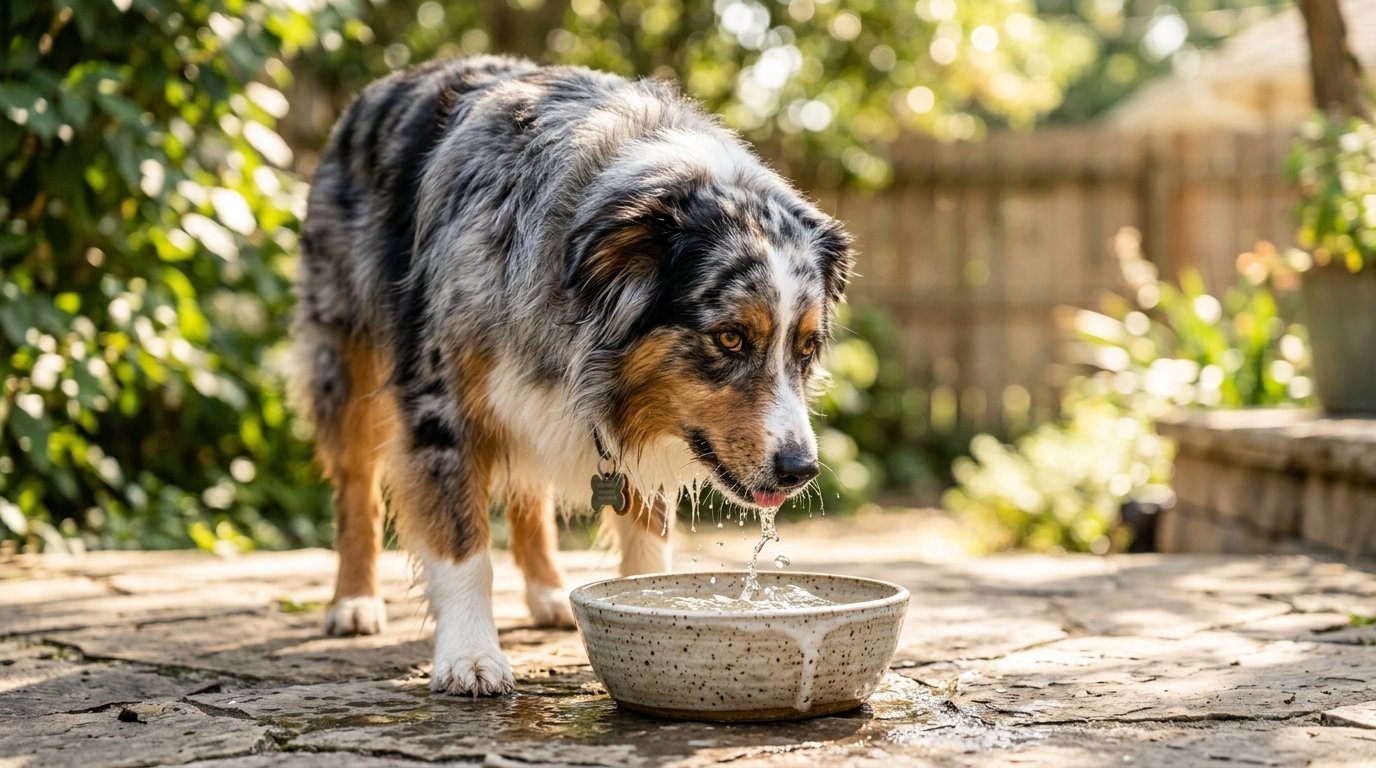
- Excessive drooling or thick, ropey saliva
- Bright red gums or tongue
- Restlessness or seeming unable to settle
- Seeking out shade or lying down more than normal
Signs of Severe Heatstroke: A True Emergency
If overheating progresses, the signs become much more serious and unmistakable. This is the point where waiting to see if your dog improves is no longer an option, and you need to act immediately while also getting emergency veterinary help on the way.
Severe heatstroke can escalate within minutes, so any of the following signs should be treated as a critical emergency, not something to monitor from a distance.
- Collapse or inability to stand
- Vomiting or diarrhea, sometimes with blood
- Uncoordinated movement or stumbling
- Seizures or tremors
- Pale or bluish gums instead of red
- Loss of consciousness
What Happens Inside Your Dog’s Body During Heatstroke
When your dog’s temperature stays elevated for too long, it doesn’t just make them uncomfortable. High internal temperatures can begin to damage cells throughout the body, affecting organs like the kidneys, liver, and brain. This is why heatstroke isn’t something that resolves just because your dog looks a bit better after a few minutes of rest.
Even after your dog seems to be cooling down, internal damage may already be underway and can worsen over the following hours or days. This delayed effect is one of the most dangerous parts of heatstroke, and it’s exactly why a veterinary exam is necessary even if your dog appears to recover quickly at home.
What to Do Immediately If You Suspect Heatstroke
If you notice signs of heatstroke, your first move should be getting your dog out of the heat and into a shaded or air-conditioned area right away. Every minute matters, so don’t wait to see if symptoms improve before taking action.
While you’re preparing to head to the vet, begin cooling your dog using safe methods. Call your veterinary clinic or an emergency animal hospital on your way so they can prepare for your arrival and give you guidance for the drive.
- Move your dog to shade or an air-conditioned space immediately
- Offer small amounts of cool (not ice-cold) water if they’re alert and able to drink
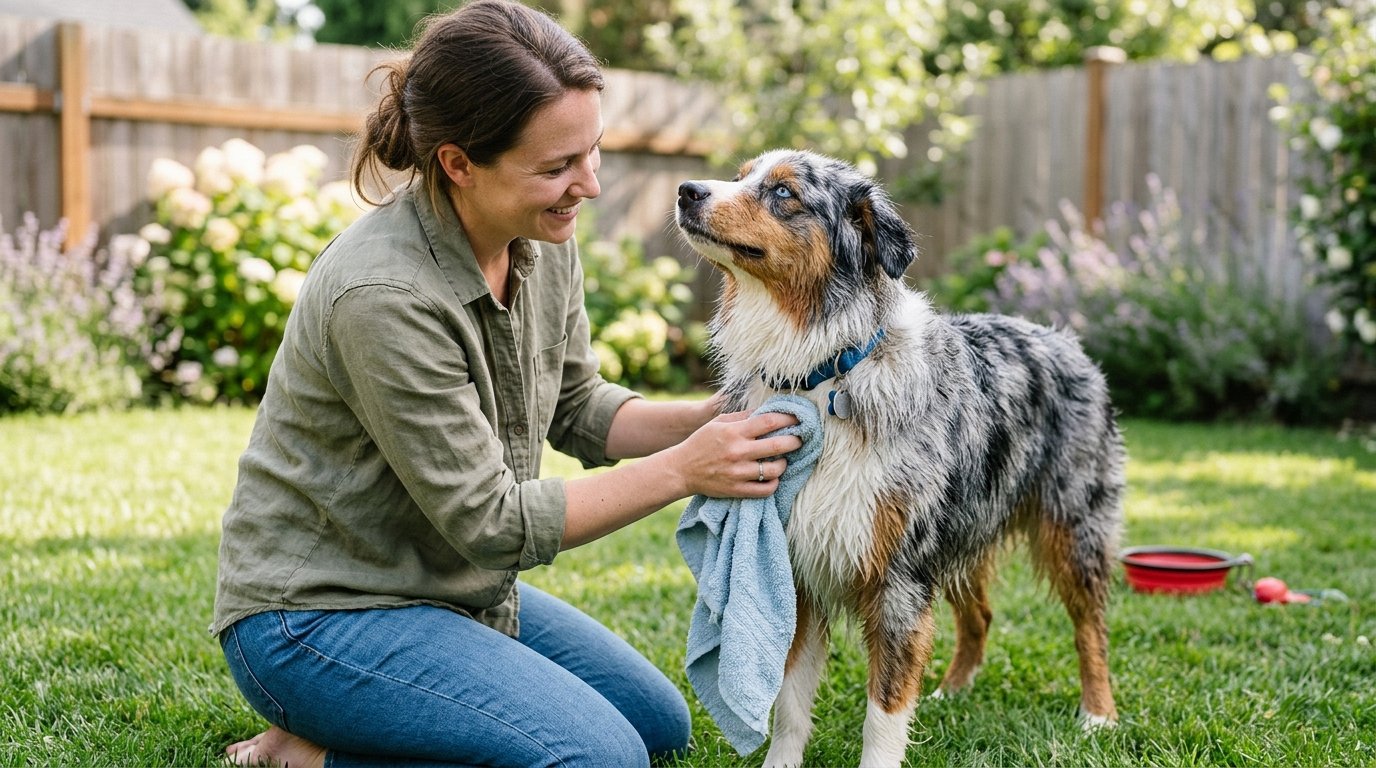
- Begin cooling the body with cool, wet towels focused on the neck, armpits, and groin
- Call your vet or the nearest emergency animal hospital right away
- Transport your dog to the vet even if they seem to be improving
What NOT to Do When Your Dog Is Overheating
It’s natural to want to cool your dog down as fast as possible, but some well-meaning actions can actually make things worse. Using ice water or ice packs directly on the skin can cause blood vessels near the surface to constrict, which traps heat inside the body instead of releasing it.
Avoid forcing water into your dog’s mouth if they’re not alert enough to swallow safely, since this can lead to choking or aspiration. It’s also important not to leave your dog unattended even briefly during this process, since their condition can change rapidly and without warning.
Safe Cooling Methods You Can Use at Home
The goal with cooling your dog is to bring the temperature down gradually and safely, not to shock the body with extreme cold. Cool or lukewarm water works far better than ice, and focusing on areas with less fur and closer blood flow to the surface helps speed up the process.
A fan blowing over wet fur can also help through evaporative cooling, similar to how panting works. Keep checking your dog’s condition as you cool them, since your priority is getting them stable enough for the trip to the vet, not achieving a normal temperature entirely on your own.
- Use cool tap water, not ice water, on towels or a spray bottle
- Focus cooling efforts on the neck, belly, groin, and paw pads
- Point a fan toward damp fur to encourage evaporation
- Offer small sips of water rather than a large amount at once
- Stop active cooling once your dog seems more alert, but still head to the vet
Getting to the Vet: What to Expect
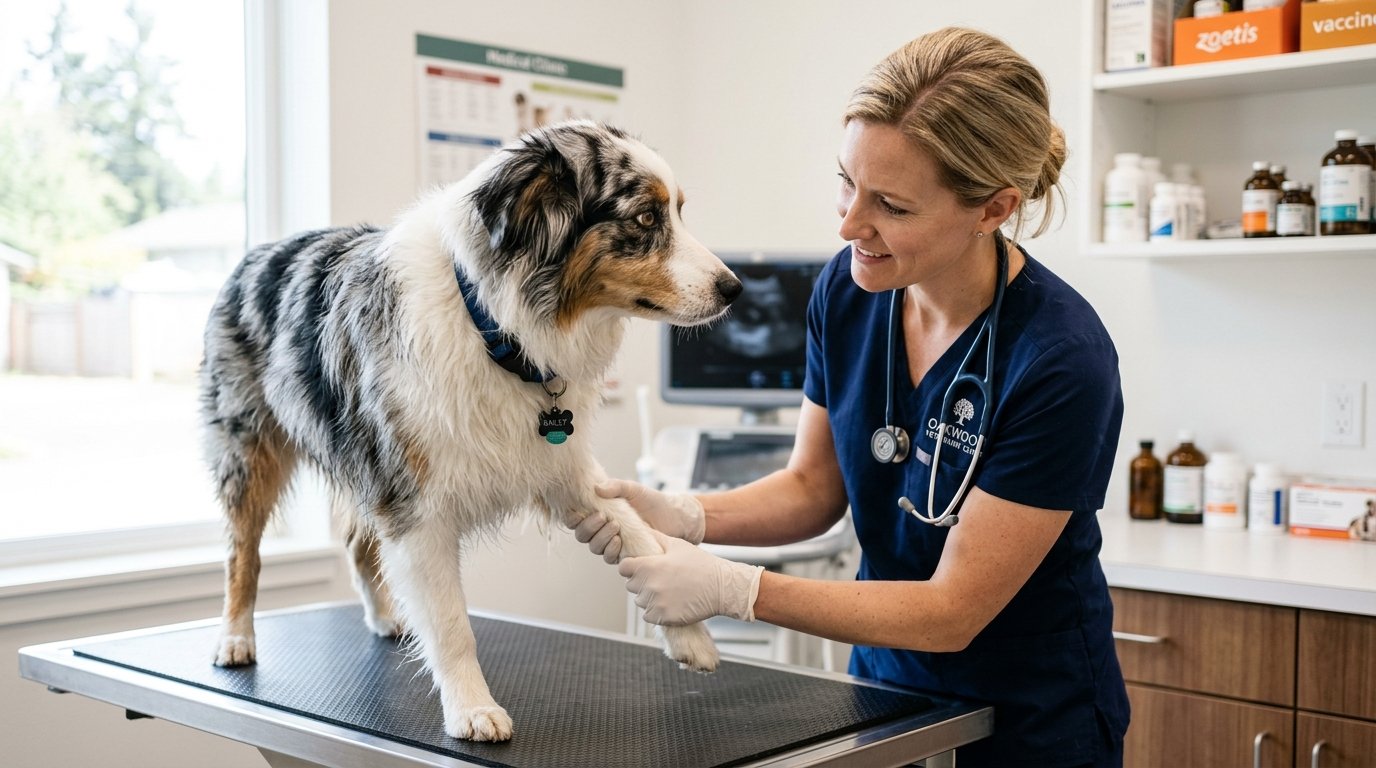
Once you arrive at the vet, your dog will likely have their temperature checked right away, along with an assessment of their gum color, heart rate, and breathing. Vets often continue cooling efforts using controlled methods and may run bloodwork to check for organ damage or clotting problems, since these can develop even after the body temperature returns to normal.
Depending on how severe the heatstroke was, your dog may need to stay for observation, IV fluids, or additional supportive care over the following hours or days. Your veterinarian is best positioned to tell you what specific treatment your dog needs, and it’s important to follow their guidance closely even if your dog seems to be acting like themselves again.
Dogs at Higher Risk of Heatstroke
While any dog can experience heatstroke, certain factors increase the risk significantly. Age, weight, coat type, and overall health all play a role in how well a dog handles heat, and owners of at-risk dogs need to be extra cautious during warm weather or intense activity.
Flat-faced breeds struggle more because their airways are already narrower, making effective panting harder. Overweight dogs also have more insulation and less efficient cooling, and senior dogs or those with heart or respiratory conditions may not tolerate heat stress the way a younger, healthier dog would.
- Brachycephalic (flat-faced) breeds like Bulldogs and Pugs
- Overweight or obese dogs
- Senior dogs or those with underlying heart or lung conditions
- Dogs with thick double coats, including Australian Shepherds
- Puppies, who regulate temperature less efficiently
Preventing Heatstroke During Hot Weather
Prevention is always easier than treatment, and small adjustments to your routine can make a big difference during warm months. Avoid walking or exercising your dog during the hottest part of the day, choosing early mornings or evenings instead when temperatures are lower.
Always make sure your dog has access to fresh water and shade, whether they’re in the yard or out on a walk. Never leave your dog in a parked car, even for a few minutes with the windows cracked, since temperatures inside a vehicle can climb to dangerous levels far faster than most people realize.
- Exercise during cooler parts of the day
- Provide constant access to shade and fresh water
- Never leave your dog in a parked car
- Watch pavement temperature, which can burn paw pads and radiate heat
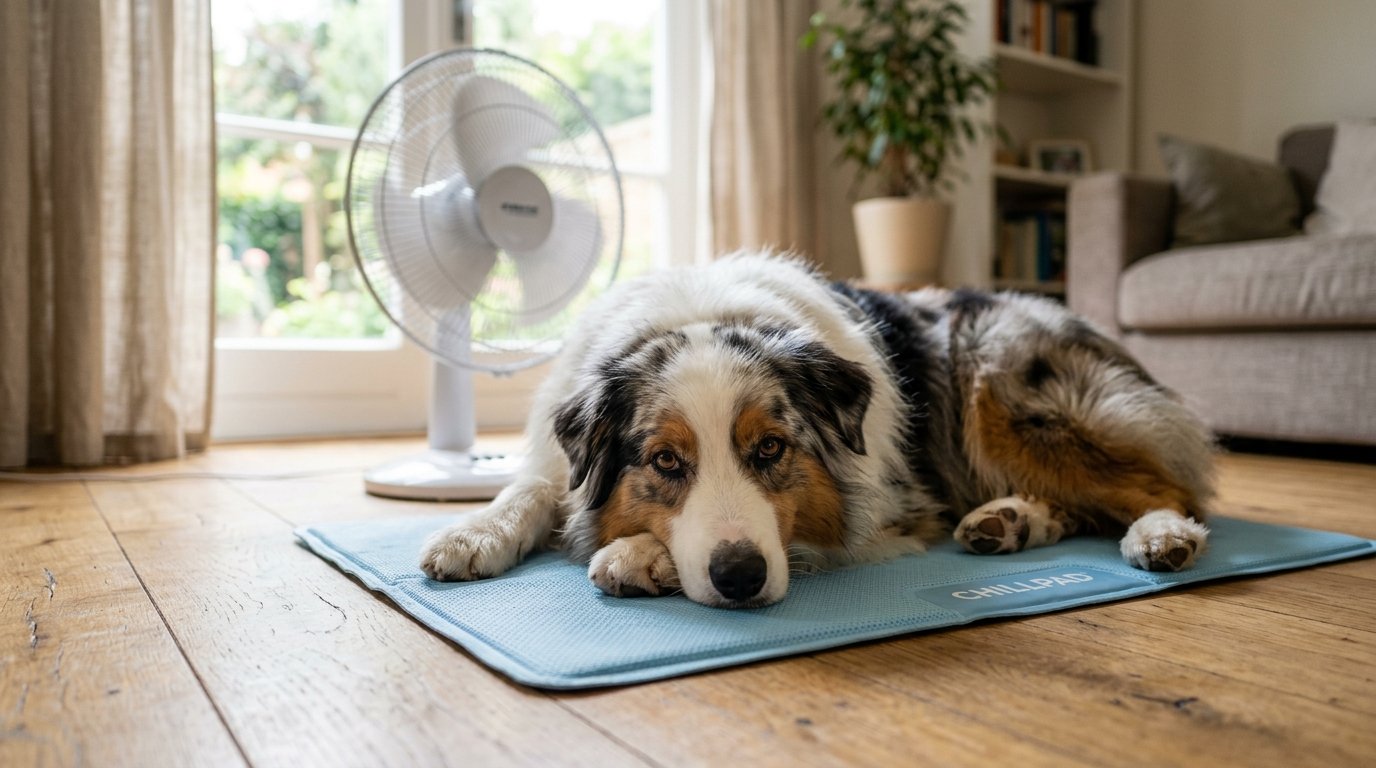
- Consider cooling mats or vests for high-risk dogs
Exercise and Heat Safety Tips for Active Breeds
Active, driven dogs like Australian Shepherds often don’t know when to stop, which makes it your job to set the limits. Break up play sessions with frequent water and rest breaks, even if your dog doesn’t seem tired yet, since the goal is to prevent overheating rather than react to it.
Pay attention to humidity as well as temperature, since high humidity makes it much harder for your dog to cool down through panting even if the air temperature isn’t extreme. On especially hot or humid days, consider shorter indoor play sessions or mentally stimulating games as a substitute for vigorous outdoor exercise.
Recovery and Aftercare Following Heatstroke
If your dog experiences heatstroke and receives treatment, recovery doesn’t necessarily end once they’re discharged from the vet. Some dogs need follow-up bloodwork to monitor organ function over the following days or weeks, since effects on the kidneys or liver aren’t always immediately obvious.
Your veterinarian may recommend a period of rest with limited activity while your dog’s body fully recovers. Watch for any lingering signs like reduced appetite, unusual tiredness, or changes in urination, and report these to your vet promptly since they could indicate ongoing complications.
When to Call the Vet Immediately
Any suspected case of heatstroke should be treated as an emergency, even if your dog seems to be improving during the car ride to the clinic. It’s always safer to have a veterinary professional evaluate your dog than to assume they’ve fully recovered on their own.
If you’re ever unsure whether what you’re seeing is heatstroke or something else, don’t wait to find out. Call your vet or an emergency animal hospital right away, describe the symptoms you’re seeing, and let them guide you on the next steps while you get your dog to safety.
This article is for general education and is not a substitute for care from your own veterinarian. Learn about The Pet Vet and our editorial policy.