
If your dog’s breath has started to smell less like “dog breath” and more like something is wrong, you’re not imagining it. Dental disease in dogs is one of the most common health problems vets see, and it often goes unnoticed until it’s already causing pain. Here’s what you need to know about the signs, stages, and treatment options available.
Table of Contents
- What Is Dental Disease in Dogs?
- Why Small Breeds Like Dachshunds Are Especially Prone
- The Stages of Dental Disease
- Early Warning Signs to Watch For
- Bad Breath: More Than Just an Odor
- How Plaque and Tartar Build Up Over Time
- Gum Disease (Periodontal Disease) Explained
- Tooth Loss and Pain: What Happens If It’s Left Untreated
- How Dental Disease Can Affect Other Organs
- How Vets Diagnose Dental Disease
- Professional Dental Cleanings: What to Expect
- At-Home Dental Care You Can Start Today
- Diet and Chew Toys: What Helps and What Doesn’t
- When to See the Vet Right Away
- Preventing Dental Disease Long-Term
- Final Thoughts
What Is Dental Disease in Dogs?
Dental disease in dogs refers to a range of problems affecting the teeth and gums, starting with a thin layer of bacteria called plaque and progressing, if untreated, into serious infection and tooth loss. It’s not a single condition but a spectrum, and most dogs fall somewhere on that spectrum by the time they reach middle age. Because it develops slowly and dogs are so good at hiding discomfort, many owners don’t realize anything is wrong until a vet points it out during a routine exam.
The frustrating part is that dental disease is largely preventable, yet it remains one of the most under-treated conditions in dogs. Left alone, it doesn’t just affect the mouth. It can lead to chronic pain, difficulty eating, and in more advanced cases, problems that reach beyond the teeth entirely. Understanding what’s happening in your dog’s mouth is the first step toward catching it early.
Why Small Breeds Like Dachshunds Are Especially Prone
Small dog breeds, including Dachshunds, tend to be more susceptible to dental disease than larger dogs. Their teeth are often crowded into a smaller jaw, which leaves less room between teeth for saliva to naturally wash away food particles and bacteria. This crowding creates more surface area where plaque can hide and build up undisturbed.
If you share your life with a Dachshund or another small breed, it’s worth being a little more vigilant about dental checks than you might be with a larger dog. This doesn’t mean something is wrong with your dog’s mouth right now, but it does mean regular monitoring and preventive care matter even more. Your vet can tell you how your particular dog’s mouth is holding up compared to what’s typical for the breed.
The Stages of Dental Disease
Vets typically describe dental disease in stages, ranging from mild gum inflammation to advanced periodontal disease with bone loss. In the earliest stage, you might not notice any outward signs at all, which is part of why routine vet checkups matter so much. As the disease progresses, the gums become more inflamed, tartar builds visibly on the teeth, and the supporting structures around the teeth start to break down.
By the time a dog reaches the more advanced stages, there’s often irreversible damage to the tissue and bone holding the teeth in place. This is why catching the problem early makes such a difference, both for your dog’s comfort and for how much treatment is eventually needed. A vet exam is the only reliable way to know exactly where your dog’s mouth stands.
Early Warning Signs to Watch For
Because dogs can’t tell you their mouth hurts, you have to rely on subtle physical and behavioral clues. Some of these signs are easy to miss if you’re not specifically looking for them, especially in a dog who still seems to eat and play normally.
Signs that may point to early dental disease include:
- Persistent bad breath that doesn’t go away with a quick teeth wipe
- Yellow or brown buildup along the gumline
- Red, swollen, or bleeding gums
- Reluctance to chew on one side of the mouth
- Dropping food while eating or chewing more slowly than usual
- Pawing at the mouth or face

Bad Breath: More Than Just an Odor
It’s tempting to write off bad breath as just something dogs have, but persistent, strong odor is actually one of the clearest early indicators of dental disease. The smell comes from bacteria breaking down food particles and tissue in the mouth, and it tends to get stronger as the underlying problem worsens.
If your dog’s breath has changed noticeably in the past few weeks or months, it’s worth mentioning to your vet even if nothing else seems off. Bad breath on its own isn’t an emergency, but it’s a signal worth paying attention to rather than masking with breath fresheners or treats.
How Plaque and Tartar Build Up Over Time
Plaque starts forming on a dog’s teeth within hours of eating, as bacteria in the mouth combine with saliva and food debris. If it’s not removed, plaque hardens into tartar within a few days, and tartar is much harder to remove without professional tools. This is why daily brushing, when possible, makes such a difference compared to occasional attempts.
Once tartar has hardened onto the teeth, it creates a rough surface that attracts even more plaque, and the cycle accelerates. This buildup pushes against the gumline, causing irritation and eventually allowing bacteria to work their way beneath the gum’s surface, which is where more serious problems begin.
Gum Disease (Periodontal Disease) Explained
When plaque and tartar are left in place long enough, the gums become inflamed in a condition called gingivitis. At this stage, the damage is often still reversible with proper veterinary cleaning and improved home care. But if gingivitis isn’t addressed, it can progress into periodontal disease, where the infection moves below the gumline and starts affecting the ligaments and bone that hold the teeth in place.
Periodontal disease is considered the more serious end of the spectrum because the damage to bone and supporting tissue generally cannot be fully undone. At this point, treatment focuses on stopping further damage, managing pain, and in many cases, removing teeth that can no longer be saved. Your vet will be able to tell you which stage your dog’s mouth is showing and what treatment path makes sense.
Tooth Loss and Pain: What Happens If It’s Left Untreated
Dogs are remarkably good at continuing to eat even with significant dental pain, which is part of why this disease often goes unnoticed for so long. Over time, though, untreated dental disease can lead to loose or lost teeth, abscesses, and chronic discomfort that affects a dog’s overall quality of life.
Some dogs with advanced dental disease become noticeably quieter, less interested in play, or slower to approach their food bowl, even though nothing else in their routine has changed. These subtle shifts are sometimes the only outward sign that a dog is dealing with significant mouth pain, which is one more reason regular dental checks matter even when your dog seems fine on the surface.
How Dental Disease Can Affect Other Organs
The bacteria living in an infected mouth don’t necessarily stay contained there. They can enter the bloodstream through inflamed gum tissue and travel to other parts of the body, where they may contribute to stress on organs like the heart, kidneys, and liver over time. This is one of the reasons vets take dental health seriously even in dogs who don’t seem bothered by their mouth.
This connection between oral health and whole-body health is part of why dental checks are typically included in routine wellness exams. It’s not just about keeping your dog’s smile looking nice. It’s about catching a source of ongoing inflammation and infection before it has a chance to affect the rest of your dog’s body.
How Vets Diagnose Dental Disease
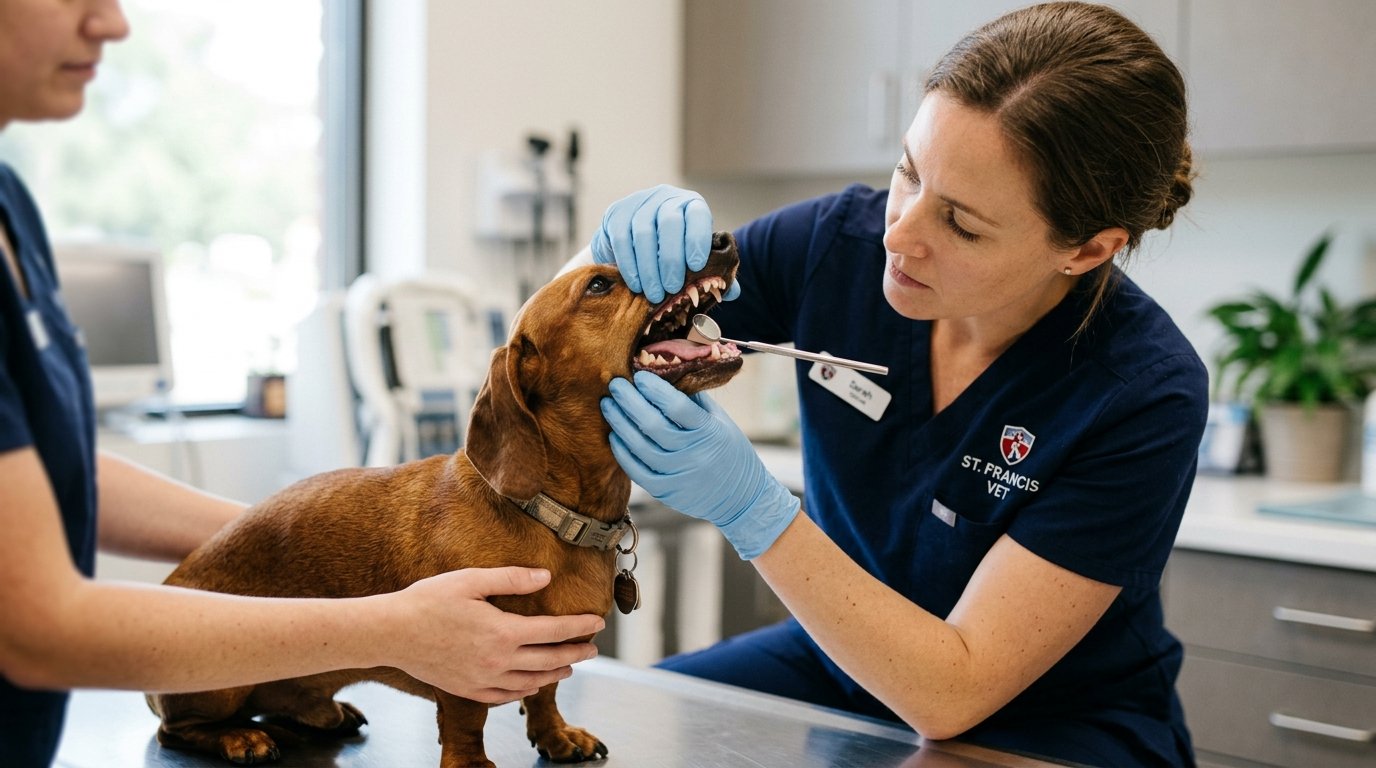
A vet will usually start with a visual and physical exam of your dog’s mouth, checking the gums, teeth, and overall condition while your dog is awake. This can catch obvious tartar buildup, gum redness, and loose teeth, but it doesn’t show what’s happening below the gumline.
For a full picture, most dogs need dental X-rays taken under anesthesia, since a large portion of dental disease happens beneath the surface where it can’t be seen or felt during a routine exam. This combination of physical exam and imaging gives your vet the information needed to recommend the right treatment plan for your dog specifically.
Professional Dental Cleanings: What to Expect
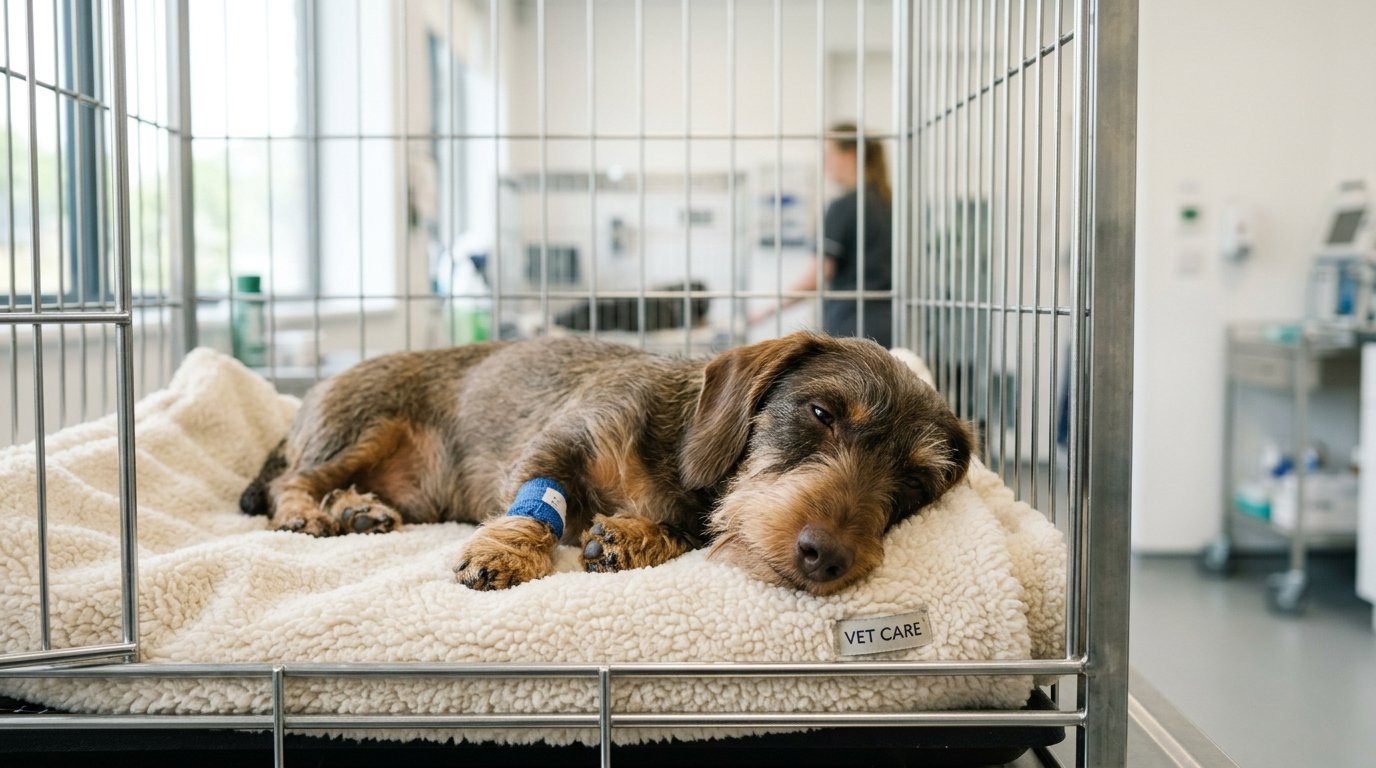
A professional dental cleaning is more thorough than anything that can be done at home, and it typically requires general anesthesia so the vet team can safely clean below the gumline, take X-rays, and address any problem teeth without causing your dog stress or pain. Understandably, anesthesia can feel like a big step for many owners, but it allows for a level of care and precision that simply isn’t possible in an awake dog.
Before recommending anesthesia, your vet will usually run bloodwork and review your dog’s overall health to make sure it’s a safe option for your individual dog. If you have concerns about anesthesia, it’s worth discussing them directly with your vet, who can walk you through the specific precautions taken for dogs like yours.
At-Home Dental Care You Can Start Today
Daily brushing is the single most effective thing you can do at home to slow down plaque buildup, and it’s worth introducing gradually if your dog isn’t used to it. Starting slowly, using a dog-specific toothpaste, and keeping sessions short and positive can help your dog get comfortable with the process over time.
Beyond brushing, there are other tools that can support your dog’s dental health as part of a broader routine, though none of them replace the need for professional cleanings when your vet recommends one.
Ways to support your dog’s dental health at home:
- Brush your dog’s teeth with a dog-safe toothpaste as often as you can manage, ideally daily
- Offer dental chews or treats that carry a veterinary dental seal of approval
- Provide safe chew toys appropriate for your dog’s size and chewing style
- Schedule regular veterinary checkups that include a dental assessment
- Watch for changes in eating habits, breath, or behavior between vet visits
Diet and Chew Toys: What Helps and What Doesn’t
Some diets and treats are formulated specifically to help reduce plaque and tartar buildup through texture and mechanical action as your dog chews. These can be a helpful addition to a dental care routine, but they work best alongside brushing rather than as a replacement for it.
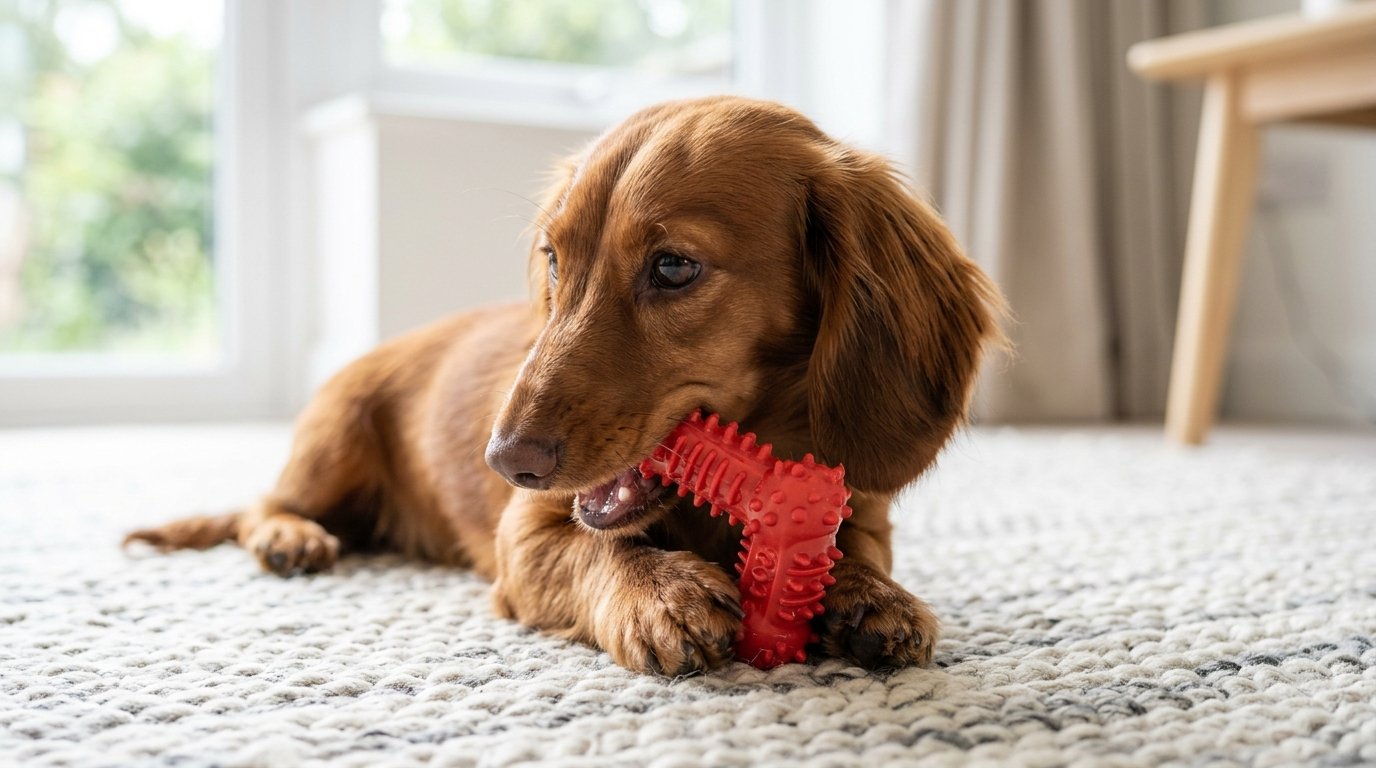
Not all chew toys are created equal, and overly hard toys can actually crack or damage teeth rather than help clean them. Your vet or a veterinary dentist can point you toward options that are appropriate for your dog’s size, age, and chewing habits, which is especially worth asking about if your dog is an aggressive chewer.
When to See the Vet Right Away
While routine dental checkups can be scheduled as part of regular wellness visits, some signs warrant a sooner appointment rather than waiting. Pain, swelling, and infection in the mouth can progress and cause your dog real discomfort, so it’s better to have things checked than to wait and see.
Contact your vet promptly if you notice any of the following:
- Facial swelling, especially near the jaw or under the eye
- Bleeding from the mouth that isn’t related to a minor injury
- A tooth that looks broken, loose, or discolored
- Your dog suddenly refusing food or only eating on one side of the mouth
- A foul odor combined with visible drooling or pawing at the face
Preventing Dental Disease Long-Term
Prevention is almost always easier and less costly than treating advanced dental disease later on. Building a simple, consistent routine around brushing, appropriate chews, and regular vet checkups can make a real difference in how your dog’s mouth ages over the years.
It also helps to keep an ongoing conversation with your vet about your dog’s individual risk factors, including breed, age, and any past dental issues. What works well for one dog may need adjusting for another, and your vet is the best resource for tailoring a plan that fits your dog’s specific needs.
Final Thoughts
Dental disease in dogs is common, but it’s also one of the more manageable health issues when it’s caught early and addressed consistently. Paying attention to your dog’s breath, gums, and eating habits, along with keeping up with regular veterinary checkups, goes a long way toward protecting your dog’s comfort and overall health.
If you’ve noticed any signs of dental trouble in your own dog, don’t wait for things to get worse. Reach out to your vet for an exam so you can find out exactly what’s going on and what the next steps should be.
This article is for general education and is not a substitute for care from your own veterinarian. Learn about The Pet Vet and our editorial policy.