
Obesity in Labrador Retrievers is one of the most common weight problems veterinarians see, and it isn’t simply a matter of willpower or a lazy afternoon on the couch. Labs are wired to want food, and small daily habits can add up to serious extra pounds over time. This article walks through why the breed struggles with weight, the health risks involved, and practical ways you can help your dog get back to a healthy size.
Table of Contents
- Why Labrador Retrievers Are Prone to Weight Gain
- Recognizing Your Dog Is Overweight
- Health Risks of Carrying Extra Weight
- Talk to Your Vet Before Changing Anything
- Portion Control Matters More Than the Food Type
- Treats Add Up Faster Than You Think
- Exercise Needs for a Weight-Loss Plan
- Weighing In and Tracking Progress
- Household Teamwork Makes or Breaks the Plan
- When Weight Loss Plateaus
- Special Considerations for Puppies and Seniors
- Signs You Should Contact Your Vet Right Away
- The Bigger Picture: A Lifelong Commitment
- A Final Word on Patience and Consistency
Why Labrador Retrievers Are Prone to Weight Gain
Labrador Retrievers carry a genetic quirk that many other breeds don’t have. Researchers have identified a variation in a gene related to appetite regulation that is unusually common in Labs, and dogs carrying it tend to feel hungrier and are slower to feel full after eating. This doesn’t mean every Labrador with this trait is destined to become overweight, but it does mean your dog may genuinely experience more hunger than a dog of another breed eating the exact same amount of food.
On top of the genetic piece, Labs are famous for their food motivation. That eager, always-ready-to-eat personality is part of why they excel as service dogs and hunting companions, but it also means they’re quick to beg, counter-surf, and clean up any dropped crumb. Combine a strong drive to eat with a friendly, people-pleasing nature that makes it hard for owners to say no, and you have a breed that tends to gain weight steadily unless food intake is actively managed.
Spaying and neutering, which lowers metabolic rate somewhat, along with the breed’s tendency toward a food-focused temperament, adds another layer to the risk. None of this means weight gain is inevitable, but it does mean Labrador owners often need to be more intentional about portion control and exercise than owners of other breeds might be.
Recognizing Your Dog Is Overweight
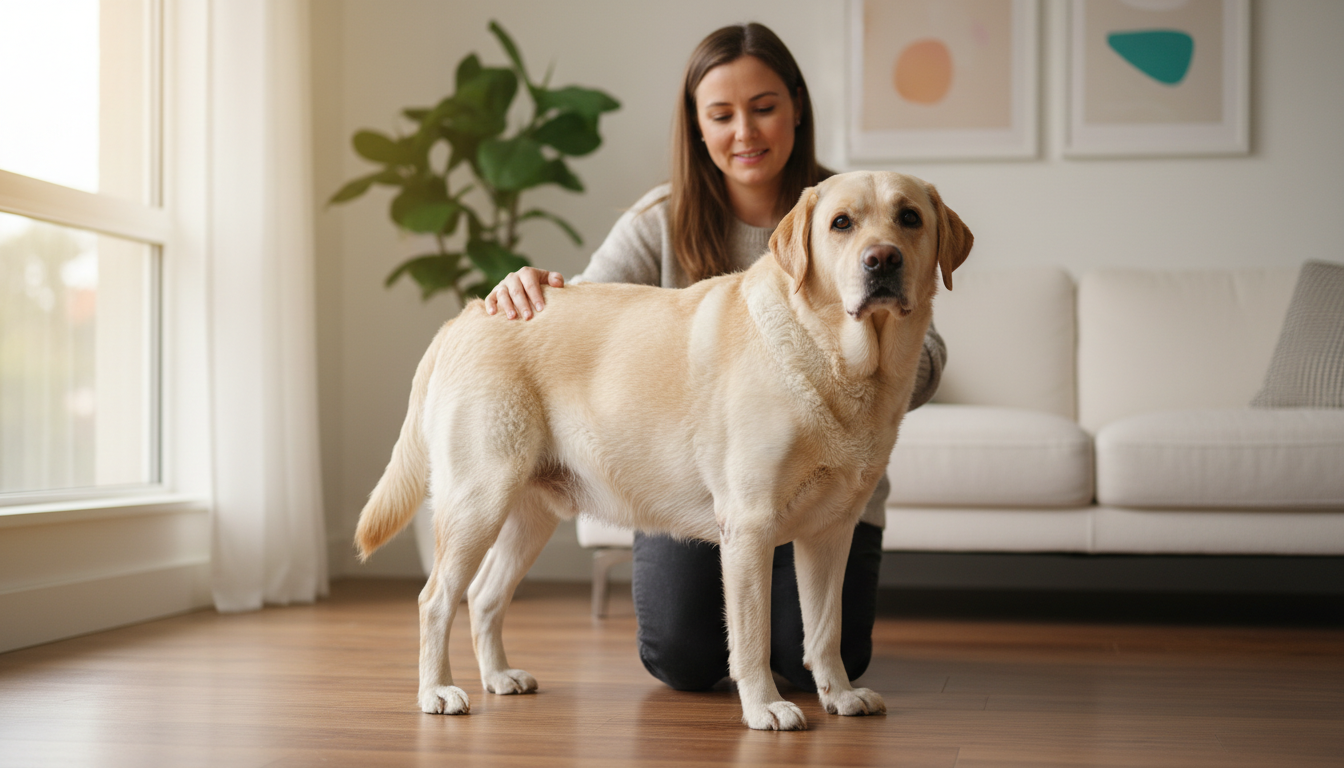
It can be surprisingly hard to notice weight gain in your own dog because it happens gradually. A good starting point is running your hands along your dog’s sides. You should be able to feel the ribs with light pressure, without having to press hard through a layer of fat. Looking down at your dog from above, there should be a visible waist behind the ribs, and from the side, the belly should tuck up rather than hang level with the chest.
Other signs include a dog that seems to tire more quickly on walks, has trouble jumping into the car, or seems to breathe more heavily after mild activity. Some owners also notice their dog seems less interested in play or seems stiff getting up after resting, which can be early signs that extra weight is starting to affect joints.
- Ribs are difficult to feel through a layer of fat
- No visible waist when viewed from above
- Belly hangs level with or below the chest from the side
- Reduced stamina on walks or reluctance to exercise
- Difficulty jumping onto furniture or into vehicles
Health Risks of Carrying Extra Weight
Extra weight puts real strain on a Labrador’s body, and the risks go well beyond appearance. Joints bear more load with every extra pound, which speeds up wear and tear and can worsen or trigger arthritis, a condition Labs are already somewhat prone to given their size and activity level. Overweight dogs often develop joint pain years earlier than they would have at a healthy weight.
Weight also affects internal organs and metabolism. Overweight dogs are at higher risk for diabetes, high blood pressure, and problems with the heart and lungs working efficiently. Extra fat tissue also produces inflammatory substances that can affect the whole body, and this chronic low-grade inflammation can make recovery from injury or illness slower and more complicated.
Excess weight can also shorten a dog’s life and reduce quality of life during the years they do have. Anesthesia carries more risk in overweight dogs, which matters if your Lab ever needs surgery for something unrelated to weight. Heat tolerance also drops, since fat acts as insulation, making overweight Labs more prone to overheating during exercise or warm weather.
Talk to Your Vet Before Changing Anything
Before you adjust your dog’s diet or exercise routine, it’s worth scheduling a visit with your vet. They can confirm whether your dog is actually overweight versus simply large-boned or muscular, since Labs vary quite a bit in frame size. Your vet can also rule out underlying medical conditions, such as thyroid problems, that sometimes contribute to weight gain and would need separate treatment.
Your vet will also help you set a realistic target weight and timeline. Weight loss that happens too quickly can be just as harmful as carrying excess weight, and your vet can help make sure any plan keeps your dog nourished and comfortable throughout the process. They may also recommend a specific therapeutic weight loss diet formulated to help dogs feel satisfied while eating fewer calories.
Portion Control Matters More Than the Food Type
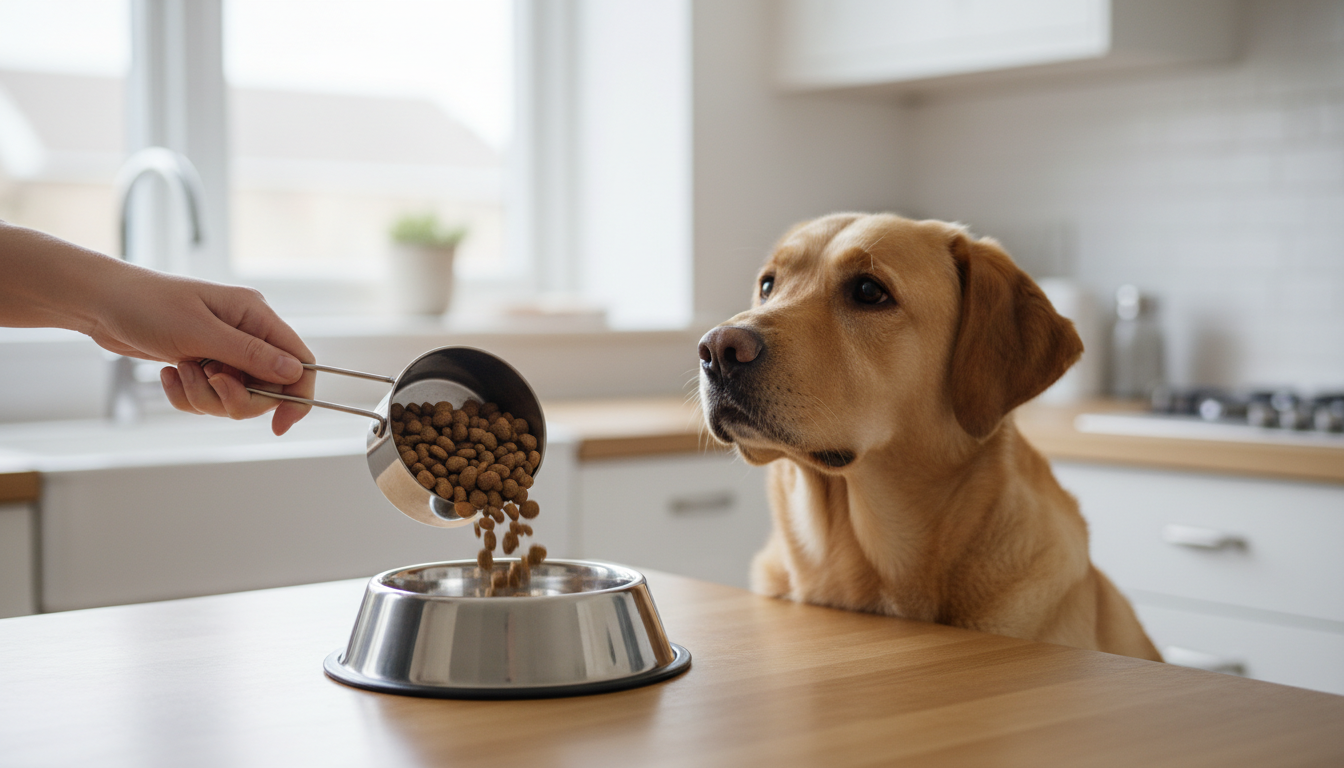
One of the biggest mistakes owners make is assuming a certain “kind” of food will manage weight without addressing portion sizes. In reality, portion control is often the most important piece of the puzzle. Many owners eyeball servings or fill the bowl to a comfortable level rather than using a measuring cup, and this alone can lead to weeks or months of overfeeding without anyone noticing.
It also helps to know that feeding guidelines on dog food bags are general starting points, not exact prescriptions for your individual dog. Your vet can help you calculate a more precise daily calorie target based on your dog’s current weight, target weight, and activity level, then translate that into a measured amount of food per meal.
- Use a kitchen scale or measuring cup rather than estimating by eye
- Divide the daily total into two or more meals rather than one large feeding
- Account for treats and table scraps as part of the daily calorie total
- Avoid free-feeding, where food is left out all day
Treats Add Up Faster Than You Think
Because Labs are so food motivated, treats often become the main tool for training, bonding, and simply satisfying those big brown eyes staring up at you. Unfortunately, treats can quietly account for a large share of daily calories, especially when multiple family members are each giving a little something throughout the day without realizing how much is adding up in total.
Switching to smaller treat pieces, or breaking treats into halves or quarters, can stretch out the reward without stretching out the calories. Using pieces of your dog’s regular kibble as training treats, or offering praise and play instead of food for some interactions, can also help reduce the treat load without making your dog feel like training time has disappeared.
- Break treats into smaller pieces rather than giving whole ones
- Use plain vegetables like green beans or carrot slices as low-calorie options
- Rotate in praise, play, or a favorite toy instead of food as a reward
- Keep a simple written or mental tally of treats given throughout the day
Exercise Needs for a Weight-Loss Plan
Labrador Retrievers were bred to work, and most do best with a good amount of daily physical activity. If your dog has been overweight for a while, it’s important to build up exercise gradually rather than jumping straight into long runs, since joints that have been carrying extra weight may need time to adjust as the pounds come off.
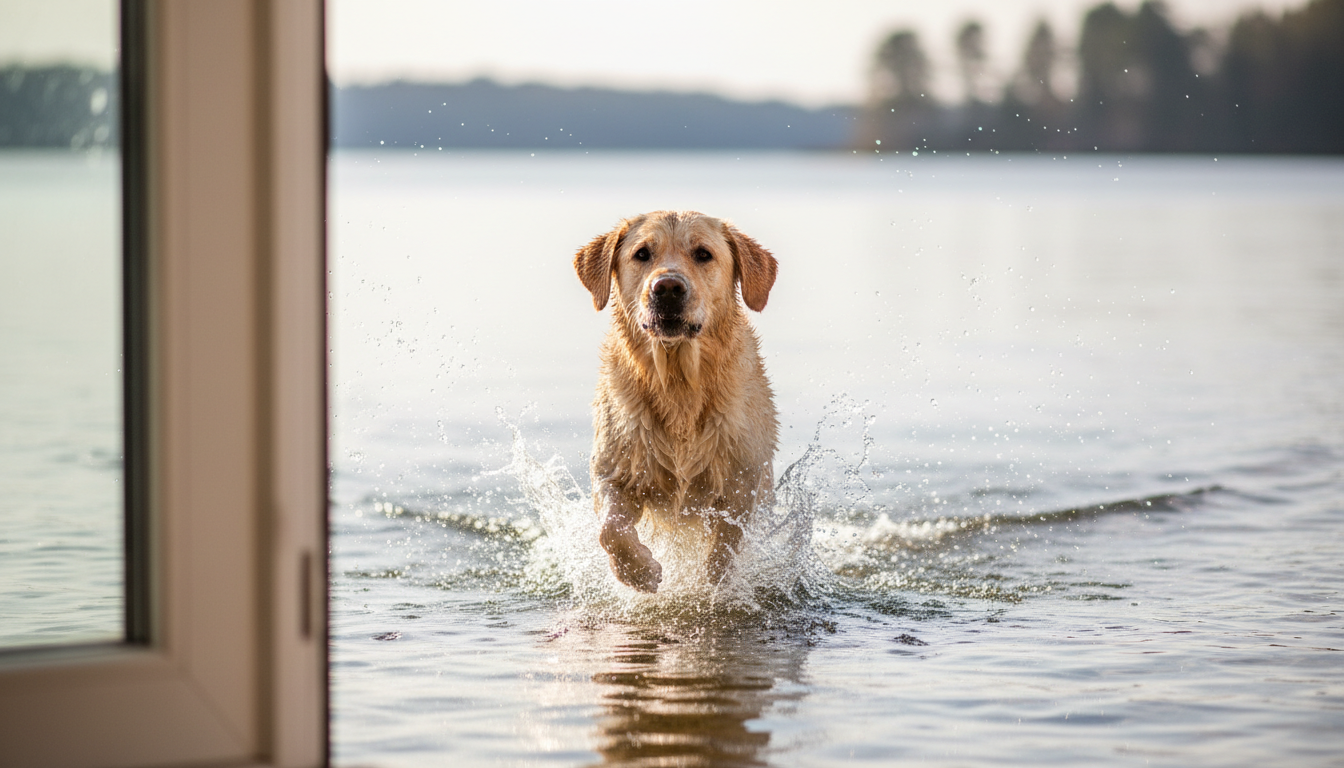
Swimming is often an excellent option for overweight Labs, since Labs typically enjoy water and swimming provides a strong workout with much less impact on the joints than running. Structured walks, ideally at a pace brisk enough to get your dog’s heart rate up rather than a leisurely stroll, also help burn calories while being gentle enough for most dogs to manage.
- Start with shorter, more frequent walks and build up duration slowly
- Consider swimming or water-based exercise for lower joint impact
- Add mentally stimulating activities like scent games, which burn energy too
- Watch for excessive panting, limping, or reluctance to continue, which mean it’s time to slow down
Weighing In and Tracking Progress
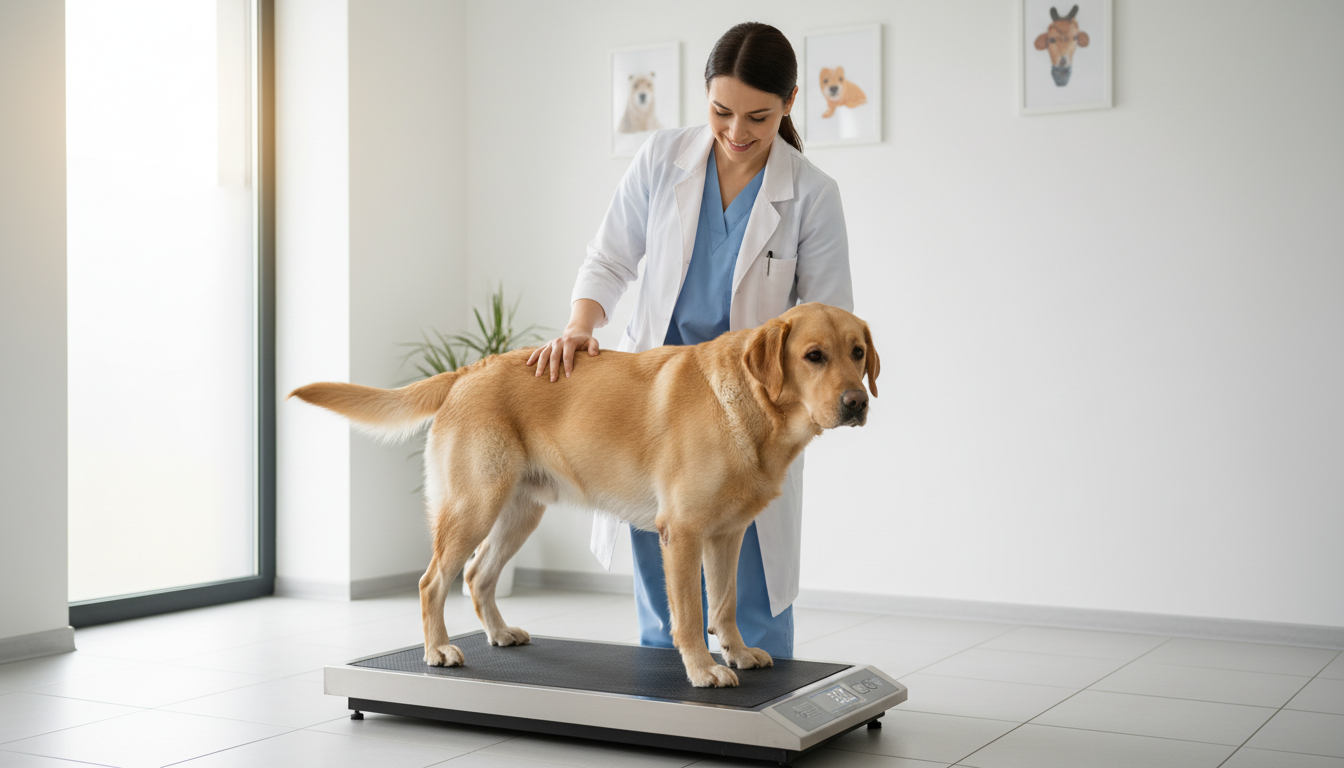
Regular weigh-ins are one of the most useful tools for staying on track, since they give you objective feedback rather than relying on guesswork. Many vet clinics are happy to let you bring your dog in periodically just to use their scale, often at no charge, which can be a helpful way to check progress between full appointments.
Photos taken from the same angles every few weeks can also help you notice changes that are hard to see day to day when you’re looking at your dog constantly. Keeping a simple log of weight, food amounts, and activity levels can help you and your vet spot what’s working and adjust the plan if progress stalls.
Household Teamwork Makes or Breaks the Plan
Weight loss plans often fail not because the plan itself is wrong, but because not everyone in the household is following it consistently. If one family member is quietly slipping your Lab extra treats or table scraps while everyone else sticks to the plan, progress can stall or reverse without anyone realizing why.
Sitting down as a household to agree on the plan, and making sure visitors, dog walkers, or pet sitters are aware of feeding rules, can prevent this kind of accidental sabotage. Posting a feeding schedule and daily calorie target somewhere visible, like on the fridge, can help keep everyone aligned and reduce confusion about how much your dog has already eaten that day.
When Weight Loss Plateaus
It’s common for weight loss to slow down or stall partway through a plan, even when you’re doing everything right. This can happen as your dog’s metabolism adjusts to eating less, and it doesn’t necessarily mean the plan has failed. Small adjustments, made in consultation with your vet, such as slightly reducing calories further or increasing activity, are often enough to get things moving again.
If a plateau lasts for several weeks despite consistent effort, it’s worth checking back in with your vet rather than making changes on your own. They can check for underlying issues that might be interfering with progress and help fine-tune the plan based on how your dog has responded so far.
Special Considerations for Puppies and Seniors
Weight management looks a little different depending on your Labrador’s life stage. Puppies grow quickly and need enough calories to support healthy bone and joint development, so restricting food too aggressively in a young, growing Lab can cause its own problems. Your vet can help you find the right balance so your puppy grows at a healthy rate without gaining excess fat along the way.
Senior Labs often become less active due to age-related joint stiffness, which can make maintaining a healthy weight harder even without any change in diet. Senior dogs may also have other health conditions that affect how a weight loss plan should be structured, so working closely with your vet is especially important at this stage of life.
Signs You Should Contact Your Vet Right Away
While most weight management happens gradually and doesn’t require emergency attention, there are situations where you should reach out to your vet promptly. Sudden, unexplained weight loss or gain, significant changes in appetite, or new symptoms like vomiting, lethargy, or difficulty breathing should always be checked out rather than assumed to be part of a weight loss plan working as expected.
- Rapid weight loss that seems faster than expected on the current plan
- Refusal to eat for more than a day
- New limping, stiffness, or reluctance to move
- Labored breathing or excessive panting at rest
- Vomiting or diarrhea that appears alongside diet changes
The Bigger Picture: A Lifelong Commitment
Helping an overweight Labrador reach a healthy weight isn’t usually a quick fix, and keeping the weight off afterward is really the long-term goal. Many dogs regain weight within a year of finishing a weight loss plan if the new habits don’t stick, so it helps to think of portion control, treat management, and regular exercise as permanent parts of your dog’s routine rather than a temporary project.
Regular checkups give you a chance to keep tabs on your dog’s weight over time and catch small increases before they become bigger problems. With patience, consistency, and support from your vet, most Labrador Retrievers can reach and maintain a healthy weight, which can make a real difference in their comfort, energy, and overall quality of life for years to come.
A Final Word on Patience and Consistency
It’s easy to get discouraged if progress feels slow, especially with a breed as enthusiastic about food as the Labrador Retriever. Try to remember that gradual, sustainable weight loss is safer and more likely to last than a rushed approach, and that every small change, from a slightly smaller scoop of kibble to an extra ten minutes of walking, adds up over time.
Your vet is your best partner throughout this process, and checking in regularly can help you stay motivated and make adjustments as needed. With consistency and the right support, you can help your Labrador feel more comfortable, active, and healthy for the years ahead.
This article is for general education and is not a substitute for care from your own veterinarian. Learn about The Pet Vet and our editorial policy.