
Noise phobia in Border Collies is something a lot of owners deal with but rarely talk about until a thunderstorm sends their dog into a full panic. This breed’s keen senses and high reactivity, so useful for herding, can make everyday sounds feel threatening. If your Border Collie trembles, hides, or tries to escape during storms, fireworks, or even the vacuum cleaner, you’re not imagining it, and you’re not alone.
Table of Contents
- Why Border Collies Are Prone to Noise Phobia
- Common Triggers to Watch For
- Recognizing the Signs of Noise Phobia
- Why Early Intervention Matters
- Creating a Safe Space at Home
- The Role of Your Own Behavior
- Desensitization and Counterconditioning
- Tools and Products That May Help
- When Medication May Be Appropriate
- Managing Episodes in the Moment
- Exercise and Mental Stimulation as Prevention
- When to See the Vet
- Living With a Noise-Sensitive Border Collie
Why Border Collies Are Prone to Noise Phobia
Border Collies were bred to work closely with a human handler, reading subtle body language and sound cues from a distance across open fields. That same acute hearing and heightened awareness that makes them exceptional herders also makes them more likely to pick up on sounds most other dogs would ignore. A distant rumble of thunder, the crackle of fireworks a mile away, or even a low-frequency sound from an appliance can register as something alarming long before you notice it.
This breed’s intelligence works against them in another way too. Border Collies are quick to form associations, so if a scary sound happens once during a walk or at home, they can start anticipating it in similar situations going forward. A dog that associates the sound of rain on a window with an approaching storm may begin reacting to rain alone, even without thunder. Add in their tendency toward anxious, obsessive behavior patterns when stressed, and you have a breed that is simply wired to feel noise more intensely than most.
It’s also worth remembering that noise phobia is not a training failure or a sign of weakness in the dog. It’s a genuine fear response rooted in how the nervous system processes a perceived threat. Understanding this can help you approach the problem with patience rather than frustration, which matters a great deal for a breed as sensitive to your emotional tone as the Border Collie.
Common Triggers to Watch For
Thunderstorms are the most talked-about trigger, but they’re far from the only one. Many Border Collies react just as strongly, sometimes more strongly, to fireworks, gunshots in the distance, construction noise, or even the beep of a smoke detector with a low battery. Some dogs develop sensitivity to specific household sounds like the blender, vacuum, or a door slamming.
Storms carry an added complication because they involve more than just sound. Changes in barometric pressure, static electricity in the air, darkening skies, and wind can all contribute to a dog’s distress before the thunder even starts. This is part of why some dogs seem to “predict” a storm and start pacing or panting well before you hear anything yourself.
- Thunder, lightning flashes, and sudden pressure changes
- Fireworks, gunshots, or backfiring vehicles
- Loud household appliances like vacuums or blenders
- Construction equipment or passing trucks
- Alarms, sirens, or smoke detector chirps
Recognizing the Signs of Noise Phobia
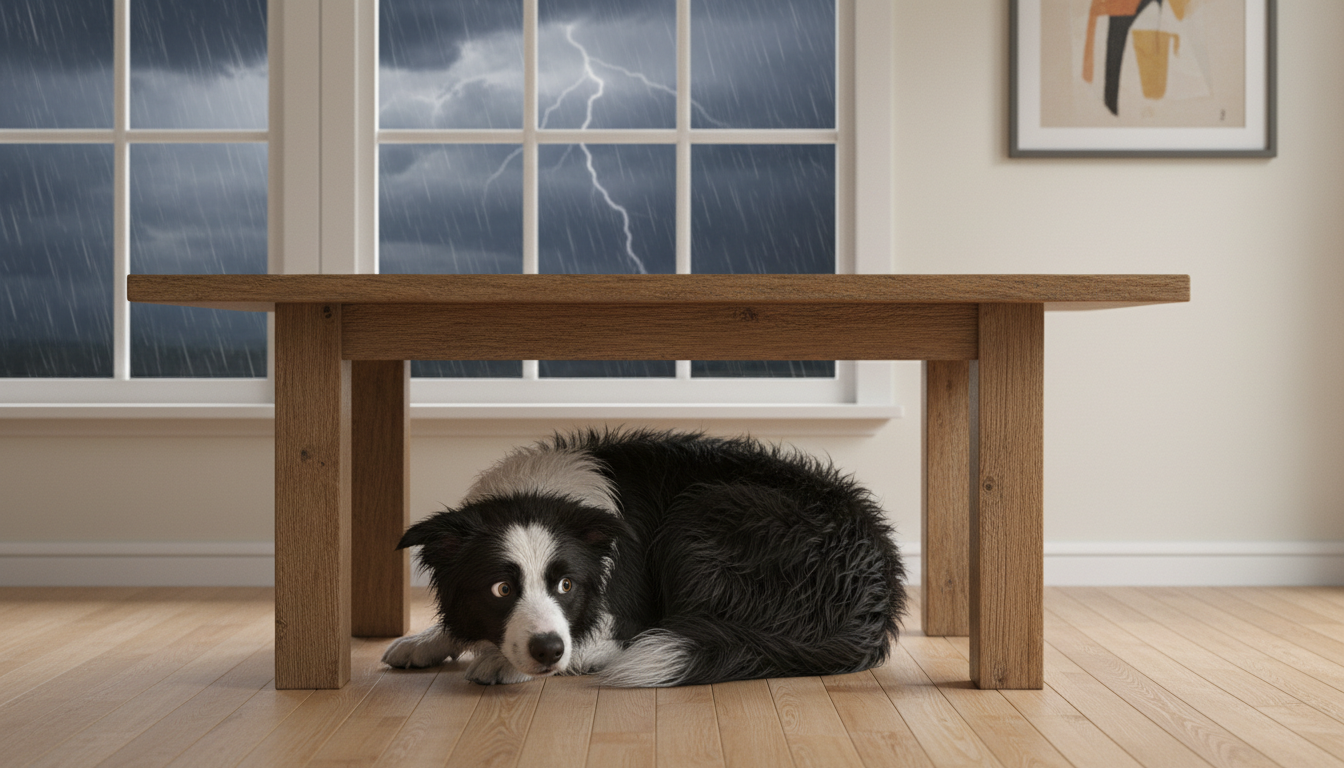
Noise phobia doesn’t always look like obvious panic. Some Border Collies pace, pant heavily, or drool more than usual. Others become clingy, pressing against your legs or trying to climb into your lap. Still others shut down entirely, freezing in place or refusing to move from a particular spot in the house.
More severe reactions can include attempts to escape, such as scratching at doors, jumping fences, or squeezing through gaps to get away from the sound. This is how many dogs go missing during fireworks displays, so it’s worth taking these behaviors seriously rather than assuming your dog will simply “ride it out.” Destructive behavior, like chewing door frames or tearing up bedding, can also show up during an episode and often gets mistaken for separation anxiety when the real trigger is actually noise.
- Trembling, pacing, or excessive panting
- Hiding, cowering, or pressing against you
- Drooling or excessive lip licking
- Attempts to escape the house or yard
- Destructive chewing or scratching during episodes
Why Early Intervention Matters
Noise phobias tend to worsen over time if left unaddressed. A dog that reacts mildly to a distant storm this year may become significantly more fearful by next season if the fear isn’t managed. This is sometimes called sensitization, where repeated exposure without any coping strategy makes the response more intense rather than less.
Getting ahead of the problem early, ideally when you first notice mild signs of discomfort, gives you more tools to work with. Waiting until your dog is in full crisis mode during a thunderstorm makes it much harder to teach new coping skills in that moment, since a highly stressed brain isn’t in a good position to learn. If you’ve noticed even subtle signs of noise sensitivity in your Border Collie, it’s worth bringing this up with your vet sooner rather than later.
Creating a Safe Space at Home
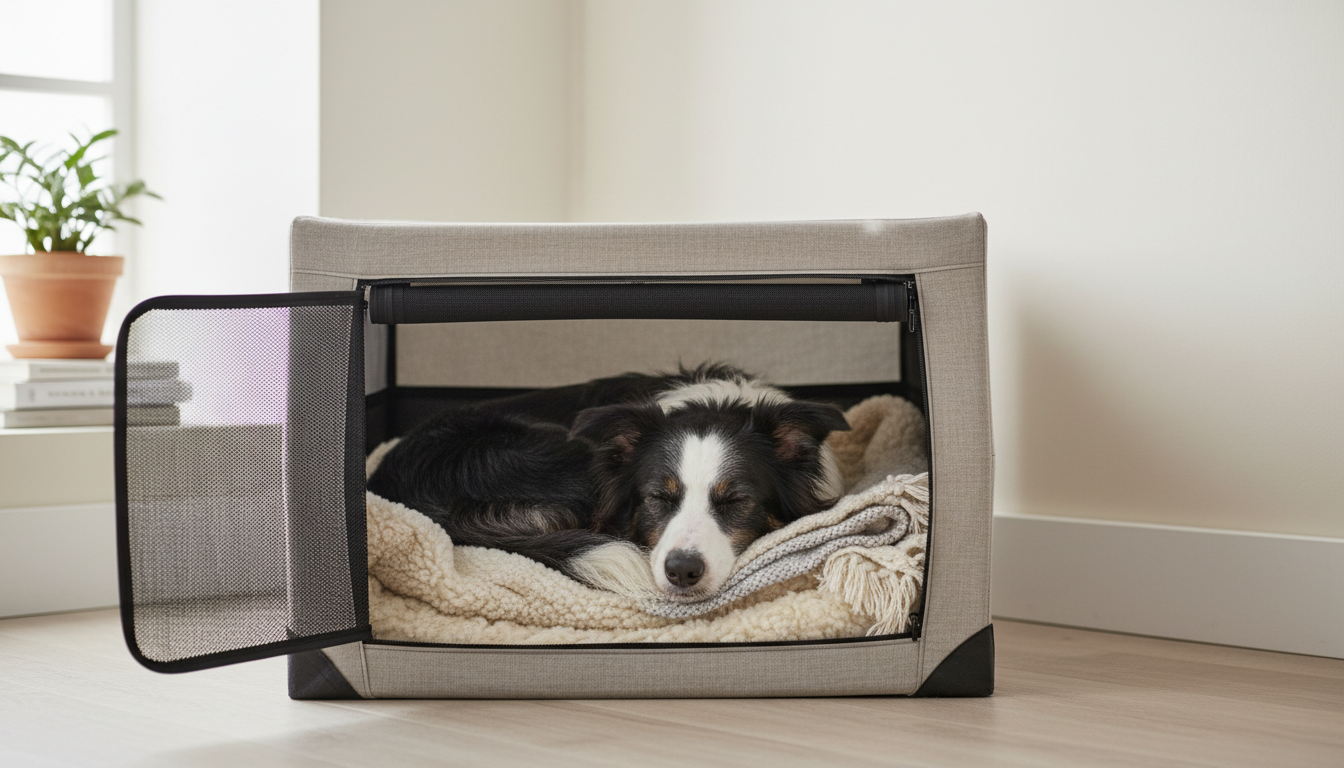
Having a designated safe space can make a real difference for a noise-phobic dog. This should be an area that feels enclosed and secure, such as a covered crate, a small room without windows, or a corner with furniture on multiple sides. Many Border Collies feel safer in tight, den-like spaces during a storm or fireworks event.
You can help your dog associate this space with calm by making it available at all times, not just during scary events. Toss treats in there regularly, let your dog nap there, and avoid using it for anything punitive. Some owners find that playing calming music or white noise in this space, or covering the crate with a blanket, helps dampen outside sounds and reduces visual triggers like lightning flashes.
- Choose an enclosed, den-like area the dog can retreat to
- Make the space available year-round, not just during storms
- Use white noise or calming music to mask outside sounds
- Keep curtains or blinds closed to block lightning flashes
- Avoid forcing your dog into the space if it increases distress
The Role of Your Own Behavior
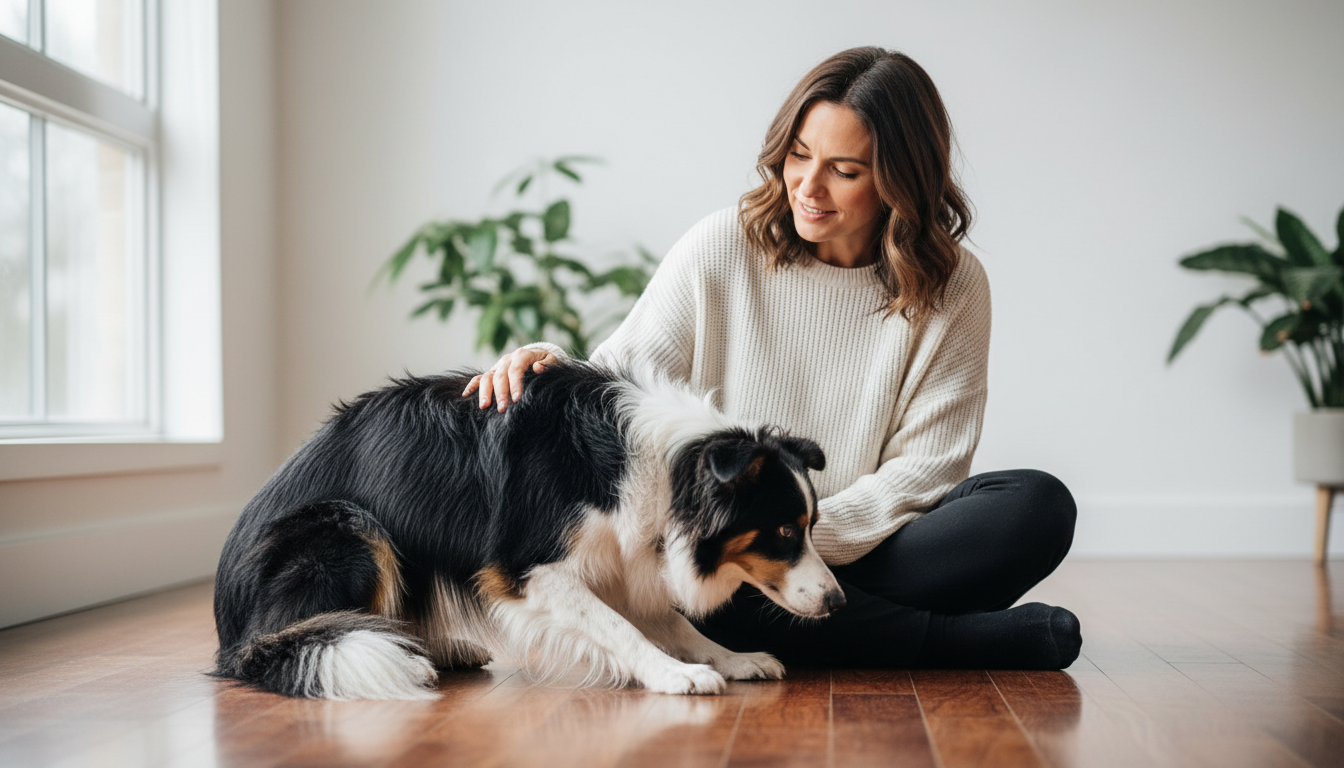
Border Collies are extraordinarily tuned in to their owner’s emotional state, probably more so than most other breeds. If you tense up, raise your voice, or hover anxiously during a storm, your dog may read that as confirmation that something is genuinely wrong. On the other hand, overly dramatic comforting, baby talk, and excessive petting during a panic episode can inadvertently reinforce the fearful behavior for some dogs.
The better approach for most dogs is calm, neutral confidence. Speak in a normal tone, move around the house as you normally would, and offer comfort without turning it into a big event. If your dog wants to be near you, that’s fine, but try not to make the interaction feel like a crisis response. This measured energy helps signal to your dog that there’s nothing to be alarmed about, even if it takes time for that message to sink in.
Desensitization and Counterconditioning
One of the more effective long-term strategies for noise phobia involves gradually and carefully exposing your dog to recordings of the trigger sound at a very low volume, paired with something positive like treats or play. Over repeated sessions, the volume is slowly increased only as your dog remains relaxed, with the goal of changing the emotional association from fear to neutrality or even positive anticipation.
This process takes real patience and should move at the dog’s pace, not a fixed schedule. Rushing it or increasing volume too quickly can backfire and make the fear worse. Because this kind of training requires careful observation of your dog’s stress signals and consistent technique, it’s worth discussing with your vet or a qualified animal behaviorist who can guide you through the process and help you recognize when it’s time to move to the next step.
Tools and Products That May Help
A number of products are marketed to help anxious dogs, and while results vary by individual, many owners find some benefit. Pressure wrap vests, often called anxiety wraps, apply gentle, constant pressure that some dogs find calming, similar to swaddling. Pheromone diffusers release synthetic calming scents designed to mimic those produced by nursing mother dogs, which some pets respond well to.
White noise machines, fans, or calming playlists designed for dogs can help mask outside sounds before they fully register. It’s worth trying products one at a time so you can tell what’s actually helping your particular dog, rather than introducing everything at once during a storm.
- Pressure wrap vests or snug-fitting calming garments
- Pheromone diffusers or sprays made for dogs
- White noise machines or dog-specific calming playlists
- Interactive puzzle toys to redirect focus during mild anxiety
- Blackout curtains to reduce visual storm triggers
When Medication May Be Appropriate
For Border Collies with moderate to severe noise phobia, behavioral strategies alone may not be enough, and that’s not a failure on your part or your dog’s. Veterinarians have access to several categories of anti-anxiety medications and situational calming aids that can be used alongside training to help a dog get through storm season or firework holidays more comfortably.
The right choice depends on your dog’s health history, the severity and frequency of episodes, and how they respond to different approaches, which is why this decision should always be made with your veterinarian rather than through guesswork or advice from other dog owners. Never give your dog any medication, supplement, or human anxiety drug without veterinary guidance, since dosing and safety profiles differ significantly between species and individual animals.

Managing Episodes in the Moment
When a storm or fireworks event catches you off guard, having a plan ready can reduce everyone’s stress. Bring your dog inside before the noise starts if you have advance warning, such as a weather forecast or a known fireworks schedule in your area. Close windows and curtains, turn on some background noise, and guide your dog toward their safe space without forcing them there.
Offering a long-lasting chew or a stuffed food toy can give some dogs something productive to focus on, though not every dog will be interested in food during a high-stress moment, and that’s normal too. Stay present but calm, and resist the urge to leave your dog alone during a known trigger event if you can help it, since isolation often intensifies fear for this breed.
- Bring your dog inside before the noise begins if possible
- Close windows, curtains, and use background noise
- Offer a safe space without forcing your dog into it
- Provide a chew or food toy as a possible distraction
- Stay calm and present rather than leaving your dog alone
Exercise and Mental Stimulation as Prevention
Border Collies are a famously high-energy, high-drive breed, and unmet physical and mental needs can make any existing anxiety worse. A dog that gets plenty of structured exercise and mental engagement during the day is often more resilient when faced with a stressful trigger in the evening. This doesn’t eliminate noise phobia, but it can take the edge off overall anxiety levels.
Activities like agility, scent work, or structured herding-style games tap into the breed’s natural instincts and can serve as a helpful outlet for the same intensity that makes them prone to anxiety in the first place. Building a predictable daily routine with adequate stimulation is a reasonable, low-risk piece of the puzzle worth incorporating alongside any other treatment plan.

When to See the Vet
If your Border Collie’s reaction to noise is frequent, intense, or appears to be getting worse over time, it’s time to involve your veterinarian rather than trying to manage it entirely on your own. This is especially true if your dog has ever attempted to escape the house or yard during an episode, since that puts them at real risk of injury or getting lost. A vet visit also helps rule out other medical issues that can sometimes contribute to anxiety-like behavior, such as pain or underlying illness.
Your vet may refer you to a veterinary behaviorist for more involved cases, particularly if standard desensitization and environmental changes haven’t made enough of a difference. There’s no need to wait until things feel unmanageable. Getting support earlier gives you and your dog more options and a better chance at meaningful improvement.
- Frequent or worsening reactions to noise over time
- Attempts to escape the house, yard, or crate during episodes
- Self-injury from scratching, chewing, or panicked movement
- Noise reactions that seem to be spreading to new triggers
- Overall quality of life affected by ongoing fear or avoidance
Living With a Noise-Sensitive Border Collie
Managing noise phobia is rarely a one-time fix. It’s an ongoing process of observation, adjustment, and patience, especially with a breed as perceptive and emotionally responsive as the Border Collie. Some seasons will be harder than others, particularly during summer storms or holiday fireworks, and that’s worth planning for in advance rather than scrambling each time.
The good news is that with a thoughtful combination of environmental management, training, and veterinary support when needed, most dogs can become noticeably more comfortable over time. Your Border Collie’s sensitivity is part of what makes them such an attentive, responsive companion, and with the right support, that same sensitivity doesn’t have to mean a life ruled by fear.
This article is for general education and is not a substitute for care from your own veterinarian. Learn about The Pet Vet and our editorial policy.