
Basset Hound back and joint problems come with the territory when you love a breed built so low to the ground. That long spine, short heavy legs, and substantial body weight put real strain on the back, hips, and elbows over a lifetime. Understanding how this unique shape affects your dog’s skeleton can help you catch trouble early and keep your Basset moving comfortably for years to come.
Table of Contents
- Why the Basset Hound Body Shape Creates Risk
- Intervertebral Disc Disease in Bassets
- Hip and Elbow Concerns
- Recognizing Early Warning Signs
- The Weight Connection
- Everyday Habits That Help Protect the Spine
- When Exercise Helps and When It Hurts
- Diagnosing Back and Joint Problems
- Treatment Approaches Your Vet May Discuss
- Living with a Dog That Has Chronic Joint Pain
- Puppy Through Senior: Watching for Changes at Every Life Stage
- When to Treat It as an Emergency
- Supporting Your Basset Hound for the Long Run
Why the Basset Hound Body Shape Creates Risk
The Basset Hound was bred for a specific job: tracking scent close to the ground at a slow, methodical pace. That purpose shaped a body that is long through the spine, short in the legs, and heavy relative to its frame. While this build gives the breed its famous silhouette and excellent nose-to-ground tracking ability, it also places unusual mechanical stress on the back and joints that most other breeds simply don’t experience in the same way.
The combination of a long back and short legs means the spine has to support a lot of length without the leverage that longer legs would normally provide. Add in the breed’s naturally heavy bone structure and tendency to carry extra weight, and you have a recipe for chronic strain. Every jump off the couch, every set of stairs, and every awkward twist adds a little more wear to a back that is already working harder than it should have to.
This is not to say every Basset Hound will develop serious problems, but owners should go in with realistic expectations. Knowing that this breed is structurally predisposed to back and joint issues means you can make proactive choices about exercise, weight, and home setup that genuinely reduce the risk over time.
Intervertebral Disc Disease in Bassets
One of the most serious spinal concerns for Basset Hounds is intervertebral disc disease, often shortened to IVDD. This condition happens when the cushioning discs between the vertebrae degenerate, bulge, or rupture, putting pressure on the spinal cord. Because Bassets share the long-backed, short-legged body type seen in breeds like Dachshunds, they carry a similar elevated risk for this painful and potentially serious condition.
Signs of IVDD can range from subtle to dramatic. Some dogs show a reluctance to jump or climb stairs, a hunched posture, or sensitivity when touched along the back. Others develop more obvious symptoms like wobbly back legs, dragging a paw, or sudden difficulty standing up. In severe cases, a dog can lose the ability to walk entirely, which is considered a true emergency.
Because IVDD can progress quickly and sometimes requires urgent treatment to prevent permanent damage, any sudden change in your Basset’s mobility, posture, or comfort around the back deserves an immediate call to your vet. Early intervention often makes a significant difference in outcome, so it’s never worth waiting to see if symptoms resolve on their own.
Hip and Elbow Concerns
Beyond the spine, Basset Hounds commonly experience joint problems in their hips and elbows. Their heavy, low-slung frame puts constant pressure on these joints, and genetic predisposition to developmental issues like hip dysplasia and elbow dysplasia adds another layer of risk. These conditions involve abnormal joint formation that can lead to arthritis and chronic discomfort as the dog ages.
Unlike a sudden back injury, hip and elbow problems often develop gradually. You might notice your dog taking longer to get up in the morning, a subtle stiffness after rest, or a reluctance to go on long walks that used to be no trouble at all. Some dogs develop a bunny-hopping gait in the back legs or seem to favor one front leg over the other.
These changes are easy to dismiss as simply part of getting older, but they’re worth mentioning to your vet regardless of your dog’s age. Joint issues caught earlier are generally easier to manage, and your vet can discuss options ranging from lifestyle changes to medication or imaging to get a clearer picture of what’s going on.

Recognizing Early Warning Signs
Because Basset Hounds are so prone to back and joint trouble, learning to spot early warning signs can make a real difference in how quickly problems are addressed. Dogs are often skilled at masking discomfort, so subtle behavioral changes are frequently the first clue that something is wrong before obvious pain appears.
Pay attention to how your dog moves through a typical day, since small shifts in routine behavior often signal joint or back discomfort before anything looks dramatically wrong.
If you notice any combination of these signs, it’s worth scheduling a vet visit rather than waiting to see if things improve. Your vet can perform a physical exam and recommend imaging if needed to determine what’s actually going on beneath the surface.
- Hesitating before jumping onto furniture or into the car
- A hunched back or lowered head carriage that wasn’t there before
- Yelping or flinching when picked up or touched along the spine
- Dragging the back paws or scuffing the nails on the ground
- Reduced interest in walks or slower pace than usual
- Stiffness that improves as the dog warms up, then returns after rest
The Weight Connection
Weight management plays an outsized role in a Basset Hound’s joint and spinal health. Because this breed’s skeleton is already working against a disadvantageous ratio of body length to leg length, every extra pound adds disproportionate strain to the back, hips, and elbows. A Basset carrying excess weight is working its joints much harder than a lean dog of the same breed.
Many Bassets have hearty appetites and a food-motivated personality, which can make weight creep a constant battle for owners. It often happens so gradually that it’s hard to notice until a vet points out that your dog has moved from a healthy weight into an overweight category. Unfortunately, by that point, the extra strain has often already been affecting the joints for some time.
Keeping your Basset at a lean, healthy weight is genuinely one of the most powerful things you can do to protect their back and joints long term. Regular weigh-ins at the vet, careful portion control, and limiting high-calorie treats all help keep this breed’s unique frame under less daily strain.
Everyday Habits That Help Protect the Spine
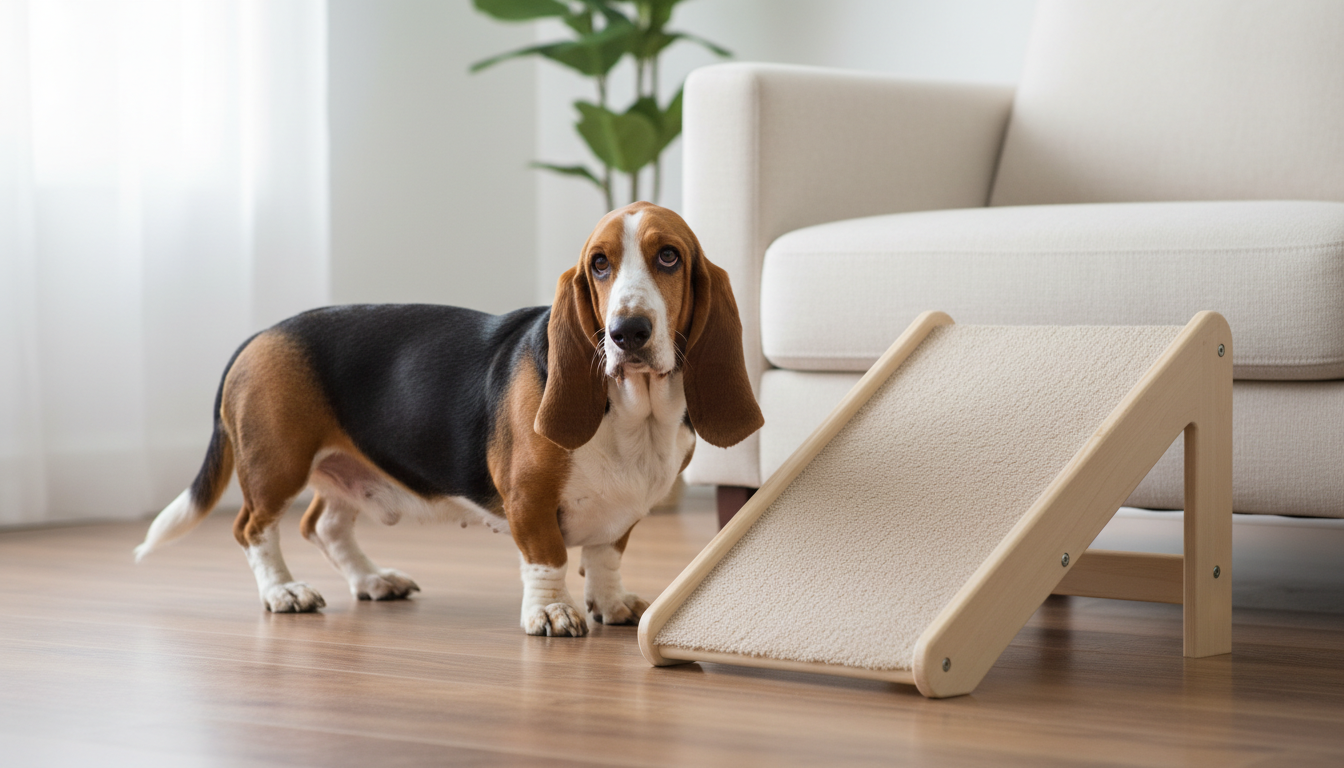
Small changes to your daily routine can meaningfully reduce the stress placed on a Basset Hound’s back and joints. Because this breed’s structure leaves little margin for error, simple adjustments around the house often pay off far more than you’d expect.
None of these changes require major investment, but together they add up to meaningfully less wear and tear over a Basset’s lifetime. Think of it as building a lower-impact lifestyle around a dog whose body simply isn’t designed for high-impact movement.
- Use ramps or steps instead of allowing jumps on and off furniture or into vehicles
- Keep floors less slippery with rugs or runners in high-traffic areas
- Avoid activities that involve a lot of twisting, like aggressive tug-of-war
- Support the chest and hindquarters properly when picking your dog up
- Choose shorter, more frequent walks over long, strenuous outings
- Provide a supportive orthopedic bed to ease pressure on joints at rest
When Exercise Helps and When It Hurts
Exercise is a bit of a balancing act for Basset Hounds. Too little activity contributes to weight gain and muscle loss, both of which make joint and back problems worse. Too much of the wrong kind of exercise, especially high-impact activities, can actively damage a vulnerable spine or joints. Finding the right middle ground is key to supporting this breed’s long-term mobility.
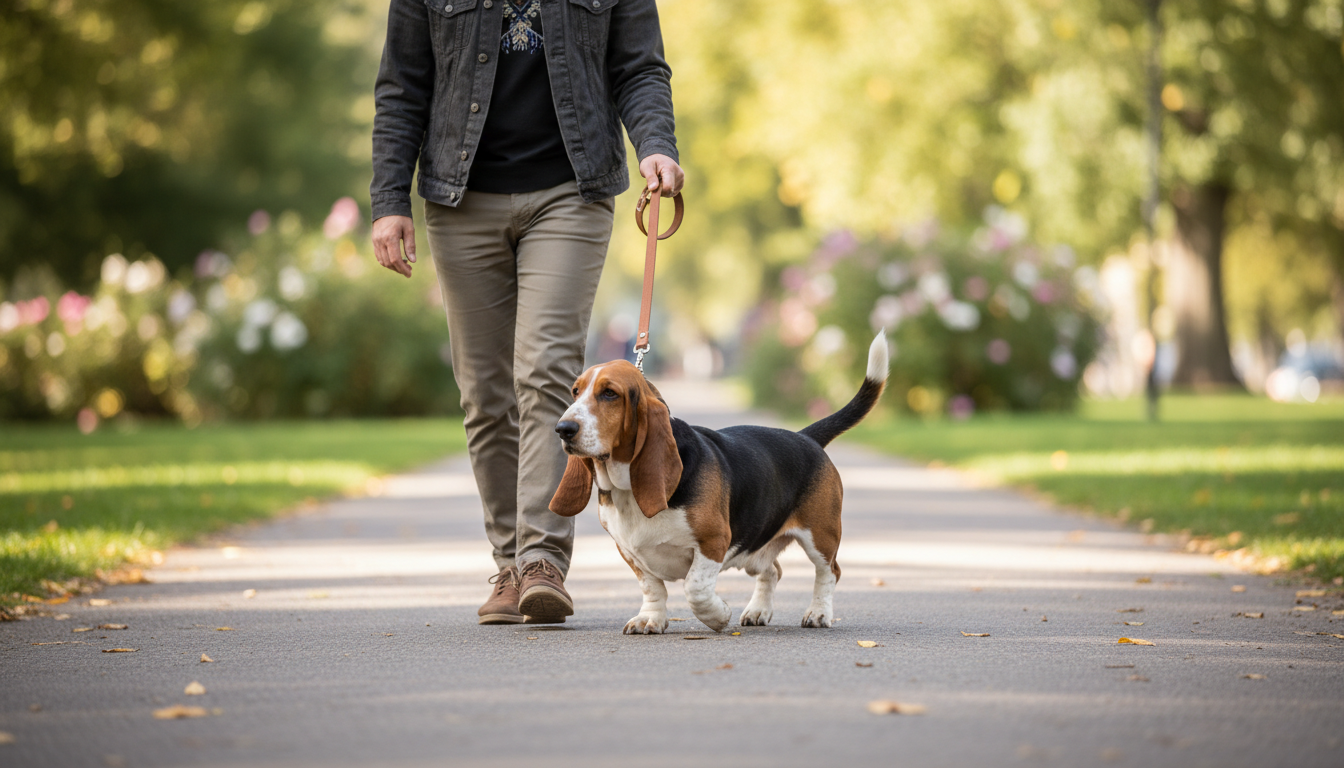
Gentle, consistent movement tends to serve Bassets best. Regular leash walks on flat, even ground allow the dog to build and maintain muscle tone that supports the spine without excessive jarring impact. Swimming, when introduced carefully and supervised, can also be a great low-impact option for some dogs, since it builds strength without stressing the joints.
What you want to avoid is sporadic bursts of high-intensity activity, like letting a mostly sedentary dog suddenly run and jump excessively at the dog park. These unpredictable, intense movements are often when injuries happen. Talk to your vet about an exercise routine that fits your individual dog’s age, weight, and current joint health.
Diagnosing Back and Joint Problems
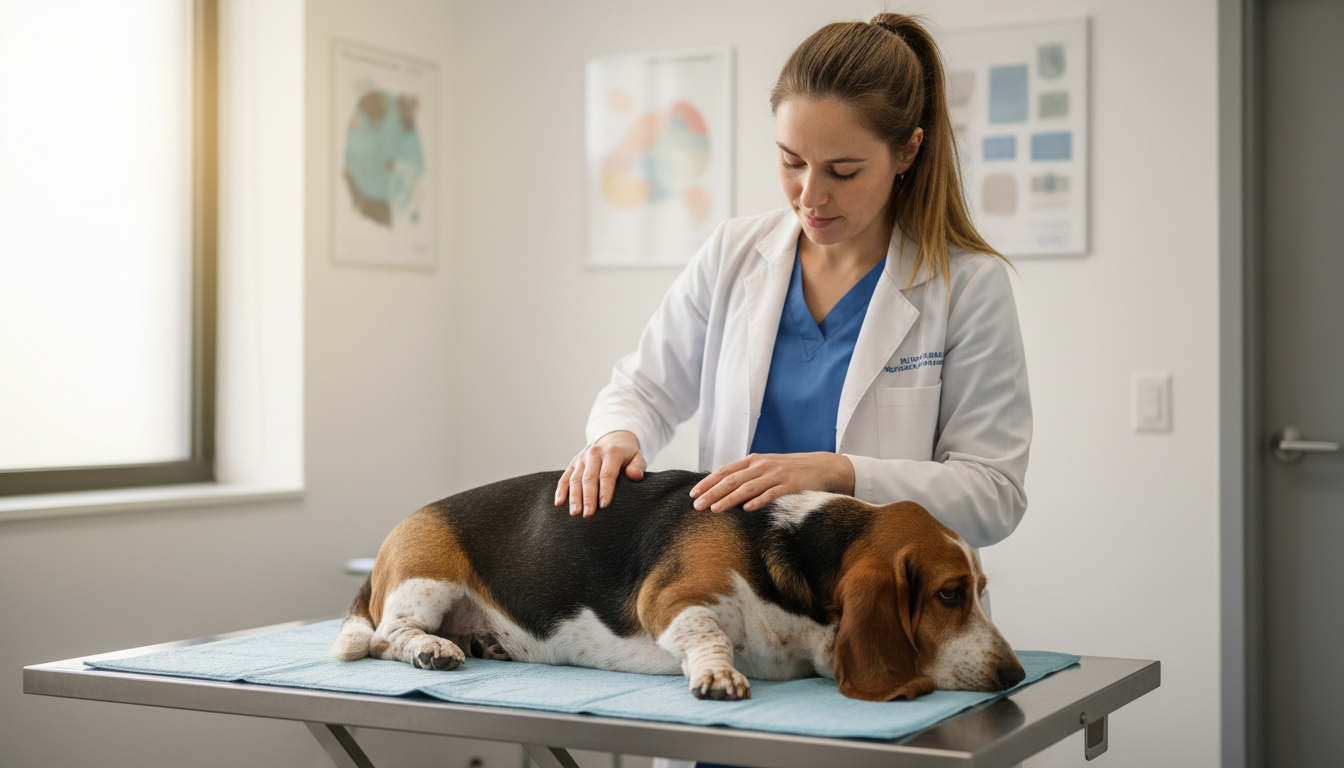
If your vet suspects a back or joint issue in your Basset Hound, they’ll typically start with a thorough physical exam, checking for pain responses, range of motion, and any obvious abnormalities in gait or posture. From there, imaging such as X-rays is often used to get a clearer look at the spine, hips, or elbows and assess the extent of any changes.
In some cases, especially when spinal cord involvement is suspected, more advanced imaging like an MRI or CT scan may be recommended, sometimes requiring referral to a veterinary specialist. These tools give a much more detailed view of soft tissue structures like the intervertebral discs, which standard X-rays can’t always show clearly.
The diagnostic path your vet chooses will depend on your dog’s specific symptoms and how urgent the situation appears. Don’t be surprised if your vet wants to rule out several possibilities before settling on a treatment plan, since back and joint symptoms in Bassets can sometimes overlap or occur together.
Treatment Approaches Your Vet May Discuss
Treatment for back and joint problems in Basset Hounds varies widely depending on the specific diagnosis and severity. Mild cases of arthritis or early disc degeneration might be managed with a combination of weight control, controlled exercise, and vet-prescribed pain management. More severe cases, particularly significant disc herniation affecting the spinal cord, may require surgical intervention to relieve pressure and prevent permanent nerve damage.
Your vet may also suggest supportive therapies like physical rehabilitation, which can help maintain muscle strength and mobility, especially during recovery from an acute episode or surgery. Some dogs benefit from joint supplements, though it’s important to discuss these with your vet rather than choosing them independently, since not every product is backed by solid evidence or appropriate for every dog.
Because treatment plans are so individualized, it’s essential to have an honest conversation with your vet about your dog’s specific diagnosis, prognosis, and what outcomes are realistic. What works well for one Basset with mild hip dysplasia may be entirely inappropriate for another dealing with acute disc herniation.
Living with a Dog That Has Chronic Joint Pain
For many Basset Hounds, back and joint issues become a long-term part of life rather than something that’s fully resolved. Learning to manage chronic discomfort means adjusting your expectations and your home environment to keep your dog as comfortable as possible day to day. This often involves an ongoing partnership with your vet to monitor how your dog is doing and adjust the management plan as needed.
Dogs living with chronic joint pain often do better with predictable routines, since sudden changes in activity level or environment can trigger flare-ups. Many owners find that a combination of a supportive bed, consistent gentle exercise, weight management, and any prescribed medications creates a stable baseline that keeps their dog comfortable most of the time.
It’s also worth watching for signs that your management plan needs adjusting, such as increased stiffness, reluctance to move, or changes in appetite or mood that might indicate pain is becoming harder to control. Regular vet check-ins, even when things seem stable, help catch these shifts before they become bigger problems.
Puppy Through Senior: Watching for Changes at Every Life Stage
Basset Hound back and joint problems aren’t limited to senior dogs, though risk generally does increase with age. Even young Bassets can experience early joint abnormalities related to their genetics and rapid growth, which is why responsible breeding practices and early vet checkups matter so much for this breed. Paying attention at every life stage helps you catch issues whenever they first appear.
In puppies and young adults, watch for any asymmetry in how your dog moves, reluctance to play normally, or signs of discomfort during growth spurts. Middle-aged dogs may start showing the first hints of arthritis, particularly if they’ve carried extra weight or had an old injury. Senior Bassets often need the most vigilant monitoring, since age-related joint degeneration combines with the breed’s inherent structural challenges.
Regular wellness visits throughout your dog’s life give your vet the chance to track subtle changes over time, which can be much harder for an owner to notice day to day. Bringing up any concerns, even minor ones, at these visits helps build a more complete picture of your dog’s joint health as they age.

When to Treat It as an Emergency
While many back and joint issues in Basset Hounds develop gradually, some situations call for immediate emergency care. Recognizing the difference between a condition that can wait for a regular appointment and one that needs urgent attention could genuinely protect your dog from permanent damage.
Certain signs should prompt an immediate trip to the vet or emergency animal hospital rather than a wait-and-see approach.
These symptoms can indicate significant spinal cord compression or injury, where time matters for the best possible outcome. If you ever see these signs in your Basset Hound, don’t wait to see if things improve. Treat it as the emergency it likely is and seek veterinary care right away.
- Sudden inability to stand or use the back legs
- Obvious extreme pain, such as screaming or being unable to get comfortable
- Loss of bladder or bowel control that’s new or sudden
- Dragging the back legs or knuckling over on the paws
- Any sudden, severe change in mobility after a fall, jump, or rough play
Supporting Your Basset Hound for the Long Run
Living with a Basset Hound means embracing both the breed’s wonderful personality and the physical realities of their unique build. Back and joint problems are common in this breed, but they don’t have to define your dog’s quality of life. With thoughtful management, many Bassets live full, happy lives despite these structural challenges.
The most important things you can do are keep your dog at a healthy weight, provide consistent low-impact exercise, set up your home to minimize jumping and slipping, and stay attentive to any changes in movement or comfort. None of these steps guarantee your dog will avoid problems entirely, but together they meaningfully reduce risk and support better outcomes if issues do arise.
Your vet is your best partner in this process, since they know your individual dog’s history and can help you make decisions tailored to their specific needs. Regular checkups, open communication about any concerns, and prompt attention to warning signs all work together to give your Basset Hound the best possible chance at a comfortable, mobile life.
This article is for general education and is not a substitute for care from your own veterinarian. Learn about The Pet Vet and our editorial policy.