
Abyssinian cat activity levels are famously high, and that constant motion is one of the first things new owners notice. These cats climb, chase, and investigate everything in sight, and they rarely slow down the way many other breeds do. If you’ve brought an Abyssinian into your home, understanding why they move so much, and how to meet that need safely, can make a huge difference in your cat’s happiness and your own sanity.
Table of Contents
- Why Abyssinians Are Wired for Movement
- What High Energy Actually Looks Like Day to Day
- The Difference Between Normal Energy and a Problem
- Why Enrichment Matters So Much for This Breed
- Interactive Play Is Not Optional
- Social Needs and Companionship
- Managing an Abyssinian in a Small Living Space
- When Activity Level Signals Stress, Not Just Personality
- Exercise Needs Beyond Play Sessions
- Diet and Activity: What to Keep in Mind
- Kittenhood: Setting the Stage Early
- Aging and Changes in Activity Level
- Common Mistakes Owners Make With This Breed
- When to Call Your Vet
- Building a Life That Fits This Breed
Why Abyssinians Are Wired for Movement
Abyssinians were developed as an athletic, lean breed, and that body type comes paired with a brain that craves input. Unlike some cat breeds that are content to doze on a windowsill for most of the day, Abyssinians often seem to be running an internal engine that never fully idles. This isn’t bad behavior or a training failure on your part, it’s simply how the breed is built, and recognizing that early helps you set realistic expectations.
Owners sometimes describe their Abyssinian as more dog-like than cat-like, following them room to room, learning to open doors, and inventing games out of ordinary household objects. This high drive can be wonderful if you’re prepared for it, but it can also become exhausting or even lead to behavior problems if the cat’s needs aren’t being met. A tired, understimulated Abyssinian is far more likely to get into mischief than one whose energy has a healthy outlet.
It helps to think of activity level as a core personality trait rather than something you can train away. Instead of trying to make your Abyssinian calmer by nature, the more productive approach is building an environment that channels that energy into appropriate outlets throughout the day.
What High Energy Actually Looks Like Day to Day
For most owners, the reality of living with an Abyssinian means near-constant supervision of counters, shelves, and anything that can be knocked over or batted around. These cats are known for climbing to the highest point in any room, and they often seem to view vertical space as prime real estate rather than an occasional novelty. You may also notice your cat seeking out interactive play far more often than a typical housecat, initiating games rather than waiting to be invited.
Many Abyssinians also show a strong interest in water, puzzle-solving, and opening cabinets or drawers, behaviors that reflect genuine intelligence paired with restless curiosity. This combination means boredom can show up quickly and in creative ways if there isn’t enough to keep your cat occupied.
- Frequent climbing onto furniture, shelves, and countertops
- Persistent interest in exploring closed cabinets, boxes, or bags
- Seeking out interactive play multiple times a day
- Following owners from room to room throughout the house
- Unusual fascination with running water or dripping faucets
The Difference Between Normal Energy and a Problem
It’s worth knowing where typical Abyssinian enthusiasm ends and where something concerning might begin. A cat that is highly active but still eats well, sleeps deeply after bursts of play, and settles reasonably when you want quiet time is likely just expressing normal breed temperament. Energy that seems endless with no downtime at all, however, especially if paired with weight loss, increased thirst, or changes in appetite, is a different story and deserves veterinary attention rather than just more toys.
Hyperactivity that comes on suddenly in an adult cat that was previously calmer can sometimes point to an underlying medical issue rather than simple personality. Conditions affecting the thyroid or other body systems can cause increased activity and restlessness, so any dramatic shift in energy level, especially in an older cat, is worth discussing with your vet rather than assuming it’s “just the breed.”
Your vet is in the best position to rule out medical causes and confirm that what you’re seeing is simply normal Abyssinian temperament. Never try to diagnose the difference yourself, especially if other symptoms appear alongside the energy change.
Why Enrichment Matters So Much for This Breed
Enrichment isn’t a luxury for an Abyssinian, it’s closer to a requirement. Because these cats are so mentally engaged with their surroundings, a lack of stimulation tends to show up as unwanted behavior rather than quiet boredom. Scratching furniture, knocking items off shelves, or excessive vocalizing can all be signs that your cat’s mind and body aren’t getting enough to do.
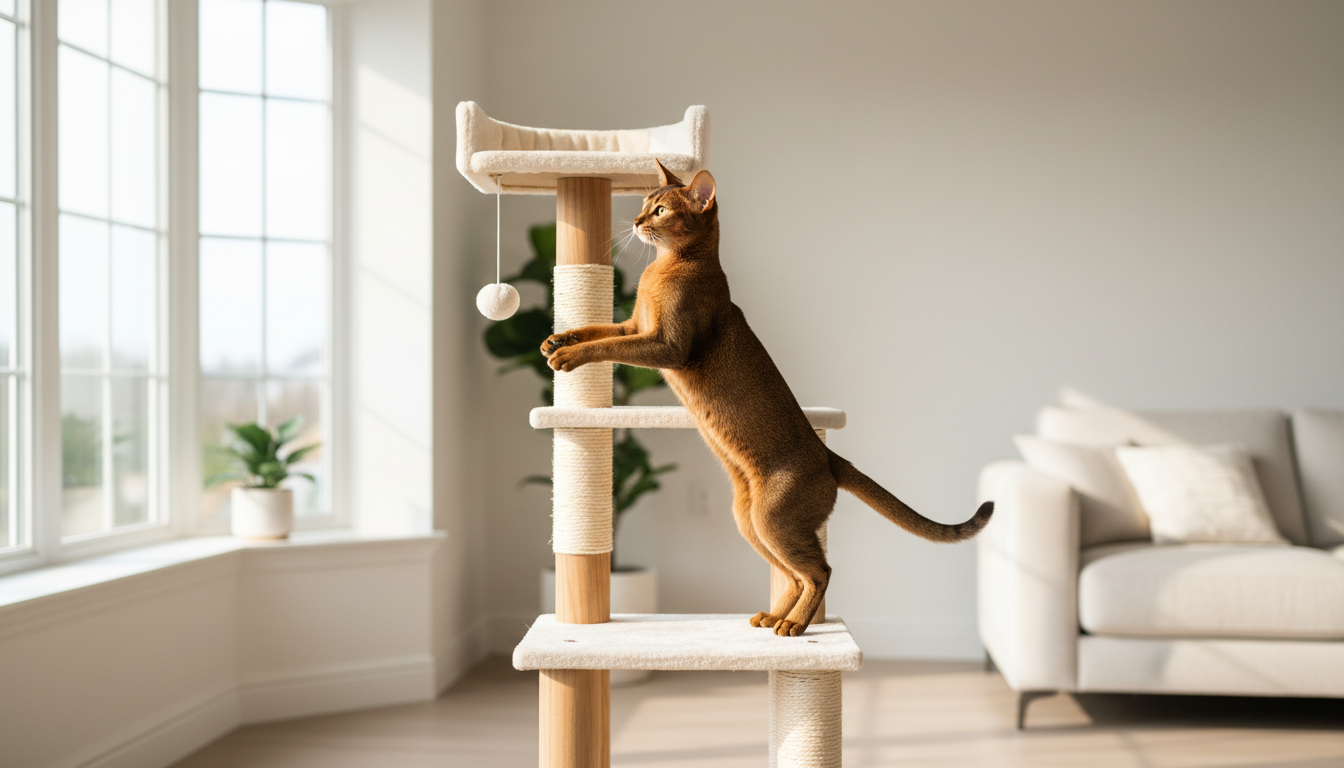
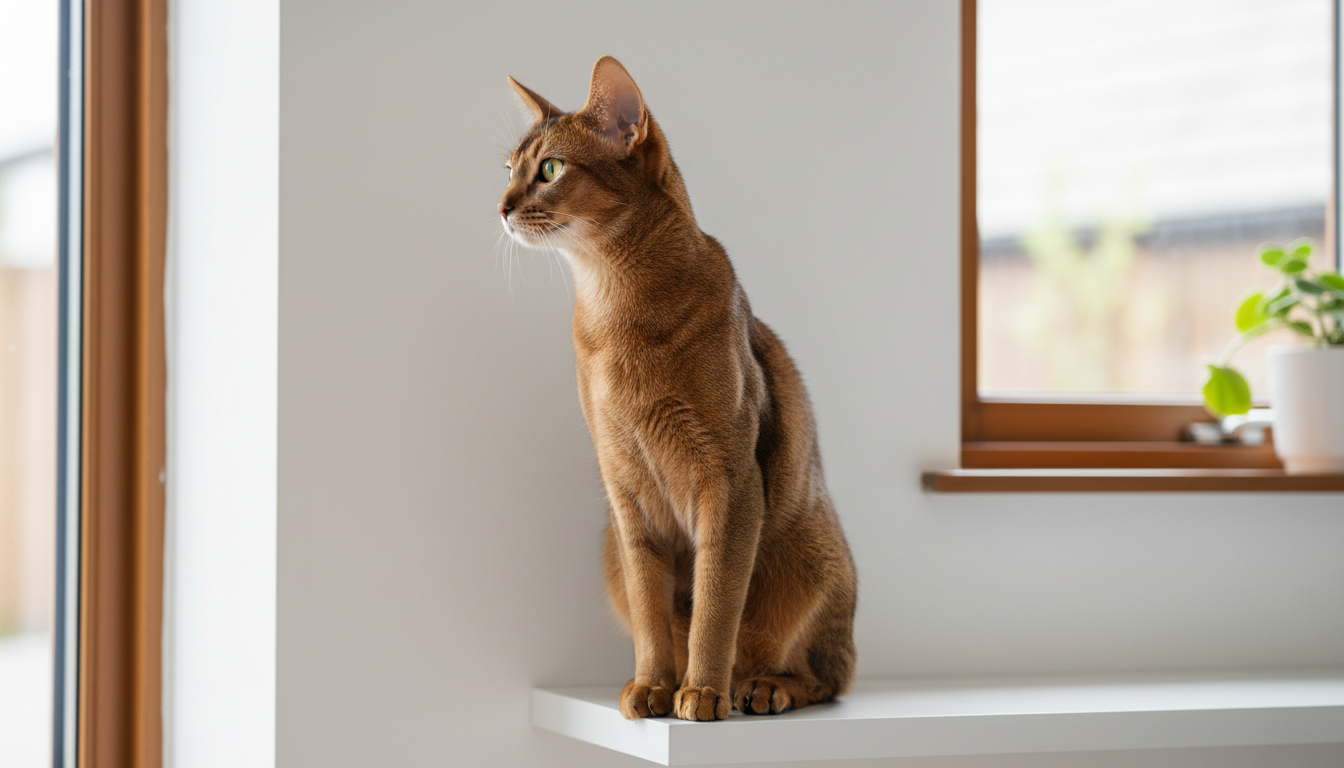
Providing vertical space is one of the most effective things you can do, since Abyssinians have a strong instinct to climb and survey their territory from above. Cat trees, wall shelves, and secure window perches give your cat a legitimate outlet for that climbing drive instead of the top of your refrigerator or bookshelf.
- Tall cat trees or wall-mounted shelving for climbing
- Puzzle feeders that make mealtime mentally engaging
- Rotating toys weekly so novelty stays high
- Supervised access to a secure outdoor enclosure (a “catio”)
- Short daily training sessions using treats and a clicker
Interactive Play Is Not Optional
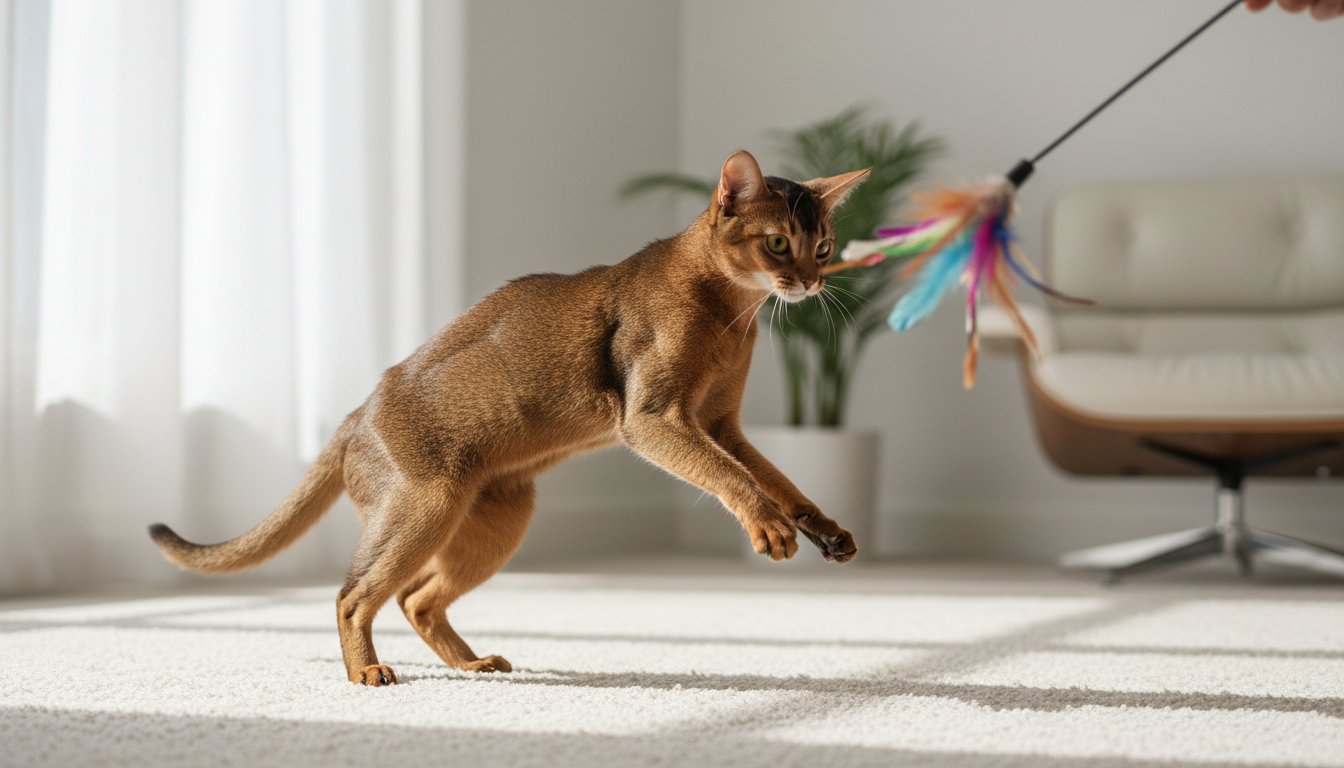
Because Abyssinians were bred with such a strong prey drive and physical capability, passive toys alone usually aren’t enough. Interactive play, where you actively participate with a wand toy or similar object that mimics prey movement, taps into instincts that static toys simply can’t satisfy. Many owners find that two or three short, focused sessions a day work better than one long session, since it mirrors the natural hunt-rest-hunt pattern cats display in the wild.
The goal of interactive play isn’t just to tire your cat out physically, though that matters too. It’s also about giving your cat a sense of accomplishment, letting them stalk, chase, and “catch” something at the end of the session. Ending play with a small treat or meal afterward can round out that hunting sequence in a satisfying way for your cat.
If your schedule makes multiple daily play sessions difficult, consider automated toys that move unpredictably, though these should supplement, not replace, time with you. Your attention and interaction are part of what makes play meaningful for a social, people-oriented breed like the Abyssinian.
Social Needs and Companionship
Abyssinians tend to bond closely with their human family members and often don’t do well being left alone for long stretches without any interaction. Many owners find that their Abyssinian wants to be involved in whatever is happening in the house, whether that’s supervising cooking from the counter or investigating a suitcase the moment it’s opened. This social drive is part of what makes the breed so endearing, but it also means isolation can contribute to stress or destructive behavior.
If you work long hours, think about whether your Abyssinian will have enough engagement during the day. Some owners find that a second cat, ideally also active and playful, helps provide companionship and an outlet for energy when humans aren’t available. This isn’t the right solution for every household, and introductions should always be done carefully, but it’s worth discussing with your vet or a behavior professional if your cat seems lonely or anxious when alone.
Leaving background noise, safe window views of outdoor activity, or food puzzles that take time to work through can also help ease the hours when you’re away.
Managing an Abyssinian in a Small Living Space
Not every Abyssinian owner has a large home with room to spare, and that’s okay, but it does mean you’ll need to be more intentional about using vertical space effectively. In smaller apartments, wall-mounted shelves, window perches, and multi-level cat trees can create a surprising amount of usable territory without taking up floor space. Think of your walls as an extension of your cat’s environment rather than just decoration.
Rotating a smaller number of toys more frequently can also help keep things interesting without requiring more physical space. Hiding treats or small toys around the house for your cat to “hunt” is another low-space way to engage that curious mind, and many Abyssinians take to this kind of scavenger hunt enthusiastically.
- Use wall shelves and cat trees to maximize vertical territory
- Create hiding and hunting games with treats placed around rooms
- Offer a secure window perch with an interesting outdoor view
- Keep a rotating toy basket so novelty doesn’t run dry
When Activity Level Signals Stress, Not Just Personality
It’s important to distinguish between an Abyssinian simply being energetic and an Abyssinian that is stressed or anxious. Stress-driven activity often looks different, more erratic, more vocal, and sometimes paired with other signs like overgrooming, hiding, or changes in litter box habits. If your cat’s energy seems to have an edge of anxiety rather than playful curiosity, something in the environment may need adjusting.
Common stressors include a recent move, a new pet or family member, changes in routine, or not enough safe retreat spaces in the home. Cats, including highly social breeds like the Abyssinian, still need quiet places where they can retreat and feel secure when things feel overwhelming.
If you notice signs that seem more like distress than enthusiasm, it’s worth talking to your vet. They can help rule out medical causes and, if needed, point you toward a veterinary behaviorist who can help address the underlying stress rather than just managing the symptoms.
Exercise Needs Beyond Play Sessions
While interactive play is important, some Abyssinians benefit from additional structured exercise, especially if they’re prone to extra weight gain as they age or if indoor space is limited. Harness training is becoming more popular among active cat breeds, and many Abyssinians, given patient and gradual introduction, take well to supervised leash walks or secure outdoor time.
This isn’t right for every cat or every owner, and it should only be attempted with a properly fitted harness and in safe, controlled environments. But for cats that seem to crave more physical outlet than indoor play alone can provide, it’s worth exploring as one option among several.
Swimming or interest in water play is another outlet some Abyssinians enjoy, given their breed’s documented fascination with moving water. A shallow water dish with a fountain feature, supervised bath-time play, or even puzzle toys involving water can tap into this interest safely.
Diet and Activity: What to Keep in Mind
High activity levels mean many Abyssinians burn through calories at a faster rate than more sedentary breeds, but that doesn’t mean every Abyssinian can eat without limits. Body condition still needs to be monitored regularly, since individual metabolism varies and activity can decrease with age or health changes. Your vet can help you determine an appropriate feeding plan based on your specific cat’s weight, age, and activity level rather than assumptions based on the breed alone.
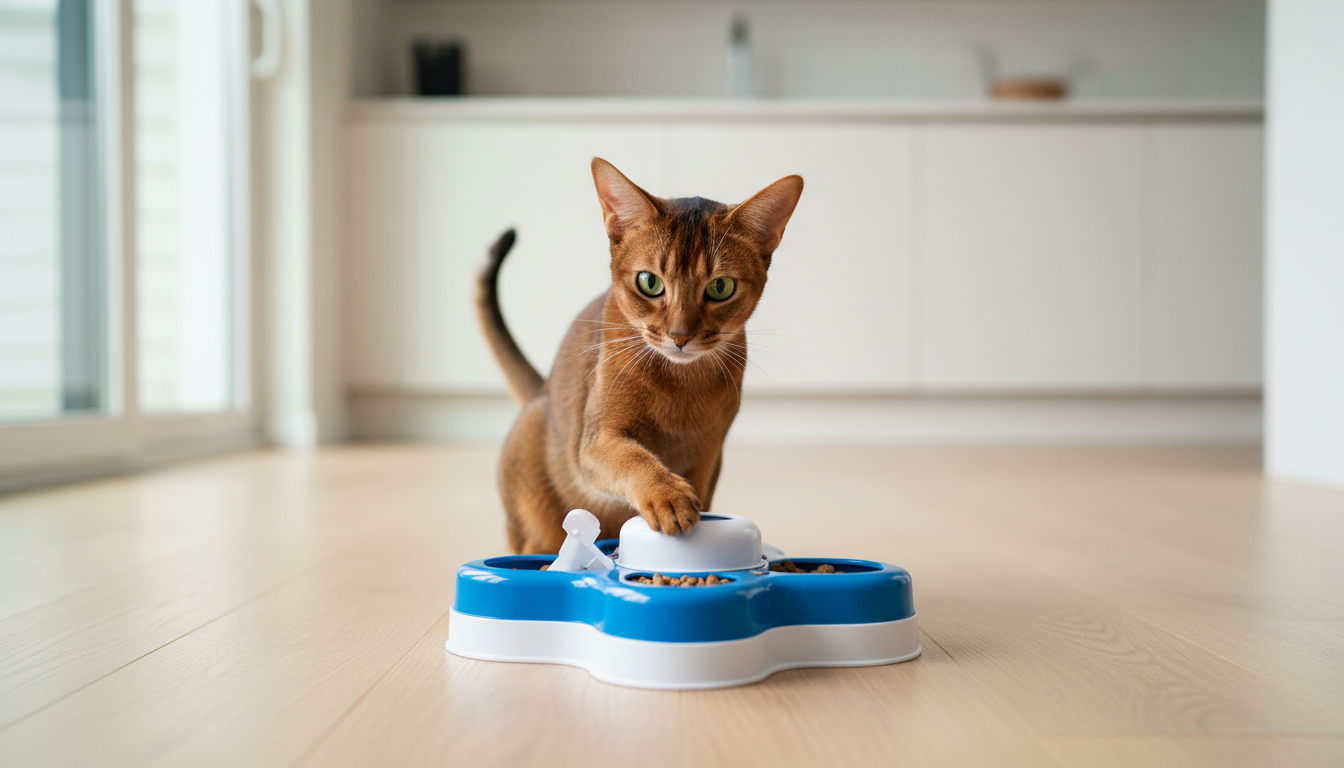
Using puzzle feeders or food-dispensing toys is a great way to combine mental stimulation with mealtime, slowing down eating while also requiring some problem-solving. This can be particularly useful for cats that eat quickly or seem bored during normal feeding routines.
Any sudden changes in appetite, whether increased or decreased, alongside shifts in activity level deserve a vet visit rather than assumptions about diet alone. Changes like these can sometimes indicate a medical issue that needs attention rather than a simple feeding adjustment.
Kittenhood: Setting the Stage Early
If you’re bringing home an Abyssinian kitten, the habits you establish early will shape behavior for years to come. Kittens of this breed tend to be even more relentlessly active than adults, and early enrichment, consistent play routines, and safe exploration opportunities help channel that energy constructively from the start. Kitten-proofing your home matters more with an Abyssinian than with many other breeds, since their curiosity and climbing ability mean few areas are truly off-limits without intervention.
Early socialization to handling, other pets, and various environments also helps set a confident, well-adjusted temperament as your kitten matures. Many behavior patterns, good and bad, become more entrenched with age, so investing time in the kitten stage pays off for years afterward.
Regular veterinary checkups during kittenhood also give you a chance to discuss activity level, growth, and any early behavior questions with a professional who knows your cat’s specific health history.

Aging and Changes in Activity Level
As Abyssinians enter their senior years, you may notice a gradual decrease in the relentless energy that defined their younger life. This is normal to some degree, but any sudden or dramatic drop in activity should prompt a vet visit rather than being written off as simple aging. Arthritis, dental pain, and other age-related conditions can all cause a previously active cat to slow down in ways that aren’t just about getting older.
Keeping some form of gentle enrichment available even as your cat ages helps maintain quality of life and mental engagement. Lower cat trees with easier access, softer bedding near favorite perches, and shorter but still regular play sessions can help an older Abyssinian stay engaged without physical strain.
Your vet can help you adjust enrichment and exercise expectations appropriately as your cat ages, ensuring comfort remains the priority while still honoring your cat’s naturally curious spirit.
Common Mistakes Owners Make With This Breed
One of the most common mistakes is underestimating just how much stimulation an Abyssinian needs compared to other breeds, leading to a mismatch between expectations and reality. Owners sometimes assume that a single toy or occasional play session will be enough, only to find their cat developing destructive habits out of sheer boredom.
Another common issue is punishing high-energy behaviors without addressing the root cause. Scolding a cat for climbing or knocking things over doesn’t resolve the underlying need for stimulation, it often just adds stress on top of an unmet need. Redirecting that energy toward appropriate outlets tends to work far better than discipline alone.
- Assuming one toy or scratching post is sufficient long-term
- Leaving the cat alone for long hours without any enrichment
- Punishing natural climbing or play behavior instead of redirecting it
- Ignoring sudden changes in energy level as “just personality”
- Skipping regular vet visits because the cat seems healthy and active
When to Call Your Vet
While high energy is part of the Abyssinian’s normal character, certain signs warrant a conversation with your veterinarian rather than assumptions about breed temperament. Sudden changes in activity level, whether a spike in restlessness or an unexpected drop in energy, should always be mentioned at your next visit or sooner if accompanied by other symptoms.
Changes in appetite, weight, thirst, litter box habits, or grooming behavior alongside activity shifts are particularly important to flag, since these combinations can sometimes point to underlying medical conditions. Your vet can run appropriate tests to rule out issues and help you understand whether what you’re seeing is simply this breed being itself or something that needs further attention.
Never hesitate to reach out to your vet with concerns, even if you’re not sure whether something is “serious enough.” They would much rather reassure you that everything is normal than have you wait on something that needed earlier care.
Building a Life That Fits This Breed
Living well with an Abyssinian means building your home and routine around their need for movement, exploration, and mental challenge rather than expecting them to adapt to a more sedentary lifestyle. This might mean investing in more vertical furniture than you originally planned, carving out dedicated play time daily, or rethinking which rooms and cabinets need to be off-limits.
Many owners find that once they embrace rather than fight the breed’s natural energy, the relationship becomes much more rewarding. The same curiosity and drive that can feel exhausting at first often becomes one of the most delightful parts of sharing your life with an Abyssinian.
With the right environment, consistent enrichment, and attentive veterinary care, most Abyssinians thrive as engaged, happy companions well into their senior years. Understanding and respecting their activity level isn’t just about managing behavior, it’s about giving this remarkable breed the life they’re naturally built for.
This article is for general education and is not a substitute for care from your own veterinarian. Learn about The Pet Vet and our editorial policy.