
Norwegian Forest Cat cold weather tolerance is one of the things that makes this breed stand out from other cats. Bred for harsh Scandinavian winters, these cats carry a thick double coat and a sturdy build that lets them handle chilly temperatures most cats would avoid. But being cold-hardy isn’t the same as being cold-proof, and there are still situations where even a Norwegian Forest Cat needs your help staying safe and comfortable.
Table of Contents
- Why This Breed Developed Such Strong Cold Tolerance
- Understanding the Double Coat
- Outdoor Access and Realistic Limits
- Signs Your Cat Is Actually Too Cold
- Hypothermia Risk Still Exists
- Indoor Temperature Considerations
- Joint Health and Cold Weather
- Grooming Routines Through the Seasons
- Water and Hydration in Cold Months
- Exercise and Activity Levels in Winter
- Kittens, Seniors, and Cats with Health Conditions
- When Outdoor Access Isn’t Appropriate
- Diet Adjustments for Colder Months
- Signs It’s Time to Call the Vet
- Helping Your Norwegian Forest Cat Thrive All Winter
Why This Breed Developed Such Strong Cold Tolerance
Norwegian Forest Cats trace their roots back to the forests and farms of Norway, where survival depended on withstanding long, harsh winters with limited shelter. Over generations, nature favored cats with dense fur, strong bodies, and the instincts to seek out safe places during storms. This natural selection process, rather than deliberate breeding for showmanship, is what gave the breed its signature hardiness.
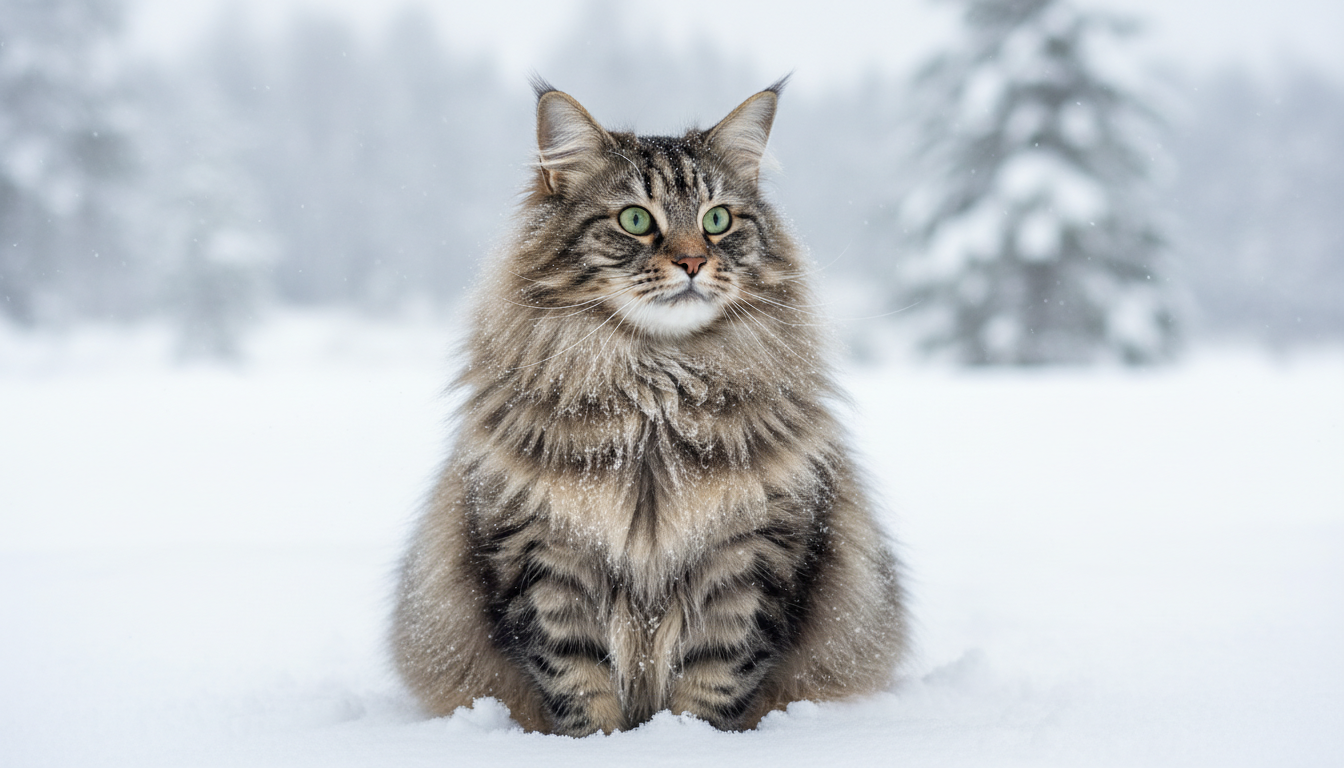
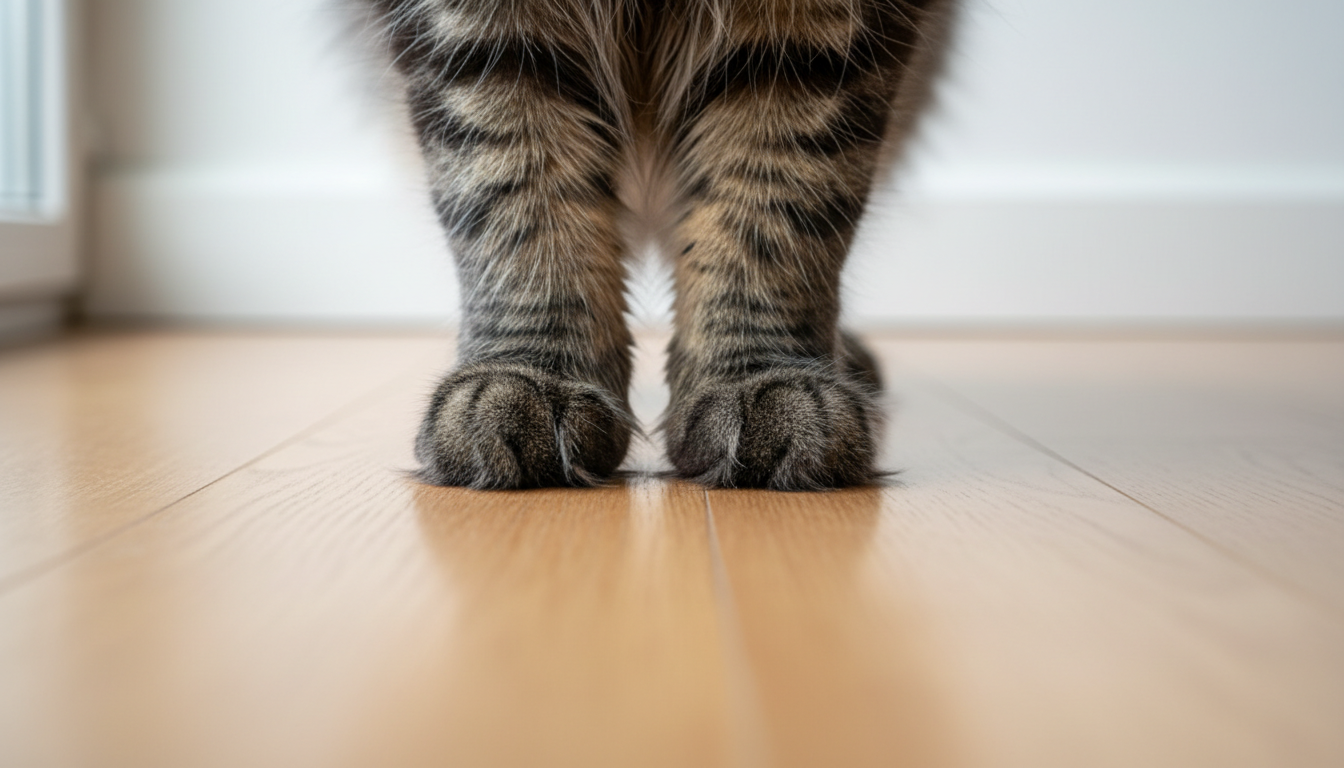
Their coat is the most obvious adaptation. It consists of a water-resistant top layer and a thick, wooly undercoat that traps body heat close to the skin. Combined with a muscular frame and tufted paws that act almost like built-in snowshoes, Norwegian Forest Cats are physically equipped to handle conditions that would leave a short-haired breed shivering and stressed.
Even indoor Norwegian Forest Cats often retain these traits. You may notice your cat seems perfectly content lounging near a drafty window or stretched out on a cool tile floor in winter when other cats would be hunting for the warmest spot in the house. This is simply their biology at work, not a sign that something is wrong.
Understanding the Double Coat
The double coat is central to this breed’s identity and its relationship with temperature. The undercoat thickens noticeably in colder months and sheds out significantly as the weather warms, a seasonal cycle sometimes called “blowing coat.” This natural insulation layer is what allows the cat to regulate body heat so effectively.
Because the coat does so much work, keeping it healthy matters more for this breed than for many others. Mats and tangles can disrupt the coat’s ability to trap air and insulate properly, which may reduce the cat’s natural cold tolerance over time. Regular brushing, especially during seasonal shedding periods, helps maintain the integrity of both coat layers.
- Brush several times a week during heavy shedding seasons
- Pay close attention to the belly, armpits, and behind the ears where mats form easily
- Avoid shaving the coat except when medically necessary, since it can take a long time to regrow properly
Outdoor Access and Realistic Limits
Many Norwegian Forest Cat owners assume their pet can handle unlimited time outdoors in winter simply because of the breed’s reputation. While these cats do tolerate cold better than most, they are still domestic animals that rely on you for shelter, food, and safety. Extended exposure to freezing temperatures, wind chill, wet conditions, or ice can still pose real risks regardless of coat thickness.
If your cat does spend time outdoors, it helps to provide a dry, insulated shelter option and to limit time outside during extreme weather events like blizzards or ice storms. Wet fur loses much of its insulating ability, so a cat caught in freezing rain or wet snow can get cold far faster than one in dry conditions. Watching your cat’s behavior, rather than relying solely on breed reputation, is the best way to judge how much outdoor time is appropriate on any given day.
- Provide a dry, wind-protected shelter if outdoor access is allowed
- Bring your cat inside during storms, heavy wind, or freezing rain
- Check paws for ice buildup or salt residue after outdoor time
Signs Your Cat Is Actually Too Cold
Even a breed built for cold climates has limits, and it helps to know what discomfort or danger looks like. Shivering is one of the more obvious signs, though cats can also become unusually quiet, seek out heat sources more aggressively than normal, or curl into a tighter ball than usual to conserve warmth. Cold ears, paws, or tail tips can be another clue, especially if your cat seems reluctant to let you touch those areas.
More concerning signs include lethargy, weakness, confusion, or a reluctance to move. These can indicate that body temperature has dropped to a level where the cat is struggling to compensate on its own. If you notice these symptoms after outdoor exposure or in a very cold indoor environment, you should see a vet right away rather than waiting to see if your cat warms up on its own.
- Shivering or tightly curled posture
- Cold ears, paws, or tail that feel noticeably chilled to the touch
- Lethargy, weakness, or unusual quietness after cold exposure
Hypothermia Risk Still Exists
It’s a common misconception that a cold-hardy breed can’t develop hypothermia, but this simply isn’t true. Hypothermia occurs when body temperature drops below a safe range, and it can happen to any cat exposed to extreme cold for long enough, particularly if the cat is wet, elderly, very young, or has an underlying health condition. A thick coat buys time and comfort, but it does not make a cat immune to the physical realities of extreme cold.
Kittens and senior Norwegian Forest Cats are especially vulnerable, since their ability to regulate body temperature isn’t as efficient as a healthy adult cat’s. Cats with certain medical conditions, including thyroid disorders or cardiovascular issues, may also have a harder time maintaining normal body temperature in cold environments. If you suspect your cat is hypothermic, this is an emergency, and you should contact a vet or emergency animal hospital immediately.
Indoor Temperature Considerations
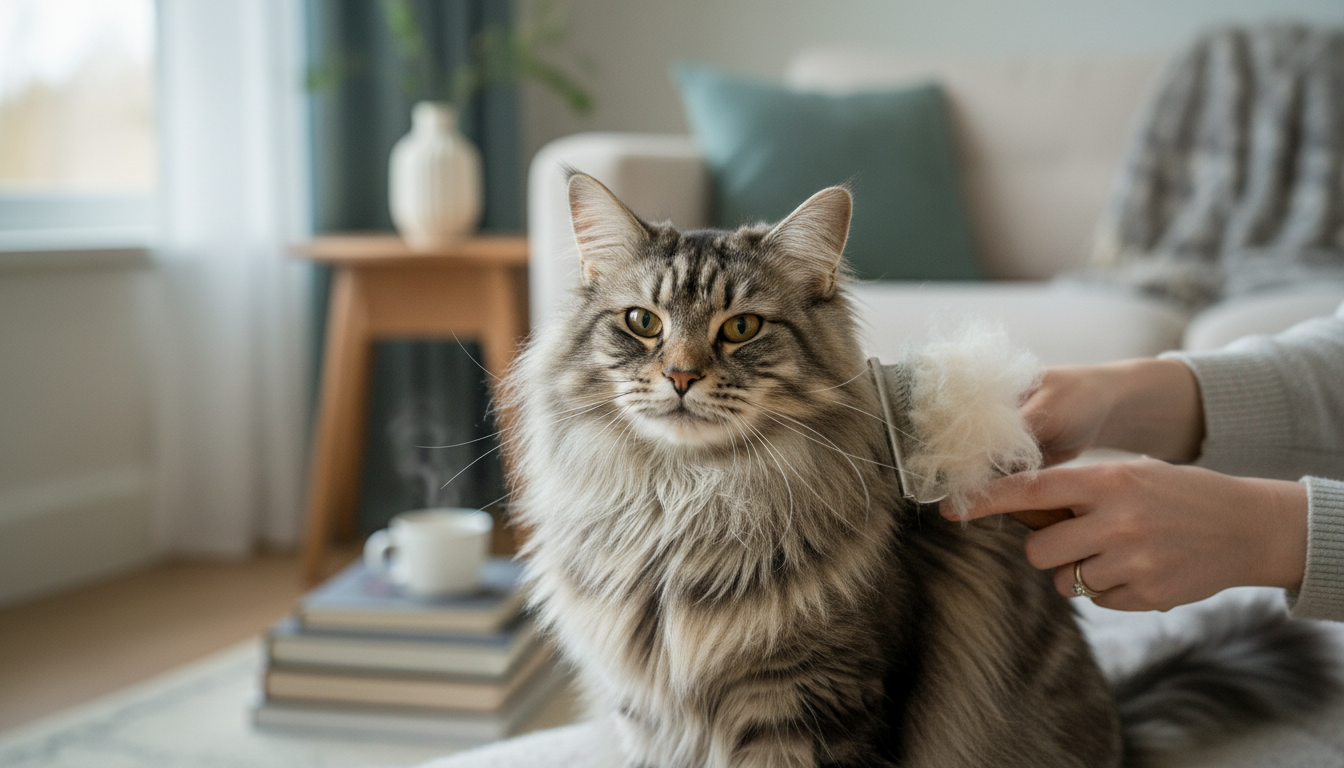
Just because your Norwegian Forest Cat tolerates cool indoor temperatures well doesn’t mean you need to keep your home chilly for their comfort. Most cats, including this breed, do fine in typical home heating ranges, and there’s no health benefit to keeping your house uncomfortably cold on their behalf. What matters more is making sure your cat has choices, including both warm, cozy spots and cooler areas, so they can self-regulate based on what feels right to them.
Providing a variety of resting spots at different temperatures and heights allows your cat to naturally seek out whatever feels most comfortable throughout the day. Heated cat beds or blankets can be a nice addition during particularly cold snaps, especially for senior cats or those with joint stiffness that worsens in cold weather.
Joint Health and Cold Weather
Cold weather can sometimes aggravate joint stiffness, particularly in older cats or those with early arthritis. While Norwegian Forest Cats are a sturdy, athletic breed, they are not immune to joint issues as they age, and some owners notice their cat seems a bit stiffer or less willing to jump during the coldest months. This doesn’t necessarily mean something is seriously wrong, but it’s worth mentioning to your vet, especially if the stiffness seems to be getting worse over time or is affecting your cat’s mobility.
Keeping your cat at a healthy weight year-round can help reduce strain on joints, and providing soft, supportive bedding in a warm location may ease some of that cold-weather discomfort. If you notice limping, reluctance to jump onto furniture, or obvious difficulty moving, it’s worth scheduling a vet visit to rule out underlying joint disease rather than assuming it’s simply a cold-weather quirk.
Grooming Routines Through the Seasons
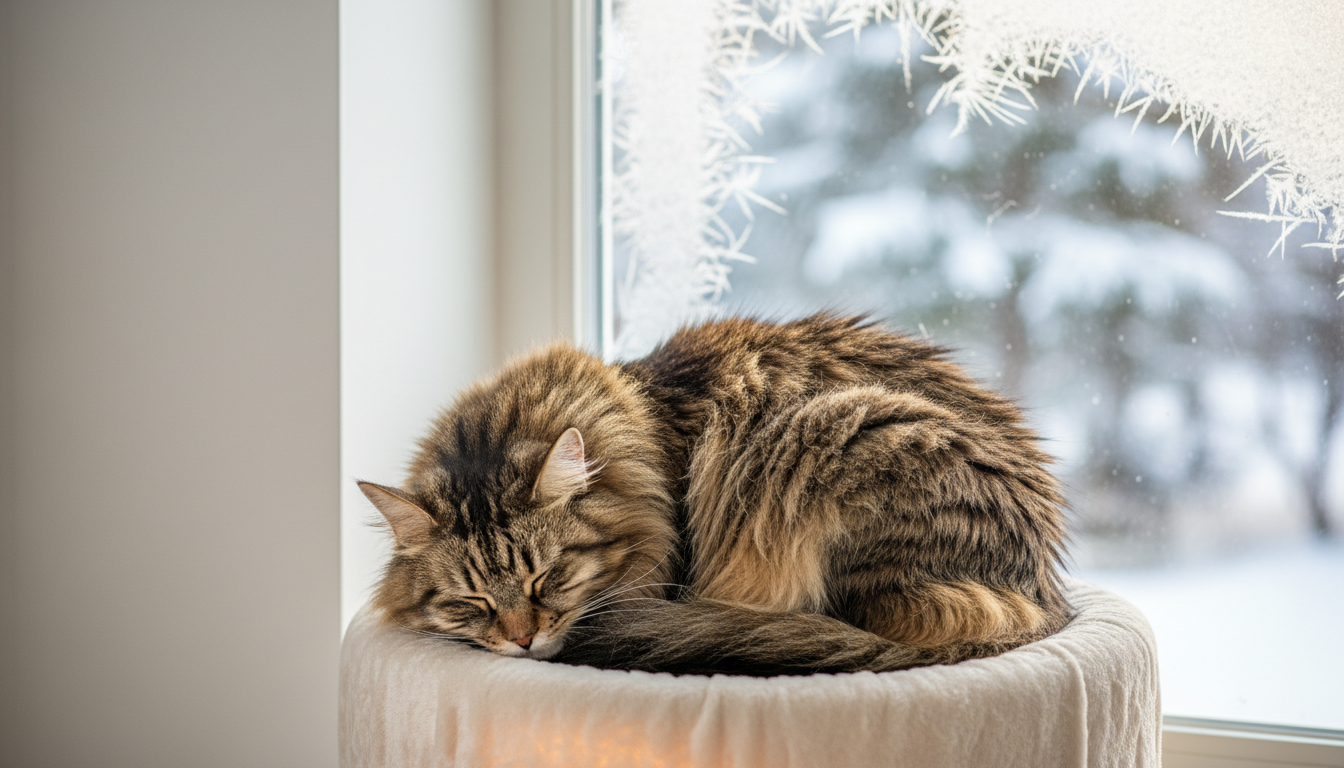
Because the Norwegian Forest Cat’s coat changes so much with the seasons, your grooming routine should flex along with it. During the fall and spring shedding periods, when the undercoat is actively changing, more frequent brushing helps prevent mats and reduces the amount of loose fur your cat ingests while self-grooming. In the depths of winter, when the coat is at its thickest and most stable, you can often ease back on brushing frequency somewhat, though regular maintenance is still important.
Paying attention to areas prone to matting, like behind the legs and under the chin, can prevent small tangles from becoming painful mats that need professional removal. If you notice severe matting that you can’t manage with regular brushing, a trip to a groomer experienced with long-haired breeds, or a conversation with your vet, is a better option than attempting to cut mats out yourself, since this can easily lead to accidental skin injury.
- Increase brushing frequency during seasonal coat changes
- Check problem areas like behind the ears, under the arms, and around the tail base
- Seek professional help for severe mats rather than cutting them out at home
Water and Hydration in Cold Months
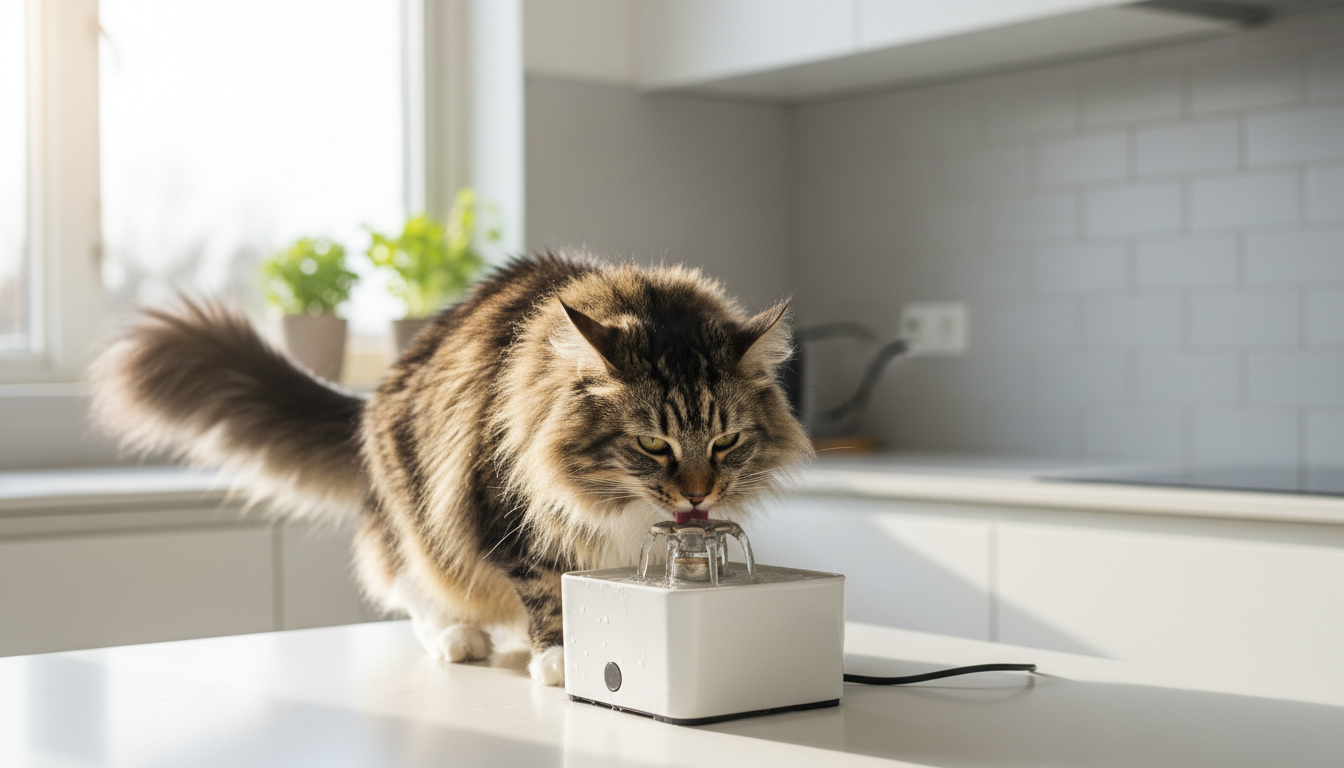
It’s easy to assume hydration is mostly a warm-weather concern, but cats can actually drink less water during cold months, especially if they’re less active or spending more time curled up resting. Reduced water intake can contribute to urinary issues over time, which is a concern for any cat breed, including Norwegian Forest Cats. Keeping fresh water available and encouraging your cat to drink, whether through a fountain, multiple water stations, or wet food in the diet, remains important no matter the season.
If you notice your cat drinking unusually little, or conversely drinking excessively, either change is worth mentioning to your vet. Changes in thirst can sometimes point to underlying health conditions unrelated to the weather, and it’s better to have these checked out rather than assuming it’s just a seasonal shift in habits.
Exercise and Activity Levels in Winter
Cold weather and shorter days can sometimes lead to reduced activity levels, both because outdoor access may be more limited and because cats, like many of us, may simply feel less inclined to be active when it’s cold and dark outside. For an athletic, playful breed like the Norwegian Forest Cat, a drop in activity isn’t ideal, since regular movement supports healthy weight, joint function, and mental stimulation.
Making an effort to keep indoor play sessions consistent through the winter months can help offset reduced outdoor activity. Interactive toys, climbing structures, and short daily play sessions can keep your cat engaged and moving even when outdoor time is limited by weather. If you notice a significant, prolonged drop in activity or appetite, though, it’s worth mentioning to your vet rather than assuming it’s purely seasonal.
- Keep daily play sessions consistent even when outdoor access is limited
- Provide climbing or perching opportunities to maintain muscle tone
- Watch for prolonged lethargy that goes beyond typical winter mellowness
Kittens, Seniors, and Cats with Health Conditions
While adult Norwegian Forest Cats in good health tend to handle cold well, this tolerance isn’t universal across every life stage or health status. Kittens haven’t yet developed the full coat or body mass that helps regulate temperature, and they can get cold more easily than you might expect from the breed’s reputation. Senior cats may have a harder time maintaining body heat due to decreased muscle mass, slower metabolism, or underlying health conditions that become more common with age.
Cats being treated for chronic illnesses, recovering from surgery, or managing conditions like kidney disease or heart disease may also have reduced ability to regulate temperature normally. If you have a kitten, senior cat, or a cat with a known health condition, it’s worth taking extra precautions during cold weather and discussing specific recommendations with your vet, rather than assuming breed traits apply equally at every stage of life.
When Outdoor Access Isn’t Appropriate
Even though Norwegian Forest Cats are often associated with outdoor living in their country of origin, this doesn’t mean unsupervised outdoor access is the right choice for every cat today. Outdoor cats face risks beyond cold weather, including traffic, predators, parasites, and disease exposure, regardless of how well-insulated their coat is. Many vets recommend supervised outdoor time, secure outdoor enclosures, or leash training as safer alternatives to free-roaming access, even for cold-hardy breeds.
If you’re considering outdoor access for your cat, it’s worth having a conversation with your vet about what’s realistic and safe given your specific climate, neighborhood, and your cat’s individual health status. A cat’s genetic cold tolerance doesn’t eliminate the other outdoor risks that have nothing to do with temperature.
Diet Adjustments for Colder Months
Some owners notice their Norwegian Forest Cat’s appetite shifts slightly with the seasons, sometimes eating a bit more during colder months. This can be a normal response related to maintaining body heat and energy levels, particularly if the cat spends any time outdoors or in a cooler environment. However, any significant or sudden change in appetite, whether an increase or decrease, is worth discussing with your vet rather than assuming it’s purely seasonal.
Maintaining a balanced, appropriate diet year-round supports healthy coat growth, which in turn supports the insulating properties that help this breed handle cold weather in the first place. Your vet can help you determine whether your cat’s current diet and body condition are appropriate, especially if you have any concerns about weight changes through the seasons.
Signs It’s Time to Call the Vet
While a lot of cold-weather care for Norwegian Forest Cats comes down to common sense and attentive observation, there are specific signs that should prompt a call to your vet rather than a wait-and-see approach. Trust your instincts here, since you know your cat’s normal behavior better than anyone else, and any significant deviation from that baseline is worth having checked out.
Getting prompt veterinary attention when something seems off is always the safer choice, even if it turns out to be nothing serious. Cold weather complications can progress quickly in vulnerable cats, and early intervention tends to lead to better outcomes.
- Persistent shivering that doesn’t resolve once your cat is warmed up
- Lethargy, weakness, or disorientation after cold exposure
- Cold, pale, or unusually firm-feeling ears, paws, or tail
- Changes in appetite, thirst, or activity that last more than a day or two
- Any signs of frostbite, including discoloration or swelling on ear tips, paws, or tail
Helping Your Norwegian Forest Cat Thrive All Winter
Understanding your Norwegian Forest Cat’s natural cold tolerance can help you appreciate why they seem so at home in chilly weather, but it shouldn’t replace basic seasonal awareness and care. This breed’s thick coat and sturdy build are real advantages, not an excuse to skip the thoughtful attention any cat deserves during winter months. Balancing respect for their natural hardiness with sensible precautions is the best way to keep your cat comfortable and healthy no matter how cold it gets outside.
If you’re ever unsure whether your cat’s behavior reflects normal cold-weather adaptation or a sign of something more concerning, your vet is always the best resource for guidance specific to your cat’s age, health history, and living situation.
This article is for general education and is not a substitute for care from your own veterinarian. Learn about The Pet Vet and our editorial policy.