
Abyssinian cat shedding is often overlooked because this breed’s short, ticked coat seems low-maintenance compared to long-haired cats. But that reputation can lead owners to skip grooming altogether, which sometimes causes skin irritation, excess loose hair around the home, or missed early signs of other problems. This guide walks through what’s normal for an Abyssinian’s coat, what warrants a vet visit, and how to keep your cat comfortable through every season.
Table of Contents
- Understanding the Abyssinian’s Unique Coat
- Why Abyssinians Still Need a Grooming Routine
- What Counts as Normal Shedding
- Signs That Shedding Has Become a Problem
- Common Underlying Causes of Excess Shedding
- The Role of Diet in Coat Health
- Bathing: Is It Necessary?
- Managing Hairballs in a Short-Haired Breed
- Seasonal Coat Changes to Expect
- Grooming Tools That Work Well for Short Coats
- When Stress Affects Shedding and Grooming Habits
- Keeping Your Home Comfortable During Shedding Season
- When to Schedule a Vet Visit
- Bringing It All Together
Understanding the Abyssinian’s Unique Coat
The Abyssinian is known for its short, dense coat with a distinctive ticked pattern, where each individual hair carries two or three bands of color. This agouti pattern gives the breed its warm, wild-looking appearance, but it also means the coat behaves a little differently than a solid-colored cat’s fur. Because the hair shafts are fine and short, shedding can be less visible on furniture and clothing than it would be with a longhaired breed, which sometimes gives owners a false sense that grooming isn’t necessary at all.
Despite the low visibility of loose hair, Abyssinians do shed year-round with heavier shedding periods in spring and fall as daylight changes trigger natural coat cycling. Skipping brushing because the shedding seems minimal can still lead to a buildup of dead hair close to the skin, which may contribute to dullness, mild irritation, or an increase in hairballs during heavier shedding windows. Regular, gentle grooming keeps the coat looking vibrant and gives you a chance to spot skin issues early.
- Ticked coat pattern means each hair has multiple color bands
- Shedding is less visible than in longhaired breeds but still occurs
- Spring and fall often bring heavier seasonal shedding
- Regular brushing helps distribute natural skin oils
Why Abyssinians Still Need a Grooming Routine
Even though Abyssinians are often marketed as nearly self-sufficient when it comes to coat care, their active, high-energy lifestyle means they can pick up dirt, dust, and debris quickly, especially if they enjoy climbing, exploring outdoor enclosures, or investigating every corner of the house. A short coat hides grime less effectively than people assume, and without the occasional brushing, oils and debris can accumulate at the skin’s surface.
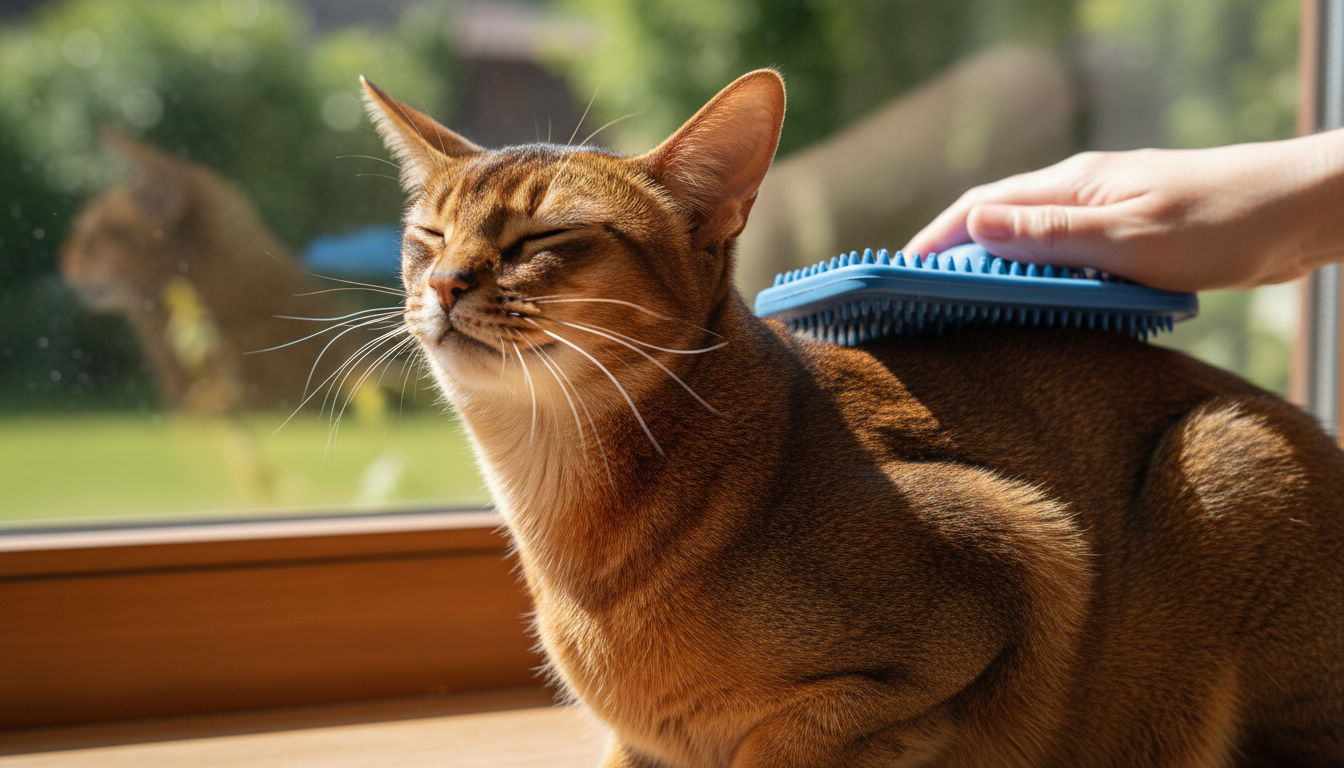
A simple weekly brushing session, increased to two or three times a week during heavier shedding seasons, is usually enough to keep an Abyssinian’s coat in good shape. Brushing not only removes loose hair before it ends up around the house but also helps you become familiar with your cat’s normal skin and coat condition, which makes it much easier to notice when something changes. Many owners find that their Abyssinian actually enjoys the bonding time that comes with a gentle brushing routine, since this breed tends to be social and interactive.
- Weekly brushing is typically sufficient for most Abyssinians
- Increase frequency during spring and fall shedding seasons
- Use a soft rubber brush or grooming mitt for short coats
- Grooming sessions double as a chance to check skin condition
What Counts as Normal Shedding
Normal shedding in an Abyssinian looks like a light, steady loss of fine hairs, often more noticeable on dark furniture or clothing than you’d expect given how short the coat is. You might notice slightly more hair in the brush during seasonal transitions, and that’s generally not a cause for concern. The skin underneath should look healthy, without redness, flaking, or bald patches.
It helps to get a baseline sense of what’s typical for your own cat, since shedding can vary based on diet, indoor temperature, and overall health. Cats kept primarily indoors with consistent artificial lighting sometimes shed more evenly throughout the year rather than having sharply defined seasonal peaks, which is also considered within the range of normal.
Signs That Shedding Has Become a Problem
While mild, consistent shedding is expected, certain changes suggest something beyond normal coat cycling. Patchy hair loss, especially in a symmetrical pattern or concentrated in one area, can point to an underlying issue rather than simple seasonal shedding. Excessive scratching, chewing at the fur, or visible irritation under the coat are also signs that it’s time to look closer.
If you notice your Abyssinian shedding far more than usual, developing bald spots, or showing signs of discomfort when you touch certain areas of their body, it’s best to schedule a veterinary visit rather than assume it will resolve on its own. A vet can help determine whether the cause is related to allergies, parasites, stress, or another underlying condition that needs treatment.
- Patchy or symmetrical hair loss
- Excessive scratching or chewing at the coat
- Flaky, red, or irritated skin
- Shedding that seems sudden or dramatically increased
Common Underlying Causes of Excess Shedding
Several things beyond normal seasonal cycling can cause a cat to shed more than usual. Nutritional deficiencies, particularly inadequate essential fatty acids, can affect coat quality and shedding volume. Stress is another common contributor, since cats are sensitive to changes in routine, new pets, moving homes, or shifts in their environment, and this stress can manifest as increased shedding or over-grooming.
Parasites such as fleas can also trigger excessive shedding and skin irritation, even in indoor cats, since fleas can be brought inside on clothing or other pets. Hormonal imbalances and certain skin conditions may likewise play a role, which is why a vet visit is important if shedding patterns change noticeably. Your vet can run appropriate tests to rule out or confirm these possibilities rather than guessing at home.
- Poor nutrition or inadequate fatty acid intake
- Environmental or emotional stress
- Flea infestation, even in indoor-only cats
- Underlying hormonal or skin conditions
The Role of Diet in Coat Health
Nutrition plays a meaningful role in how healthy your Abyssinian’s coat looks and how much shedding you can expect to see. A diet lacking appropriate protein or essential fatty acids can lead to a dull, brittle coat that sheds more readily. High-quality commercial cat foods formulated for your cat’s life stage typically provide the nutrients needed to support healthy skin and fur.
If you’re considering dietary changes or supplements to support your cat’s coat, it’s worth discussing this with your vet first rather than adding products on your own. Your vet can recommend options suited to your individual cat’s needs and confirm there are no underlying health issues that diet alone won’t resolve.
Bathing: Is It Necessary?
Many Abyssinian owners wonder whether bathing is part of a proper grooming routine, given the short coat. In most cases, regular brushing is enough to keep the coat clean, and bathing isn’t a routine necessity the way it might be for some longhaired breeds. However, if your cat gets into something messy, has a skin condition requiring medicated shampoo, or simply tolerates baths well and enjoys the experience, occasional bathing isn’t harmful when done correctly.
If your vet recommends bathing as part of managing a specific skin issue, be sure to follow their instructions on products and frequency rather than using human shampoos or random pet products, since the wrong choice can worsen irritation.
Managing Hairballs in a Short-Haired Breed
It might seem surprising, but even short-haired cats like the Abyssinian can develop hairballs, particularly during heavier shedding periods when more loose fur is ingested during self-grooming. Occasional hairballs are usually not a major concern, but frequent vomiting, retching without producing a hairball, or signs of lethargy warrant a vet visit, since these can sometimes indicate a blockage or another digestive issue.
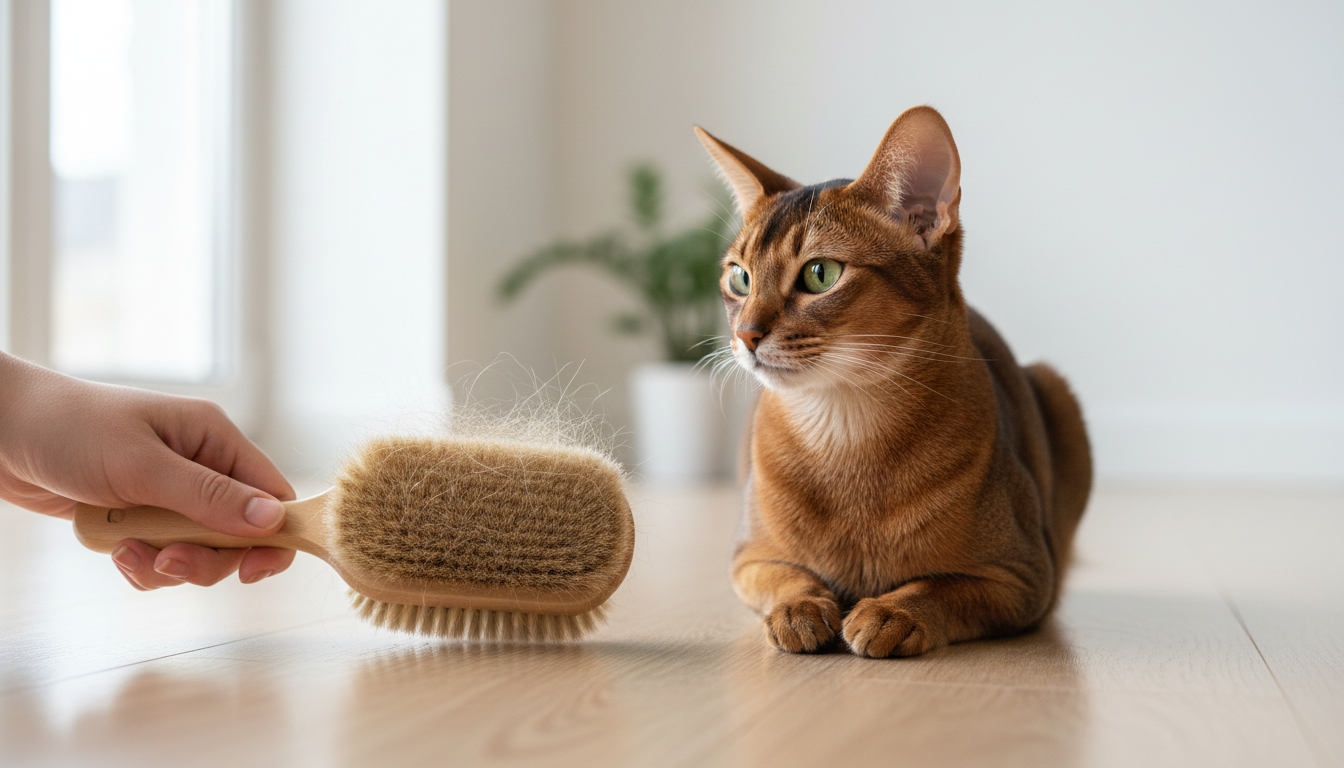
Regular brushing reduces the amount of loose hair your cat swallows during grooming, which in turn can help minimize hairball frequency. Some specially formulated cat foods are designed to support healthy digestion and reduce hairball formation, and your vet can advise whether this type of diet makes sense for your cat.
- Brush regularly to reduce ingested loose hair
- Occasional hairballs are usually not concerning
- Frequent vomiting or retching needs veterinary attention
- Ask your vet about hairball-specific diets if needed
Seasonal Coat Changes to Expect
As daylight hours shift throughout the year, many cats including Abyssinians go through noticeable coat changes. Shedding often increases in spring as cats lose some of their denser winter coat, and again in fall as they prepare for cooler months. Indoor cats exposed mostly to artificial light may show less dramatic seasonal shifts, but some fluctuation is still common.
Staying consistent with your grooming routine throughout these transitions, rather than only brushing when you notice visible hair, helps keep shedding manageable and gives you regular opportunities to check your cat’s skin and coat condition.
Grooming Tools That Work Well for Short Coats
Choosing the right tools makes grooming sessions more effective and more comfortable for your cat. A soft rubber curry brush or grooming mitt tends to work well on the Abyssinian’s short, fine coat, helping to loosen dead hair without pulling or irritating the skin. Fine-toothed metal combs can help catch any remaining loose hairs after an initial brushing pass.
Avoid using tools designed for thick, long coats, as these can be too harsh for the Abyssinian’s finer fur and may cause unnecessary discomfort. If you’re unsure which tools suit your cat best, your vet or a professional groomer familiar with short-haired breeds can offer recommendations.
- Rubber curry brushes work well for short, fine coats
- Grooming mitts offer a gentle, hands-on option
- Fine-toothed combs catch remaining loose hair
- Avoid tools designed for thick or long coats
When Stress Affects Shedding and Grooming Habits
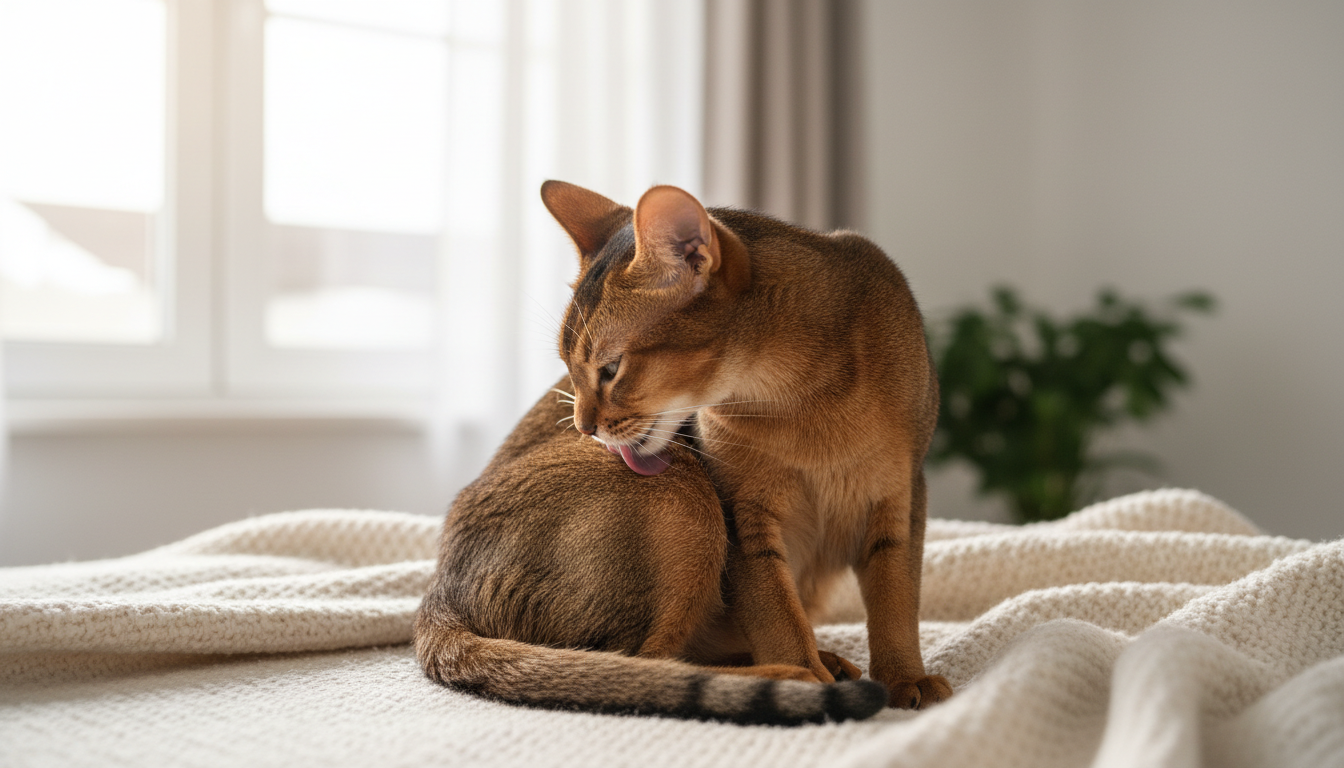
Abyssinians are known for their active, curious, and social temperament, which also means they can be sensitive to changes in their environment. Stressful events such as moving to a new home, introducing a new pet, or even rearranging furniture can sometimes trigger excessive shedding or over-grooming behaviors like licking a particular spot until the fur thins.
If you notice a connection between a recent change in your cat’s environment and a shift in shedding or grooming behavior, it’s worth mentioning to your vet. They can help distinguish between a stress response and a medical issue, and may suggest strategies to help your cat adjust more comfortably.
Keeping Your Home Comfortable During Shedding Season
While Abyssinian shedding is generally lighter than that of longhaired breeds, it can still be noticeable during peak seasons. Regular vacuuming, washable furniture covers, and consistent brushing can help manage loose hair around your home. Keeping up with grooming not only reduces hair in your living space but also supports your cat’s overall skin health.
Some owners find that a dedicated grooming schedule, perhaps tied to a specific day each week, helps keep both the cat and the household more comfortable, especially as shedding increases in spring and fall.
When to Schedule a Vet Visit
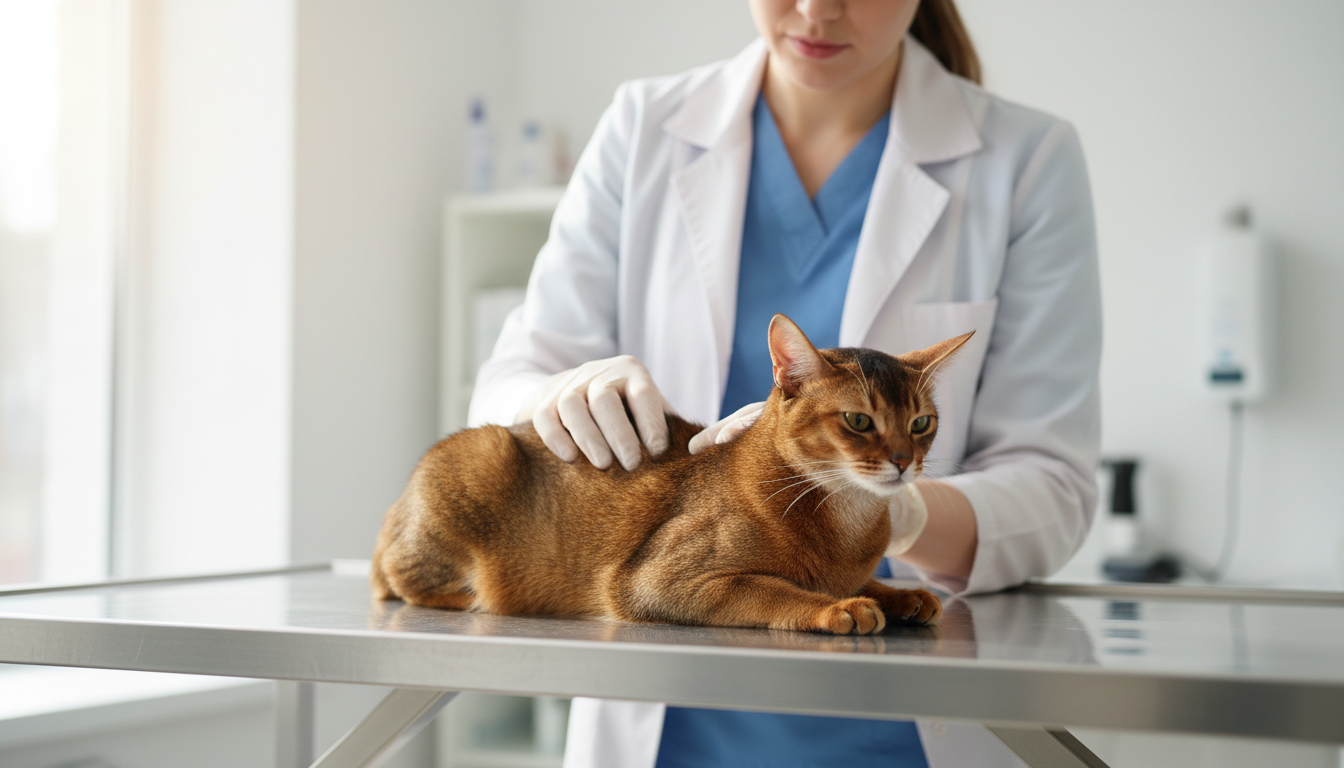
If you notice any of the warning signs mentioned earlier, such as bald patches, persistent scratching, flaky or red skin, or a sudden dramatic increase in shedding, it’s time to schedule a visit with your vet rather than waiting to see if things improve. Early evaluation can help identify whether the cause is something simple like diet or stress, or something that needs more targeted treatment such as a flea infestation, allergy, or hormonal issue.
Your vet may ask about recent changes in your cat’s environment, diet, or routine, and may recommend tests such as a skin scraping or bloodwork depending on what they observe during the exam. Catching issues early generally leads to simpler, more comfortable treatment for your cat.
Bringing It All Together
An Abyssinian’s short, ticked coat may require less intensive grooming than some other breeds, but that doesn’t mean it needs no attention at all. Regular brushing, a good diet, and attentiveness to changes in shedding or skin condition all play a role in keeping your cat comfortable and healthy. Treating grooming as a routine part of care, rather than an afterthought, helps you catch potential problems early and strengthens the bond you share with your cat.
If you’re ever uncertain whether what you’re seeing is normal seasonal shedding or something that needs medical attention, reaching out to your vet is always the safest choice. They know your cat’s history and can offer guidance tailored to your individual pet’s needs.
This article is for general education and is not a substitute for care from your own veterinarian. Learn about The Pet Vet and our editorial policy.