

A Bernese Mountain Dog that rises slowly, avoids steps or changes its gait needs assessment rather than an automatic diagnosis of old age or arthritis. Body size matters for practical support, but it cannot establish the cause of pain. Injury, developmental joint disease and other conditions may need different care.
Describe the movement change
Record onset, affected activities and whether one limb seems worse. Include appetite, sleep, toileting, medicines and a dated weight if available. A short spontaneous video can help show a home task; do not repeatedly make a painful dog climb stairs for footage. Sudden severe lameness, inability to stand, major trauma or neurological weakness warrants prompt direct assessment.
Ask what supports the diagnosis
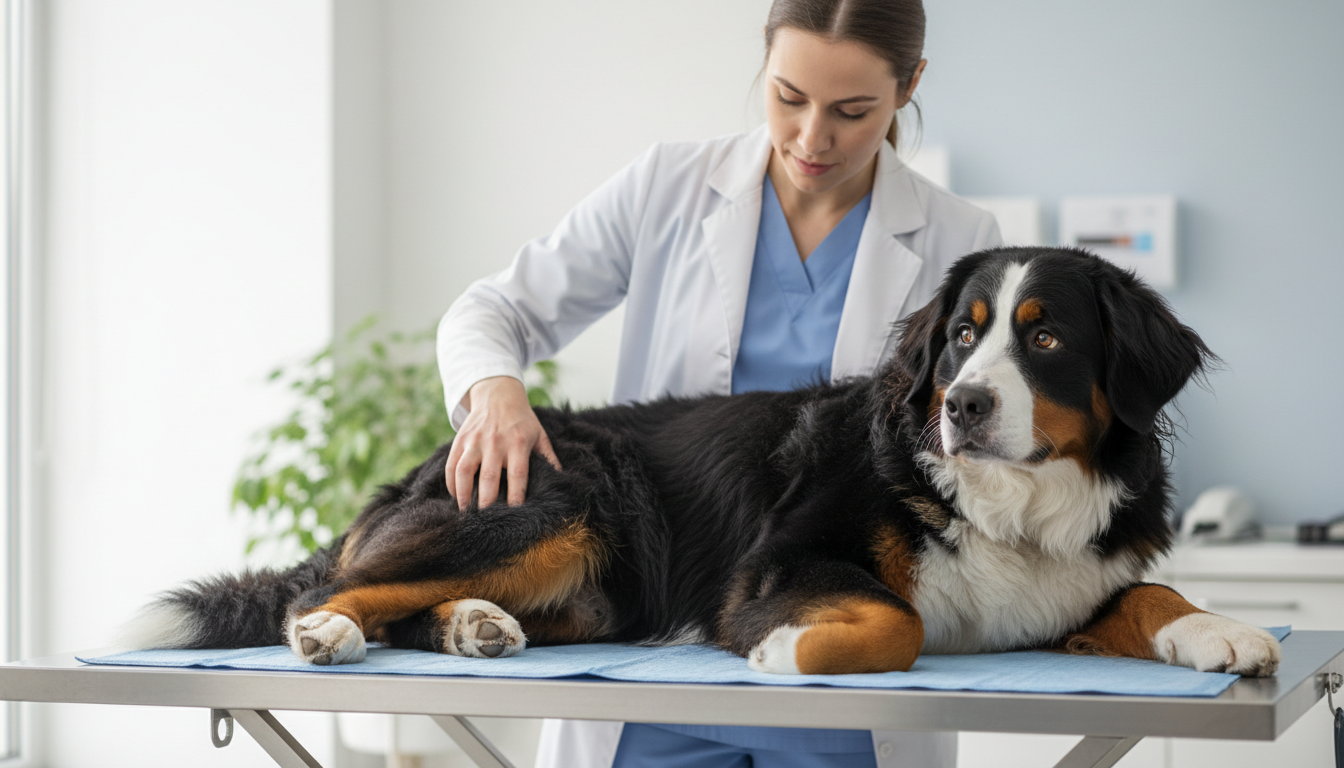
The clinician examines gait, joints and the whole dog and may recommend imaging or other tests. Ask what is confirmed and whether a different cause could explain worsening signs. Imaging findings and observed comfort should be considered together. A previous arthritis diagnosis does not prove every new limp has the same cause.
Combine nutrition, movement and home support
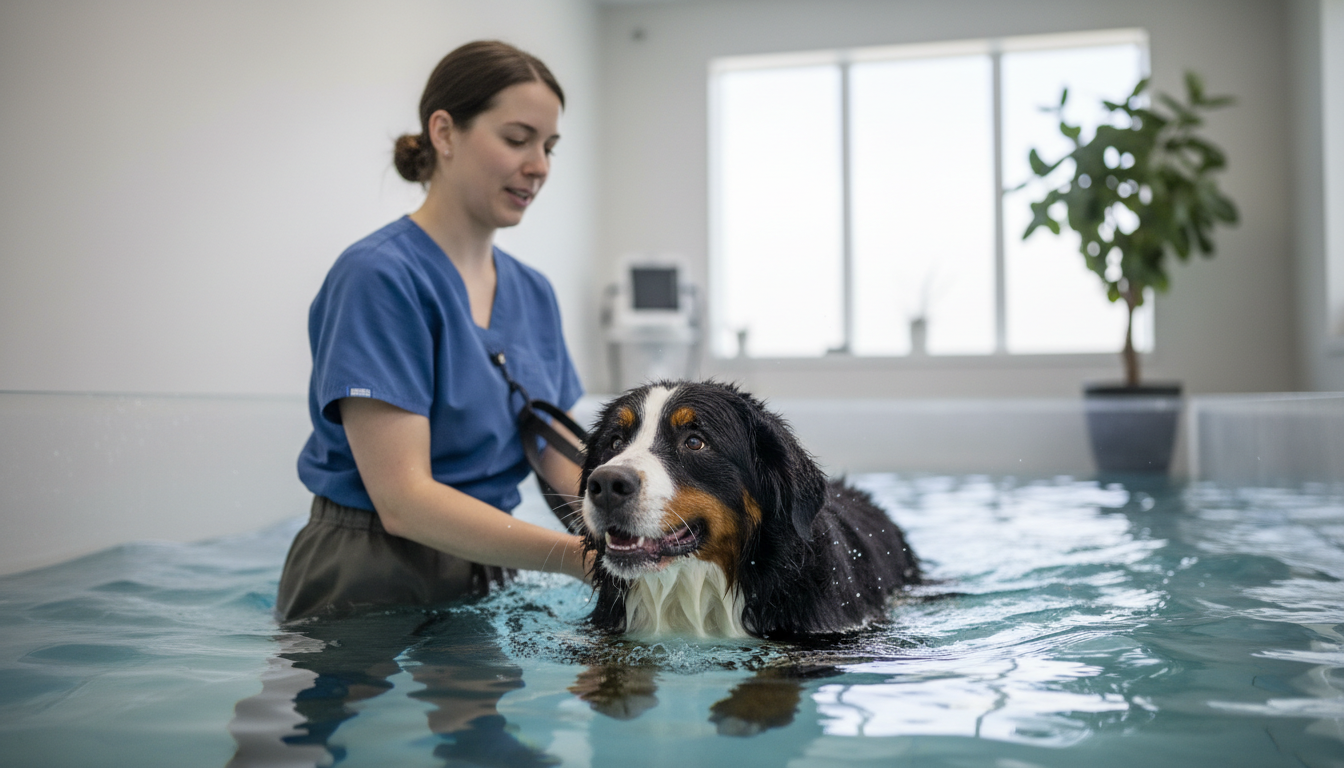
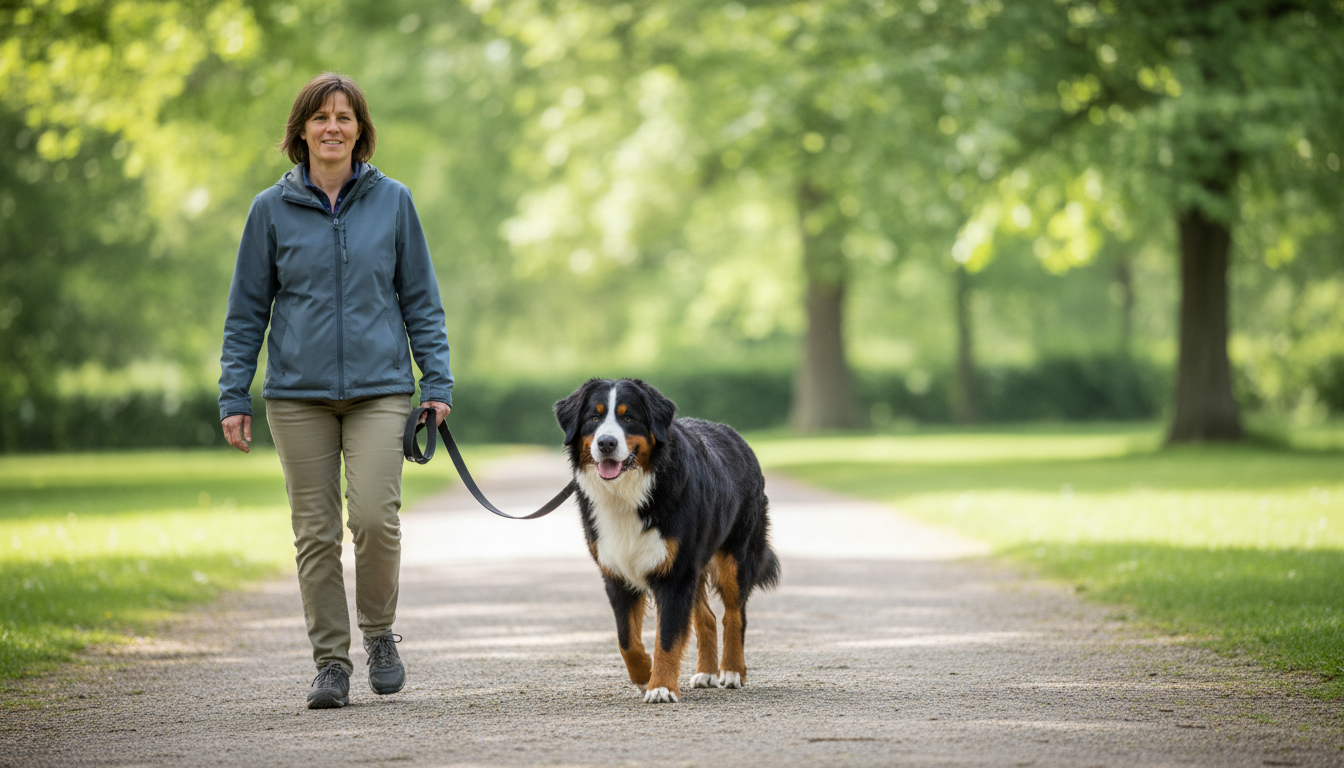
Ask for body- and muscle-condition assessment and an individual feeding plan. Avoid severe calorie restriction or substituting an unbalanced homemade diet. Plan comfortable activity with the team rather than forcing exercise or imposing indefinite complete inactivity. Rehabilitation may help selected patients when it fits the diagnosis and ability.
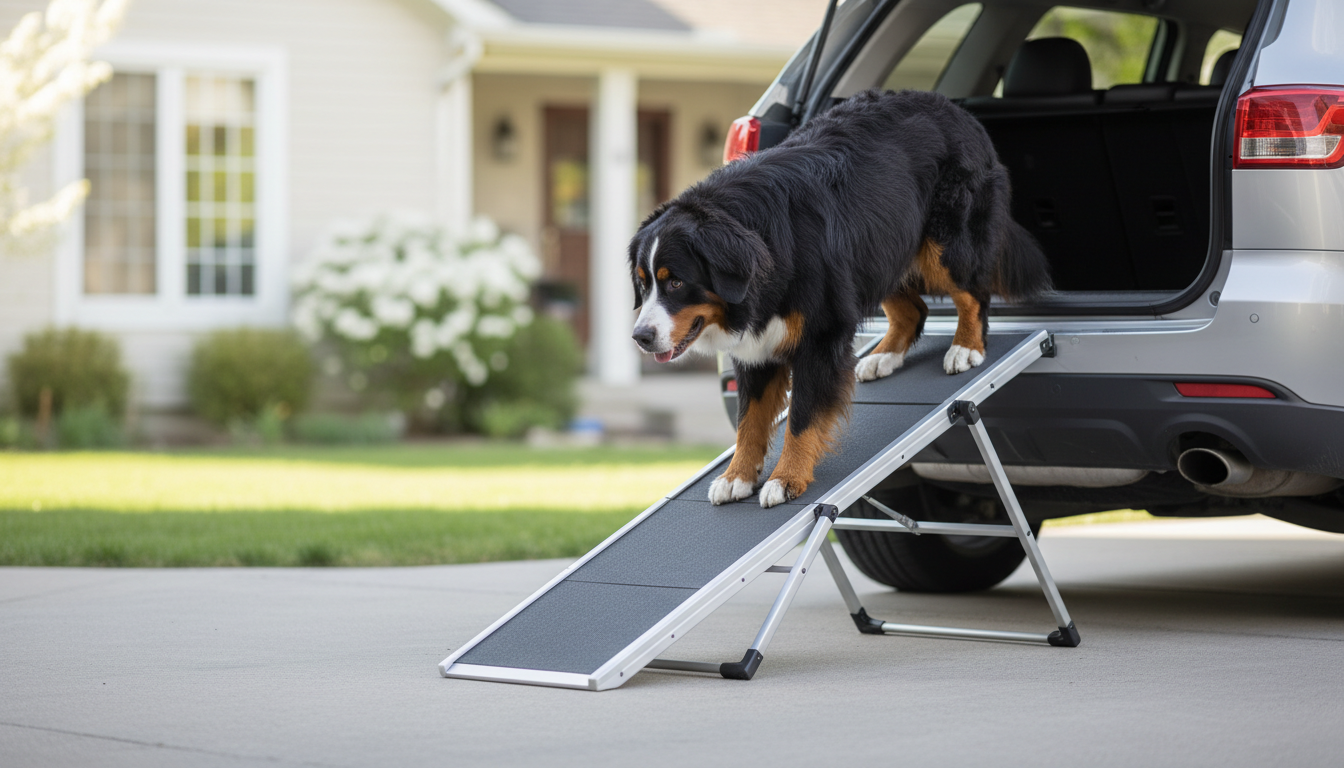
Provide stable footing, accessible resting and a route to essential resources. A ramp or support aid must suit the dog’s movement and the caregiver’s ability to use it safely. Ask for a demonstration before attempting transfers of a heavy dog.
Review medicines and supplements together
List every prescription, supplement and over-the-counter product. Ask what each targets, which monitoring is needed and what changes require contact. Do not give human ibuprofen or naproxen, combine pain medicines independently or restart an old course after illness. Evidence differs across supplements; a glucosamine label or fish-oil ingredient does not establish benefit for a specific product or replace pain treatment.
Measure useful change
Choose a few everyday tasks to observe consistently, such as rising from rest or walking to the usual toilet area. Record tolerance and medicine administration rather than chasing a numerical score without context. Agree a review date and seek earlier advice if comfort, strength or intake deteriorates.
Surgery and other interventions depend on the actual condition and patient. The goal is an achievable individual comfort and mobility plan, with reassessment when it is not working, rather than a fixed treatment ladder for every Bernese Mountain Dog.
Sources
- AAHA2022: Pain management guidelines
- Cornell: Joint supplements and orthopedic conditions
- American College of Veterinary Surgeons: Fractured limbs
General education; individual diagnosis and care require an appropriate veterinary assessment.
This article is for general education and is not a substitute for care from your own veterinarian. Learn about The Pet Vet and our editorial policy.