
Australian Shepherd eye problems are more common than many owners realize, and some of them can develop without any obvious outward signs until vision is already affected. Because this breed carries a genetic risk for several inherited eye conditions, understanding what to watch for and when to get your dog checked can make a real difference. This guide walks you through the most important issues, their signs, and how to protect your dog’s sight for as long as possible.
Table of Contents
- Why Australian Shepherds Are Prone to Eye Problems
- Collie Eye Anomaly Explained
- Signs That May Point to an Eye Problem
- Progressive Retinal Atrophy and What It Means
- The Merle Gene and Eye Health
- Cataracts in Australian Shepherds
- How Vets Diagnose Eye Conditions in Dogs
- Living With a Visually Impaired Dog
- When to See the Vet Right Away
- The Role of Genetic Testing Before Breeding
- Supporting Overall Eye Health at Home
- Working With Your Veterinarian Long-Term
- Final Thoughts on Protecting Your Aussie’s Vision
Why Australian Shepherds Are Prone to Eye Problems
Australian Shepherds carry a higher genetic risk for certain inherited eye conditions than many other breeds, largely because of how the breed was developed and the gene pool it came from. Some of these conditions are linked to coat color genetics, particularly in merle dogs, while others are passed down independently through recessive genes that both parents can carry without showing symptoms themselves. This means even a puppy from two healthy-looking parents can still develop an inherited eye condition later in life.
Responsible breeders typically screen their breeding dogs for these issues, but not every Australian Shepherd comes from a breeder who does this testing. If you already have an Aussie, or you are getting one from a source where eye testing was not done, it is worth being extra alert to changes in how your dog sees and behaves. Early detection rarely reverses genetic eye disease, but it often helps slow progression or manage complications before they become severe.
Owners are sometimes surprised to learn how much variation exists even within a single litter. One puppy might have perfectly normal eyes while a littermate develops a significant problem, which is why individual screening matters more than just knowing the parents were tested. Understanding this risk from the start helps you build a proactive relationship with your veterinarian rather than waiting until a problem is obvious.
Collie Eye Anomaly Explained
Collie Eye Anomaly, often shortened to CEA, is one of the most well-known inherited eye conditions affecting Australian Shepherds and related herding breeds. It is a developmental condition that affects how the back of the eye forms, particularly the choroid, which is the layer of tissue that supplies blood to the retina. Because it is a developmental issue rather than a progressive disease process, it is present from birth, even though it is not always obvious right away.
The severity of Collie Eye Anomaly can range from very mild, with almost no impact on vision, to severe, where retinal detachment or bleeding inside the eye leads to significant vision loss. This wide range is part of why the condition is tricky for owners to catch on their own. A dog with a mild case may seem to have completely normal eyesight throughout its life, while a dog with a more severe form may struggle with depth perception or bump into objects, especially in dim lighting.
Diagnosis typically happens through a specialized eye examination performed by a veterinary ophthalmologist, ideally when the puppy is still young, since some mild cases can become harder to detect as the dog ages. If you suspect your Australian Shepherd may have this condition or you simply want peace of mind, ask your vet about a referral for a full ophthalmic exam.
Signs That May Point to an Eye Problem
Dogs are remarkably good at compensating for vision changes, especially when the loss happens gradually, which means many owners do not notice anything unusual until the problem has progressed. This makes it especially important to know the subtle signs that something might be off, rather than waiting for obvious blindness to appear. Paying attention to small behavioral shifts can help you catch a problem while there is still time to manage it.
If you notice any combination of these signs, it is worth scheduling a veterinary visit rather than waiting to see if things improve on their own. Vision problems in dogs can sometimes point to issues beyond the eye itself, including neurological conditions, so a full evaluation matters.
- Hesitation or bumping into furniture, especially in new environments or dim lighting
- Reluctance to jump onto or off furniture, beds, or vehicles
- Eyes that appear cloudy, unusually red, or have a visible white or bluish film
- Excessive squinting, tearing, or pawing at one or both eyes
- Noticeable changes in pupil size or a pupil that does not react normally to light
- Increased clumsiness or a change in how confidently your dog moves around the house or yard
Progressive Retinal Atrophy and What It Means
Progressive Retinal Atrophy, commonly referred to as PRA, is another inherited condition that can affect Australian Shepherds, though it works differently than Collie Eye Anomaly. Rather than being a structural issue present at birth, PRA involves a gradual degeneration of the light-sensing cells in the retina over months or years. Dogs with PRA are usually born with normal vision and slowly lose it as the condition progresses.
One of the earliest signs owners often notice is difficulty seeing in low light or at dusk, sometimes called night blindness, before the condition eventually affects vision in bright light as well. Because the progression is usually slow, many dogs adapt remarkably well to their changing vision, especially if their home environment stays consistent and familiar. This adaptability can actually make PRA harder for owners to catch early, since a dog who knows their house well may not seem to be struggling even as their sight declines.
There is currently no cure for PRA, but genetic testing can identify carriers and affected dogs, which is valuable information both for management and for responsible breeding decisions. If your Australian Shepherd is diagnosed with PRA, your vet can guide you on how to support your dog’s quality of life as vision changes over time.
The Merle Gene and Eye Health
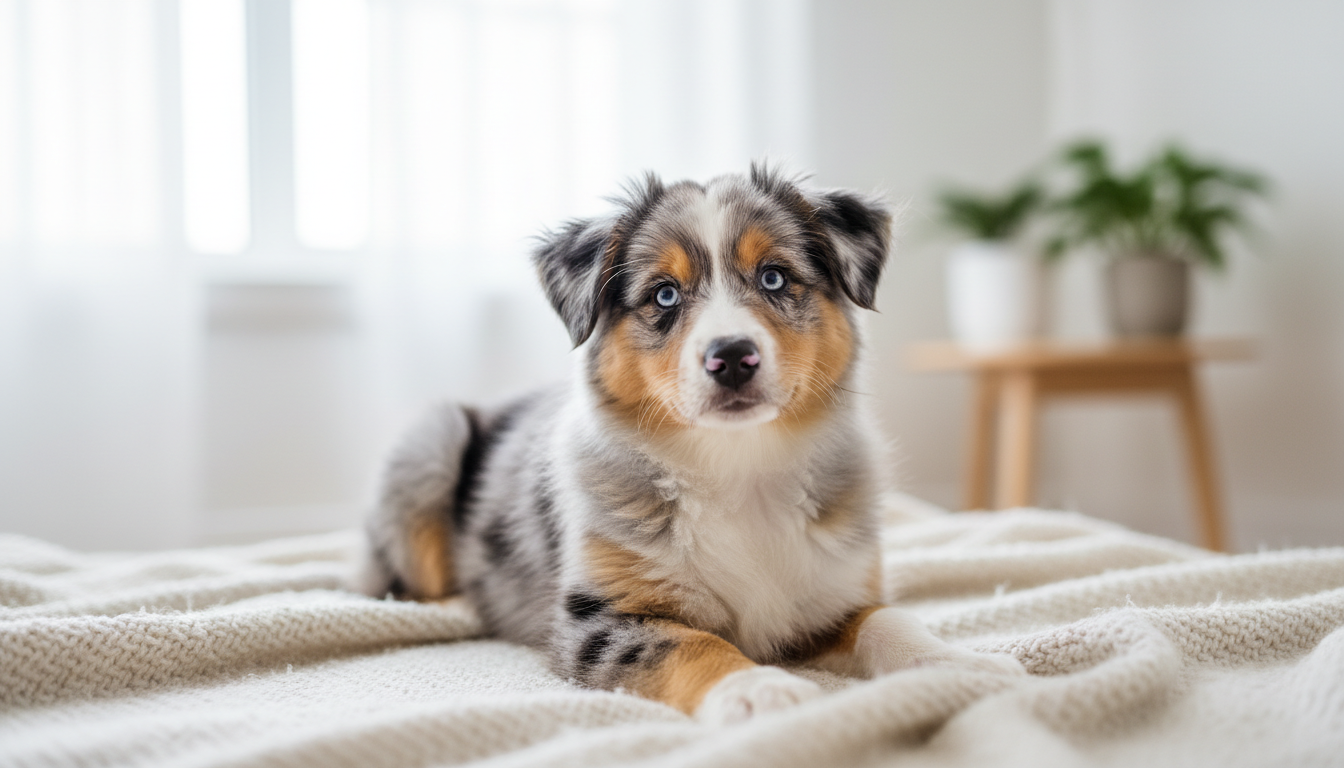
The merle coat pattern that many Australian Shepherds are known for is tied directly to a gene that can affect eye development, which is part of why this breed has such a strong association with eye health concerns. Dogs with one copy of the merle gene typically have the mottled coat pattern owners recognize, and this can sometimes come with associated eye differences such as smaller eyes, irregularly shaped pupils, or blue eye color changes. These variations are not always harmful on their own.
The bigger concern arises with double merle dogs, meaning those that inherit two copies of the merle gene, usually from breeding two merle-patterned parents together. Double merle dogs face a significantly higher risk of serious eye abnormalities, including microphthalmia, where the eyes are abnormally small, as well as significant vision impairment and sometimes hearing loss as well. This is a major reason why reputable breeders avoid pairing two merle dogs together.
If you have a double merle Australian Shepherd or you are unsure of your dog’s genetic background, talk to your veterinarian about what eye and hearing evaluations might be appropriate. Even if your dog seems to be managing well, understanding the underlying risk helps you watch for changes and plan for their long-term care needs.
Cataracts in Australian Shepherds
Cataracts, which cause the lens of the eye to become cloudy, can affect Australian Shepherds either as an inherited condition or later in life due to aging, diabetes, or injury. Inherited cataracts in this breed sometimes appear at a younger age than the typical age-related cataracts seen in many dogs, which is why any cloudiness in the eye of a young or middle-aged Aussie deserves veterinary attention rather than being dismissed as normal aging.
A cataract does not always mean immediate blindness, since many dogs live with partial cataracts for a long time before vision is significantly affected. However, cataracts can progress, and in some cases they lead to inflammation inside the eye or increase the risk of glaucoma, which makes monitoring important even when the cataract itself seems mild. Your vet can assess the size, location, and progression of a cataract during a routine eye exam.
Surgical removal is an option for some dogs and can restore a significant amount of vision, though it is not the right choice for every dog or every situation. Your veterinarian, potentially alongside a veterinary ophthalmologist, can help you weigh the benefits and risks based on your dog’s overall health and the specifics of the cataract.
How Vets Diagnose Eye Conditions in Dogs
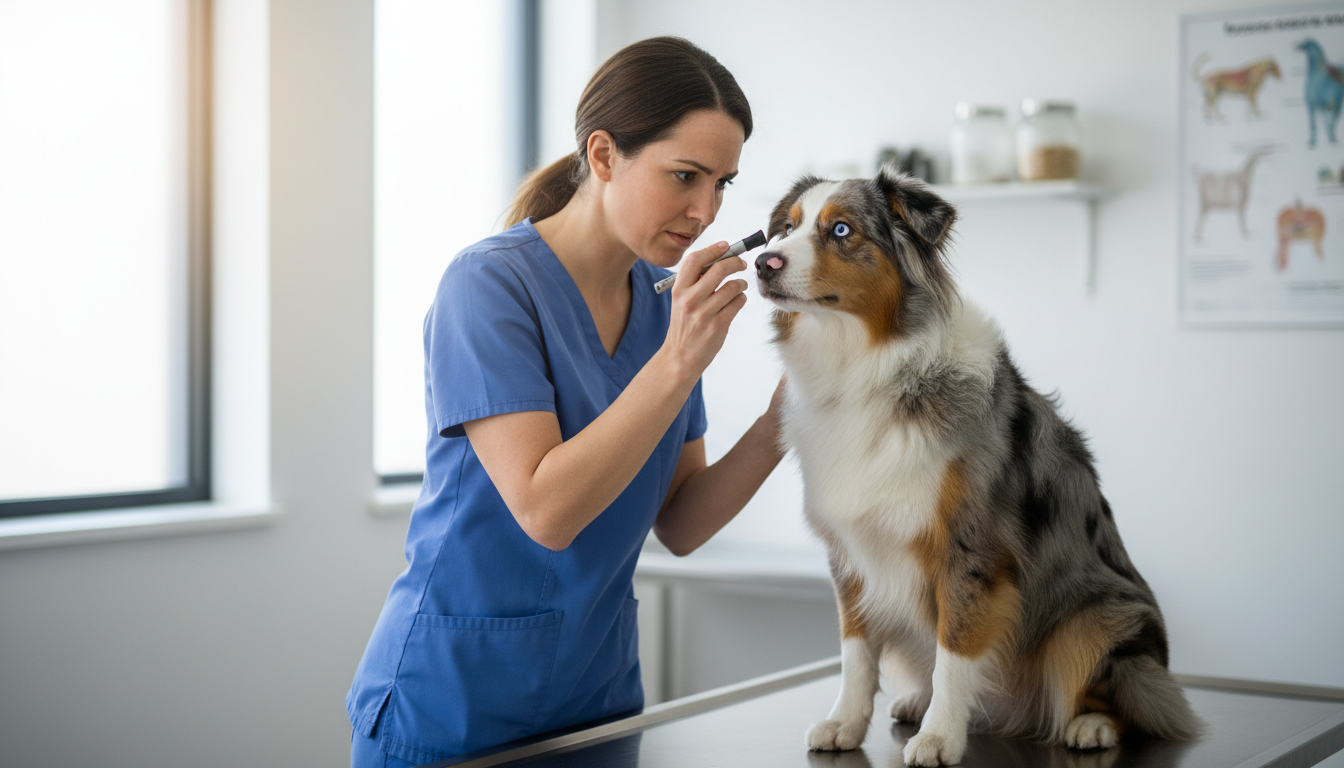
When you bring your Australian Shepherd in for an eye concern, your veterinarian will typically start with a general physical exam before moving into more specific eye tests. This often includes checking pupil response to light, examining the surface of the eye for scratches or ulcers, and using specialized instruments to look at the internal structures of the eye, including the retina at the back.
For inherited conditions like Collie Eye Anomaly or PRA, a referral to a veterinary ophthalmologist is common, since these specialists have access to more advanced diagnostic tools and experience specifically with breed-related eye disease. Tests may include electroretinography, which measures how the retina responds to light, or specialized imaging to get a detailed look at the internal eye structures without needing surgery.
Getting an accurate diagnosis matters because treatment and management look very different depending on the specific condition, so avoid assuming you know what is wrong based on symptoms alone.
- A thorough eye exam using a light source to check pupil response and surface health
- Tonometry to measure pressure inside the eye and screen for glaucoma
- Referral to a veterinary ophthalmologist for advanced or inherited conditions
- Genetic testing, particularly useful for confirming PRA or assessing merle-related risk
- Bloodwork if an underlying condition like diabetes is suspected as a contributing factor
Living With a Visually Impaired Dog
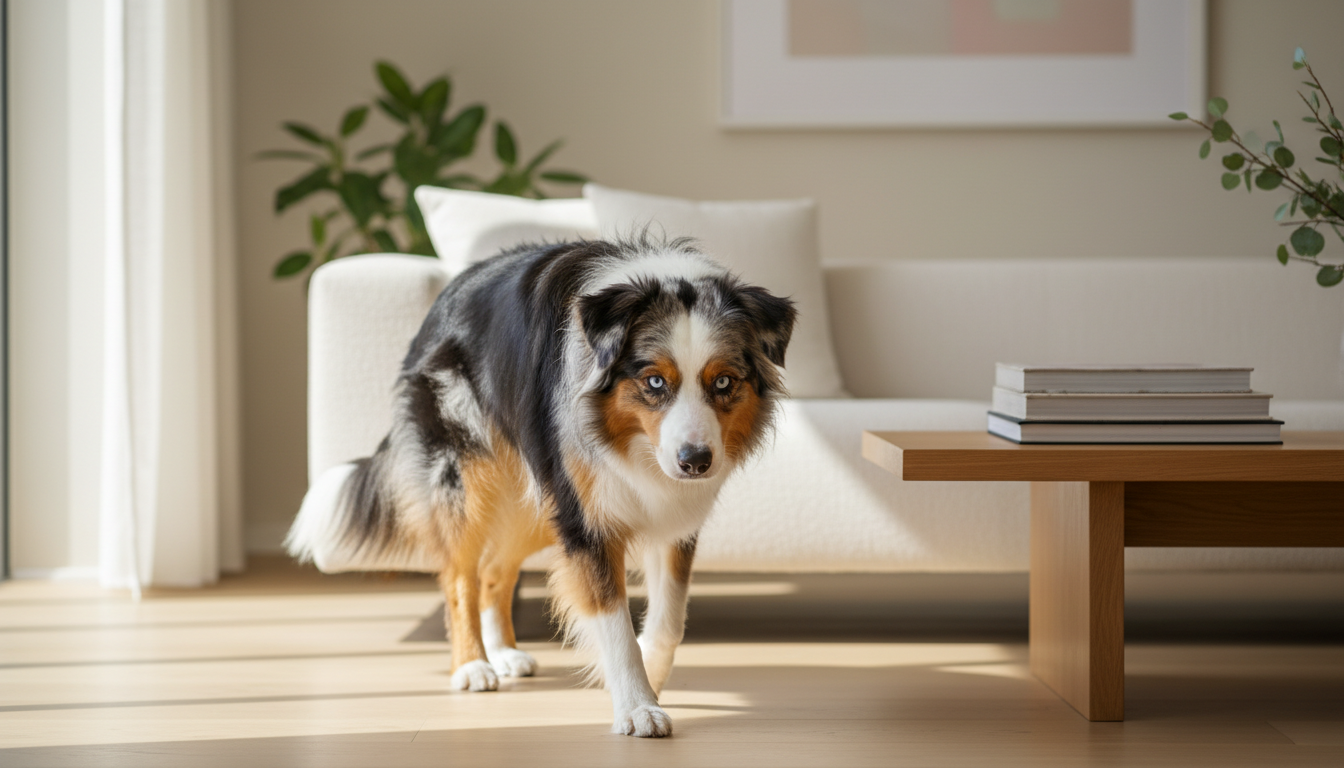
If your Australian Shepherd does experience significant vision loss, whether from an inherited condition or another cause, it is worth knowing that dogs generally adapt to blindness far better than most owners expect. Dogs rely heavily on smell and hearing, and many blind dogs continue to enjoy walks, play, and daily routines with just a few adjustments to help them navigate safely.
Keeping furniture and household layouts consistent helps a visually impaired dog build a mental map of their space, so try to avoid rearranging rooms unnecessarily once your dog has adjusted. Using verbal cues consistently, such as saying “step up” before stairs or “watch” before an obstacle, can also help your dog feel more confident moving through both familiar and new environments.
Many dogs with vision loss continue to live full, happy lives, especially when their owners are patient during the adjustment period and willing to make a few practical changes at home.
- Keep furniture arrangement consistent to help your dog build spatial memory
- Use textured mats or rugs near stairs or doorways as tactile markers
- Introduce verbal cues for common obstacles like steps or doorways
- Avoid leaving objects in unexpected places, especially in main walkways
- Consider a harness with a small bell or scent marker to help you locate your dog easily outdoors
When to See the Vet Right Away
While many eye conditions in Australian Shepherds develop gradually, some situations call for prompt veterinary attention rather than a wait-and-see approach. Sudden vision loss, a painful or swollen eye, or an eye that suddenly appears very red or cloudy should always be treated as urgent, since certain eye emergencies can cause permanent damage within hours if left untreated.
If you notice any of these signs, do not wait for a routine appointment. Contact your vet or an emergency animal hospital right away, since quick action can sometimes mean the difference between a treatable issue and permanent vision loss.
- Sudden loss of vision in one or both eyes
- Visible swelling, redness, or discharge from the eye
- Your dog holding one eye closed or pawing at it repeatedly
- A cloudy or bluish appearance that develops quickly rather than gradually
- Signs of pain such as whining, avoiding light, or reluctance to be touched near the face
The Role of Genetic Testing Before Breeding
If you are considering breeding your Australian Shepherd, or you are looking to bring a puppy into your home, genetic testing plays an important role in reducing the risk of inherited eye disease in future generations. Tests are available for conditions including PRA and merle-related genetics, and responsible breeders use this information to make informed pairing decisions rather than relying on the physical appearance of the parent dogs alone.
Asking a breeder about health testing before bringing home a puppy is a reasonable and important question, and a reputable breeder should be able to provide documentation of relevant screenings. This does not guarantee a puppy will never develop any health issue, since genetics can be complex, but it significantly reduces the odds of preventable inherited conditions being passed along.
If you already own an Australian Shepherd and are unsure of their genetic background, your veterinarian can discuss whether testing would be useful for your dog’s long-term care planning, even outside of a breeding context.
Supporting Overall Eye Health at Home
While you cannot prevent genetic eye conditions through home care alone, there are still things you can do to support your Australian Shepherd’s overall eye health and catch problems early. Regular at-home checks, even informal ones, help you notice small changes before they become bigger problems.
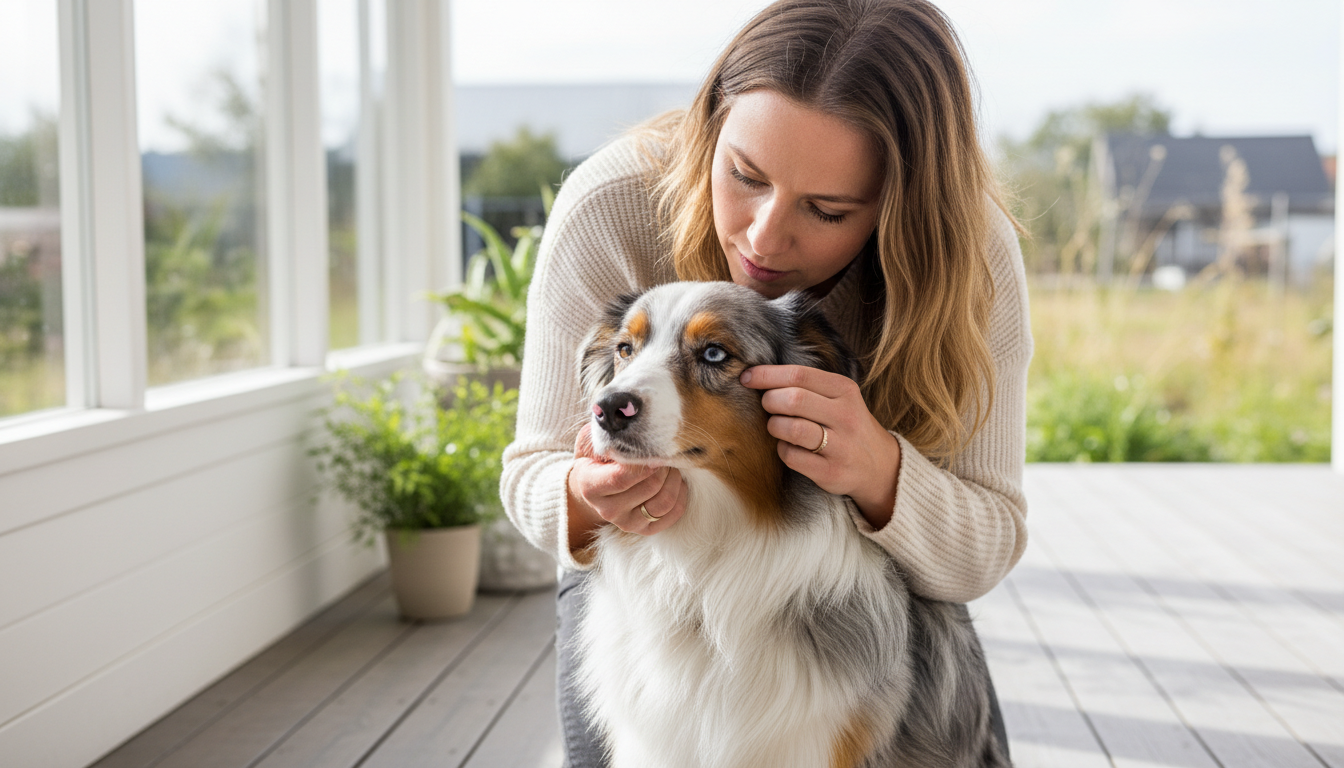
Get in the habit of looking at your dog’s eyes during grooming or quiet moments together, checking for any new cloudiness, redness, discharge, or asymmetry between the two eyes. Keeping up with routine veterinary checkups, including a look at the eyes during annual exams, gives your vet a baseline to compare against if changes develop later. Protecting your dog’s eyes from irritants, such as keeping their head inside the car window during rides and avoiding harsh chemical exposure during bathing, also supports general eye health over time.
Nutrition can play a supportive role in overall eye and body health as well, though it is not a substitute for genetic screening or veterinary care when an inherited condition is present. Talk to your vet about whether your dog’s current diet supports their overall wellness, especially if they have a diagnosed eye condition that may benefit from specific nutritional considerations.
Working With Your Veterinarian Long-Term
Managing eye health in an Australian Shepherd is often not a one-time conversation but an ongoing part of their overall veterinary care throughout their life. Because some conditions like PRA progress slowly, regular monitoring allows your vet to track subtle changes over time that might not be obvious during a single visit.
Keeping a simple log at home of anything you notice, even small things like your dog seeming more hesitant at dusk, can be genuinely useful information to share at checkups. Your vet may also recommend more frequent eye exams if your dog has a known inherited condition or comes from a breeding line with a documented history of eye disease.
Building this kind of ongoing relationship with your veterinarian means problems are more likely to be caught early, treatment plans can be adjusted as needed, and you will feel more confident navigating whatever your dog’s specific eye health journey looks like.
Final Thoughts on Protecting Your Aussie’s Vision
Eye problems in Australian Shepherds cover a wide range, from mild and barely noticeable to serious conditions that significantly affect vision, and the breed’s genetics mean these risks deserve real attention rather than being brushed aside. The good news is that many affected dogs continue to live happy, active lives, especially when owners stay alert to changes and partner closely with their veterinarian for monitoring and care.
If you have any concerns about your dog’s eyes, whether it is a subtle behavior change or something more obvious like redness or cloudiness, do not hesitate to reach out to your vet. Early conversations, even about small concerns, are always worthwhile when it comes to protecting your dog’s vision and overall quality of life.
This article is for general education and is not a substitute for care from your own veterinarian. Learn about The Pet Vet and our editorial policy.