
Collie Eye Anomaly in Border Collies is a genetic condition that affects the back of the eye, and it can be present from the moment a puppy is born. Because it often causes no obvious outward signs in mild cases, many owners never know their dog has it until a vet checks the eyes closely. Here’s what every Border Collie owner should understand about this condition, how it’s diagnosed, and what it means for your dog’s quality of life.
Table of Contents
- What Collie Eye Anomaly Actually Is
- Why Border Collies Are Prone to This Condition
- How CEA Is Usually Diagnosed
- Signs You Might Notice at Home
- Mild vs More Severe Forms
- Living With a Dog Who Has Reduced Vision
- Will CEA Get Worse Over Time?
- What Treatment Options Exist
- Breeding Considerations and Genetic Testing
- The Difference Between CEA and Other Eye Conditions
- When to See a Vet Right Away
- Supporting Your Dog’s Overall Eye Health
- Living a Full Life With CEA
- Talk to Your Vet About Eye Screening
What Collie Eye Anomaly Actually Is
Collie Eye Anomaly, often shortened to CEA, is an inherited condition that affects how the eye develops before a puppy is even born. It involves the choroid, a layer of blood vessels that nourishes the retina, and in affected dogs this layer doesn’t form properly. The result can range from a small, barely noticeable patch of underdevelopment to more serious structural problems inside the eye.
This condition is sometimes called Choroidal Hypoplasia when it appears in its mildest form, which is also the most common presentation. Because the changes are present at birth and don’t typically get worse over time in their mild form, many dogs live their whole lives with CEA and their owners never notice anything unusual about their vision or behavior.
What makes CEA tricky is that it exists on a spectrum. Some Border Collies have such mild changes that a veterinary ophthalmologist has to look carefully to find them, while others have more significant defects that can affect vision meaningfully. Understanding where your dog falls on that spectrum starts with a proper eye exam.
Why Border Collies Are Prone to This Condition
CEA is strongly associated with herding breeds, and Border Collies are among the breeds most frequently affected. It’s passed down genetically, which means it traces back through breeding lines rather than developing from something in a dog’s environment or lifestyle. Because the condition is inherited, responsible breeders test their dogs before breeding to try to reduce how often it’s passed to puppies.
The inheritance pattern for CEA is recessive, meaning a puppy typically needs to inherit the gene from both parents to show signs of the condition. This is part of why the anomaly can seem to appear unexpectedly in a litter even when neither parent shows obvious symptoms themselves. A dog can be a genetic carrier without displaying any visible signs of CEA at all.
Because this is a congenital condition tied to genetics, there’s nothing you did or could have done differently as an owner to cause it in your puppy. If your Border Collie has been diagnosed with CEA, it’s simply part of how the eye developed before you ever brought them home.
How CEA Is Usually Diagnosed
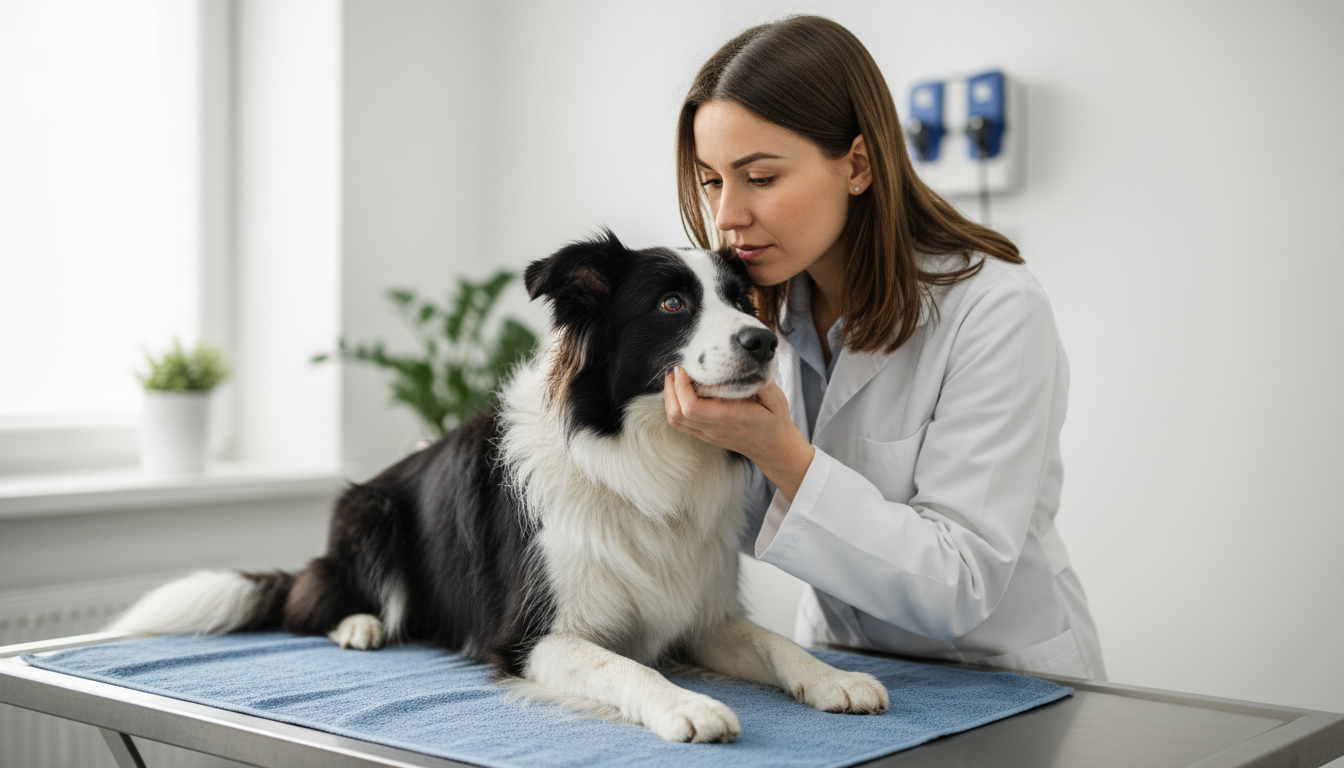
The only reliable way to diagnose Collie Eye Anomaly is through a veterinary eye examination performed by a professional trained to look at the structures inside the eye. This typically happens early, often around six to eight weeks of age in puppies, because that’s before certain changes in the eye can mask milder forms of the condition in older dogs.
A veterinary ophthalmologist uses specialized equipment to examine the retina and choroid directly. This isn’t something that shows up on a basic at-home check, and owners usually can’t tell their dog has CEA just by looking at the eyes from the outside, especially in milder cases. That’s exactly why screening at a young age matters so much for this breed.
If you got your Border Collie from a breeder, it’s worth asking whether the puppy or its parents were screened for CEA. If you’re unsure whether your dog has ever been examined, bringing this up with your vet is a reasonable next step, particularly if you’re noticing any changes in how your dog interacts with their environment.

Signs You Might Notice at Home
Because mild CEA often causes no visible symptoms, many owners never notice anything different about their dog’s day-to-day behavior. However, in cases where the anomaly is more significant, there are some changes that might catch your attention and are worth mentioning to your vet.
None of these signs are exclusive to CEA, and they can point to a range of other eye or health issues. That’s exactly why any of these changes deserve a trip to the vet rather than guesswork at home.
- Hesitation or bumping into objects, especially in dim lighting or unfamiliar spaces
- Reluctance to jump onto furniture or down stairs they previously navigated easily
- Noticeably cloudy, red, or differently colored areas within the eye itself
- Squinting, pawing at the eye, or excessive blinking
- Changes in how your dog tracks moving objects like toys or other pets
Mild vs More Severe Forms
The spectrum of CEA matters a lot when it comes to what your dog’s day-to-day life looks like. In the mildest form, Choroidal Hypoplasia, dogs usually have completely normal vision and the condition is essentially an incidental finding during an eye exam. These dogs can run, herd, play fetch, and live full lives without any limitations tied to their eyes.
On the more severe end, some Border Collies have additional complications such as colobomas, which are gaps or pits in the structure of the eye, or even retinal detachment in the most serious cases. These more advanced presentations can genuinely affect vision and, in rare instances, may contribute to partial or significant vision loss in one or both eyes.
Because the severity varies so much from dog to dog, it’s not accurate to assume a CEA diagnosis automatically means your dog will struggle with vision. Your vet or a veterinary ophthalmologist is the only one who can tell you where your individual dog falls on that spectrum after a thorough exam.

Living With a Dog Who Has Reduced Vision
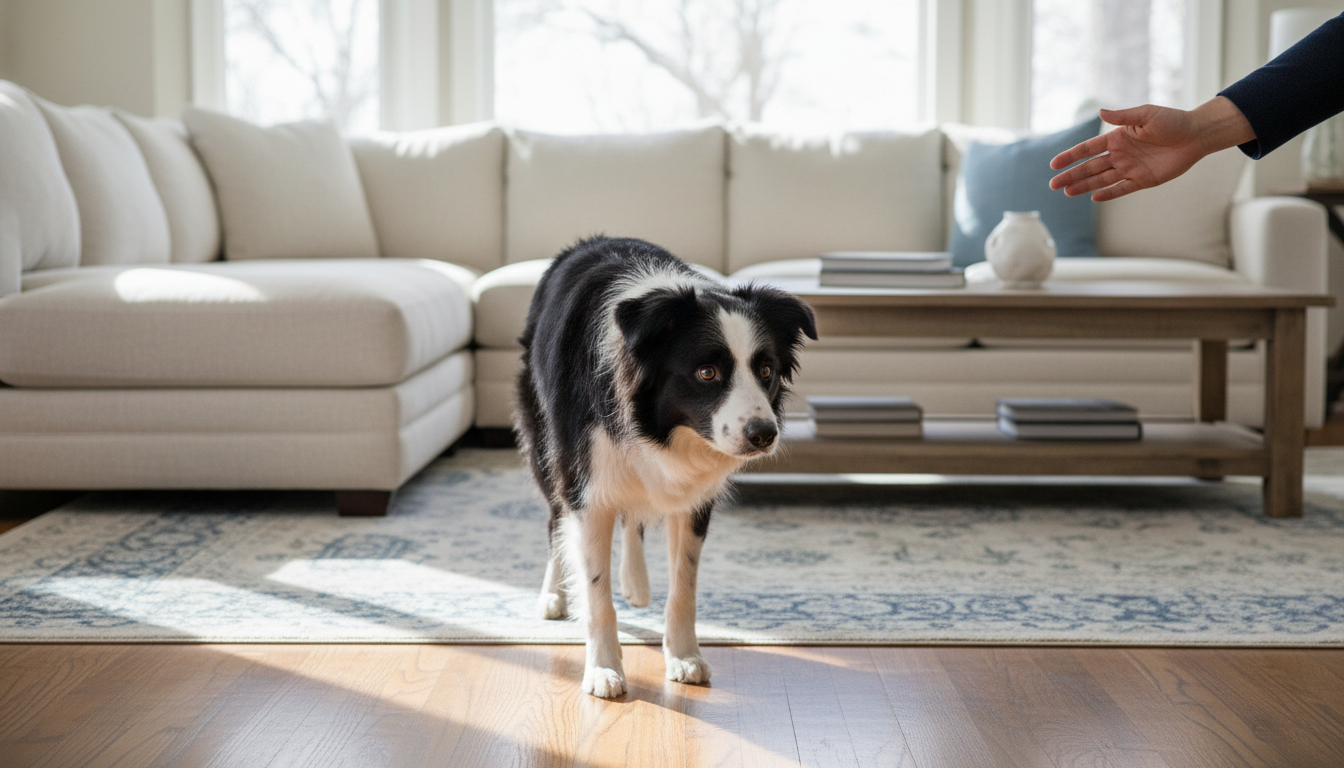
If your Border Collie does have a form of CEA that affects their vision, the good news is that dogs are remarkably adaptable. Many dogs with partial vision loss learn to rely heavily on their other senses, including smell and hearing, and continue to navigate their homes and yards confidently once they’re familiar with the layout.
Keeping furniture and major obstacles in consistent places can make a real difference for a dog who isn’t seeing as clearly as they once did. Sudden changes to a room’s layout can be disorienting, so if your dog’s vision is affected, try to minimize rearranging large furniture pieces without giving them time to adjust.
- Use consistent verbal cues before stairs, doorways, or uneven ground
- Keep food, water, and bed locations the same every day
- Add texture cues, like a mat at the top of stairs, to help orient your dog
- Avoid leaving unexpected objects in frequently used pathways
- Talk to your dog as you approach rather than touching them unexpectedly
Will CEA Get Worse Over Time?
One of the more reassuring aspects of mild Choroidal Hypoplasia is that it’s generally considered a stable condition, meaning it typically doesn’t progress or worsen as the dog ages. A puppy diagnosed with mild CEA at eight weeks old will usually have the same level of eye involvement as an adult.
More severe forms involving colobomas or retinal detachment can behave differently, and in some cases there may be changes over time that affect vision more than they did initially. This is part of why ongoing monitoring with your vet matters, even after an initial diagnosis, so that any changes can be caught and discussed as early as possible.
Regular checkups give your vet the chance to compare notes over time and flag anything that seems different from previous visits. Bringing a dog in for a recheck isn’t a sign that something is necessarily wrong; it’s simply a sensible way to stay ahead of a condition that can occasionally shift.
What Treatment Options Exist
There isn’t a cure for Collie Eye Anomaly, since it stems from how the eye developed before birth rather than an active disease process that can be reversed. In mild cases where vision isn’t affected, treatment usually isn’t needed at all beyond routine monitoring.
In more complex cases, particularly where retinal detachment has occurred or is at risk of occurring, your vet may discuss options with a veterinary ophthalmologist to determine whether any interventions are appropriate for your dog’s specific situation. These conversations are highly individual, and what’s right for one dog with CEA may not apply to another with a different level of severity.
It’s worth being cautious of any product or supplement claiming to reverse or cure structural eye conditions like CEA. Because this is a developmental condition rather than an inflammatory or nutritional one, there’s no supplement that changes how the choroid formed before birth. Always discuss any product you’re considering with your vet before trying it.
Breeding Considerations and Genetic Testing
If you’re a Border Collie owner who got your dog from a breeding program, or if you’re considering breeding your own dog down the line, understanding the genetics behind CEA is important. Genetic testing is available that can identify whether a dog carries the gene associated with CEA, even if that dog shows no outward signs of the condition itself.
Responsible breeders typically test their breeding dogs for CEA status before pairing them, aiming to reduce the likelihood of producing puppies with more severe forms of the condition. If you’re planning to add a Border Collie puppy to your family in the future, asking a breeder about CEA testing in the parent dogs is a reasonable and increasingly common question.
This kind of testing doesn’t eliminate CEA from a breeding line overnight, but over generations it can help reduce how often significant cases appear. If genetics and future puppies are part of your plans, this is a conversation worth having directly with your vet or a veterinary genetics specialist.
The Difference Between CEA and Other Eye Conditions
Border Collies can develop other eye conditions throughout their lives that aren’t related to CEA at all, and it’s easy for an owner to worry that any eye symptom must be connected to this specific diagnosis. Conditions like conjunctivitis, corneal scratches, cataracts, or glaucoma can occur in any dog regardless of whether they have CEA, and they require their own separate evaluation and care.
This is exactly why any new eye symptom in your dog, whether or not they’ve been previously diagnosed with CEA, deserves its own trip to the vet rather than being automatically attributed to an existing condition. Redness, squinting, discharge, or sudden vision changes can signal something that needs prompt attention, separate from a stable congenital finding like Choroidal Hypoplasia.
Your vet can help you understand which symptoms are expected given your dog’s known CEA status and which ones represent something new that needs its own workup. Keeping a simple log of any eye-related changes you notice at home can be genuinely helpful information to bring to these appointments.
When to See a Vet Right Away
While mild CEA itself isn’t an emergency and doesn’t require urgent care, certain eye symptoms in any dog should prompt a same-day or emergency vet visit rather than waiting for a routine appointment. Eyes are delicate structures, and sudden changes can sometimes indicate something progressing quickly.
If you notice any of these signs, don’t wait to see if they resolve on their own. Getting your dog seen quickly gives your vet the best chance to address whatever is happening before it potentially affects your dog’s long-term vision.
- Sudden onset of apparent blindness or significant vision changes
- A visibly bulging, misshapen, or painful-looking eye
- Heavy discharge, especially if it’s yellow, green, or bloody
- Your dog pawing frantically at one or both eyes
- Noticeable swelling around the eye or eyelid

Supporting Your Dog’s Overall Eye Health
Whether or not your Border Collie has been diagnosed with CEA, there are general habits that support eye health for any dog. Routine vet checkups typically include a basic look at the eyes, which can catch early signs of unrelated issues like cataracts or corneal damage before they become bigger problems.
Keeping your dog’s face clean and free of excessive discharge, trimming hair around the eyes if your dog’s coat tends to grow long there, and avoiding exposing your dog’s eyes to irritants like strong wind, dust, or chemical sprays are all simple ways to reduce unnecessary strain on the eyes day to day. None of these habits prevent or treat CEA specifically, but they contribute to overall eye comfort.
- Schedule a basic eye check at annual wellness visits
- Keep hair trimmed away from the eyes if it tends to grow long
- Avoid direct exposure to wind, dust, or chemical sprays
- Watch for any new redness, squinting, or discharge
- Mention any known CEA diagnosis at every vet visit going forward
Living a Full Life With CEA
It’s worth repeating that the vast majority of Border Collies diagnosed with CEA have the mild form, and these dogs typically go on to live completely normal, active lives. They can still excel at agility, herding trials, long hikes, and all the activities Border Collies are known for loving. A CEA diagnosis on its own is rarely something that should change how you approach your dog’s exercise or daily routine.
Even in cases involving more noticeable vision changes, dogs are genuinely good at adapting, especially with a little extra thought from their owners about consistency and safety around the home. Many owners of dogs with vision impairment report that their dogs continue to enjoy walks, play, and companionship just as much as fully sighted dogs, simply with a bit more reliance on scent and sound.
The most important thing you can do as an owner is stay in close contact with your vet, follow through on any recommended rechecks, and bring up any new symptoms promptly. With that kind of attentive care, a diagnosis of CEA is something most families manage without major disruption to their dog’s happiness or quality of life.
Talk to Your Vet About Eye Screening
If your Border Collie hasn’t had a formal eye exam and you’re not sure whether CEA has ever been ruled in or out, there’s no downside to asking your vet about it at your next visit. A referral to a veterinary ophthalmologist for a more detailed look is a straightforward, low-stress process for most dogs.
Early knowledge about your dog’s eye health gives you the ability to plan ahead, whether that means simply noting it in their records for future reference or being more attentive to certain environmental adjustments. Either way, you’ll be acting from information rather than guesswork, which is always the better position for you and your dog.
Never hesitate to bring any concern about your dog’s eyes to your vet, no matter how small it seems. Eyes can be sensitive indicators of broader health, and a professional exam is the only reliable way to know what’s really going on behind those bright, attentive Border Collie eyes.
This article is for general education and is not a substitute for care from your own veterinarian. Learn about The Pet Vet and our editorial policy.