
Strabismus in Siamese cats is so common that crossed eyes have become part of the breed’s charm, showing up in old photographs and breed standards alike. But not every case of crossed eyes is simply cosmetic, and some causes need veterinary attention. This guide walks you through why Siamese cats are prone to this condition, what’s considered normal, and when crossed eyes might signal something more serious going on with your cat’s nervous system or vision.
Table of Contents
- What Strabismus Actually Means
- Why Siamese Cats Are Prone to This
- Signs You Might Notice at Home
- When Crossed Eyes Are Just a Breed Trait
- When Crossed Eyes Signal Something New
- How Vets Diagnose the Cause
- Related Vision Quirks in the Breed
- Does Strabismus Affect Quality of Life
- What You Can Do at Home
- Kittens With Crossed Eyes
- Strabismus Versus Other Eye Problems
- Working With Your Veterinarian Long Term
- The Bigger Picture on Breed-Related Traits
- When to Seek Emergency Care
What Strabismus Actually Means
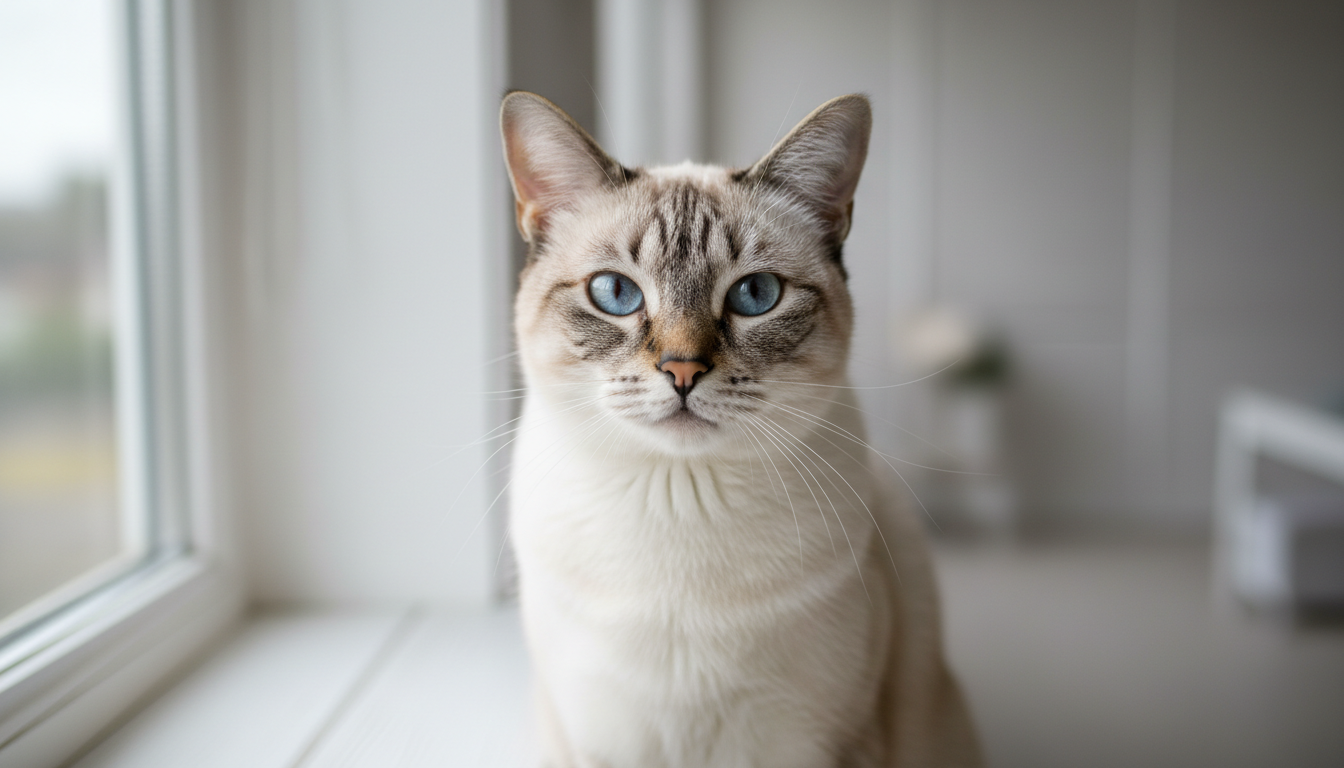
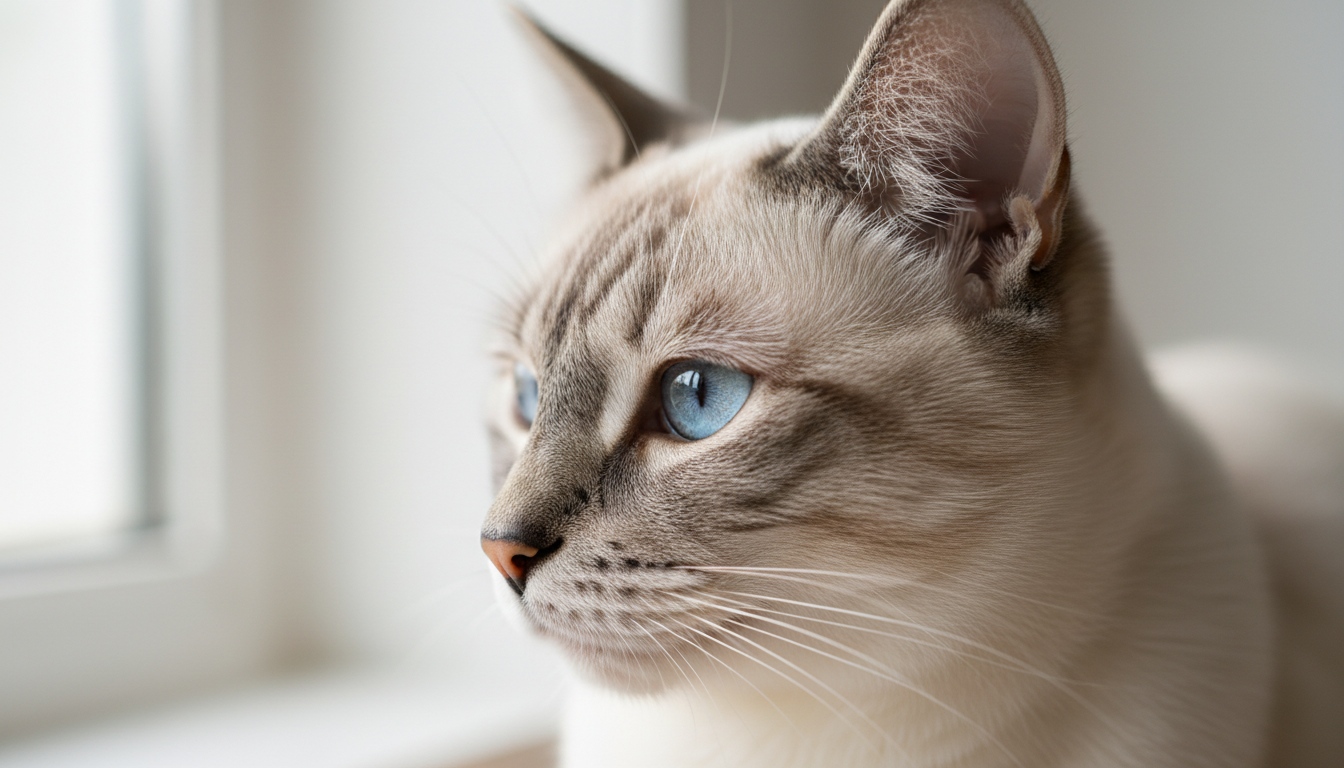
Strabismus is the medical term for eyes that don’t line up in the same direction. In Siamese cats, this usually shows up as a convergent strabismus, where both eyes turn inward toward the nose, giving that classic cross-eyed look many people find endearing. The condition can affect one eye or both, and it can be present from birth or develop later in life depending on the underlying cause.
In most Siamese cats, strabismus is a structural quirk tied to how the visual pathways in the brain are wired, rather than a problem with the eye muscles themselves. This means the eyes are physically capable of moving normally, but the signals telling them where to point get crossed somewhere between the retina and the brain. It’s a fascinating example of how a single genetic trait can ripple out into a very visible physical characteristic.
Because this form of strabismus is so tightly linked to the breed, veterinarians and researchers have studied it extensively in Siamese cats specifically. It’s one of the better understood breed-related quirks in feline medicine, even though the exact way it affects day to day vision in each individual cat can vary quite a bit.
Why Siamese Cats Are Prone to This
The tendency toward crossed eyes in Siamese cats traces back to the same genetic mutation responsible for their pointed coat pattern. This mutation affects an enzyme involved in pigment production, and it turns out that pigment plays a surprising role in how the visual system develops in the womb. In cats with this mutation, some of the nerve fibers from the retina cross to the wrong side of the brain instead of following the typical path.
Because the brain still needs to make sense of the world using two eyes working together, many Siamese cats develop crossed eyes as a way of compensating for this miswiring. It’s essentially the visual system trying to correct for a shortcut taken during development. This is why strabismus shows up so consistently across the breed rather than being a random individual trait.
Not every Siamese cat will have noticeably crossed eyes, since the degree of nerve miswiring and the brain’s ability to compensate varies from cat to cat. Some cats show a mild, barely noticeable inward turn, while others have a much more pronounced cross that’s obvious even in casual conversation with your cat.
Signs You Might Notice at Home
If you share your home with a Siamese cat, you may have already noticed some of these signs without knowing what they meant. Crossed eyes are often present from a young age and tend to stay fairly stable throughout life in cats where the cause is the classic breed-related wiring issue.
Many owners describe their Siamese cat’s crossed eyes as simply part of their personality, and in cats where the strabismus has been present since kittenhood without other symptoms, that’s often a fair way to look at it. The key is knowing what counts as typical for this breed versus what might be a red flag.
- One or both eyes appear to turn inward toward the nose
- The crossing may be more noticeable when your cat is focusing intently on something, like a toy or a bird outside
- Your cat may tilt or turn their head slightly when watching moving objects
- Depth perception quirks, such as occasional missed jumps or hesitant landings
- The appearance stays roughly the same over months and years rather than getting progressively worse
When Crossed Eyes Are Just a Breed Trait
In the vast majority of cases, strabismus in a Siamese cat is simply an inherited quirk that doesn’t cause pain, discomfort, or significant vision problems. Cats are remarkably good at adapting to visual differences, and many Siamese cats with obviously crossed eyes navigate their homes, jump onto furniture, and catch toys without any apparent trouble.
This type of strabismus is usually present early in life, symmetrical in how it behaves over time, and doesn’t come with other symptoms like squinting, redness, or changes in behavior. If your cat has had the same slightly crossed look since you first brought them home as a kitten and nothing else has changed, that’s generally reassuring.
That said, “usually harmless” doesn’t mean you should assume every case is fine without ever mentioning it to your vet. A routine wellness visit is a good time to point out your cat’s eye appearance so your veterinarian can document it as a baseline, which makes it much easier to notice if anything changes down the road.
When Crossed Eyes Signal Something New
Strabismus that appears suddenly in an adult cat, or that changes noticeably over a short period, is a different situation entirely and deserves prompt veterinary attention. Sudden onset strabismus can point toward issues completely unrelated to the classic Siamese genetic trait, including problems within the eye itself, the muscles that control eye movement, or the nerves and brain structures involved in vision.
Possible causes of acquired strabismus include inner ear disease, inflammation or infection affecting the nerves that control eye movement, trauma to the head or eye socket, and in some cases neurological conditions affecting the brain. Because the list of possible causes is broad and some of them are serious, sudden changes in eye position should never be brushed off as “just being Siamese.”
If you notice any of these alongside new or worsening strabismus, it’s worth contacting your veterinarian promptly rather than waiting to see if it resolves on its own.
- Strabismus that appears suddenly in a cat that never had it before
- Crossing that starts on one side and then seems to spread or worsen
- Accompanying signs like head tilt, loss of balance, or stumbling
- Visible pain, squinting, or pawing at the eye or face
- Changes in pupil size or the two pupils no longer matching each other
How Vets Diagnose the Cause
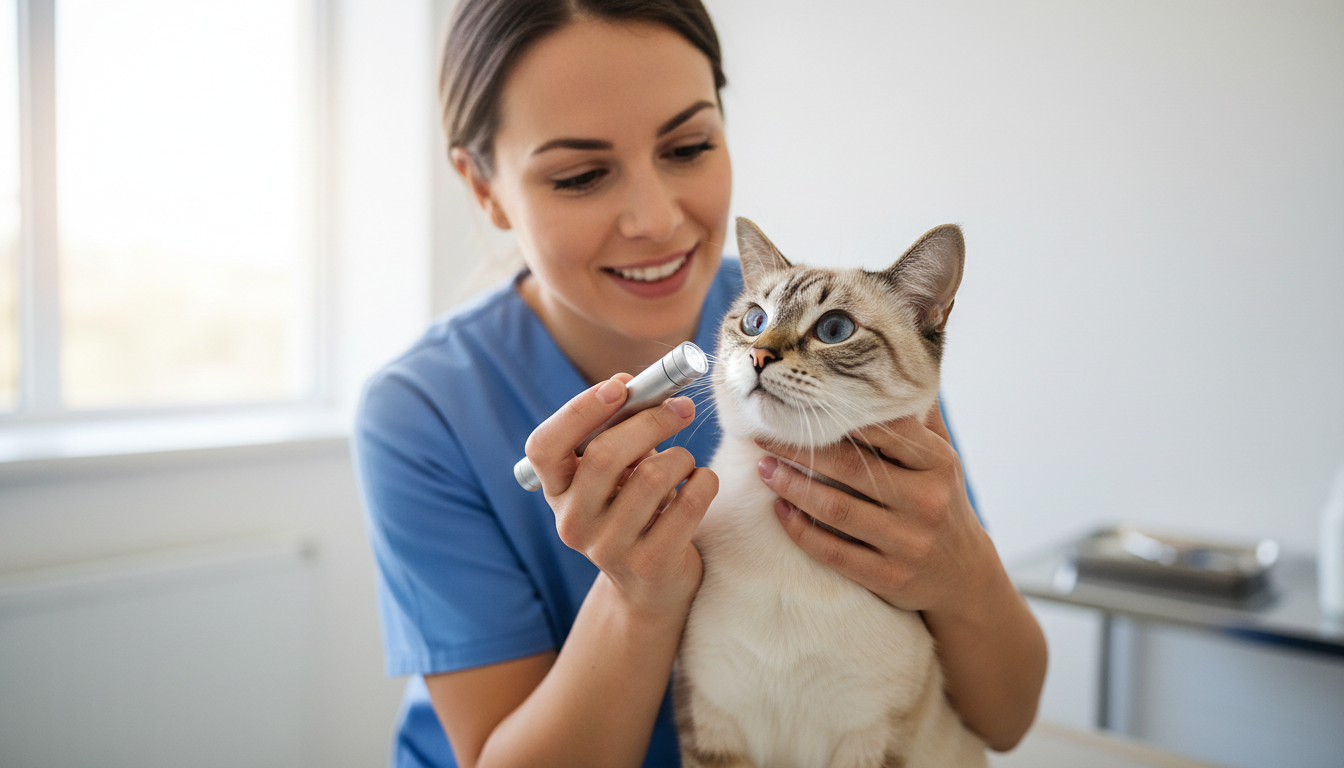
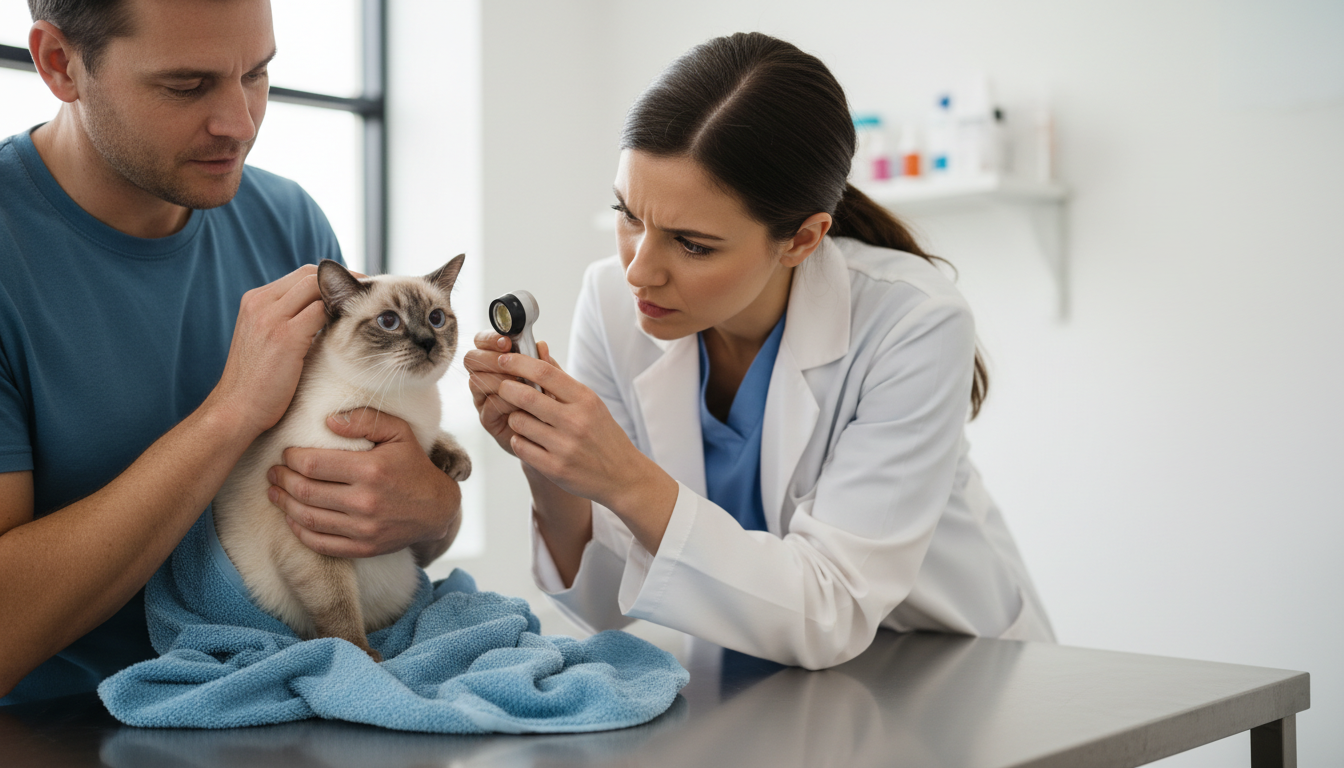
When you bring a cat in for evaluation of crossed eyes, your veterinarian will start by asking detailed questions about when the strabismus began, whether it’s stayed the same or changed, and whether you’ve noticed any other symptoms. This history is often just as important as the physical exam, since it helps distinguish a lifelong breed trait from something that developed more recently.
The physical exam typically includes a thorough look at the structure of the eyes themselves, checking pupil responses to light, and assessing how well your cat tracks moving objects. Your vet may also check reflexes and coordination to see whether the nervous system is functioning normally outside of the visual system.
In cases where the history and exam suggest a longstanding, stable, breed-related strabismus, further testing often isn’t needed. But if there are signs pointing toward an acquired cause, your vet may recommend additional diagnostics such as bloodwork, specialized eye exams, or referral to a veterinary ophthalmologist or neurologist for more advanced imaging.
Related Vision Quirks in the Breed
Strabismus in Siamese cats doesn’t usually occur in isolation. Many cats with this trait also show a mild, rhythmic side to side eye movement known as nystagmus, especially when they’re excited or focusing hard on something. This is thought to stem from the same underlying visual pathway differences and is generally considered part of the same package rather than a separate problem.
Some Siamese cats also seem to have subtly different depth perception compared to cats without crossed eyes, though most compensate well enough that it doesn’t meaningfully affect their quality of life. You might notice an occasional miscalculated jump, but most Siamese cats are just as agile and confident as any other cat once they’ve learned their own visual quirks.
Understanding that these traits often travel together can help put your mind at ease if you notice more than one of them in your own cat, especially if they’ve all been present since kittenhood and remain stable over time.
Does Strabismus Affect Quality of Life
For most Siamese cats, crossed eyes have little to no meaningful impact on daily life. Cats rely on a combination of vision, whiskers, hearing, and memory of their environment to navigate confidently, so a visual quirk that might seem significant to us often barely registers for the cat living with it.
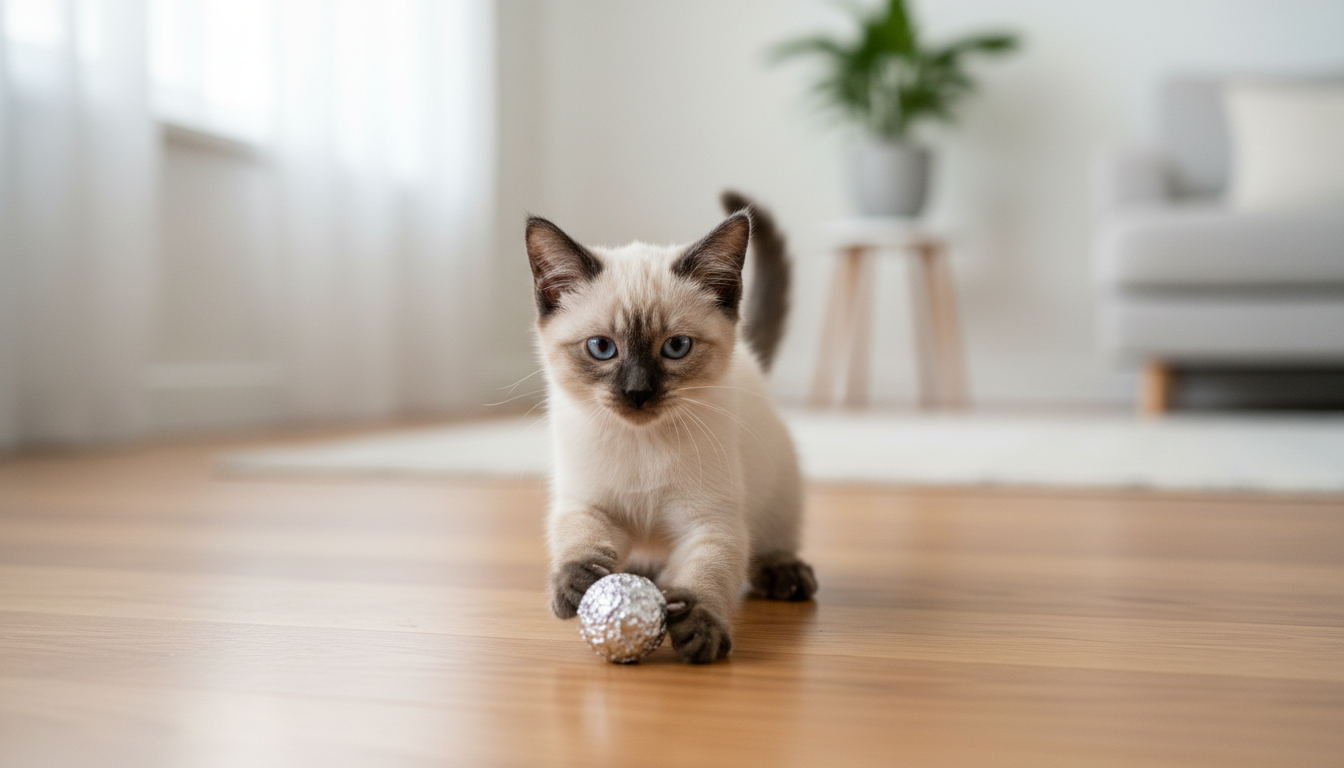
Owners sometimes worry that their cat must be missing out on normal feline experiences because of how their eyes look, but in practice, most cats with lifelong strabismus play, hunt toys, climb, and interact with their families exactly like any other cat. The brain is remarkably good at adapting during development, especially when the visual difference has been present from a very young age.
Where quality of life can be affected is in cases of acquired strabismus tied to an underlying disease process, since in those situations the strabismus is often a symptom of something else going on rather than the primary concern. This is another reason why distinguishing lifelong from newly developed strabismus matters so much.
What You Can Do at Home
While you can’t change your cat’s underlying eye wiring, there are things you can do to support a Siamese cat with strabismus and keep an eye on their overall wellbeing. Simple observation is one of your most valuable tools, since you’re the person best positioned to notice subtle changes over time.
Being an attentive observer doesn’t require any special skill, just consistency and a willingness to speak up if something seems off compared to your cat’s usual baseline.
- Keep a mental or written note of how your cat’s eyes typically look so you can spot changes
- Watch for any new hesitation with jumps, stairs, or unfamiliar spaces
- Take photos periodically, since side by side comparisons can reveal gradual changes you might otherwise miss
- Mention your cat’s eye appearance at every wellness visit, even if nothing seems different
- Avoid assuming any new symptom is “just the Siamese thing” without checking with your vet first
Kittens With Crossed Eyes
If you’ve recently brought home a Siamese kitten with visibly crossed eyes, it’s natural to wonder whether this will resolve as they grow or stay the same into adulthood. In many cases, the degree of strabismus present in kittenhood is a reasonable predictor of what you’ll see in adulthood, though some kittens do show slight changes in the appearance as their skull and eye socket structure matures.
It’s worth having your kitten’s eyes checked as part of their normal kitten wellness visits, both to establish a baseline and to rule out other kitten-specific eye issues that are unrelated to the classic Siamese trait, such as congenital cataracts or other developmental abnormalities. Your veterinarian can help you understand what you’re looking at and what, if anything, to watch for as your kitten grows.
Raising a kitten with crossed eyes generally doesn’t require any special adjustments to their environment or care routine, since most kittens adapt naturally and develop normal coordination and confidence right alongside their littermates.
Strabismus Versus Other Eye Problems
It’s worth distinguishing true strabismus from other eye appearances that can sometimes look similar to an untrained eye. Third eyelid protrusion, uneven pupil size, and certain types of eye discharge can all change how a cat’s eyes appear without actually involving misaligned eye position.
If you’re ever unsure which of these you’re seeing in your own cat, a photo taken in good lighting can be genuinely helpful to show your veterinarian, since it captures exactly what you’re describing in a way that’s sometimes hard to put into words.
- Strabismus involves the position of the eyes themselves relative to each other
- Third eyelid protrusion involves a membrane covering part of the eye and can signal illness or discomfort
- Anisocoria refers to pupils of different sizes and can indicate several different underlying issues
- Squinting or excessive blinking often points toward pain or irritation rather than a positional eye problem
- Cloudiness or color change in the eye itself is a separate concern from strabismus
Working With Your Veterinarian Long Term
Because strabismus in Siamese cats is often lifelong, it’s worth thinking of it as something you and your veterinarian track together over the years rather than a one time diagnosis. Regular wellness exams give your vet the chance to compare your cat’s eyes to previous visits and catch subtle changes early.
Bring up any questions you have during these visits, whether that’s about your cat’s coordination, any behavior changes you’ve noticed, or simply reassurance that everything still looks consistent with prior exams. Veterinarians appreciate owners who pay close attention to their pets, and this kind of ongoing observation is genuinely useful clinical information.
If your cat is ever referred to a veterinary ophthalmologist for a more detailed look at their eyes, don’t be alarmed. This is often done simply to establish a thorough baseline in breeds known for this trait, rather than because something alarming has been found.
The Bigger Picture on Breed-Related Traits
Siamese cats carry a number of distinctive traits linked to their genetics, and crossed eyes are one of the more visible examples of how a single gene can influence multiple systems in the body. Learning to recognize what’s typical for the breed helps you become a more confident, informed advocate for your own cat’s health.
This doesn’t mean every quirky trait should be dismissed as “just genetics,” but it does mean you can approach your Siamese cat’s crossed eyes with a reasonable, informed sense of calm rather than constant worry, as long as you stay alert to the specific warning signs that suggest something new is going on.
Talk to your veterinarian about anything that concerns you, even if you suspect it’s simply part of your cat’s Siamese heritage. Getting a professional opinion costs you very little and gives you real peace of mind, which is worth far more than guessing on your own.
When to Seek Emergency Care
While most cases of Siamese strabismus are stable and harmless, certain situations call for urgent veterinary attention rather than a routine appointment. Trust your instincts if something feels seriously wrong with your cat.
In any of these situations, contact an emergency veterinary clinic right away rather than waiting for a regular appointment, since some of the underlying causes can progress quickly and benefit from early treatment.
- Sudden onset of crossed eyes in a cat with no prior history of strabismus
- Strabismus accompanied by seizures, collapse, or severe disorientation
- Signs of head trauma, such as after a fall or accident
- Sudden loss of vision alongside any change in eye position
- Severe pain, such as your cat avoiding touch near the face or crying out
This article is for general education and is not a substitute for care from your own veterinarian. Learn about The Pet Vet and our editorial policy.