
If you share your home with a Dachshund, back problems are probably already on your radar. Their long spines and short legs make them especially prone to a painful spinal condition called intervertebral disc disease. This guide walks you through the warning signs, what happens at the vet, and the everyday habits that can help protect your dog’s back for years to come.
Table of Contents
- What Is IVDD in Dachshunds?
- Why Dachshunds Are More Prone to Back Problems
- Early Warning Signs You Shouldn’t Ignore
- Sudden Signs That Mean Emergency Vet Care
- How Vets Diagnose IVDD
- Treatment Options: Conservative Management
- Treatment Options: Surgery
- Recovery and Rehabilitation
- Preventing Back Injuries at Home
- Safe Exercise for Dachshunds
- Weight Management and Spinal Health
- Ramps, Stairs, and Furniture Safety
- Diet and Joint Support Supplements
- Living With a Dachshund Prone to IVDD
- When to Call the Vet Immediately
- Final Thoughts
What Is IVDD in Dachshunds?
Intervertebral disc disease, or IVDD, happens when the cushioning discs between the bones of the spine bulge, slip, or rupture. When this occurs, disc material can press on the spinal cord, causing pain, nerve damage, and sometimes loss of movement in the back legs. It is one of the most common reasons Dachshunds end up at the emergency vet.
Because Dachshunds have such a long torso relative to their leg length, their spines carry more stress than most other breeds. This body shape is exactly what people love about Dachshunds, but it also means their discs tend to degenerate earlier and more severely than in other dogs. Understanding this risk from the start can help you catch problems before they become emergencies.
Why Dachshunds Are More Prone to Back Problems
Dachshunds belong to a group of breeds sometimes described as chondrodystrophic, meaning their bones and cartilage develop differently than average. This affects how their spinal discs form and age, making the discs more brittle and prone to sudden rupture even during normal activities like jumping off a couch.
This is a structural, breed-related risk rather than something caused by anything you did wrong as an owner. That said, understanding the risk means you can make smarter choices about your dog’s daily routine, from how they play to how they get in and out of the car, which can meaningfully lower the odds of a serious spinal injury.
Early Warning Signs You Shouldn’t Ignore
Back problems in Dachshunds do not always show up as dramatic paralysis right away. Often, the first signs are subtle changes in behavior or posture that are easy to write off as your dog just being tired or in a mood. Paying attention to these small shifts can make a real difference in catching a problem early.
Trust your instincts here. You know your dog’s normal energy, posture, and habits better than anyone, and if something feels off, it is worth a call to your vet rather than waiting to see if it resolves on its own.
- Reluctance to jump onto furniture or climb stairs they normally use easily
- A hunched back or lowered head held close to the body
- Yelping or flinching when touched near the back or picked up
- Noticeably reduced interest in walks or play
- Trembling or shaking without an obvious cause
- A stiff, wobbly, or uneven gait
Sudden Signs That Mean Emergency Vet Care
Some Dachshund back problems come on gradually, but others happen suddenly and require immediate attention. A disc rupture can cause sudden pain, weakness, or even complete loss of movement in the hind legs within minutes to hours. This is considered a true emergency, and time matters for the best chance at recovery.
If you notice any of the signs below, do not wait to see if things improve. Call your vet or the nearest emergency animal hospital right away and follow their guidance on how to safely transport your dog without causing further injury.
- Sudden inability to stand or walk on the back legs
- Dragging the hind legs or knuckling the paws while walking
- Crying out in pain with no clear trigger
- Loss of bladder or bowel control
- Complete lack of feeling in the back paws
How Vets Diagnose IVDD
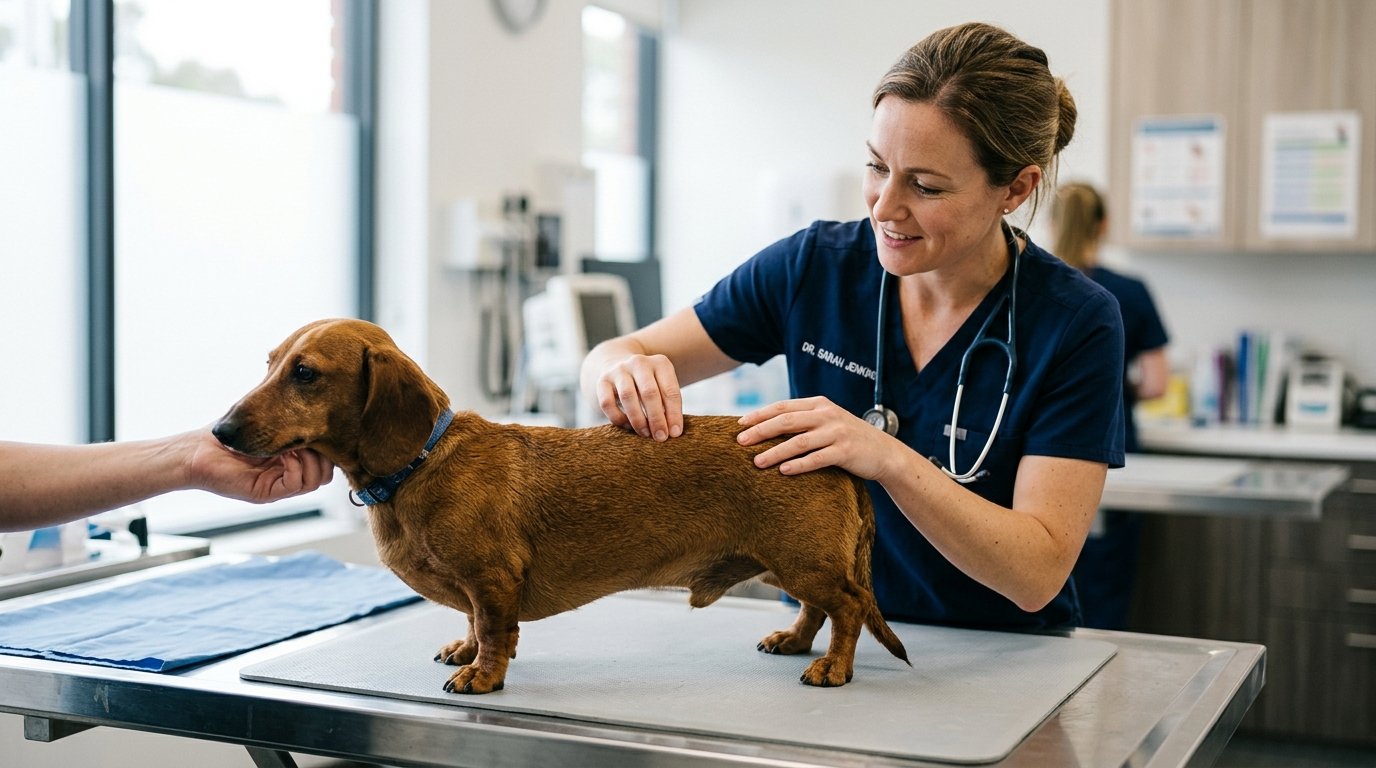
When you bring your Dachshund in for a suspected back problem, your vet will start with a physical and neurological exam. This includes checking reflexes, pain response, and how well your dog can feel and move their back legs. These simple tests give your vet a lot of information about how severe the problem might be.
In many cases, your vet will recommend imaging such as X-rays, a CT scan, or an MRI to get a clearer picture of what is happening at the spine. MRI in particular is considered the gold standard for pinpointing exactly which disc is affected and how much pressure is on the spinal cord, which helps guide treatment decisions.
Your vet may also discuss referring you to a veterinary neurologist, especially if surgery is being considered. This is a normal and often recommended step for a condition as delicate as spinal disc disease, and it does not mean your regular vet has done anything wrong.
Treatment Options: Conservative Management
For milder cases of IVDD, your vet may recommend what is called conservative or medical management. This typically involves strict crate rest for several weeks, along with medication prescribed and monitored by your vet to manage pain and inflammation. The goal is to give the disc and surrounding tissue time to heal without further strain.
Strict rest can be genuinely hard to enforce with an energetic Dachshund, but it is one of the most important parts of recovery. Even short bursts of jumping or running during this healing window can undo progress or worsen the injury, so following your vet’s exact instructions on activity restriction matters more than it might seem.
Treatment Options: Surgery
In more severe cases, especially when a dog has lost the ability to walk or feel their back legs, your vet may recommend surgery to relieve pressure on the spinal cord. Surgical treatment for IVDD is usually performed by a veterinary neurologist or surgeon and can significantly improve the chances of regaining movement, particularly when done promptly.
Deciding on surgery is a big decision, and it is completely reasonable to ask your vet detailed questions about expected outcomes, recovery time, and cost. Every dog and every case is different, so lean on your veterinary team to help you understand what is realistic for your individual dog rather than comparing to other cases you may have read about online.
Recovery and Rehabilitation
Whether your Dachshund is recovering from conservative treatment or surgery, rehabilitation plays a major role in getting back to normal life. Many vets recommend working with a canine rehabilitation specialist who can guide exercises, hydrotherapy, or other techniques designed to rebuild strength safely.
Recovery timelines vary widely depending on the severity of the original injury, so try not to compare your dog’s progress to a timeline you found in a forum or article. Consistent, gentle progress under your vet’s guidance is generally more valuable than pushing too hard too soon, which can risk reinjury.
Preventing Back Injuries at Home
While you cannot change your Dachshund’s genetics, you can control a lot of the everyday risks that contribute to spinal injuries. Simple household adjustments can meaningfully reduce the strain on your dog’s back over time, especially the repeated small impacts from jumping on and off furniture.
Think of prevention as a set of small habits rather than one big fix. Over months and years, these little choices add up and can make a real difference in whether your dog ever experiences a serious disc injury.
- Block access to high furniture unless a ramp or step is available
- Carry your dog for stairs when possible, especially as they age
- Avoid activities that involve twisting jumps, like catching a ball mid-air
- Use a harness instead of a collar to avoid neck and spine strain
- Keep nails trimmed so your dog has good traction on smooth floors
Safe Exercise for Dachshunds
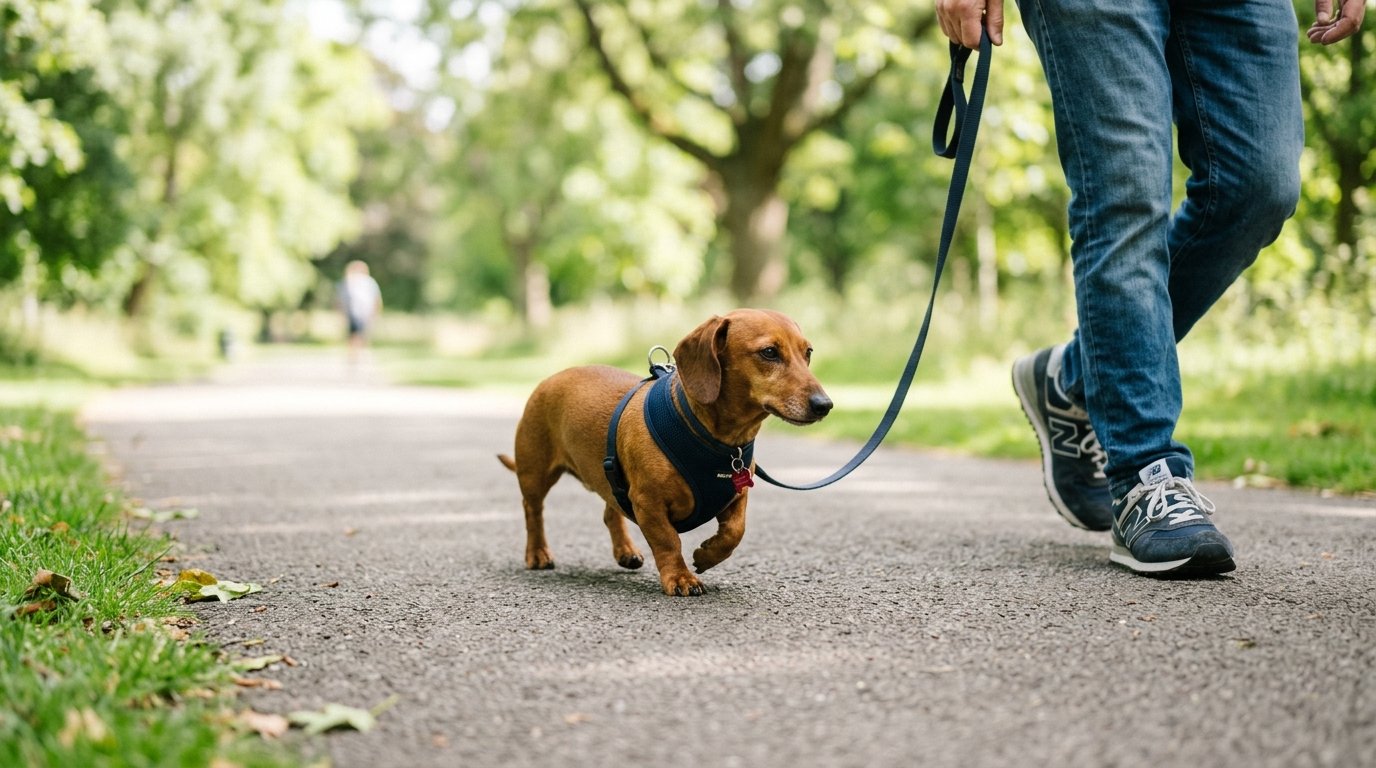
Exercise is still important for a healthy Dachshund, but the type of activity matters as much as the amount. Steady walks on flat, even ground are generally easier on the spine than high impact games involving running, jumping, or sudden direction changes.
Talk to your vet about an exercise routine that fits your individual dog’s age, weight, and any history of back issues. A dog who has already had one disc episode may need a more cautious, structured routine than a young, healthy Dachshund with no prior problems.
Weight Management and Spinal Health
Extra weight puts additional pressure on your Dachshund’s spine and joints, which can increase the risk of disc problems or make an existing condition worse. Keeping your dog at a healthy weight is one of the more straightforward ways you can support their back over their lifetime.
If you are unsure whether your dog is at a healthy weight, ask your vet at your next visit rather than guessing. They can assess your dog’s body condition directly and help you set realistic feeding and exercise goals if any adjustments are needed.
Ramps, Stairs, and Furniture Safety
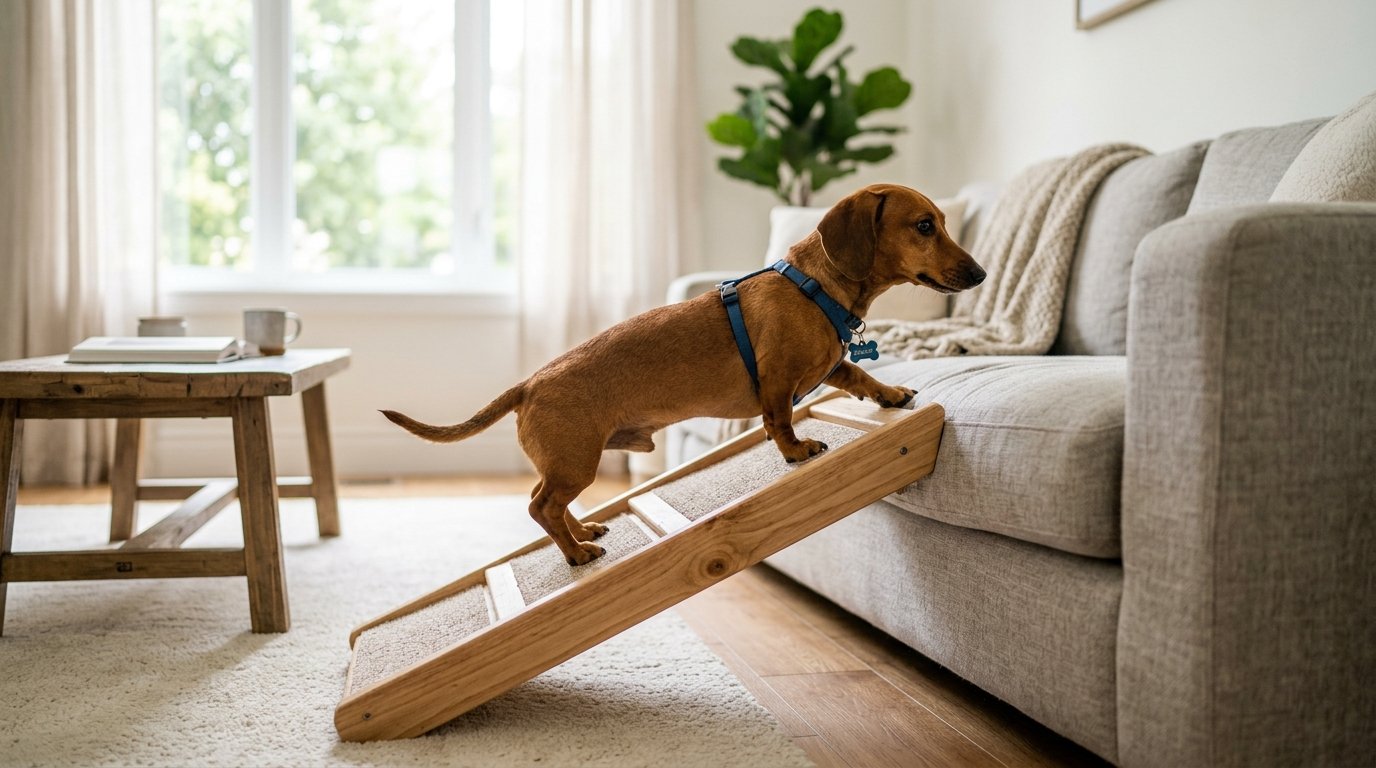
Small tools like pet ramps and steps can make a big difference in daily life for a Dachshund. These allow your dog to reach a favorite couch or bed without the repeated jumping impact that stresses their spine, and most dogs adjust to using them quickly with a little encouragement.
It is worth thinking through every spot in your home where your dog currently jumps up or down, including the car, the bed, and any raised furniture. Consistent use of ramps in all these spots, not just one, is what actually reduces cumulative strain on the back.
- Place a ramp or steps at the bed and couch
- Use a ramp for getting in and out of the car
- Consider a portable ramp for visiting friends’ or family’s homes
- Block off access to stairs if your dog struggles with them
Diet and Joint Support Supplements
Good nutrition supports more than just weight management, it also plays a role in overall joint and connective tissue health. Some owners choose to add joint support supplements to their Dachshund’s routine, but it is important to talk to your vet before starting anything new.
Your vet can recommend a product and approach that fits your dog’s specific needs and existing health history, and can also make sure any supplement will not interact with other medications your dog may be taking. Never start a new supplement or adjust dosing on your own without professional guidance.
Living With a Dachshund Prone to IVDD
If your Dachshund has already experienced a back problem, it is natural to feel anxious about every jump or wobble afterward. Many dogs go on to live full, happy lives after treatment and recovery, especially with thoughtful adjustments to their daily routine and environment.
Building a relationship with a vet you trust, and possibly a rehabilitation specialist, gives you a support system to lean on as questions come up. Regular checkups can also help catch any new issues early, which tends to lead to better outcomes overall.
When to Call the Vet Immediately
It bears repeating that sudden changes in your Dachshund’s ability to walk, stand, or control their bladder are always worth an urgent call to your vet or an emergency animal hospital. These situations can progress quickly, and getting professional care sooner rather than later generally gives your dog the best chance at a good recovery.
If you are ever unsure whether a symptom warrants an emergency visit, it is always safer to call your vet’s office and describe what you are seeing. They would much rather hear from you and reassure you than have you wait through a genuine emergency.
Final Thoughts
Dachshund back problems are a real and well-known risk for the breed, but they do not have to define your dog’s life. With awareness of the warning signs, thoughtful daily habits, and a strong relationship with your veterinary team, you can meaningfully lower the risk and respond quickly if something does go wrong.
Every Dachshund is different, so use this guide as a starting point for conversations with your vet rather than a substitute for their advice. They know your dog’s history and can help you build a plan that fits your specific situation.
This article is for general education and is not a substitute for care from your own veterinarian. Learn about The Pet Vet and our editorial policy.