
Herding instinct in Border Collies is one of the strongest working drives found in any dog breed, and it shapes almost everything about how these dogs think, move, and react to the world around them. That same instinct, when it does not have a healthy outlet, can spiral into shadow chasing, light fixation, obsessive circling, or compulsive herding of children, cars, or other pets. Understanding where natural drive ends and a behavior problem begins can help you keep your Border Collie happy, safe, and mentally balanced.
Table of Contents
- Why Border Collies Are Wired to Herd
- The Line Between Drive and Obsession
- Common Triggers You Might Not Expect
- Why Under-Stimulation Makes This Worse
- When Herding Behavior Crosses Into a Safety Concern
- Giving Herding Instinct a Healthy Outlet
- The Role of Structure and Predictable Routines
- Managing Herding Around Children and Other Pets
- When to Involve a Professional Trainer or Behaviorist
- The Connection Between Anxiety and Obsessive Herding
- Setting Realistic Expectations for This Breed
- Building a Long-Term Management Plan
- A Final Word for Worried Owners
Why Border Collies Are Wired to Herd
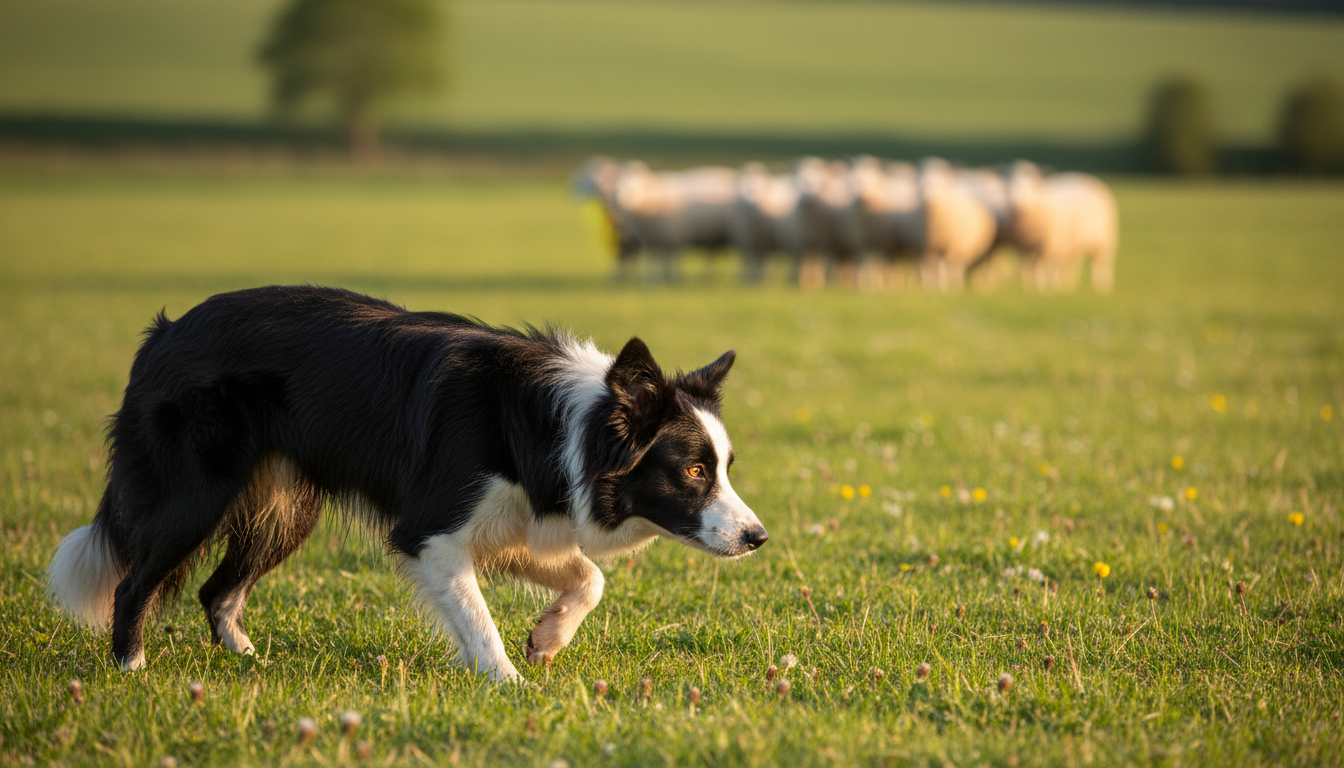
Herding instinct in Border Collies did not appear by accident. For generations, this breed was selectively bred to gather, control, and move livestock across open ground, often working independently and making split-second decisions far from a shepherd’s direct command. That history left behind a dog with an intense visual tracking ability, a strong desire to control movement in its environment, and a work ethic that does not simply switch off because the dog now lives in a house instead of a field.
This instinct shows up in behaviors that owners often find charming at first, like crouching low and staring intently at a moving object, nipping at heels, or circling a group to bring it together. In a working context, these behaviors are functional and rewarded. In a home without sheep, that same drive has to go somewhere, and it often redirects onto children, joggers, bicycles, vacuum cleaners, or other household pets.
Recognizing that this is instinct rather than disobedience is the first step toward managing it well. A Border Collie that stares, stalks, and nips is not being defiant; it is doing exactly what its genetics tell it to do. The goal is not to suppress that drive entirely but to give it appropriate outlets before it turns into something more compulsive.
The Line Between Drive and Obsession
Not every herding behavior is a problem. A dog that enjoys chasing a ball, working through an agility course, or practicing structured herding exercises with livestock or herding balls is expressing its drive in a healthy, satisfying way. Problems tend to develop when the behavior becomes rigid, repetitive, and difficult to interrupt, especially when it happens in contexts that have nothing to do with actual herding.
Obsessive behaviors often share a few common features. The dog may fixate on a single stimulus for long periods, such as a shadow, a reflection, or a spinning fan, and struggle to disengage even when called or offered a treat. The behavior may escalate over time, starting as occasional light chasing and progressing to pacing, whining, or frantic circling whenever the trigger appears. In some cases, the dog may appear distressed rather than satisfied after the behavior, which is a signal that this has moved from drive into compulsion.
- Fixating on moving lights, shadows, or reflections for extended periods
- Herding or nipping at children, joggers, or cyclists in ways that feel compulsive rather than playful
- Circling or pacing in repetitive patterns, especially when anxious or under-stimulated
- Difficulty settling down even in a calm, familiar environment
- Behavior that continues or worsens despite consistent redirection
Common Triggers You Might Not Expect
Many owners are surprised by how many ordinary household moments can trigger herding behavior. Ceiling fans, moving shadows from sunlight through blinds, reflections off water, and even the flicker of a television screen can catch a Border Collie’s eye and hold its attention in a way that looks unusual compared to other breeds. Vacuum cleaners and lawn mowers, with their steady back-and-forth motion, often become targets of intense fixation or nipping.
Children running and playing in the yard are a particularly common trigger, since fast, unpredictable movement closely mimics the behavior of livestock that the breed was designed to control. Cyclists, skateboarders, and joggers passing by the home can provoke similar responses, sometimes leading to chasing or nipping at heels. Even another pet in the household running playfully can set off herding behavior if the Border Collie has not been taught an alternative response.
Understanding your own dog’s specific triggers is useful because it lets you anticipate situations before they escalate. Keeping a simple mental or written log of what sets your dog off, and how intensely, can help you and your veterinarian or a qualified trainer figure out whether you are dealing with normal instinct that needs channeling or a more compulsive pattern that needs professional guidance.
Why Under-Stimulation Makes This Worse
A Border Collie that does not get enough physical exercise and mental work is far more likely to develop obsessive or compulsive versions of herding behavior. This breed was built to work long hours covering large distances while making continuous decisions, and a short daily walk rarely comes close to meeting that need. When the dog’s mind and body are not sufficiently engaged, that pent-up drive often finds its own outlet, and it is rarely one that owners find convenient.
Mental fatigue matters just as much as physical tiredness for this breed. A Border Collie that runs for an hour but never has to think, problem-solve, or use its nose and eyes in a structured way can still end up restless and fixated on inappropriate targets. Training sessions, puzzle feeders, scent work, and structured herding-style games give the brain a job to do, which often reduces the intensity of obsessive behaviors far more effectively than exercise alone.
- Long daily walks combined with off-leash time in a safe, enclosed area
- Structured training sessions that involve problem-solving, not just repetition
- Puzzle toys and food-dispensing games that require mental effort
- Organized activities like agility, flyball, or treibball that mimic herding motion
- Scent work or nose games that tap into natural working instincts
When Herding Behavior Crosses Into a Safety Concern
Most herding behavior is harmless, if sometimes annoying, but there are situations where it genuinely puts people, other animals, or the dog itself at risk. Nipping at the heels of children or adults, especially if it escalates to biting, is a serious concern that needs immediate attention rather than being dismissed as “just herding.” Chasing cars, bicycles, or joggers on or near roads can put the dog in real physical danger if the behavior leads it into traffic.
Obsessive light or shadow chasing can also become a safety issue if the dog injures itself trying to reach a reflection, repeatedly crashes into furniture, or becomes so fixated that it ignores basic cues like its name or a recall command. If you notice your dog’s herding behavior is interfering with its ability to eat, rest, or respond to you in everyday situations, that is a sign the behavior has moved beyond simple instinct.
If herding behavior ever results in a bite, even a minor one, or if you are concerned that your dog’s fixation has become compulsive and resistant to redirection, it is important to talk to your veterinarian. They can help rule out underlying medical or neurological contributors and can refer you to a qualified veterinary behaviorist or certified trainer experienced with working breeds.

Giving Herding Instinct a Healthy Outlet
One of the most effective ways to manage strong herding drive is to give it a structured, appropriate outlet rather than trying to eliminate it. Many Border Collie owners find that formal herding instinct testing or lessons with trained livestock, offered through herding clubs in many areas, allow the dog to use its natural ability in the exact context it was bred for. Even owners with no access to livestock can simulate some of that experience using herding balls, which are large, durable balls designed to be pushed and controlled much like a flock of sheep.
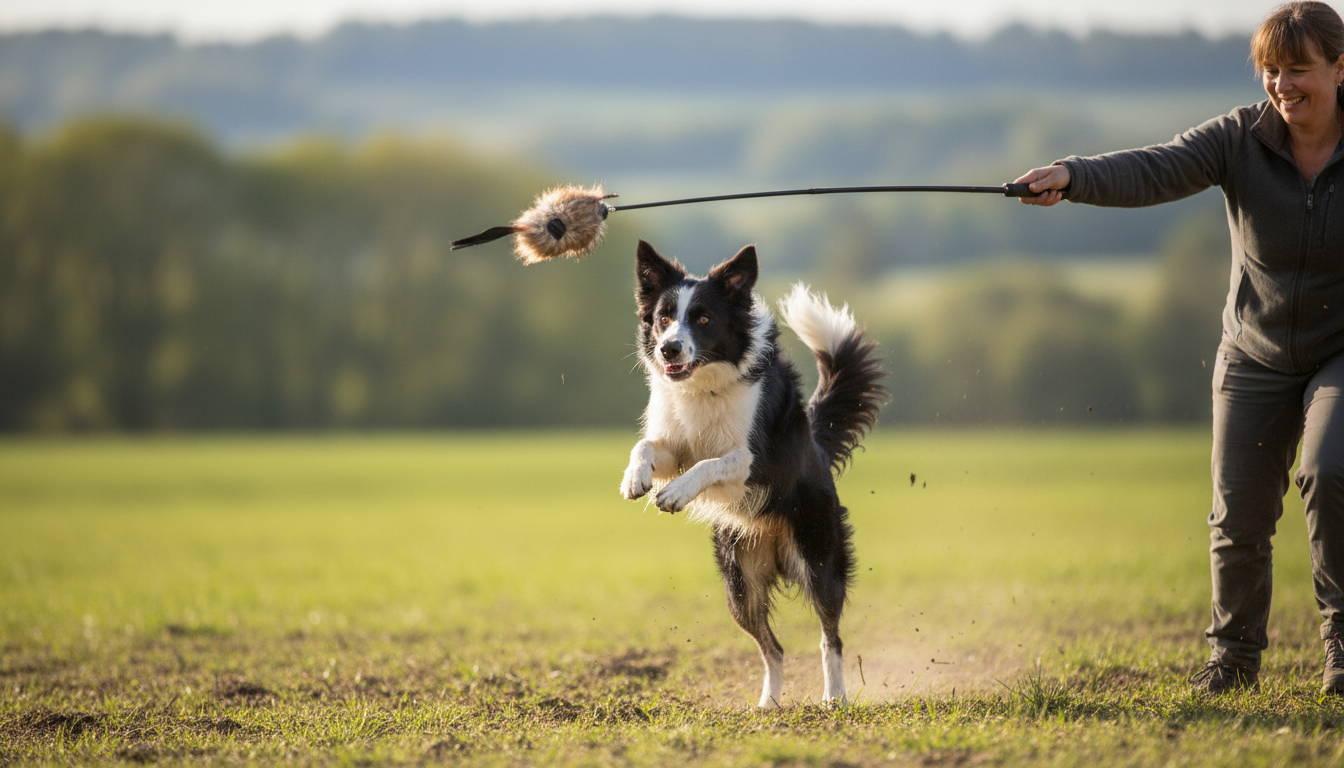
Structured games that involve controlled chasing, such as flirt pole work or directed fetch with clear start and stop cues, can also satisfy some of the chase-and-control instinct in a way that stays within your management. Teaching a strong “leave it” and a reliable recall gives you tools to interrupt fixation before it builds into something obsessive, and practicing these cues regularly, even when your dog is calm, makes them far more reliable in the moment they are actually needed.
- Herding instinct tests or lessons through local herding clubs, where available
- Herding balls for simulated livestock work in a yard or open space
- Flirt pole sessions with clear start and stop signals
- Strong foundational cues like leave it, watch me, and recall practiced daily
- Rotating toys and games to prevent fixation on any single object
The Role of Structure and Predictable Routines
Border Collies tend to thrive on predictability, and a lack of structure can actually feed obsessive behaviors rather than reduce them. Dogs that do not know what is expected of them, or whose days are inconsistent, often fall back on self-directed, repetitive behaviors to create their own sense of order. Establishing clear daily routines around feeding, exercise, training, and rest can reduce anxiety and give the dog fewer opportunities to develop fixations out of boredom or uncertainty.
Consistent household rules also matter. If chasing the vacuum is allowed one day and scolded the next, or if children are sometimes allowed to run freely near the dog and other times told to stop because the dog is herding them, the inconsistency can make it harder for your dog to learn what behavior is actually expected. Involving every member of the household in consistent responses to herding behavior helps your dog generalize the lesson faster and reduces confusion that can contribute to anxious, obsessive patterns.

Managing Herding Around Children and Other Pets
Because herding behavior often targets fast-moving children, it is worth taking some proactive steps if you have kids in the home or visiting frequently. Teaching children to stop and stand still if the dog begins nipping or circling can interrupt the behavior naturally, since stillness removes the trigger that the dog is responding to. Supervising play sessions closely, especially early on, allows you to redirect the dog before nipping becomes a habit rather than reacting after it has already happened.
With other pets, especially smaller or more timid animals, it helps to give everyone separate space and supervised introductions rather than assuming the Border Collie will self-regulate its herding instinct. Some Border Collies learn to coexist peacefully with cats, rabbits, or smaller dogs once they understand that chasing and nipping are not acceptable, but this usually requires consistent, patient training rather than hoping the behavior resolves on its own.
- Teach children to stand still and avoid screaming or running if nipped at
- Supervise all interactions between the dog and small children or smaller pets
- Redirect herding attempts toward an appropriate toy or activity immediately
- Reward calm behavior around triggers rather than only correcting unwanted behavior
- Separate the dog from triggering situations if it becomes overstimulated
When to Involve a Professional Trainer or Behaviorist
If you have tried increasing exercise, mental stimulation, and structured outlets and your Border Collie’s herding behavior still seems to be escalating or causing problems, it is worth bringing in professional help. A certified trainer with experience in herding breeds can observe your dog’s specific triggers and body language and help you build a tailored management and training plan rather than relying on generic advice that may not fit your dog’s particular pattern.
Veterinary behaviorists are especially useful when a behavior has crossed into what looks like a compulsive disorder, meaning it is rigid, difficult to interrupt, and seemingly not fully under the dog’s control. These specialists can assess whether there are underlying anxiety, pain, or neurological factors contributing to the behavior and can work alongside your regular veterinarian to create a comprehensive plan that may include behavior modification and, in some cases, other supportive interventions.
Do not wait until a behavior has caused an injury or a major household disruption before seeking help. Early intervention is generally far more successful than trying to retrain a long-standing, deeply ingrained compulsive pattern, and a professional can often spot warning signs that are easy to miss from the inside of a daily routine with your dog.
The Connection Between Anxiety and Obsessive Herding
In some Border Collies, obsessive herding behaviors are linked less to boredom and more to underlying anxiety. A dog that feels unsettled by changes in its environment, unpredictable schedules, or a lack of clear leadership may turn to repetitive, self-soothing behaviors like circling, pacing, or fixating on a particular object as a way of coping. This is similar to how some people develop repetitive habits during stressful periods, except the dog cannot tell you in words what is bothering it.
If you notice that your dog’s herding or fixation behaviors intensify during specific situations, such as thunderstorms, visitors, travel, or changes in routine, it is worth considering whether anxiety is playing a role alongside instinct. Addressing the anxiety directly, through calm management, predictable routines, and possibly professional behavioral support, can sometimes reduce obsessive behaviors more effectively than focusing on the herding component alone.
Your veterinarian can help you figure out whether anxiety is a meaningful factor in your dog’s case, since they can evaluate your dog’s overall health and behavior history and refer you to specialists if needed. Trying to address a behavior that is fundamentally rooted in anxiety using only exercise and herding outlets may bring limited improvement, so getting an accurate picture of what is driving the behavior matters.
Setting Realistic Expectations for This Breed
It is worth being honest with yourself about what living with a Border Collie actually involves before and after you notice obsessive tendencies developing. This is not a breed that tends to do well with a sedentary lifestyle or minimal engagement, and some degree of herding behavior, like eye contact, crouching, or occasional nipping at moving objects, is likely to show up no matter how much training and enrichment you provide. The goal is not a dog with zero herding instinct, which would be unusual for the breed, but a dog whose instinct is channeled into acceptable outlets most of the time.
Owners who come into Border Collie ownership expecting a dog that behaves like a lower-drive breed are often the ones who end up overwhelmed when herding instinct shows up in full force. Researching the breed thoroughly before bringing one home, or working closely with a trainer from the early puppy stages if you already have one, sets more realistic expectations and reduces frustration for both you and your dog down the road.

Building a Long-Term Management Plan
Successfully living with a Border Collie’s herding instinct is usually not about a single fix but about an ongoing, flexible management plan that evolves as your dog ages and your household changes. What works for a six-month-old puppy with boundless energy may need adjustment for a seven-year-old dog with early joint stiffness, so staying attentive to your dog’s changing needs is part of responsible long-term care. Regular veterinary checkups are a good opportunity to discuss behavior alongside physical health, since the two are often more connected than owners realize.
Keeping a flexible toolkit of outlets, from herding balls to structured training sessions to simple changes in daily routine, allows you to adapt as needed rather than relying on a single strategy that may stop working over time. Tracking what helps and what does not, and being willing to bring in professional support when things feel stuck, gives you the best chance of keeping your Border Collie’s incredible natural drive working for your household instead of against it.
- Schedule regular veterinary checkups that include behavior discussions
- Reassess exercise and enrichment needs as your dog ages
- Keep a flexible set of outlets rather than relying on just one activity
- Track triggers and progress to spot patterns over time
- Reach out to a trainer or behaviorist early if obsessive patterns develop
A Final Word for Worried Owners
Living with a Border Collie’s herding instinct can feel overwhelming at times, especially when the behavior shows up in ways that disrupt family life or seem hard to control. It helps to remember that this drive is not a flaw or a sign of a poorly behaved dog, but a deeply ingrained part of what makes the breed so capable and intelligent. With the right combination of structure, outlets, and patience, most Border Collies learn to channel their instinct in ways that work for everyone in the household.
If you are ever genuinely concerned that your dog’s behavior has moved beyond manageable instinct into something compulsive, anxious, or unsafe, please reach out to your veterinarian. They are your best first step, whether that means ruling out medical contributors, connecting you with a veterinary behaviorist, or simply reassuring you about what is normal for this remarkable, hardworking breed.
This article is for general education and is not a substitute for care from your own veterinarian. Learn about The Pet Vet and our editorial policy.