
Basset Hound obesity is one of the most common health concerns this breed faces, and it often creeps up quietly until the extra weight is already straining joints and organs. Between their low-slung build, strong appetite, and laid-back energy levels, Bassets are practically designed to gain weight if their diet and activity aren’t carefully managed. This guide walks you through why it happens, what to watch for, and how to help your Basset stay lean and comfortable.
Table of Contents
- Why Basset Hounds Gain Weight So Easily
- The Basset Hound Body Shape and Why It Matters
- Signs Your Basset Hound May Be Overweight
- Health Risks Linked to Extra Weight in This Breed
- How Vets Assess a Healthy Weight for Basset Hounds
- Feeding Strategies That Help Prevent Weight Gain
- Exercise That Works With a Basset Hound’s Body
- The Role of Genetics and Breed Predisposition
- Weight Gain in Puppies vs. Adult Basset Hounds
- Senior Basset Hounds and Weight-Related Concerns
- Hidden Calories Owners Often Overlook
- Working With Your Vet on a Weight Loss Plan
- Supporting Joint Health Alongside Weight Management
- When to See a Vet About Your Basset Hound’s Weight
- Helping Your Basset Hound Live a Longer, Healthier Life
Why Basset Hounds Gain Weight So Easily
Basset Hounds were bred as scent hounds meant to work at a slow, steady pace, trailing game over long distances rather than sprinting or jumping. That body type comes with a naturally efficient metabolism built for endurance rather than high-calorie burn, which means they simply don’t need as many calories as more athletic breeds their size. Add in their famously food-motivated personality and persuasive begging skills, and it becomes very easy for owners to overfeed them without realizing it.
Their short legs and long, heavy body also mean that even modest weight gain looks and feels different on a Basset than it would on a taller dog. A few extra pounds on a dog this low to the ground translates into a much higher percentage of body weight than the same gain would on a Labrador or German Shepherd. That makes Bassets especially vulnerable to the downstream effects of carrying extra weight, since their frame has less margin for error.
Many owners also underestimate how sedentary Bassets can be by nature. They are not a breed that demands constant exercise, and their calm, low-key temperament can mask the fact that they’re getting far less activity than they need to balance out their food intake. Over months and years, that mismatch between calories in and calories burned adds up steadily.
The Basset Hound Body Shape and Why It Matters
The same long back and short legs that give Basset Hounds their iconic look also make them more sensitive to extra weight than many other breeds. Their spine is already under more mechanical stress than a dog with a more proportional build, and added pounds increase the load on the vertebrae and surrounding muscles with every step. This is part of why weight management matters so much more urgently in this breed than in some others.
Their joints face a similar challenge. Basset Hounds are already prone to joint issues given their heavy bone structure relative to their height, and extra weight accelerates wear on the hips, elbows, and knees. Over time, this can make it harder for them to get up, climb stairs, or enjoy the slow sniffing walks they love so much.
Their chest and abdomen shape can also make it harder to visually judge weight gain early on. Because Bassets naturally have a deep chest and a bit of a droop to their belly, it can take longer for an owner to notice that their dog has actually gained weight compared to a breed with a more visibly athletic silhouette.
Signs Your Basset Hound May Be Overweight
Because Bassets carry their weight differently than many breeds, it helps to know what specific signs to look for rather than relying on appearance alone. A hands-on check is often more reliable than a visual one with this body type.
If you notice several of these signs together, it’s worth scheduling a visit with your vet to get an objective weight and body condition assessment rather than guessing on your own.
- You cannot easily feel the ribs when running your hands along the sides of the chest
- There is little to no visible waist when looking down at your dog from above
- Your dog seems reluctant to go on walks they used to enjoy, or tires quickly
- Getting up from lying down looks like more effort than it used to
- Your dog is panting heavily after mild activity or in cool weather

Health Risks Linked to Extra Weight in This Breed
Carrying excess weight puts a Basset Hound at higher risk for a number of health problems that can significantly affect their quality of life. Joint strain is often the most visible issue, since their already heavy-boned frame has to support additional pounds with every movement, which can speed up the development of arthritis and general joint discomfort.
Back problems are another major concern given how much stress extra weight places on a long spine supported by short legs. This can increase the chances of disc issues and chronic back pain, which may show up as reluctance to jump, stiffness, or changes in posture. Heart and respiratory strain are also common consequences, since extra weight makes the heart work harder and can make breathing more labored, especially in warm weather or after any exertion.
Any of these concerns should be discussed with your veterinarian, who can evaluate your dog’s specific situation rather than relying on general assumptions.
- Increased risk of arthritis and joint degeneration
- Greater strain on the spine and back muscles
- Higher chance of heart and respiratory difficulty
- Increased risk of diabetes
- More strain on the liver and other organs processing excess fat
How Vets Assess a Healthy Weight for Basset Hounds
Because Basset Hounds have such a distinctive body shape, a standard weight chart alone often isn’t the best tool for judging whether your dog is at a healthy size. Veterinarians typically use a body condition scoring system that combines a visual assessment with hands-on palpation of the ribs, waist, and abdomen to get a fuller picture.
During a body condition check, your vet will usually feel along your dog’s ribcage to see how easily the ribs can be felt under a thin layer of fat, check for a visible waist when viewed from above, and assess the abdominal tuck when viewed from the side. This gives a much more accurate picture than weight alone, since two Basset Hounds of the same weight could have very different body compositions depending on their individual frame.
It’s worth asking your vet to walk you through this assessment during a regular wellness visit so you understand what a healthy weight looks and feels like on your specific dog. This way, you’ll be better equipped to notice subtle changes at home between appointments.

Feeding Strategies That Help Prevent Weight Gain
Portion control is one of the most effective tools for preventing obesity in Basset Hounds, and it starts with knowing exactly how much food your dog actually needs rather than relying on bag recommendations alone, which are often designed for more active breeds. Measuring food precisely rather than estimating by eye can make a significant difference over time.
Treats deserve particular attention in this breed, since Bassets are notorious for using those soulful eyes to score extra snacks throughout the day. Those calories add up quickly, especially with a breed that doesn’t burn through them easily, so it helps to think of treats as part of the daily calorie total rather than as freebies.
Your veterinarian or a veterinary nutritionist can help you build a feeding plan tailored to your dog’s age, activity level, and any existing health conditions.
- Measure meals with a standard kitchen scale or measuring cup rather than guessing
- Account for treats and table scraps as part of total daily calories
- Avoid free-feeding and stick to set mealtimes instead
- Ask your vet about appropriate portion sizes based on your dog’s current body condition
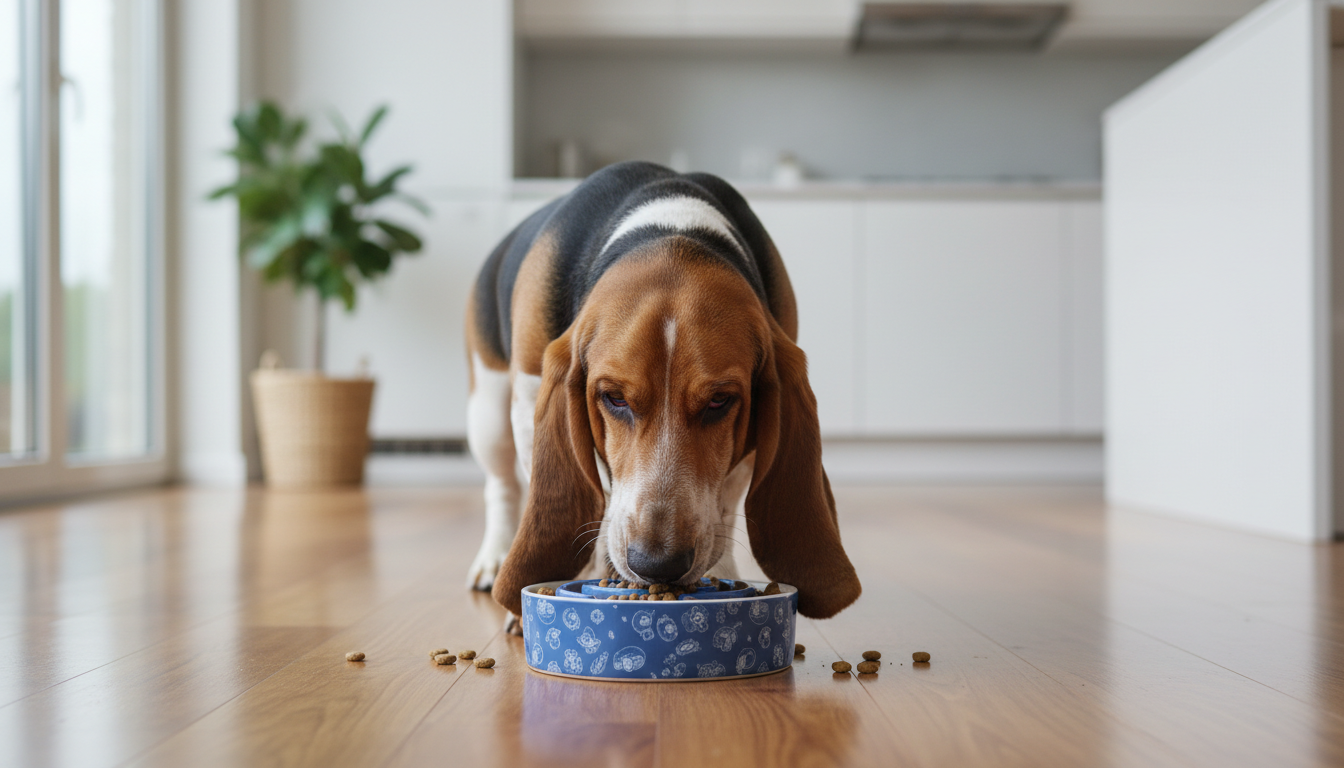
- Consider slow feeders if your dog eats quickly and seems to overeat as a result
Exercise That Works With a Basset Hound’s Body
Exercise is an essential part of weight management, but it needs to be approached carefully with Basset Hounds given their joint and back sensitivities. High-impact activities like jumping or repetitive stair climbing aren’t ideal for this breed, since they place unnecessary strain on a frame that’s already working against gravity and a long spine.
Low-impact activities tend to work best, such as steady walks on flat ground where your dog can follow their nose at a comfortable pace. Because Bassets are scent hounds at heart, incorporating sniffing games or short scent-trail walks can make exercise more mentally engaging, which often encourages them to stay active longer than they would on a straightforward walk alone.
Always check with your vet before starting a new exercise routine, especially if your dog is already carrying extra weight or has existing joint concerns.
- Favor flat, even walking surfaces over hills or stairs when possible
- Keep sessions consistent and frequent rather than long and infrequent
- Use scent games or nose work to add mental stimulation to physical activity
- Avoid high-impact activities like jumping on and off furniture
- Build up activity gradually if your dog hasn’t been very active recently

The Role of Genetics and Breed Predisposition
Genetics play a real role in how easily a Basset Hound gains weight, and some individual dogs within the breed may be more prone to it than others. This doesn’t mean weight gain is inevitable, but it does mean some dogs will need more deliberate management than others to stay at a healthy size throughout their life.
Breed predisposition also means that Basset Hounds as a group tend to show up more frequently in veterinary weight-related concerns compared to leaner, more active breeds. Being aware of this tendency from the time you bring your Basset home, rather than waiting until weight becomes an obvious problem, can make long-term management much easier.
Talking with your vet about your individual dog’s family history and body type, if you have that information, can help shape a more personalized approach to feeding and exercise from early on.
Weight Gain in Puppies vs. Adult Basset Hounds
Weight management looks a little different depending on your Basset’s life stage. Puppies are growing and need adequate nutrition to support healthy bone and joint development, so restricting calories too aggressively at a young age isn’t the answer. Instead, the focus during puppyhood should be on feeding an appropriate growth formula in the right amounts and avoiding overfeeding from the start.
Adult Basset Hounds, on the other hand, have different needs since their growth has finished and their metabolism tends to slow down as they settle into adulthood. This is often when extra weight starts to creep in if feeding amounts aren’t adjusted to match their lower calorie needs compared to the puppy stage.
Your vet can help you transition your Basset’s diet appropriately as they move from puppy to adult food, and can flag any early signs of excess weight gain before it becomes an established pattern.
Senior Basset Hounds and Weight-Related Concerns
As Basset Hounds age, their activity levels naturally decline further, which can make existing weight issues worse if feeding amounts aren’t adjusted accordingly. Senior dogs often need fewer calories than they did in their middle years, even if their appetite stays just as strong.
Extra weight becomes particularly concerning in senior Bassets because it compounds age-related joint wear and can make arthritis symptoms more severe and harder to manage. A senior dog carrying extra pounds may also have a harder time regulating body temperature and recovering from minor illnesses or injuries.
Discuss your senior Basset’s changing calorie needs with your vet at routine checkups so adjustments can be made before noticeable weight gain occurs.
- Senior dogs often need adjusted calorie intake even without changes to activity
- Extra weight can worsen existing arthritis or joint stiffness
- Weight gain can make it harder to spot other health changes during visual checks
- Regular senior wellness visits help track weight trends over time
Hidden Calories Owners Often Overlook
Many owners focus on main meals while overlooking the smaller sources of calories that add up throughout the day. Table scraps, flavored medications, dental chews, and even the occasional bite of a family member’s food can quietly undermine an otherwise well-managed diet.
Basset Hounds’ expressive, pleading faces make this an especially easy trap to fall into, since it can feel difficult to say no to a dog who seems so genuinely hopeful. Being mindful of these hidden calorie sources, and discussing them openly with everyone in the household who interacts with your dog, can make a meaningful difference in overall weight control.
Keeping a simple daily log of everything your dog eats, including small extras, can help you and your vet identify where excess calories might be sneaking in.
- Table scraps and leftovers, even small amounts
- High-calorie dental chews or flavored supplements
- Peanut butter or cheese used to hide medication
- Treats given by multiple family members without tracking totals
- Food used purely as a way to manage begging behavior

Working With Your Vet on a Weight Loss Plan
If your Basset Hound has already gained excess weight, your veterinarian can help you build a structured, gradual weight loss plan tailored to your dog’s specific needs. This typically involves a combination of calorie-controlled feeding, appropriate exercise, and regular weigh-ins to track progress over time.
Rapid weight loss isn’t healthy or safe for dogs, so your vet will likely recommend a gradual approach designed to protect muscle mass and avoid additional strain on joints during the process. They may also recommend specific prescription weight management diets formulated to help dogs feel satisfied on fewer calories.
Regular follow-up visits are an important part of this process, since they allow your vet to adjust the plan as needed based on how your dog is responding and to catch any related health concerns early.
Supporting Joint Health Alongside Weight Management
Because Basset Hounds are already prone to joint strain, supporting joint health alongside any weight management plan is especially important for this breed. Reducing excess weight is one of the most effective ways to ease pressure on the joints, but your vet may also discuss other supportive measures depending on your dog’s individual needs.
This might include joint-supportive supplements, orthopedic bedding to reduce pressure on pressure points, or ramps and steps to help your dog avoid jumping on and off furniture or into vehicles. These small environmental adjustments can meaningfully reduce daily strain while your dog works toward a healthier weight.
Your vet is the best resource for determining which supportive measures make sense for your individual dog, based on their current joint health and any existing conditions.
When to See a Vet About Your Basset Hound’s Weight
It’s worth scheduling a vet visit any time you’re unsure whether your Basset Hound is at a healthy weight, rather than waiting until the issue becomes obvious. Early intervention is always easier and safer than addressing an established weight problem later on.
You should also see a vet promptly if you notice sudden weight gain, increased reluctance to move, changes in breathing, or any signs of joint pain, since these can sometimes point to underlying health issues beyond diet alone. A thorough veterinary exam can rule out other causes and help you move forward with confidence.
Never attempt to diagnose the cause of weight changes on your own. Your veterinarian is best equipped to evaluate your dog and recommend a safe, effective path forward.
- Noticeable weight gain over a short period of time
- Increased difficulty standing, walking, or climbing stairs
- Labored breathing after mild activity
- Reluctance to go on walks your dog previously enjoyed
- Visible changes in body shape or loss of a waistline
Helping Your Basset Hound Live a Longer, Healthier Life
Managing your Basset Hound’s weight isn’t about restriction for its own sake, it’s about protecting their joints, heart, and overall comfort so they can enjoy more active, pain-free years. Small, consistent changes in feeding and activity tend to make a much bigger difference over time than occasional drastic efforts.
Staying in regular contact with your veterinarian, measuring food carefully, and building in low-impact exercise suited to your Basset’s body shape can go a long way toward keeping them at a healthy weight throughout their life. With the right support, many Basset Hounds can maintain a healthy size and enjoy a good quality of life well into their senior years.
Your vet remains your best partner in this process, offering guidance tailored to your individual dog rather than generic advice. Regular checkups and open communication about diet and activity will help you catch small issues before they become bigger problems.
This article is for general education and is not a substitute for care from your own veterinarian. Learn about The Pet Vet and our editorial policy.