
Labrador Retriever ear infections are one of the most common reasons this breed ends up at the vet’s office. Between their love of water, their floppy ears, and skin that tends to run a little oily, Labs seem built for ear trouble. If your Lab has had one ear infection after another, you are not imagining a pattern. Here is what is driving it, how to spot an infection early, and what you can actually do to help.
Table of Contents
- Why Labradors Are So Prone to Ear Infections
- Signs Your Lab May Have an Ear Infection
- What Causes Ear Infections in This Breed
- How Veterinarians Diagnose Ear Infections
- Treatment Approaches Your Vet May Recommend
- The Role of Allergies in Chronic Ear Trouble
- Keeping Water Out: Swimming and Bathing Precautions
- Routine Ear Care Between Vet Visits
- When to Treat This as an Emergency
- Living With a Breed Prone to Ear Trouble
Why Labradors Are So Prone to Ear Infections
Labrador Retrievers have ears that hang down and lie flat against the side of the head. That floppy shape might look adorable, but it also means less airflow reaches the ear canal. Warmth, moisture, and darkness inside the canal create exactly the kind of environment that yeast and bacteria love to grow in.
Add to that the Lab’s famous enthusiasm for swimming, splashing, and generally getting wet at every opportunity, and you have a breed that is almost constantly introducing moisture into an already poorly ventilated ear canal. Water that gets trapped inside the ear does not always drain or evaporate the way it would in a dog with upright ears, and that trapped moisture can quickly tip a normal ear into an infected one.
Labs can also have somewhat oily skin and a tendency toward allergies, both of which change the environment inside the ear canal. Excess oil or inflammation from allergies gives yeast and bacteria even more to feed on. When you put floppy ears, a love of water, and a skin type prone to allergic flare-ups together, it is easy to see why this breed struggles with ear infections more than many others.
Signs Your Lab May Have an Ear Infection
Catching an ear infection early makes treatment faster and more comfortable for your dog. Most owners notice the behavioral changes before they notice anything obviously wrong with the ear itself, since dogs tend to react to the discomfort before the visible signs become dramatic.
If you notice any combination of these signs, it is time to have your veterinarian take a look rather than waiting to see if it clears up on its own.
- Scratching at one or both ears more than usual
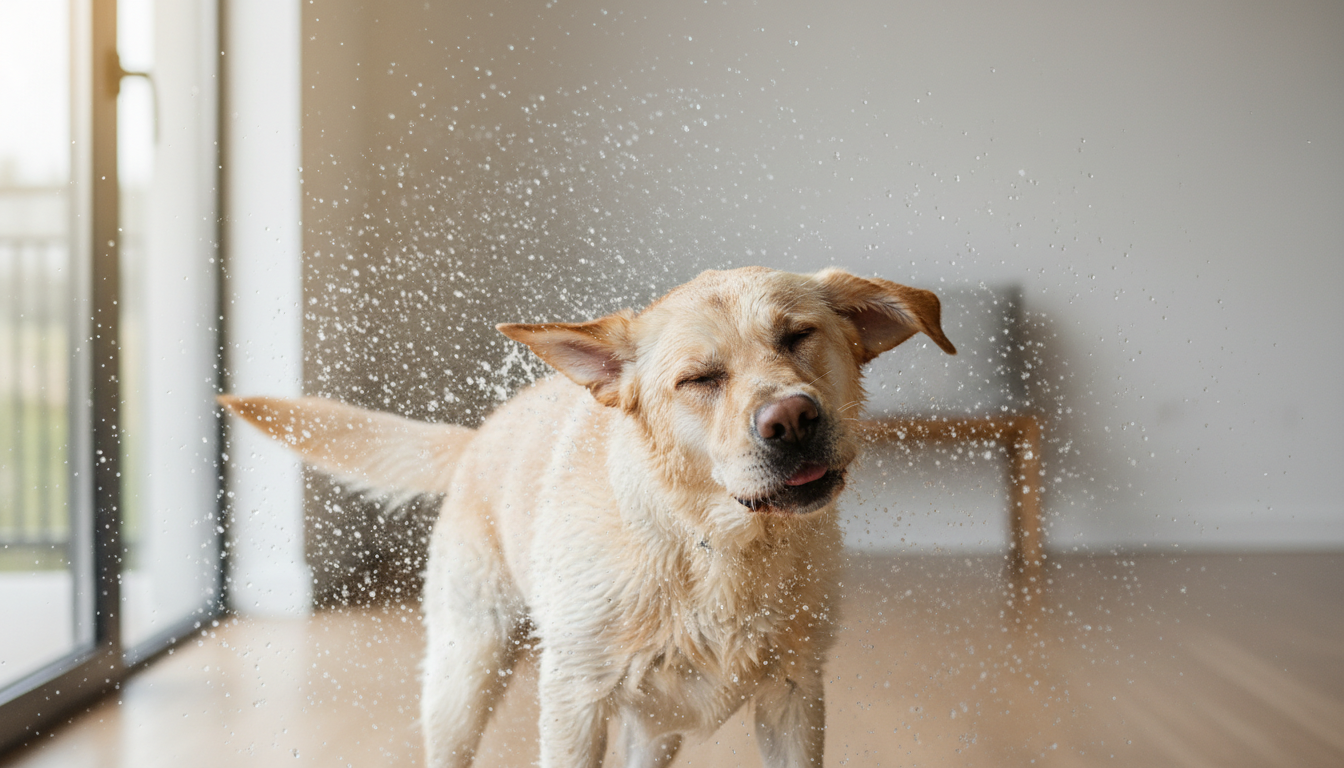
- Shaking the head frequently, sometimes violently
- A strong, unpleasant odor coming from the ear
- Dark, waxy, or crusty discharge inside the ear
- Redness or swelling of the ear flap or canal opening
- Rubbing the side of the head against furniture or the floor
- Tilting the head to one side
- Sensitivity or pain when the ears are touched
What Causes Ear Infections in This Breed
Ear infections in Labs are rarely a one-time fluke. Most cases trace back to a recurring cause, and figuring out that underlying cause is often the key to breaking the cycle. Moisture trapped after swimming or bathing is one of the most common triggers, especially during warmer months when Labs are in and out of water constantly.
Allergies, whether to food or environmental triggers like pollen and dust, are another major contributor. Allergic skin reactions often show up first in the ears, long before a dog develops the itchy paws or skin that people usually associate with allergies. Ear mites, foreign material like grass seeds, and even underlying hormonal conditions can also set the stage for infection.
Because so many different things can trigger an ear infection, your veterinarian may need to look beyond the ear itself to figure out why infections keep coming back. A single infection might just need cleaning and medication, but a Lab who gets infections over and over usually has something else going on that deserves investigation.
How Veterinarians Diagnose Ear Infections
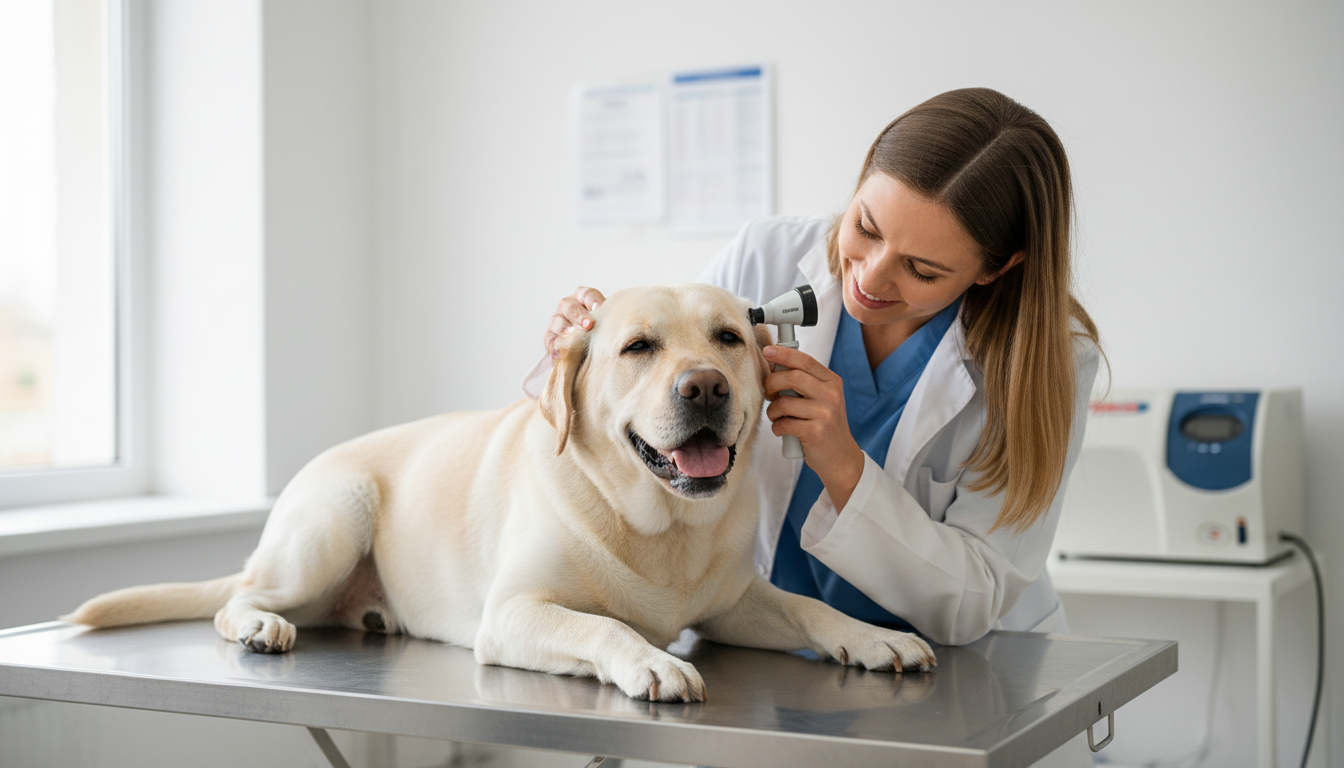
A veterinary exam for ear trouble usually starts with a good look inside the ear canal using an otoscope. This lets your vet see how red, swollen, or damaged the tissue is and check for anything unusual like a foreign object or a growth. They will also check whether the eardrum appears intact, since that affects which treatments are safe to use.
Your vet will likely take a sample of the discharge and look at it under a microscope. This step, called cytology, tells them whether the infection involves yeast, bacteria, or both, and that distinction matters because it changes the treatment approach. For dogs with chronic or severe infections, a bacterial culture may be recommended to identify exactly which organism is involved and which treatments are likely to work against it.
If your Lab has had multiple infections, your vet may also recommend allergy testing or a food trial to look for an underlying cause. This is not an overreaction. Breaking the cycle of repeated infections almost always requires addressing what is making the ears vulnerable in the first place, not just treating each flare-up as it comes.

Treatment Approaches Your Vet May Recommend
Treatment for an ear infection depends on what is actually causing it, which is why a proper diagnosis matters so much. Never use medications left over from a previous infection or borrowed from another dog, since using the wrong product on a damaged eardrum can cause serious harm. Always follow your veterinarian’s specific instructions for your dog.
Your vet may start by thoroughly cleaning the ear canal, since built-up wax and debris can block medication from reaching the infection. From there, they will typically prescribe a topical treatment tailored to whether the infection is yeast, bacterial, or a mix of both. In more stubborn or deep infections, oral medication may be added to the treatment plan.
It is worth emphasizing that finishing the full course of treatment matters, even if your Lab seems better after a few days. Stopping early is one of the most common reasons infections come back quickly.
- Professional ear cleaning to remove debris and discharge
- Topical medication targeted to the specific type of infection
- Oral medication for more severe or resistant cases
- A recheck exam to confirm the infection has fully cleared
- Addressing any underlying allergy or skin condition
The Role of Allergies in Chronic Ear Trouble
If your Lab seems to get an ear infection every few months, allergies are worth a serious look. Allergic dogs often have ongoing low-grade inflammation inside the ear canal, which makes the skin there more hospitable to yeast and bacteria even when there is no active infection. This means the ear never really gets a chance to fully reset between flare-ups.
Food allergies and environmental allergies can both play a role, and they are not always easy to tell apart without your veterinarian’s help. A food trial, which usually means feeding a very specific diet for a set period of time under veterinary guidance, is one of the more reliable ways to rule food allergies in or out. Environmental allergies may be managed with a combination of approaches depending on what your vet finds.
Treating the underlying allergy, rather than only treating each ear infection as it appears, is often what finally breaks a frustrating cycle. This is a conversation worth having directly with your veterinarian if your Lab has had more than two or three infections in a year.

Keeping Water Out: Swimming and Bathing Precautions
Given how much Labs love water, you are probably not going to keep your dog out of the lake, the pool, or the hose on a hot day, and you should not have to. The goal instead is managing moisture after the fact rather than avoiding water altogether. Drying the ears properly after any swim or bath goes a long way toward preventing the kind of trapped moisture that leads to infection.
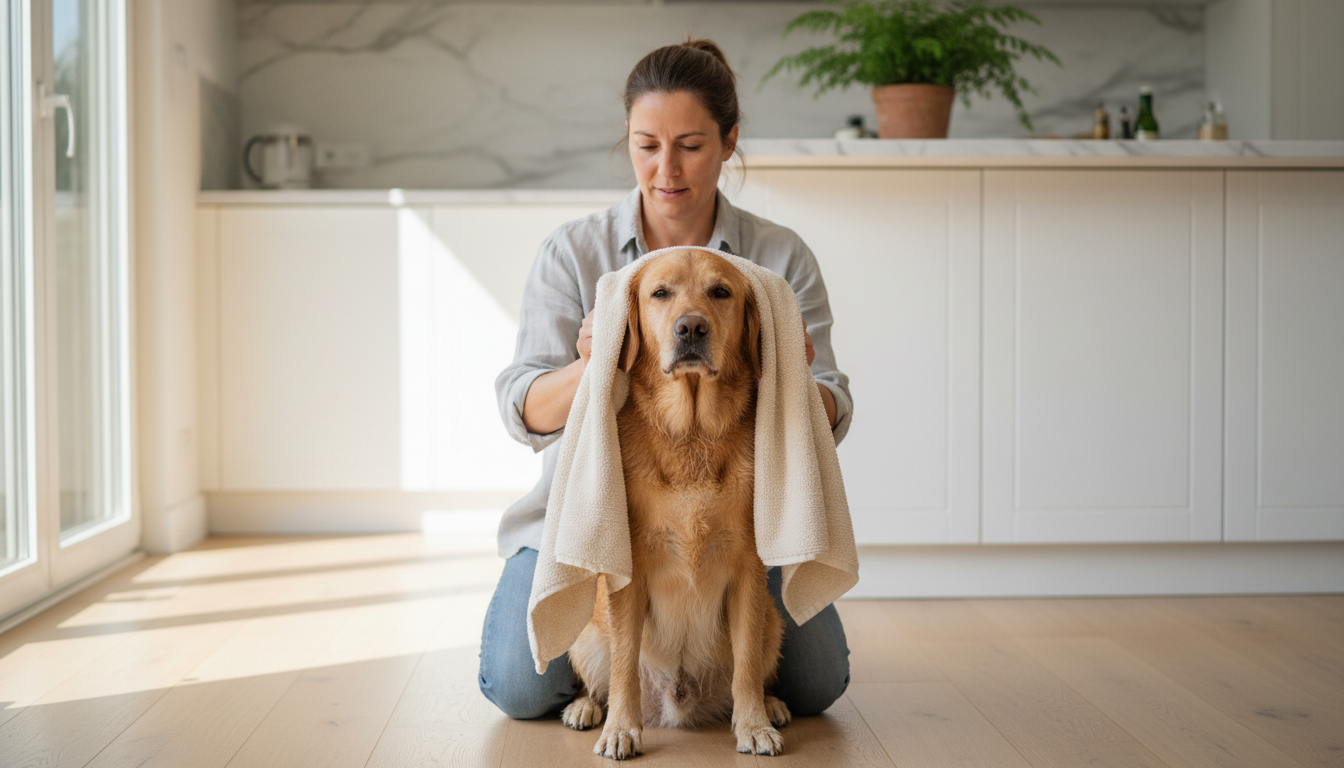
Gently drying the outer ear and the entrance to the ear canal with a soft towel after swimming is a simple habit that makes a real difference. Some owners also use a drying ear cleaner recommended by their vet after water exposure, which helps evaporate any moisture that worked its way deeper into the canal. Avoid inserting cotton swabs or anything else deep into the ear canal, since that can push debris further in or damage delicate tissue.
- Dry the outer ear thoroughly after swimming or bathing
- Use a vet-approved drying ear cleaner after water exposure if recommended
- Avoid inserting cotton swabs into the ear canal
- Check ears regularly during swimming season
- Ask your vet about ear protection if your Lab swims very frequently
Routine Ear Care Between Vet Visits
Beyond managing water exposure, a simple at-home ear care routine can help you catch problems early and keep the ear environment less friendly to infection. This does not need to be complicated or time-consuming, but consistency matters more than intensity.
Lifting the ear flap and taking a quick look and sniff a couple of times a week lets you get familiar with what is normal for your dog, which makes it much easier to notice when something changes. A healthy ear should be a pale pink color, relatively dry, and free of strong odor. Any shift toward redness, excess wax, discharge, or smell is worth mentioning to your vet, even if your dog is not showing obvious discomfort yet.
Your veterinarian can show you the proper technique for a gentle at-home ear cleaning if that is appropriate for your dog, including which products are safe to use and how often to use them. Over-cleaning can actually irritate the ear canal and make things worse, so it is worth getting specific guidance rather than guessing.
When to Treat This as an Emergency
Most ear infections are uncomfortable rather than dangerous, but there are situations where you should seek veterinary care promptly rather than waiting for a routine appointment. A sudden, severe head tilt, loss of balance, or disorientation can indicate the infection has spread to the inner ear or is affecting the nervous system, and this needs prompt attention.
Extreme swelling of the ear flap, significant pain when the head is touched, or a dog who seems generally unwell alongside ear symptoms are also reasons to call your vet promptly rather than waiting. If your dog’s ear is bleeding, has an open wound, or there is a large amount of foul-smelling discharge, do not wait to see if it improves on its own.
When in doubt, it is always safer to call your veterinary clinic and describe what you are seeing. They can tell you whether it is safe to wait for a regular appointment or whether your dog needs to be seen right away.
- Sudden severe head tilt or loss of balance
- Significant pain or swelling of the ear flap
- Bleeding or an open wound on the ear
- Large amounts of foul-smelling discharge
- A dog who seems lethargic or generally unwell alongside ear symptoms
Living With a Breed Prone to Ear Trouble
Owning a Labrador with chronic ear issues can feel discouraging, especially if you feel like you are constantly back at the vet’s office. It helps to remember that this is a well-documented tendency in the breed, not a sign that you are doing something wrong. Many Labs live full, happy, water-loving lives with ear issues that are simply managed as an ongoing part of their care, much like any other chronic condition.
Working closely with your veterinarian to identify triggers, stay ahead of moisture after swimming, and address allergies when they are present usually leads to far fewer flare-ups over time. It may take some trial and error to find the right combination of cleaning routine, products, and allergy management for your individual dog, but most Labs do settle into a manageable pattern eventually.
The bottom line is that chronic ear trouble in Labradors is common, frustrating, and almost always manageable with the right veterinary guidance. Do not hesitate to bring up recurring ear issues at every check-up, even if things seem fine at the moment, since staying proactive is the best way to keep your dog comfortable.
This article is for general education and is not a substitute for care from your own veterinarian. Learn about The Pet Vet and our editorial policy.