
If you share your home with a Cavalier King Charles Spaniel, you’ve probably heard whispers about their hearts. Mitral valve disease is the single most common health concern in this breed, affecting a large share of Cavaliers at some point in their lives. Understanding what it is, how it progresses, and what you can do makes all the difference in giving your dog the best possible quality of life.
Table of Contents
- What Is Mitral Valve Disease?
- Why Cavalier King Charles Spaniels Are So Prone to This Condition
- Early Signs You Might Notice at Home
- How the Disease Progresses Over Time
- When to Call Your Vet Right Away
- How Vets Diagnose Mitral Valve Disease
- Staging the Disease: What the Letters and Numbers Mean
- Treatment Options Your Vet May Recommend
- Living With a Cavalier With Heart Disease at Home
- Diet and Weight Management Considerations
- Exercise Guidelines for Dogs With Heart Disease
- The Importance of Regular Vet Checkups and Screening
- Breeding Considerations and Screening Programs
- Emotional Support for You as a Caregiver
- Final Thoughts
What Is Mitral Valve Disease?
Mitral valve disease, sometimes called myxomatous mitral valve disease or MMVD, happens when the valve between the left atrium and left ventricle of the heart slowly thickens and loses its normal shape. Instead of closing tightly with each heartbeat, the valve leaflets become floppy and no longer seal properly. This allows blood to leak backward into the atrium instead of moving forward through the body the way it should.
Over time, this backward leak, called regurgitation, forces the heart to work harder to keep blood circulating efficiently. The heart chambers can stretch and enlarge to compensate, and eventually this extra strain can lead to congestive heart failure if the disease isn’t monitored and managed. It’s a progressive condition, meaning it tends to worsen gradually rather than appearing overnight, which is exactly why early awareness matters so much.
Why Cavalier King Charles Spaniels Are So Prone to This Condition
Cavaliers are known to develop mitral valve disease earlier and more frequently than most other breeds, and often at a younger age than dogs affected by typical age-related valve wear. Researchers believe there’s a strong hereditary component within the breed’s gene pool, which is part of why responsible breeders place so much emphasis on heart screening before breeding decisions are made.
This doesn’t mean every Cavalier will develop serious heart disease, but it does mean that as an owner, you should treat heart health as a lifelong priority rather than something to think about only in old age. Many Cavaliers show a heart murmur, an early sign that a vet can detect during a routine exam, well before any outward symptoms appear.
Early Signs You Might Notice at Home
In the earliest stages, many Cavaliers show no obvious symptoms at all, and the only clue is a soft heart murmur your vet picks up with a stethoscope during a wellness visit. This is one of many reasons regular checkups matter even when your dog seems perfectly happy and healthy at home.
As the disease progresses, you may start to notice subtle changes in your dog’s energy or breathing pattern. It’s easy to dismiss these as simple aging, so paying close attention to any change from your dog’s normal baseline is important.
- Tiring more quickly on walks or play sessions than usual
- A soft, persistent cough, especially at night or after lying down
- Faster or more labored breathing, even at rest
- Restlessness or difficulty settling into a comfortable position to sleep
- Reduced appetite or general lack of enthusiasm for activities they used to enjoy
How the Disease Progresses Over Time
Mitral valve disease doesn’t follow the exact same timeline in every dog. Some Cavaliers live for years with a mild murmur and no other symptoms, while others progress to more advanced stages relatively quickly. Genetics, overall health, weight, and how closely the condition is monitored all play a role in how the disease unfolds.
As the valve leakage worsens, the heart chambers enlarge further, and fluid can begin to build up in or around the lungs, a condition known as congestive heart failure. This is a serious stage that requires close veterinary management, but it’s also a stage many dogs live with comfortably for a meaningful amount of time when treatment is started and followed carefully.
When to Call Your Vet Right Away
Certain symptoms should never be brushed off or monitored from a distance. If your Cavalier suddenly seems to struggle for breath, has blue or pale gums, collapses, or seems extremely weak and unwilling to move, this is an emergency and warrants immediate veterinary attention, not a wait-and-see approach.
Sudden onset of severe coughing paired with labored breathing can also signal fluid buildup in the lungs, which needs urgent care. Trust your instincts here. You know your dog’s normal behavior better than anyone, and if something feels seriously wrong, it’s always better to have your vet or an emergency clinic examine your dog right away than to wait until morning.
How Vets Diagnose Mitral Valve Disease
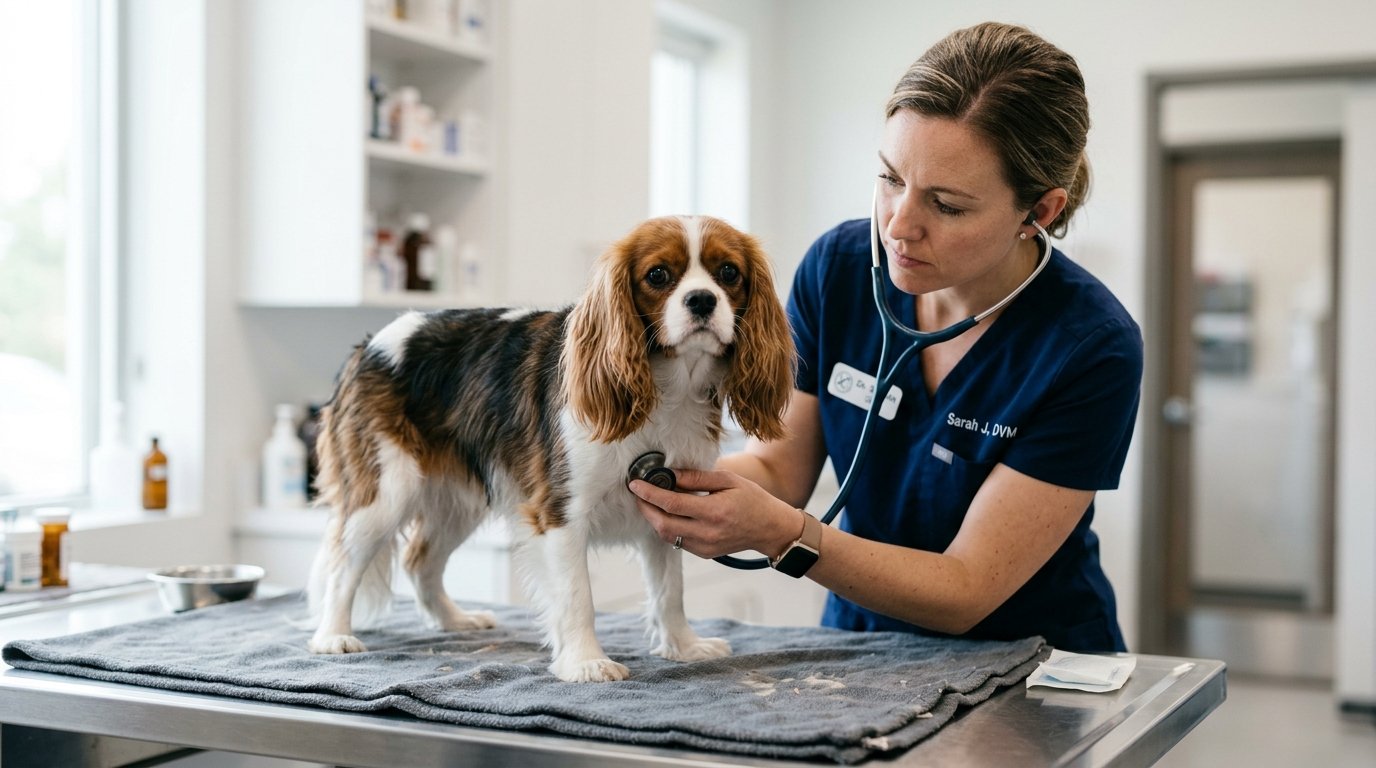
Diagnosis usually starts with something as simple as listening to your dog’s heart with a stethoscope during a routine exam. A murmur doesn’t automatically mean severe disease, but it does prompt further investigation to understand what’s happening inside the heart.
From there, your vet may recommend additional tools such as chest X-rays to check the size and shape of the heart and look for fluid in the lungs, an echocardiogram to directly visualize the valve and measure how well the heart is pumping, and sometimes blood tests or an electrocardiogram to get a fuller picture. These tests help your vet understand not just whether disease is present, but how advanced it is, which shapes the treatment plan going forward.
Staging the Disease: What the Letters and Numbers Mean
Veterinary cardiologists often use a staging system to classify how far mitral valve disease has progressed, generally moving from an early stage where a murmur is present but the heart hasn’t changed size, through stages where the heart begins to enlarge, and finally to a stage involving active heart failure symptoms.
Your vet will explain exactly where your dog falls within this framework based on the imaging and exam findings. Knowing the stage helps set realistic expectations and guides decisions about how often to schedule rechecks and whether medication should begin. It’s not a label to fear, but rather a useful roadmap for you and your veterinary team to work from together.

Treatment Options Your Vet May Recommend
Treatment plans are always individualized, and your vet is the only one who can determine what’s appropriate for your dog’s specific stage and overall health. In earlier stages, your vet might simply recommend more frequent monitoring without starting medication right away.
As the disease advances, various medications can help manage symptoms, reduce strain on the heart, and support quality of life. Your vet will discuss any medication options, how they work together, and what monitoring is needed once treatment begins. Never start, stop, or adjust any heart medication without direct veterinary guidance, since these medications need to be carefully matched to your dog’s condition and monitored over time.
Living With a Cavalier With Heart Disease at Home
A diagnosis of mitral valve disease doesn’t mean your dog’s life is over or that fun and comfort disappear from their daily routine. Many Cavaliers continue to enjoy walks, cuddles, and playtime for years after diagnosis, especially when the condition is caught early and managed consistently.
Keeping a simple log of your dog’s resting breathing rate at home can be a genuinely useful tool your vet may ask you to track, since a rising resting respiratory rate can be an early warning sign of fluid buildup before other symptoms appear. Ask your vet to show you how to count breaths properly and how often to check, so you feel confident and prepared rather than anxious.
Diet and Weight Management Considerations
Keeping your Cavalier at a healthy weight takes on extra importance once heart disease enters the picture, since excess weight puts additional strain on an already compromised heart. Your vet can help you figure out an appropriate target weight and feeding plan tailored to your dog’s age, activity level, and stage of disease.
Some dogs with more advanced heart disease benefit from a specific diet formulation, and your vet may discuss whether a therapeutic food or supplement could be appropriate for your dog’s situation. Please don’t make changes to your dog’s diet or add supplements without checking with your vet first, since some ingredients can interact with heart medications or affect sodium balance in ways that matter more than you’d expect.
- Ask your vet about an appropriate calorie target and feeding schedule
- Avoid high-sodium treats and table scraps unless your vet approves them
- Discuss whether a prescription heart-support diet fits your dog’s stage
- Weigh your dog regularly at home or during vet visits to track changes early

Exercise Guidelines for Dogs With Heart Disease
Exercise doesn’t have to stop once your Cavalier is diagnosed, but the type and intensity of activity may need to shift depending on how advanced the disease is. Many dogs in earlier stages can continue with normal, moderate exercise, while dogs in more advanced stages may need shorter, gentler outings.
Watch closely for signs of fatigue, excessive panting, or reluctance to continue during any activity, and stop immediately if you notice these signs. Your vet is the best resource for setting appropriate exercise boundaries for your dog’s specific stage, and rechecking these guidelines at each visit ensures your dog stays active in a way that’s safe rather than risky.
The Importance of Regular Vet Checkups and Screening
Because mitral valve disease often develops silently before symptoms appear, routine veterinary checkups are one of the most powerful tools you have. Many veterinary cardiologists recommend that Cavaliers have their hearts screened regularly starting at a relatively young age, precisely because early murmurs can show up well before any visible symptoms.
If your Cavalier has already been diagnosed, your vet will set a recheck schedule based on the current stage of disease, which might mean visits every few months or more frequently if the condition is advancing. Sticking to this schedule, even when your dog seems totally fine at home, allows your vet to catch changes early and adjust the treatment plan before a crisis develops.
Breeding Considerations and Screening Programs
If you’re considering breeding a Cavalier or purchasing a puppy from a breeder, heart health should be part of the conversation from the very beginning. Reputable breeders have their breeding dogs evaluated by a veterinary cardiologist and only breed dogs that meet certain heart health standards for their age, which helps reduce the likelihood of passing on early-onset disease.
Ask any breeder directly about the cardiac history of both parents and whether recent cardiac clearances are available. While no screening program can guarantee a puppy will never develop mitral valve disease later in life, working with a breeder who prioritizes heart screening is one meaningful way to support better outcomes for future generations of the breed.
Emotional Support for You as a Caregiver
Caring for a dog with a chronic heart condition can feel overwhelming at times, especially in the early days after a diagnosis. It’s completely normal to feel worried, and many owners find it helpful to write down questions before appointments so nothing gets forgotten in the moment.
Lean on your veterinary team throughout this process. They can walk you through what to expect, help you feel confident recognizing warning signs, and support you in making decisions that keep your dog comfortable. You’re not expected to navigate this alone, and asking questions, even ones that feel small, is always welcome.
Final Thoughts
Mitral valve disease is common in Cavalier King Charles Spaniels, but a diagnosis doesn’t have to mean the end of a happy, comfortable life. With regular veterinary care, attentive monitoring at home, and a treatment plan tailored to your dog’s needs, many Cavaliers continue to enjoy years of good quality time with their families.
If you notice any of the warning signs discussed here, or if it’s simply been a while since your Cavalier’s last checkup, please reach out to your vet. Early detection and consistent care truly are the best tools you have for supporting your dog’s heart health for years to come.
This article is for general education and is not a substitute for care from your own veterinarian. Learn about The Pet Vet and our editorial policy.