
Russian Blue cat respiratory sensitivity is something many owners notice without quite realizing what they’re seeing. If your Russian Blue sneezes around candles, wheezes near a dusty vacuum, or seems to avoid rooms with strong air fresheners, you’re not imagining things. This dense-coated, calm-natured breed can be more reactive to airborne irritants than many other cats. This guide walks through why that happens, what signs to watch for, and how to make your home easier on your cat’s lungs.
Table of Contents
- Why Russian Blues Seem Extra Sensitive to the Air Around Them
- Common Triggers Owners Notice
- Recognizing the Signs of Respiratory Irritation
- How This Differs From a Simple Cold
- Why Early Veterinary Evaluation Matters
- Making Air Quality Changes at Home
- The Role of Grooming in Managing Sensitivity
- When Humidity and Seasonal Changes Play a Role
- Diet and Its Possible Connection to Respiratory Comfort
- Creating Low-Irritant Safe Zones
- What to Avoid Doing at Home
- Long-Term Outlook for Sensitive Cats
- When to Seek Emergency Care
Why Russian Blues Seem Extra Sensitive to the Air Around Them
Russian Blue cats are known for their thick, plush double coat, and while most of the attention goes to how that coat looks and feels, it also plays a role in how this breed experiences its environment. A dense coat can trap dust, pollen, and other particles close to the skin, and because Russian Blues are meticulous groomers, they end up ingesting and breathing in more of what settles into their fur than a short, single-coated cat might. Add in the breed’s naturally cautious and detail-oriented temperament, and you get a cat that is both physically and behaviorally tuned in to changes in its surroundings.
It’s also worth noting that Russian Blues tend to be quieter and less demonstrative than many breeds, which means early signs of respiratory irritation can be subtle and easy to miss. A cat that simply leaves the room when you light a scented candle or starts breathing a little faster near a freshly mopped floor isn’t necessarily being finicky. These reactions are often the cat’s way of self-regulating exposure to something that genuinely bothers its airway or eyes.
None of this means every Russian Blue will struggle with respiratory issues, but owners of this breed often report a lower tolerance for strong scents, dust, and airborne chemicals compared to other cats they’ve owned. Understanding this tendency early can help you make small household adjustments before minor irritation turns into a bigger problem.
Common Triggers Owners Notice
Many Russian Blue owners find that certain everyday household items seem to set off sneezing, watery eyes, or mild coughing more than others. This isn’t unique to the breed in a medical sense, but the pattern shows up often enough in anecdotal reports that it’s worth paying attention to.
If you notice your cat consistently reacting to one or more of these, it’s worth tracking which specific products or situations seem to trigger symptoms. A simple log on your phone noting the date, the product, and what you observed can be genuinely useful information to bring to your vet.
- Scented candles, wax melts, and plug-in air fresheners
- Aerosol sprays, including hairspray and cleaning products
- Cigarette or cigar smoke, even in small amounts
- Dusty litter or litter with strong added fragrance
- Fresh paint, new carpet, or strong cleaning chemicals
- Incense or diffused essential oils
Recognizing the Signs of Respiratory Irritation
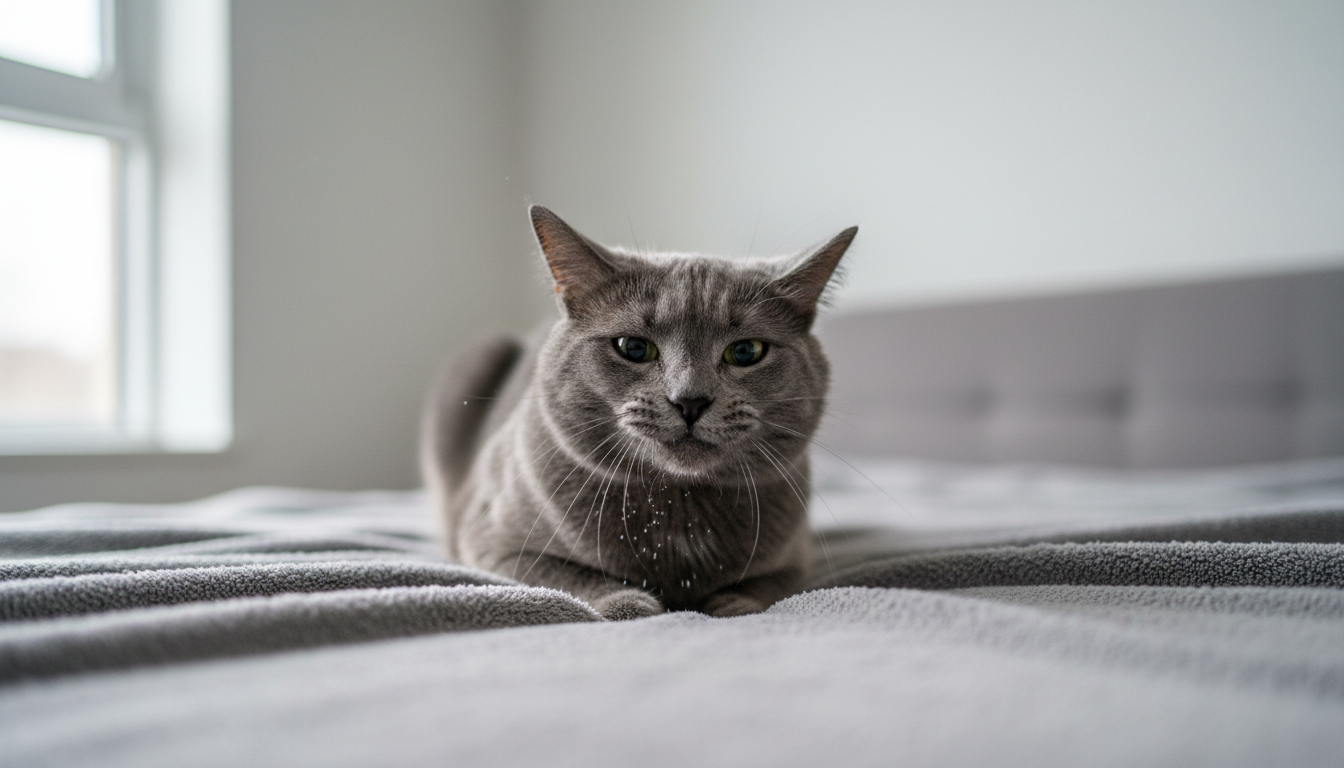
Respiratory irritation in cats doesn’t always look dramatic, and it can be easy to dismiss early signs as a cat just being a cat. Sneezing once or twice after a dusty day isn’t usually a concern, but a pattern of repeated or worsening symptoms deserves attention.
If you notice any combination of these signs, especially if breathing seems labored or your cat seems distressed, don’t wait it out. A cat in respiratory distress needs prompt veterinary attention, and open-mouth breathing in particular is always a reason to seek care right away rather than monitor from home.
- Frequent sneezing, especially in clusters
- Watery or red eyes without obvious injury
- Mild coughing or a gagging sound after exposure to strong scents
- Nasal discharge that is clear, cloudy, or occasionally tinged
- Rapid or open-mouth breathing after exposure to irritants
- Avoiding certain rooms or areas of the house consistently
How This Differs From a Simple Cold
It’s natural to wonder whether what you’re seeing is just a passing cold or something tied more specifically to environmental sensitivity. Upper respiratory infections in cats are common and typically come with a cluster of symptoms that build over a few days, often including lethargy, reduced appetite, and sometimes a mild fever, and they tend to resolve within one to two weeks with supportive care.
Environmental sensitivity, on the other hand, tends to show a clearer pattern tied to specific triggers. You might notice your Russian Blue is perfectly fine for weeks, then suddenly starts sneezing the day you switch cleaning products or light a new candle. The symptoms often ease up once the trigger is removed, which is a meaningful clue that something in the environment, rather than an infection, may be involved.
That said, telling the difference isn’t always straightforward, and some cats can have both an underlying sensitivity and a separate infection at the same time. This is exactly the kind of situation where a veterinary exam is valuable, since your vet can rule out infection, parasites, or other underlying causes before you settle on environmental factors as the explanation.
Why Early Veterinary Evaluation Matters
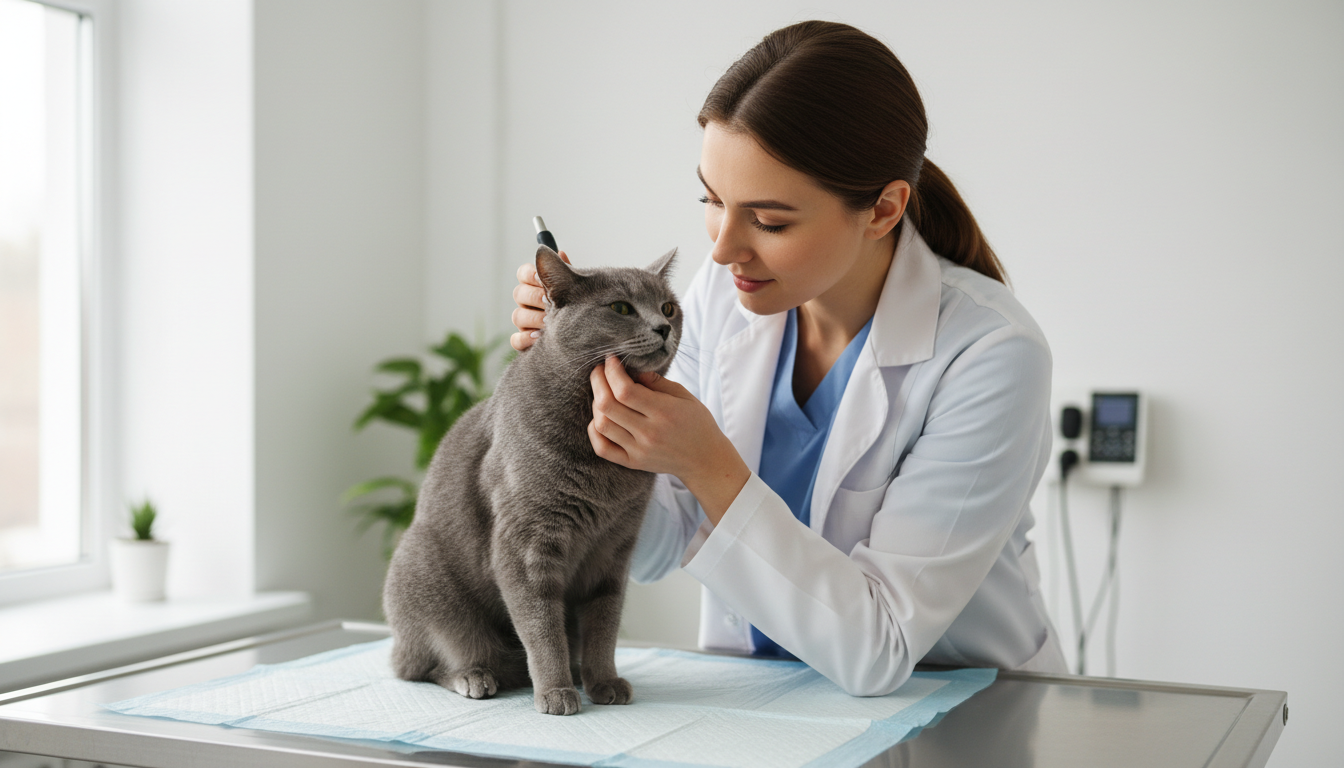
Any time a cat shows ongoing respiratory symptoms, a veterinary visit is the right first step rather than a last resort. Cats are skilled at masking discomfort, and by the time symptoms become obvious to an owner, there’s often been irritation building for a while already. A vet can examine your cat’s airway, check for signs of infection or inflammation, and help determine whether what you’re seeing is consistent with irritant exposure or something else entirely, such as feline asthma, allergies, or a dental issue causing nasal discharge.
Your vet may also ask detailed questions about your home environment, including what cleaning products you use, whether anyone smokes indoors, and what type of litter you’ve chosen. Being ready to answer these questions, or even bringing your symptom log along, can make the visit more productive and help your vet reach a clearer picture faster.
It’s worth remembering that self-diagnosing a cat based on internet research alone can lead to missed problems. What looks like simple sensitivity could occasionally be something that needs more direct treatment, so a professional opinion is always the safer route before you settle into a long-term management plan at home.
Making Air Quality Changes at Home
Once you and your vet have a reasonable sense that environmental factors are playing a role, there’s a lot you can do at home to reduce exposure. Small, consistent changes often make a bigger difference than people expect, especially for a breed that seems to notice air quality shifts more readily than others.
These changes don’t need to happen all at once. Introducing them gradually, one at a time, also makes it easier to identify which specific change made the biggest difference for your individual cat.
- Switch to unscented or low-dust litter and introduce it gradually
- Avoid scented candles, wax melts, and aerosol air fresheners in rooms your cat uses often
- Choose fragrance-free cleaning products where possible
- Vacuum and dust regularly to reduce particle buildup in carpets and furniture
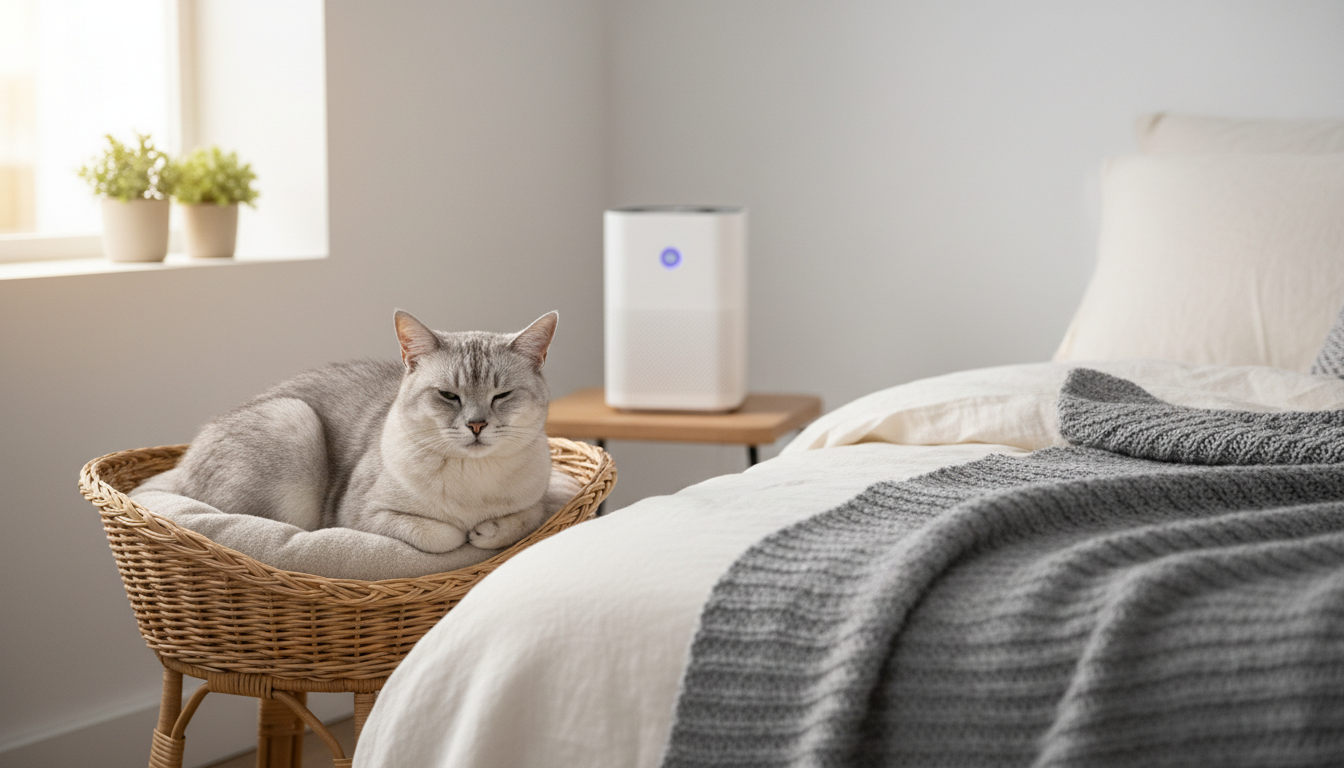
- Consider a HEPA air purifier in the rooms your cat spends the most time in
- Keep your cat out of rooms being painted or deep-cleaned until fumes clear completely
The Role of Grooming in Managing Sensitivity
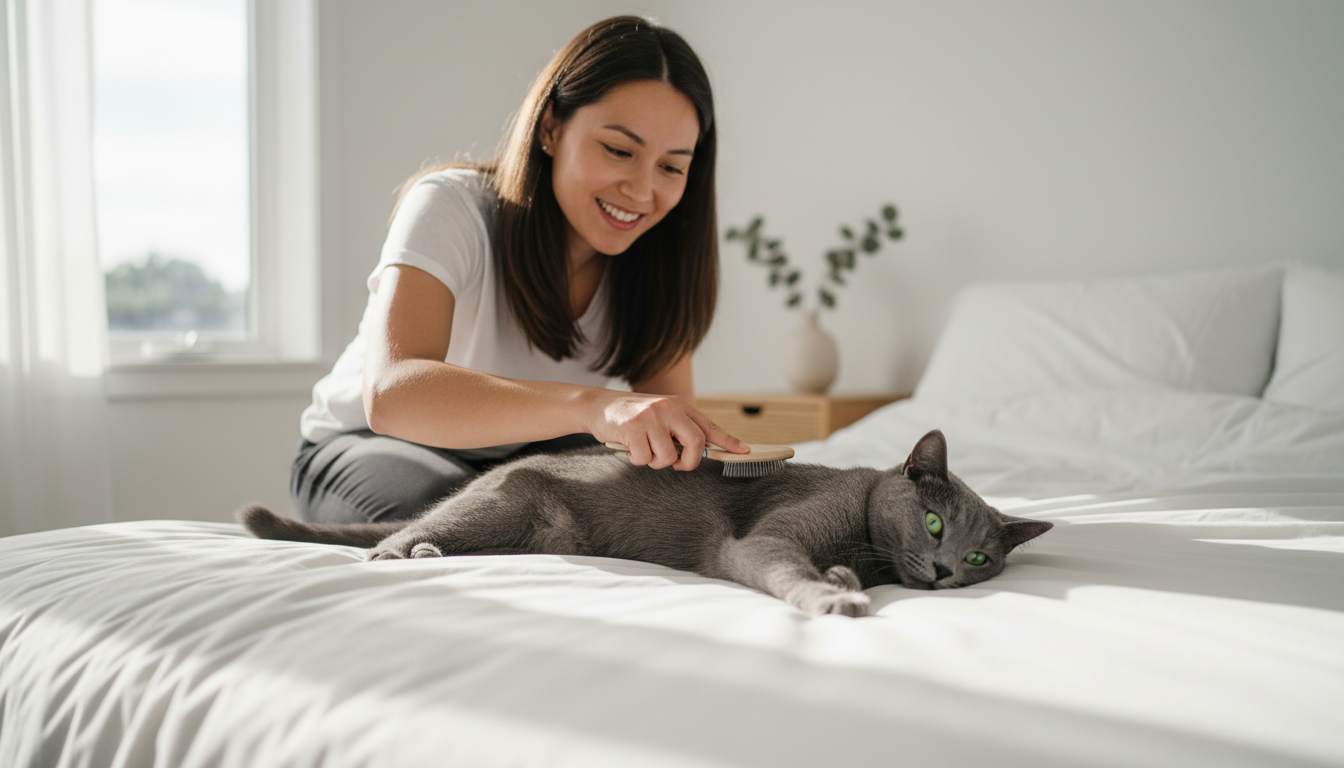
Because Russian Blues groom themselves so thoroughly, regular brushing from you can meaningfully reduce the amount of dust, dander, and airborne particles that build up in their coat between baths. A quick daily or every-other-day brushing session removes loose fur and debris before your cat has a chance to ingest or disturb it during self-grooming, which may help reduce the cumulative irritant load on their respiratory system.
Brushing also gives you a regular opportunity to check your cat’s eyes, nose, and overall coat condition, so you’re more likely to catch early signs of irritation before they escalate. Many owners find that this small daily habit becomes a useful early-warning system, since a cat that suddenly resists brushing or seems more reactive than usual during a session may be signaling discomfort elsewhere.
If your Russian Blue tolerates it, a damp cloth wipe-down after brushing can help remove any lingering surface dust, particularly during dry seasons or in homes with forced-air heating, which tends to circulate more airborne particles.
When Humidity and Seasonal Changes Play a Role
Air quality isn’t just about what you spray or burn in your home; ambient humidity and seasonal shifts can also affect how comfortable your cat’s airway feels day to day. Very dry indoor air, common in winter when heating systems run constantly, can dry out nasal passages and make cats more prone to irritation from dust and other particles that would otherwise pass through with less effect.
A humidifier in the rooms your Russian Blue frequents can help keep the air from becoming too dry, particularly during colder months. On the flip side, extremely humid conditions can encourage mold and dust mite growth, so the goal is a balanced middle ground rather than swinging to either extreme.
Paying attention to whether your cat’s symptoms seem to track with the seasons, worsening in winter with dry heat or in spring with pollen, can also give you and your vet useful clues about whether allergies, dryness, or a combination of factors are contributing to what you’re seeing.
Diet and Its Possible Connection to Respiratory Comfort
While diet isn’t a direct fix for airborne irritant sensitivity, overall health and inflammation levels in the body can influence how a cat’s respiratory system responds to environmental stress. A well-balanced diet that supports a healthy immune system gives your cat’s body a better baseline to manage minor irritations without escalating into bigger issues.
If your vet suspects an allergic component layered on top of environmental sensitivity, they may discuss diet as part of a broader conversation, since food sensitivities can sometimes contribute to overall inflammation in ways that make a cat more reactive to other triggers too. This is very individual, though, and not something to assume or change on your own without veterinary guidance, since unnecessary diet changes can create their own problems.
Fresh water availability also matters more than people often realize, since well-hydrated mucous membranes tend to handle minor irritant exposure better than dry ones. Keeping multiple water sources around the house, especially in the rooms your cat spends the most time in, is a simple habit that supports overall respiratory comfort.
Creating Low-Irritant Safe Zones
If completely overhauling your household products isn’t realistic right away, creating at least one low-irritant safe zone can give your Russian Blue a reliable place to retreat when something in the main living areas triggers a reaction. This might be a bedroom, a quiet corner, or wherever your cat already tends to settle when they seem to want space.
Over time, many cats start to use these safe zones instinctively, especially once they associate the space with feeling more comfortable. This kind of environmental management can meaningfully reduce the frequency of symptoms even if you can’t eliminate every possible trigger from the rest of the house.
- Keep this area free of scented products and sprays
- Use a dust-free or low-dust litter box in or near this space
- Run an air purifier specifically in this room if possible
- Keep the door accessible so your cat can come and go freely
- Add a comfortable bed or perch to encourage your cat to spend time there
What to Avoid Doing at Home
In the effort to help, it’s easy to reach for solutions that end up doing more harm than good. Certain products and habits that seem harmless, or even beneficial, can actually make respiratory irritation worse in sensitive cats.
If you’re ever unsure whether a product or habit might be contributing to your cat’s symptoms, it’s worth asking your vet directly rather than guessing. Some household items that seem unrelated to breathing, like certain cleaning sprays or plug-in deodorizers, can have a bigger impact on feline respiratory comfort than most owners expect.
- Avoid using essential oil diffusers anywhere in the home, since many oils are toxic to cats even at low airborne concentrations
- Don’t use scented cat litter or scented trash bags lining the litter box
- Avoid smoking indoors or in a car your cat travels in
- Don’t assume over-the-counter human allergy medications are safe for cats without veterinary guidance
- Avoid sudden, drastic changes to multiple products at once, which makes it hard to identify what’s actually helping
Long-Term Outlook for Sensitive Cats
Most cats with environmental respiratory sensitivity go on to live completely normal, comfortable lives once their owners identify the main triggers and make reasonable adjustments at home. This isn’t usually a progressive or dangerous condition on its own, though it’s always worth ruling out other underlying issues with your vet, especially if symptoms are new, sudden, or worsening rather than a long-standing pattern.
The key to long-term comfort is consistency rather than perfection. You don’t need an entirely fragrance-free, spotless home to keep a sensitive cat comfortable; you simply need to understand your individual cat’s specific triggers and build habits around avoiding them where reasonably possible. Many owners find that once the obvious culprits are removed, their Russian Blue settles into a noticeably calmer, more comfortable daily rhythm.
Regular veterinary checkups remain important even once things seem well-managed, since they give you a chance to reassess whether your cat’s sensitivity has changed over time and to catch any new developments early. A cat that seemed fine with a certain litter for years, for example, can sometimes develop new sensitivities as they age, so staying attentive rather than assuming the issue is permanently solved is the safer long-term approach.
When to Seek Emergency Care
While most respiratory sensitivity in cats is manageable with environmental changes and veterinary guidance, there are situations that call for immediate emergency care rather than a scheduled appointment. Knowing the difference can make a real difference in outcome.
If you see any of these signs, don’t wait to see if things improve on their own. Contact an emergency vet clinic immediately, since respiratory distress in cats can escalate quickly and early intervention often makes a meaningful difference in how smoothly your cat recovers.
- Open-mouth breathing or visible struggle to breathe
- Blue or pale gums
- Collapse or extreme lethargy alongside respiratory symptoms
- Persistent coughing or gagging that doesn’t resolve within minutes
- Any sudden, severe reaction after exposure to a new product or chemical
This article is for general education and is not a substitute for care from your own veterinarian. Learn about The Pet Vet and our editorial policy.