
If your cat has been shaking her head, scratching at her ears, or acting unusually irritable, cat ear mites could be the cause. These tiny parasites are uncomfortable but very treatable once a vet confirms what’s going on. Here’s what every cat owner should know about spotting, treating, and preventing them.
Table of Contents
- What Are Ear Mites in Cats?
- How Cats Catch Ear Mites
- Common Symptoms to Watch For
- Why Abyssinian Cats’ Ears Need Extra Attention
- How Vets Diagnose Ear Mites
- Ear Mites vs Other Ear Problems
- Treatment Options Your Vet May Recommend
- What Happens If Ear Mites Go Untreated
- Cleaning Your Cat’s Ears Safely at Home
- Preventing Reinfestation
- Are Ear Mites Contagious to Other Pets?
- Can Ear Mites Spread to Humans?
- Kittens and Ear Mites: Special Considerations
- When to Call the Vet Immediately
- Living With a Cat Prone to Ear Issues
- Final Thoughts
What Are Ear Mites in Cats?
Ear mites are tiny parasites that live on the surface of your cat’s ear canal, feeding on skin oils and debris. You won’t be able to see them with the naked eye, but their presence causes intense itching and irritation, which is usually what tips owners off that something is wrong. They’re one of the most common causes of ear problems in cats, especially younger ones.
Unlike some skin conditions that develop slowly, ear mite infestations can build up fairly quickly once a cat is exposed. The mites reproduce on the skin inside the ear canal, and as their numbers grow, so does the discomfort your cat feels. The good news is that a vet can usually identify them with a simple ear swab and get treatment started right away.
How Cats Catch Ear Mites
Ear mites spread through direct contact with an infested animal, which is why they’re especially common in cats that came from shelters, multi-cat households, or outdoor environments. A mother cat can pass mites to her kittens, and littermates can pass them back and forth to each other during normal grooming and play.
Indoor-only cats can still pick up ear mites if they share space with another infested pet, even briefly. This is one of the reasons vets often recommend checking every pet in the household if one cat is diagnosed, rather than assuming the others are automatically in the clear.
Common Symptoms to Watch For
Ear mite symptoms tend to be fairly obvious once you know what to look for, though they can overlap with other ear conditions. Paying attention to your cat’s behavior around her ears is often the first clue that something needs a vet’s attention.
The symptoms below are common, but they aren’t exclusive to ear mites, so a proper diagnosis still matters.
- Frequent head shaking or tilting
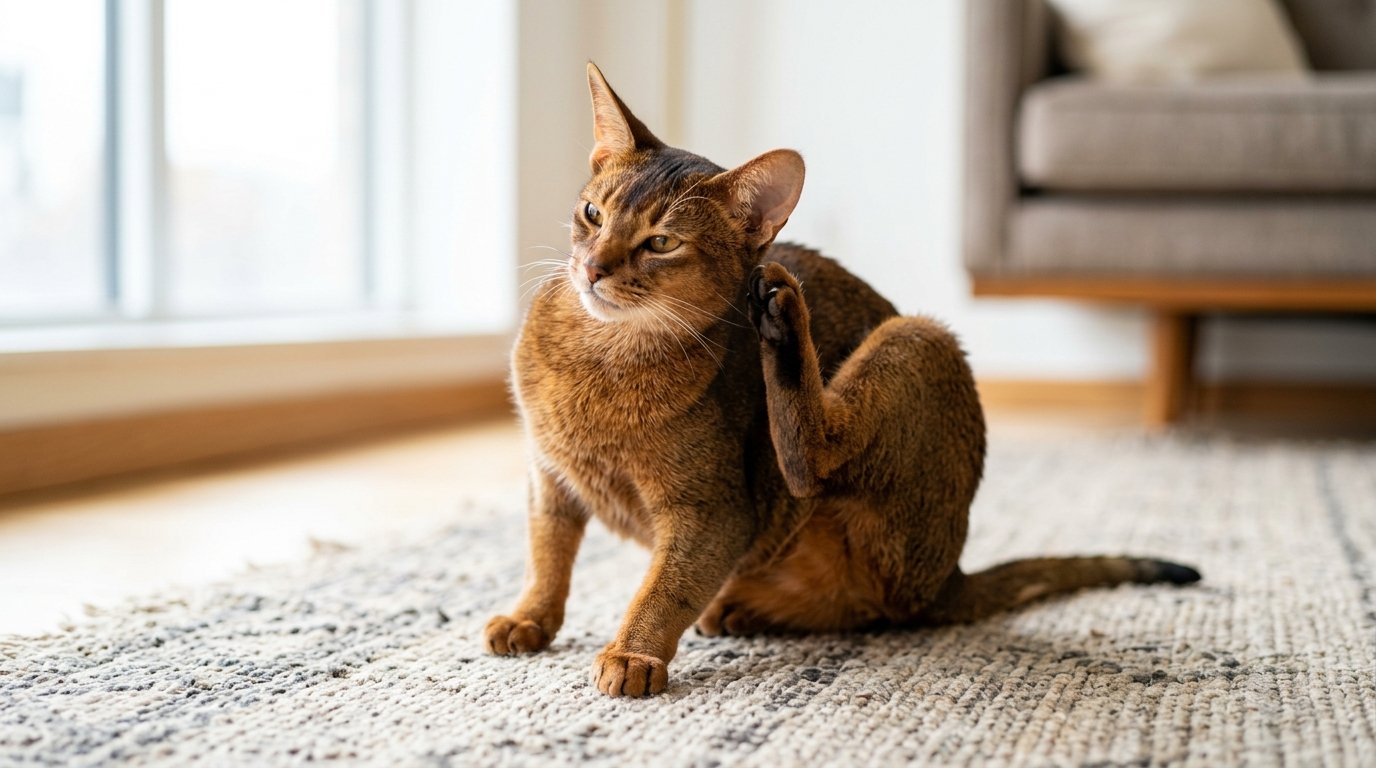
- Scratching at the ears, sometimes hard enough to cause scabs
- Dark, crumbly discharge that resembles coffee grounds
- A strong or unpleasant odor coming from the ears
- Redness or swelling inside the ear flap
- Visible hair loss around the ears from excessive scratching
Why Abyssinian Cats’ Ears Need Extra Attention
Abyssinian cats have large, alert ears that sit forward on the head, which makes debris and irritation a little easier to spot compared to breeds with smaller or more tucked ear shapes. That said, their active, curious nature means they’re often exploring nooks and interacting with other animals, which can increase exposure if they spend time around other cats.
Because Abyssinians are known for being social and energetic, they may not slow down even when their ears are bothering them, so owners sometimes notice the head shaking or scratching before they notice any change in the cat’s overall mood. Keeping an eye on ear health during regular petting and grooming sessions can help you catch problems early, regardless of breed.
How Vets Diagnose Ear Mites
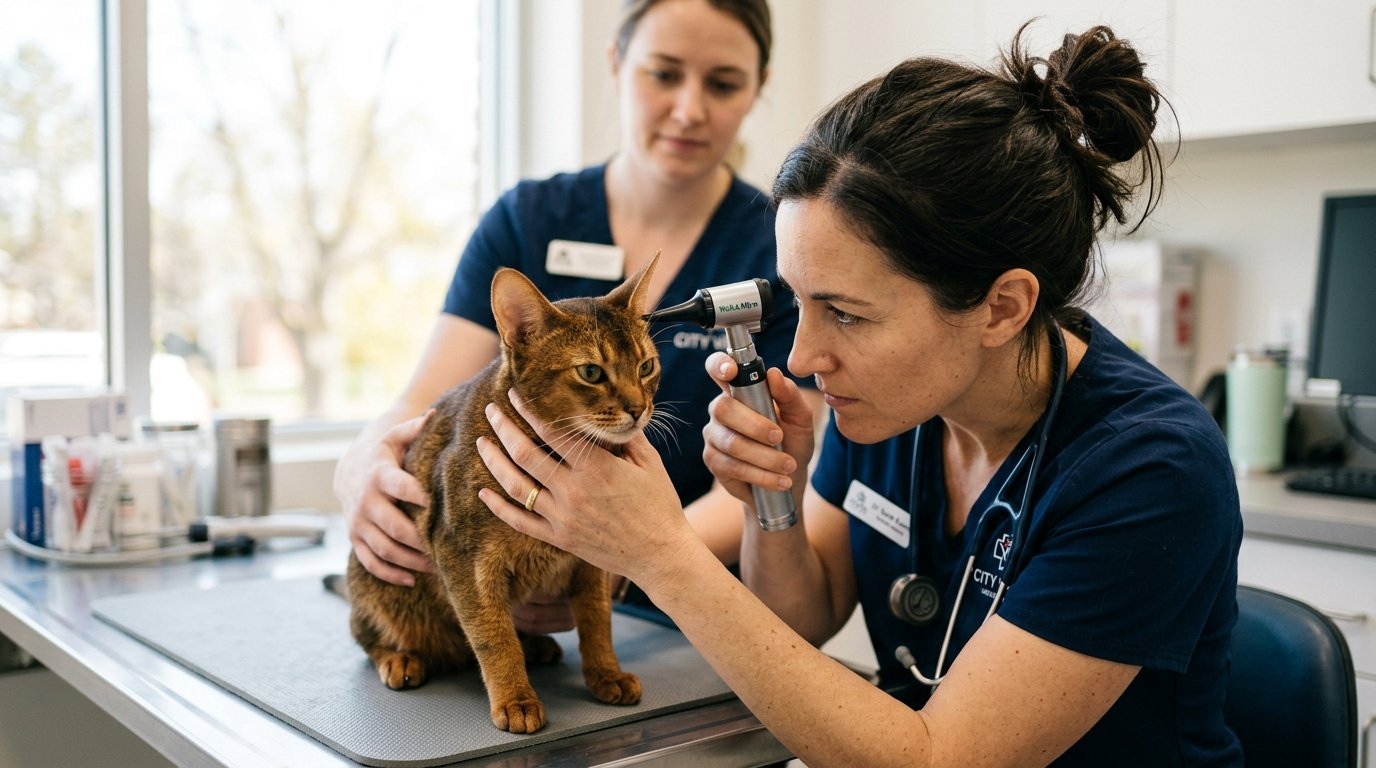
A vet will typically examine your cat’s ears with an otoscope to look at the ear canal and check for discharge, redness, or visible mites. In many cases, they’ll also take a small sample of the debris and examine it under a microscope to confirm mites are actually present, since other conditions can look similar from the outside.
This step matters because treating for ear mites when the real problem is a bacterial or yeast infection won’t solve anything, and your cat will keep suffering. A proper diagnosis also helps your vet choose the most effective treatment plan for your cat’s specific situation.
Ear Mites vs Other Ear Problems
Several ear conditions in cats can look similar on the surface, which is exactly why a vet visit is so important rather than guessing at home. Bacterial infections, yeast infections, allergies, and even ear polyps can all cause scratching, discharge, and odor.
Here are some general differences that may come up during a vet exam, though only professional testing can confirm which one your cat actually has:
- Ear mite discharge often looks dry and dark, like coffee grounds
- Bacterial infections tend to produce a wetter, yellowish discharge
- Yeast infections often come with a distinct musty or sweet smell
- Allergy-related ear issues may also involve itchy skin elsewhere on the body
Treatment Options Your Vet May Recommend
Once ear mites are confirmed, your vet will recommend a treatment plan tailored to your cat’s age, health, and the severity of the infestation. Many treatments involve cleaning the ears first to remove built-up debris, followed by a prescribed medication applied directly to the ear or given as directed by your vet.
It’s important to follow your vet’s instructions exactly and complete the full course of treatment, even if your cat seems to feel better after a few days. Stopping early can allow the mites to bounce back, undoing the progress you’ve already made. Never use leftover medication from another pet or a product not specifically recommended by your vet for your cat’s situation.
What Happens If Ear Mites Go Untreated
Left untreated, ear mites can cause ongoing discomfort and lead to secondary infections as your cat’s constant scratching damages the delicate skin inside and around the ear. In more severe cases, an untreated infestation can contribute to a painful condition called an aural hematoma, where a blood-filled swelling forms on the ear flap due to trauma from scratching or head shaking.
Chronic ear inflammation can also affect your cat’s balance or hearing over time if the infection spreads deeper into the ear canal. This is why early veterinary care matters, even if the symptoms seem mild at first.
Cleaning Your Cat’s Ears Safely at Home
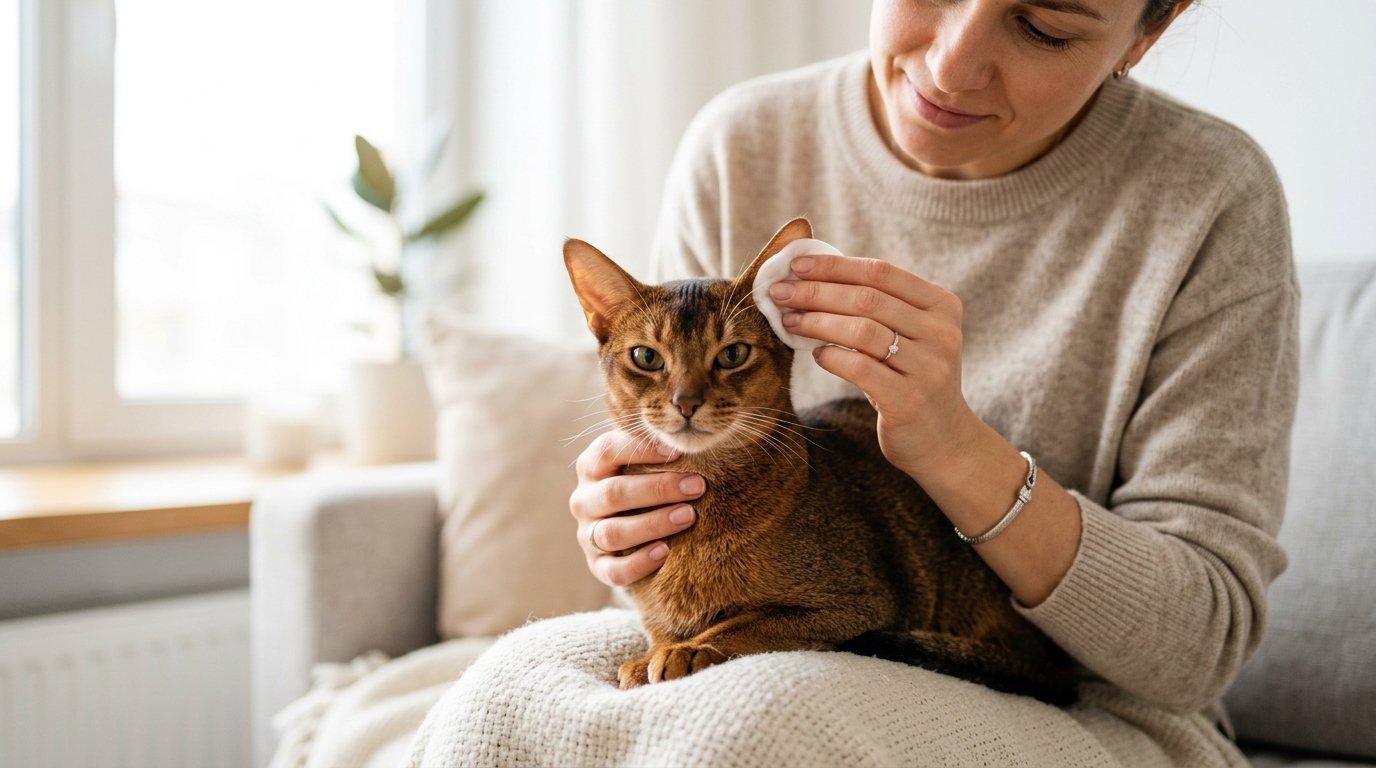
Your vet may recommend a specific ear cleaning routine as part of treatment, but it’s important to only use products they’ve approved for your cat. Human ear care products, alcohol-based solutions, or cotton swabs pushed too deep can cause more harm than good.
If your vet gives you the green light for at-home cleaning, keep these general tips in mind:
- Use only a vet-approved cat ear cleaning solution
- Clean the visible parts of the ear gently with a soft cloth or cotton ball
- Never insert anything deep into the ear canal
- Reward your cat with treats or affection to make the process less stressful
- Stop and contact your vet if your cat shows pain or the ears look worse
Preventing Reinfestation
Once your cat has been treated, keeping ear mites from coming back involves treating every pet in the household that may have been exposed, since mites can easily pass between animals living in close quarters. Your vet can advise on whether other pets need to be checked or treated as a precaution.
Routine ear checks, even after treatment is finished, can help you catch any early signs of a repeat infestation before it becomes uncomfortable for your cat again. A quick peek during regular grooming sessions is a simple habit that pays off over time.
Are Ear Mites Contagious to Other Pets?
Yes, ear mites are highly contagious between cats, dogs, and other household pets, since they spread through close contact. If one pet in your home has been diagnosed, it’s worth asking your vet whether the others should be examined as well, even if they aren’t showing symptoms yet.
A few things to keep in mind if you have multiple pets:
- Mites can pass between species, not just between cats
- Symptoms may take time to appear in a newly exposed pet
- Bedding and shared spaces can also harbor mites temporarily
- Treating only one pet in a multi-pet home may not fully solve the problem
Can Ear Mites Spread to Humans?
Ear mites generally prefer animal hosts and don’t set up a long-term infestation on human skin, so the risk to people is very low. That said, some people may notice temporary, mild skin irritation from brief contact with an infested pet, though this typically resolves on its own without treatment.
If you’re ever concerned about skin irritation after handling a pet with ear mites, it’s worth mentioning to your doctor, especially if the irritation doesn’t go away or seems to worsen.
Kittens and Ear Mites: Special Considerations
Kittens are particularly prone to ear mites, especially if they came from a shelter, rescue situation, or a mother who was infested herself. Because kittens have more sensitive skin and smaller ear canals, infestations can sometimes cause more noticeable discomfort in a short amount of time.
If you’ve recently adopted a kitten, it’s a good idea to have a vet check her ears during the first wellness visit, even if you haven’t noticed obvious symptoms yet. Catching an infestation early makes treatment easier and more comfortable for your new kitten.
When to Call the Vet Immediately
While ear mites are rarely a medical emergency, certain signs mean you shouldn’t wait to get your cat seen. Trust your instincts if something feels off, even if you’re not sure exactly what’s wrong.
Reach out to your vet promptly if you notice any of the following:
- A sudden, painful-looking swelling on the ear flap
- Signs of severe pain when the ear is touched
- Discharge with a strong foul odor or blood present
- Loss of balance, head tilting that doesn’t resolve, or disorientation
- Symptoms that don’t improve after starting a prescribed treatment
Living With a Cat Prone to Ear Issues
Some cats seem more prone to ear irritation than others, whether due to environment, exposure to other animals, or individual sensitivity. If your cat has dealt with ear mites or other ear issues before, staying consistent with routine checkups and gentle at-home monitoring can help you catch problems early before they become uncomfortable.
Building ear checks into your regular grooming routine, whether that’s during a weekly brushing session or simply while cuddling on the couch, helps you notice changes quickly. Your vet can also advise on a monitoring schedule that fits your cat’s specific history and needs.
Final Thoughts
Cat ear mites are uncomfortable for your cat, but they’re also very manageable once properly diagnosed and treated. Watching for the early signs, keeping up with routine ear checks, and reaching out to your vet at the first sign of irritation can spare your cat a lot of unnecessary discomfort.
If you suspect your cat may have ear mites or any other ear issue, don’t try to diagnose or treat it entirely on your own. A vet visit ensures your cat gets the right diagnosis and a treatment plan suited to her specific needs, so she can get back to feeling like herself again.
This article is for general education and is not a substitute for care from your own veterinarian. Learn about The Pet Vet and our editorial policy.