
Abyssinian cat gingivitis tends to show up earlier and more aggressively than in many other breeds, catching owners off guard. If you share your home with one of these active, affectionate cats, understanding why their gums are vulnerable can help you catch problems before they turn into painful, costly dental disease. Here’s what every Abyssinian owner should know about keeping those gums healthy.
Table of Contents
- Why Abyssinians Are Prone to Gum Disease
- What Gingivitis Looks Like in the Early Stages
- How Gingivitis Can Progress Without Treatment
- The Link Between Gingivitis and Feline Stomatitis
- Signs You Should Never Ignore
- Why Regular Dental Checkups Matter So Much for This Breed
- Building a Home Dental Care Routine
- Dental Diets and Chews: What They Can and Can’t Do
- The Role of Diet in Gum Health
- Watching for Pain Cats Try to Hide
- What Happens During a Veterinary Dental Exam
- Managing an Abyssinian That Resists Dental Care
- Long-Term Outlook With Proper Care
- When to See a Vet Right Away
Why Abyssinians Are Prone to Gum Disease
Abyssinians have a reputation among veterinary dentists for developing gingivitis and periodontal disease at a younger age than many other breeds. While researchers haven’t pinned down one single cause, most vets believe it comes down to a combination of genetics and how this breed’s immune system responds to the bacteria that naturally live in the mouth. In some Abyssinians, the gum tissue reacts to plaque buildup with an outsized inflammatory response, which means even small amounts of tartar can trigger significant redness, swelling, and discomfort.
This tendency is sometimes grouped under what vets call feline chronic gingivostomatitis, a painful condition where inflammation spreads beyond the gumline into the back of the mouth. Not every Abyssinian with gingivitis will develop full-blown stomatitis, but the breed does appear more often in dental referral cases than its population numbers would suggest. Because of this, many vets recommend a proactive approach to dental care for Abyssinians starting in kittenhood rather than waiting until problems appear.
Understanding this predisposition doesn’t mean every Abyssinian is destined for dental trouble. It simply means you have a head start on prevention if you know to watch closely and act early when you notice changes in your cat’s mouth, breath, or eating habits.
What Gingivitis Looks Like in the Early Stages
Gingivitis is inflammation of the gum tissue, and it’s usually the first visible sign that something is off in your cat’s mouth. In the earliest stages, the changes can be subtle enough that owners miss them entirely, especially since cats are experts at hiding discomfort. A thin red line along the edge of the gums, right where tooth meets tissue, is often the very first clue.
As gingivitis progresses, the gums may look puffier or more swollen than usual, and you might notice a change in your cat’s breath. Mild bad breath can be easy to write off, but in Abyssinians prone to this issue, it’s worth taking seriously rather than assuming it’s just “cat breath.” Some cats also start pulling away from face-touching or grooming sessions they used to tolerate just fine.
- Redness along the gumline, especially near the back teeth
- Mild swelling or puffiness of the gum tissue
- Noticeably worse breath than normal
- Slight bleeding when eating dry food or chewing toys
- Increased drooling, sometimes tinged pink
How Gingivitis Can Progress Without Treatment
Left unaddressed, gingivitis can advance into periodontal disease, where the inflammation starts damaging the structures that hold teeth in place. This is a much more serious situation because the damage to bone and connective tissue is often permanent. In Abyssinians with a tendency toward strong immune reactions, this progression can sometimes happen faster than owners expect.
Once periodontal disease sets in, you may start to notice your cat chewing differently, favoring one side of the mouth, or dropping food while eating. Some cats become reluctant to eat dry kibble altogether, switching their preference to soft food without any obvious reason. These changes are a cat’s way of avoiding pain, and they shouldn’t be dismissed as pickiness.
In more advanced cases, teeth can become loose or infected, and the inflammation may spread into the deeper tissues of the mouth. This is uncomfortable at best and quite painful at worst, which is exactly why catching gum disease in its earlier, gingivitis stage matters so much for a breed already at higher risk.
The Link Between Gingivitis and Feline Stomatitis
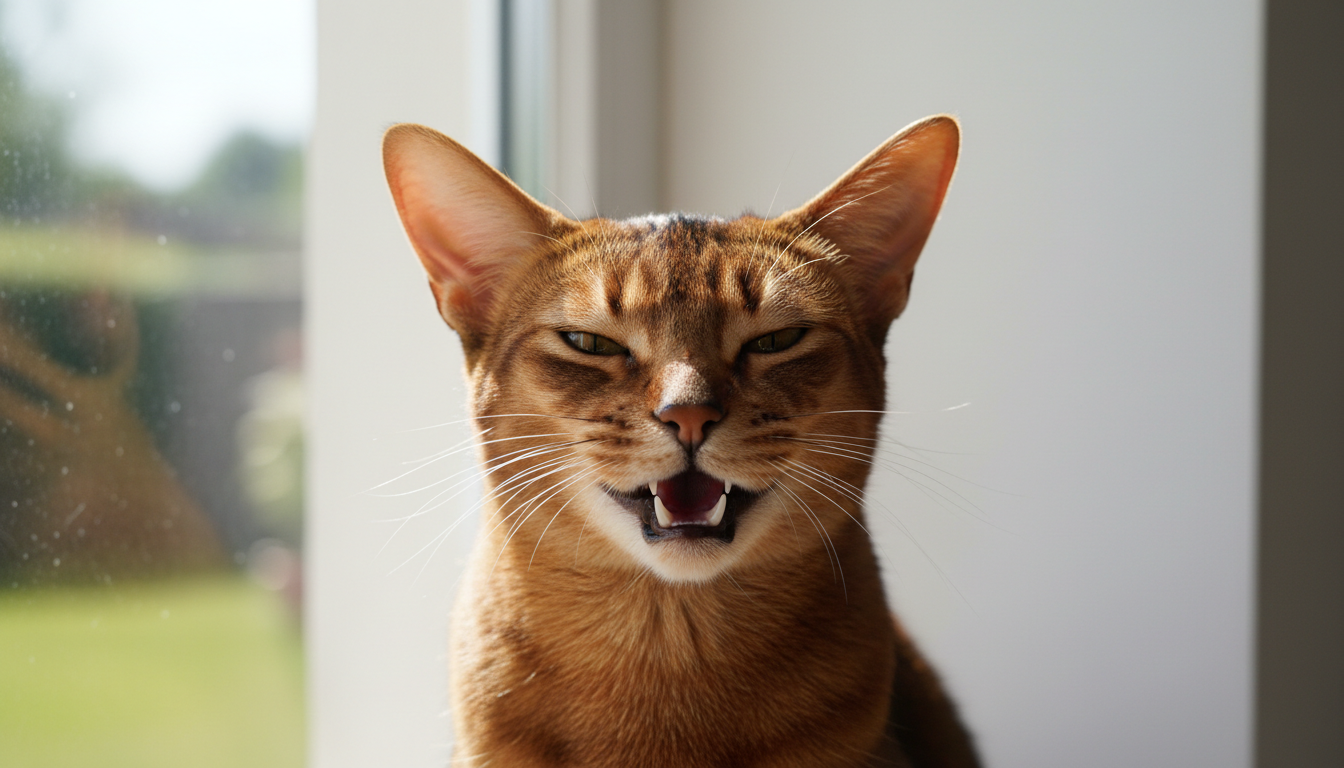
Feline chronic gingivostomatitis is a severe, painful inflammatory condition that affects the gums, the back of the throat, and sometimes the lining of the cheeks. It’s considered an exaggerated immune response to plaque and bacteria rather than a simple infection, and it tends to be far more painful than standard gingivitis. Abyssinians are among the breeds that show up more frequently in discussions of this condition, though it can affect any cat.
Cats with stomatitis often show dramatic changes in behavior around food and grooming. They may approach the food bowl eagerly but then back away without eating, cry out while chewing, or stop grooming themselves altogether because opening the mouth is too painful. Drooling, weight loss, and a generally unkempt coat can all be signs that a cat is struggling silently.
This condition requires veterinary management, and in many cases it’s far more involved than a routine dental cleaning. If your vet suspects stomatitis, they’ll likely want to discuss a treatment plan tailored to your cat’s specific situation, since this is not something that improves with brushing alone.
Signs You Should Never Ignore
Some dental symptoms are serious enough that they warrant a vet visit sooner rather than later, regardless of how mild they seem at first glance. Cats are masters at masking pain, so by the time they’re showing obvious signs, the discomfort has often been building for a while. Paying attention to small changes can make a real difference in how early you catch a problem.
If you notice any of these, it’s time to see a vet rather than waiting to see if things improve on their own. Dental pain doesn’t typically resolve itself, and delaying care usually means more extensive treatment down the road.
- Refusing dry food but still interested in wet food
- Pawing at the mouth or face repeatedly
- Visible blood on toys, food bowls, or bedding
- A noticeable drop in appetite or sudden weight loss
- Reluctance to be picked up or have the face touched
- Lethargy paired with any of the above signs
Why Regular Dental Checkups Matter So Much for This Breed
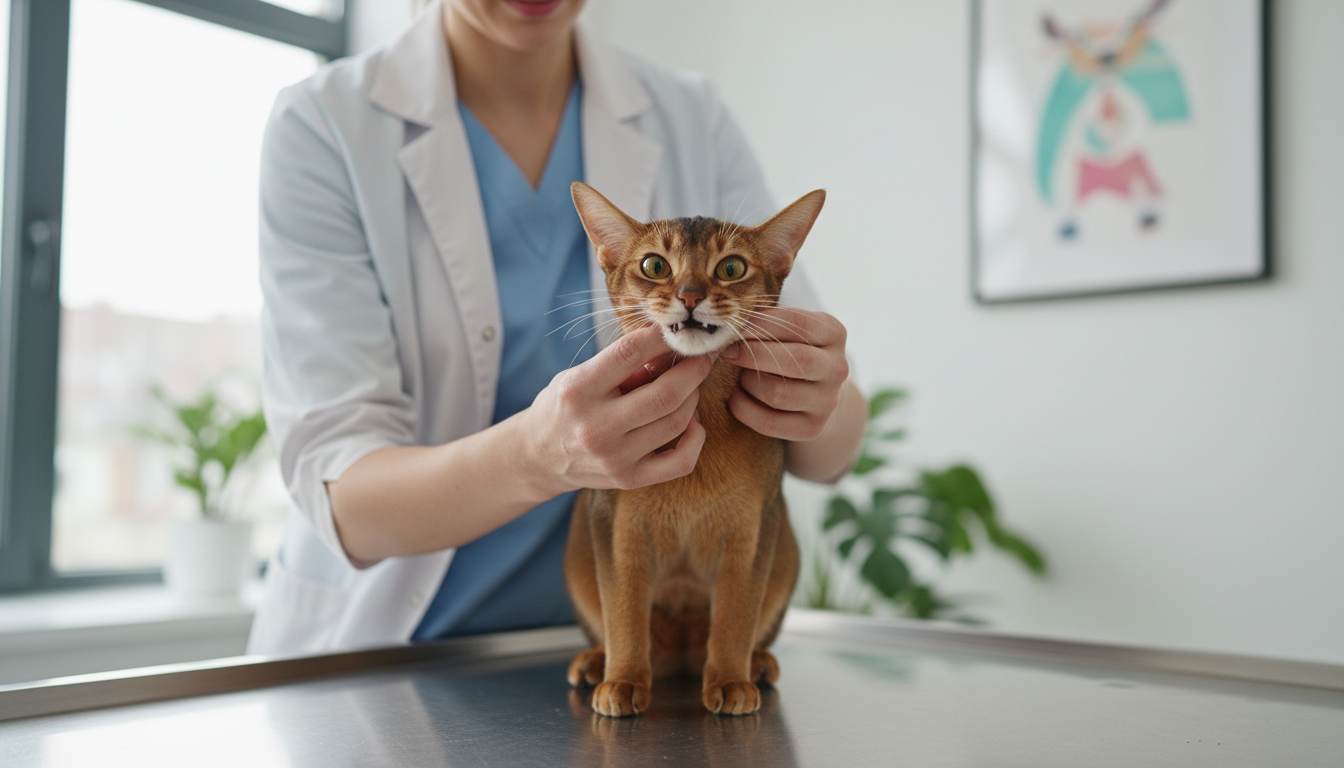
Because Abyssinians can develop gum disease earlier than other breeds, routine veterinary checkups that include a dental exam are especially valuable. Your vet can spot early redness or plaque buildup long before it becomes visible or bothersome to you at home. Catching gingivitis in its earliest form often means the difference between simple management and a more involved dental procedure later.
Many vets recommend starting these checks while your Abyssinian is still a kitten, so you have a baseline for what healthy gums look like in your specific cat. From there, your vet can advise on how often checkups should happen based on what they see, since some Abyssinians need more frequent monitoring than others.
Professional dental cleanings performed under anesthesia are sometimes necessary even for cats that get regular brushing at home, since they allow your vet to clean below the gumline where plaque and tartar build up out of sight. Your vet is the best person to tell you when this kind of cleaning makes sense for your cat and how often it should be repeated.
Building a Home Dental Care Routine
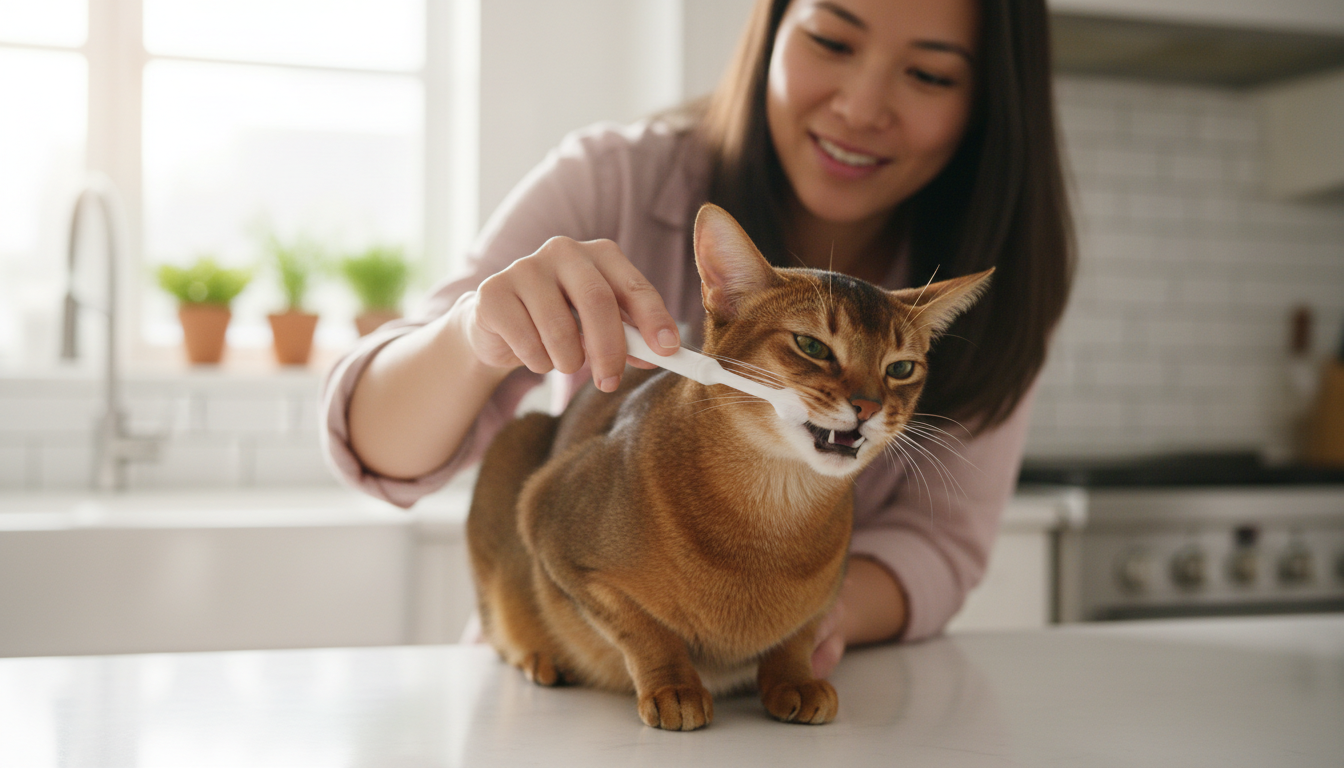
While professional care is essential, what you do at home between vet visits plays a real role in slowing down plaque buildup. Tooth brushing is considered the gold standard of home dental care, and cats can learn to tolerate it, especially if you start the habit young and keep sessions short and positive. Using a toothbrush and toothpaste made specifically for cats is important, since human toothpaste isn’t safe for them.
Consistency matters more than perfection here. Even brushing a few times a week is better than nothing, and some owners find it easier to build the habit into an existing routine, like right after a cuddle session or before a favorite treat. Patience goes a long way, especially with a breed as independent-minded as the Abyssinian.
- Introduce a cat-safe toothbrush and toothpaste gradually
- Start with short sessions focused on just the front teeth
- Reward calm behavior with praise or a treat afterward
- Build up to brushing the back teeth over several weeks
- Keep a consistent schedule so it becomes routine rather than a surprise
Dental Diets and Chews: What They Can and Can’t Do
Dental-specific diets and certain chews are designed to help reduce plaque and tartar through mechanical action, texture, or specialized ingredients. For some Abyssinians, especially those who won’t tolerate brushing, these products can be a helpful part of an overall dental care plan. That said, they’re generally considered a supplement to good dental care rather than a replacement for brushing or professional cleanings.
It’s worth talking to your vet before switching to a dental diet or introducing new dental chews, since not every product is appropriate for every cat, and some options are better studied than others. Your vet can help you figure out what combination of home care tools makes sense for your cat’s specific risk level and lifestyle.
The Role of Diet in Gum Health
Nutrition plays a supporting role in oral health, though it’s not a cure-all for a breed predisposed to gum inflammation. A well-balanced diet supports a healthy immune system, which may help your cat’s body respond more appropriately to the bacteria naturally present in the mouth. Hydration matters too, since cats who drink enough water tend to have healthier saliva production, which helps naturally rinse the mouth throughout the day.
Treats and table scraps that are sticky or high in sugar can contribute to faster plaque buildup, so it’s worth being mindful of what your Abyssinian snacks on between meals. Your vet or a veterinary nutritionist can help you choose a diet that supports your cat’s overall health while keeping dental concerns in mind.
Watching for Pain Cats Try to Hide
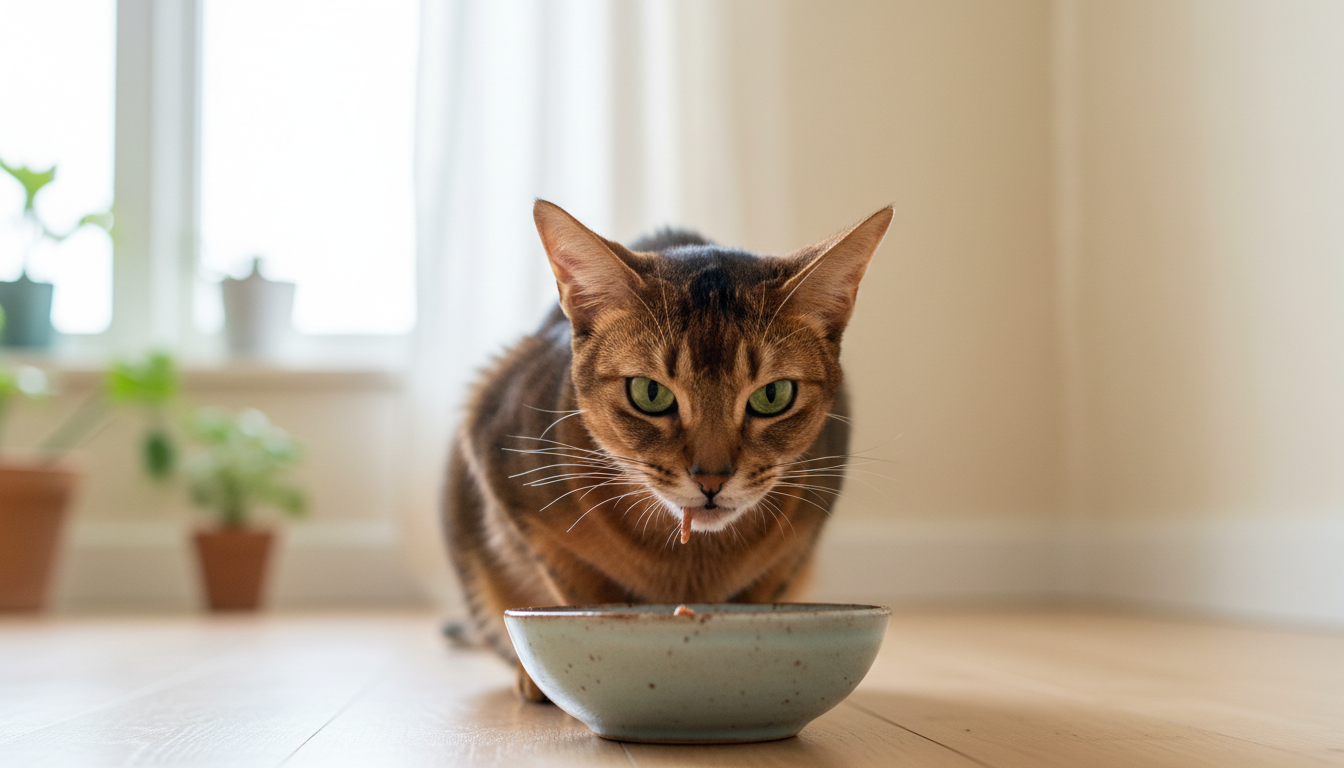
Cats are instinctively private about pain, a trait that goes back to their wild ancestry where showing weakness could make them vulnerable. This means an Abyssinian with sore gums might still act playful and affectionate most of the day, only showing subtle changes around mealtime or when you touch their face. Learning to read these quieter signals takes practice, but it’s one of the most valuable skills an owner can develop.
Some cats develop small behavioral quirks when their mouth hurts, like chewing exclusively on one side, tilting their head while eating, or becoming suddenly disinterested in crunchy treats they used to love. Grooming changes are another clue, since a cat in oral pain may groom less thoroughly or stop entirely, leading to a coat that looks duller or more matted than usual.
Trusting your instincts matters here. If something feels off about your cat’s eating or grooming habits, even if you can’t quite put your finger on why, it’s worth mentioning to your vet rather than waiting for more dramatic signs to appear.
What Happens During a Veterinary Dental Exam
A thorough dental exam goes beyond a quick look at the front teeth. Your vet will check the gumline around every tooth, look for pockets where tissue has pulled away from the tooth surface, and assess whether there’s any mobility in teeth that should be firmly anchored. They’ll also look at the back of the mouth and throat area, since stomatitis-related inflammation often shows up in places that are hard to see without proper tools and lighting.
In many cases, especially if significant tartar or suspected disease is present, your vet will recommend a dental cleaning under anesthesia so they can take X-rays of the tooth roots and clean below the gumline. This step is important because a lot of dental disease happens beneath the surface, in areas that simply aren’t visible during a cat’s conscious exam, no matter how cooperative they are.
Your vet will walk you through what they find and what it means for your cat’s ongoing care, including how often follow-up cleanings or checkups might be needed going forward.

Managing an Abyssinian That Resists Dental Care
Not every cat accepts a toothbrush gracefully, and Abyssinians, known for their strong opinions and independent streak, can be particularly resistant. If your cat won’t tolerate brushing no matter how gradually you introduce it, don’t be discouraged. There are other tools that can help fill the gap, even if they’re not quite as effective as brushing.
Working with your vet to find an approach that fits your specific cat’s personality is often more successful than trying to force a one-size-fits-all routine. Some cats respond better to dental treats or diets, while others do fine with occasional wipes along the gumline using a cat-safe product. The goal is consistency with whatever method your cat will actually tolerate, since an ideal routine that never happens doesn’t help anyone.
- Try different flavors of pet-safe toothpaste to find one your cat likes
- Use short, low-pressure sessions rather than long ones
- Consider finger brushes as a gentler alternative to bristled brushes
- Ask your vet about dental wipes or gels as a backup option
- Be patient, since building tolerance can take weeks or months
Long-Term Outlook With Proper Care
An Abyssinian with a genetic tendency toward gum disease isn’t doomed to a lifetime of dental problems. With consistent home care, regular veterinary checkups, and prompt attention to warning signs, many cats of this breed live comfortably with healthy mouths well into their senior years. The key is staying ahead of the problem rather than reacting after it’s already caused damage.
Every cat’s dental needs are a little different, and your vet is best positioned to help you build a plan tailored to your specific Abyssinian, taking into account their age, history, and how their mouth has responded to care so far. Staying engaged with that plan, rather than treating dental care as an occasional afterthought, makes a real difference over the course of your cat’s life.
When to See a Vet Right Away
Some dental symptoms call for prompt veterinary attention rather than a wait-and-see approach. If your Abyssinian stops eating altogether, seems to be in obvious pain, or shows swelling on the face in addition to mouth symptoms, don’t wait for a routine appointment slot. These can be signs of an abscess or advanced infection that needs timely treatment.
Always reach out to your vet if you’re unsure whether what you’re seeing warrants urgent care. It’s always better to have a false alarm checked out than to let a painful dental problem go untreated in a breed already prone to gum disease.
This article is for general education and is not a substitute for care from your own veterinarian. Learn about The Pet Vet and our editorial policy.